
Breakfast & Brunch
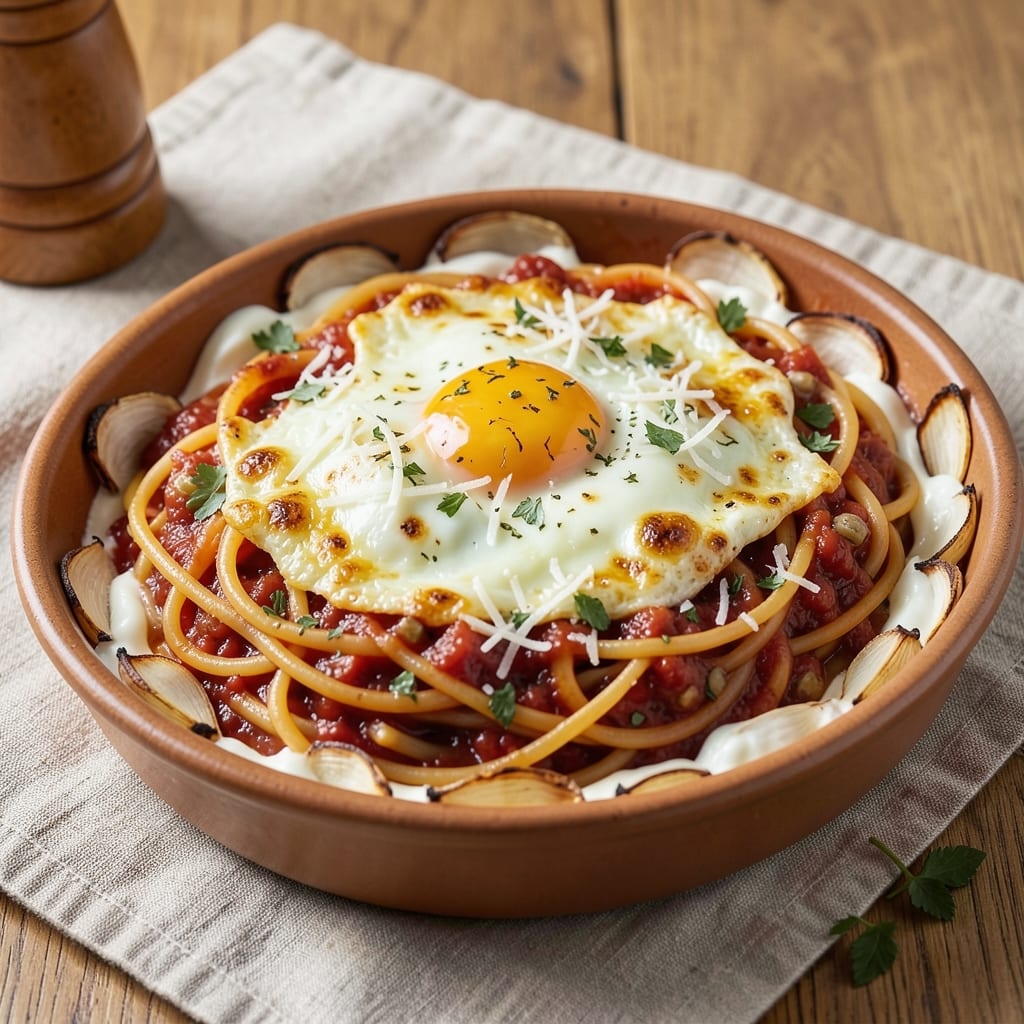
This baked spaghetti recipe with egg and parmesan cheese transforms simple ingredients into a brunch masterpiece with a crispy golden top and gooey egg streaks that disappear into every forkful. The secret lies in perfectly cooked pasta, a rich tomato base, and the magic of eggs that bind everything together while baking. I've perfected this dish over years of weekend brunches—it's the kind of recipe that makes your home smell like a cozy Italian trattoria.
The beauty of this casserole is its simplicity: no fancy techniques, just layers of flavor and texture. You'll start with al dente spaghetti tossed in a vibrant tomato sauce, then layer it with a creamy egg-parmesan mixture that creates that signature crispy crust. The eggs don't just set the dish—they create those beautiful, golden streaks that make every bite irresistible. This is comfort food at its finest, with a texture that's both creamy and satisfying.
What you'll end up with is a dish that's perfect for feeding a crowd or enjoying as a hearty weekend breakfast. The crispy top contrasts beautifully with the creamy egg mixture underneath, while the al dente pasta keeps everything from turning mushy. It's the kind of meal that makes people ask for seconds—and thirds. The best part? You can prepare it ahead of time and bake it fresh when you're ready to serve.
Serve with a simple green salad or roasted vegetables to balance the richness, and don't forget the extra parmesan on the side. This recipe is your new go-to for lazy Sunday mornings or brunch gatherings—it's foolproof, delicious, and guaranteed to impress. Let's get started!
Ingredients for baked spaghetti recipe with egg and parmesan cheese
Sixteen simple ingredients for a brunch casserole that smells like Italian heaven.
| Ingredient | Amount | Notes |
|---|---|---|
| Spaghetti 🍝 | 12 oz | Al dente, cooked separately |
| Large Eggs 🥚 | 6 whole | Room temperature for best mixing |
| Parmesan Cheese 🧀 | 2 cups | Freshly grated from block |
| Marinara Sauce 🍅 | 2 ½ cups | Homemade or high-quality jarred |
| Heavy Cream 🥛 | ½ cup | Full-fat for creaminess |
| Garlic Cloves 🧄 | 4 cloves | Minced for sauce |
| Fresh Basil 🌿 | ½ cup | Chopped, for sauce |
| Olive Oil 🫒 | 2 tbsp | Extra-virgin for richness |
| Salt 🧂 | 1 ½ tsp | Kosher or sea salt |
| Black Pepper 🌶️ | ½ tsp | Freshly ground preferred |
| Red Pepper Flakes 🌶️ | ¼ tsp | Optional for heat |
| Butter 🧈 | 2 tbsp | Unsalted, for crispy top |
| Breadcrumbs 🍞 | ¼ cup | Panko for extra crunch |
The Parmesan is non-negotiable here—freshly grated from a block makes all the difference. I grab mine at Whole Foods or Trader Joe's where they keep it cold. The spaghetti needs to be al dente—undercooked by a minute so it doesn't turn mushy while baking. For the marinara, Rao's or Muir Glen are my go-tos if I'm not making it fresh. Fresh basil is ideal, but dried works in a pinch (use half the amount). The butter for the crispy top should be cold but not frozen—cut into small pieces so it melts evenly.
No Parmesan? Pecorino Romano works too, but it's saltier so use less. Short on eggs? Add 2 tbsp milk with each egg to stretch the mixture. The breadcrumbs can be regular, but panko gives that perfect crunch. For extra richness, stir 1 tbsp cream cheese into the egg mixture. Want more flavor? Add 1 tsp Italian seasoning to the sauce. The marinara can be made ahead—it actually tastes better the next day once the flavors meld.
Prep the sauce and egg mixture ahead—they keep for 2 days in the fridge. The spaghetti can be cooked and tossed with olive oil up to 1 day ahead, stored in an airtight container. Assemble the casserole, cover, and refrigerate overnight for even deeper flavor. The baked dish reheats beautifully—350°F for 15-20 minutes until the top is golden and bubbly. Leftovers keep 4 days in the fridge or 3 months frozen.
Why You'll Love This Recipe
- One-Pan Magic: I swear by this recipe when I’m too tired to scrub pots—just toss the cooked spaghetti, marinara, and heavy cream into a dish, crack in those eggs, sprinkle parmesan, and bake. The eggs bind everything together while the cheese melts into a golden crust that cuts like butter.
- Creamy Cheesy Bliss: That first bite? The eggy richness from the yolks blending into the sauce while the parmesan crisps on top—it’s like a hug in pasta form. Honestly, the heavy cream makes it feel indulgent without needing fancy ingredients.
- Lunchbox Hero: Between us, this is my go-to for meal prep. The leftovers reheat beautifully—just a quick microwave zap or oven warm—and the kids (or my picky husband) actually eat it cold for lunch. Pack it in containers, and you’ve got a week’s worth of easy dinners.
- Budget Stretch: Pasta, eggs, and marinara are cheap staples, but the parmesan and heavy cream make it taste like a restaurant dish. I’ll be real: I’ve fed six people for under $15 with this, and no one complains about the price tag.
Step-by-step instructions for baked spaghetti with egg and parmesan cheese
Here's how to assemble this brunch showstopper with perfect texture every time.
👨🍳 Step 1: Prep the Sauce Base
In a medium saucepan, combine the 2.5 cups marinara sauce, 0.5 cup heavy cream, 4 cloves minced garlic, and 0.5 cup chopped fresh basil. Bring to a gentle simmer over medium heat and cook for 5-7 minutes until the sauce thickens slightly and the garlic is fragrant. Stir occasionally to prevent sticking. You'll know it's ready when it coats the back of a spoon smoothly.
Season with 1.5 teaspoons salt, 0.5 teaspoon black pepper, and 0.25 teaspoon red pepper flakes if using. Taste and adjust seasoning—this is your flavor foundation. Remove from heat and let cool for 10 minutes while you prepare the pasta. The warm sauce will help set the eggs beautifully when baked later.
🍳 Step 2: Cook and Assemble the Pasta Mixture
Cook the 12 oz spaghetti in salted boiling water until al dente (about 1 minute less than package instructions). Drain immediately and return to the pot. Add 2 tablespoons olive oil and toss to coat evenly. This prevents sticking and adds richness.
In a large bowl, gently combine the cooked spaghetti with the cooled sauce mixture. Stir in 2 cups freshly grated Parmesan cheese, breaking up any large clumps. The cheese should melt slightly from the residual heat, creating a creamy texture. Fold in the 6 whole large eggs one at a time, mixing just until combined. You want visible egg streaks throughout—this creates those signature gooey pockets when baked.
🥘 Step 3: Layer and Prepare for Baking
Lightly grease a 9x13-inch baking dish with 2 tablespoons butter (melted and cooled). Spread half of the spaghetti mixture evenly in the dish. For extra flavor, sprinkle half of the 0.25 cup breadcrumbs over the top. Repeat with the remaining spaghetti mixture and breadcrumbs, creating a second layer. The breadcrumbs will create that coveted crispy top we're after.
Cover the dish with plastic wrap and refrigerate for at least 30 minutes (up to 2 hours). This chilling step is crucial—it prevents the eggs from cooking prematurely and helps the breadcrumbs form a golden crust. When ready to bake, remove the plastic wrap and let the dish sit at room temperature for 15 minutes to prevent condensation in the oven.
🔥 Step 4: Bake to Golden Perfection
Preheat your oven to 375°F. Bake the casserole uncovered for 30 minutes. Then increase the heat to 400°F and bake for another 15-20 minutes until the top is deep golden brown and the edges are bubbling. You'll see the breadcrumbs puff up and turn crispy—this is your signal that the eggs have set perfectly underneath.
For the final touch, broil on high for 1-2 minutes until the top is beautifully browned. Watch closely to prevent burning. The center should be just set but still slightly jiggly—this ensures those gooey egg pockets we all love. Let rest for 10 minutes before serving to allow the layers to set completely.
🍽️ Step 5: Serve with Confidence
Slice into 6 equal portions and serve immediately. Each bite should deliver that perfect combination of crispy breadcrumb topping, creamy egg streaks, and rich Parmesan flavor. The sauce should be warm but not runny, and the spaghetti should be tender yet hold its shape. Garnish with additional fresh basil and black pepper for a restaurant-quality presentation.
This dish tastes even better the next day, so consider making it ahead for an effortless brunch. The flavors meld beautifully overnight, and the texture holds up well when reheated gently in the oven.
Pro Tips For Making Baked Spaghetti Recipe With Egg And Parmesan Cheese
- Preheat Pan, Not Just Oven: I learned this the hard way—cold spaghetti in a cold pan means soggy noodles by the time it bakes. Toss your cooked spaghetti into the same skillet you’ll use for baking (just a minute on medium heat) to dry the surface slightly. The pan’s residual heat helps the egg mixture set properly without turning into a gluey mess.
- Grated Cheese, Not Shredded: That pre-shredded stuff? It’s coated with anti-caking agents that make your baked spaghetti look like it’s swimming in oil. Freshly grate your own Parmesan—pack it tightly, and use about 1.5 cups for a 9x13 pan. The finer, drier grates stick better and create that perfect golden crust instead of clumping like wet sand.
- Mix Eggs Last: Add the eggs to the sauce after everything else is combined. I used to whisk them in early, and they’d start cooking unevenly while I mixed in the cream and cheese. Wait until the marinara, cream, and half the Parmesan are thoroughly stirred—then fold in the eggs gently. This keeps the texture creamy, not scrambled.
- Bake Covered, Then Uncovered: The first 15 minutes with foil on traps steam and helps the egg mixture set without curdling. After that, uncover and crank the broiler for 2–3 minutes—just until the top turns golden. Without this two-step, you’ll end up with a sad, pale top or a burnt crust. (Yes, even if you’re impatient like me.)
Wine and beer pairings for this baked spaghetti recipe with egg and parmesan cheese
Italian White Wines
For this creamy, cheesy dish, Italian whites shine brightest. A crisp Vermentino from Sardinia—like Cantina Mesa's Vermentino di Sardegna—cuts through the richness with its citrus and mineral notes. The acidity balances the eggy richness perfectly, cleansing your palate between bites. 🍷
Pinot Grigio
If you prefer something lighter, a Pinot Grigio from Alto Adige, such as Caldiera, offers delicate pear and apple flavors that complement the tomato sauce without overpowering it. Look for one with a touch of almond character to enhance the Parmesan's nutty undertones.
Off-Dry Options
For those who love a hint of sweetness, try an off-dry Italian white like Friulano or Ribolla Gialla. The slight residual sugar mirrors the creamy egg mixture beautifully. Santa Margherita's Ribolla Gialla is a fantastic choice—its honeyed notes play well with the baked dish's caramelized crust.
Beer Pairings
A crisp Italian lager like Peroni or Birra del Borgo provides refreshing carbonation to contrast the dish's richness. For craft beer lovers, a Belgian witbier with its citrusy orange peel and coriander notes offers an unexpected but delightful pairing. Avoid heavy stouts or IPAs—they'll clash with the delicate egg and cheese flavors.
Non-Alcoholic Options
For a refreshing non-alcoholic choice, try a sparkling blood orange soda like San Pellegrino Aranciata Rossa. The citrusy fizz mirrors the wine pairings while keeping the meal light. Alternatively, a ginger beer with a squeeze of lemon adds a zesty contrast to the creamy dish.
Serving Temperature
Serve whites between 45-50°F to highlight their crispness. For beer, chill lagers to 38-42°F and witbiers to 45°F. The colder temperature enhances their refreshing qualities, balancing the dish's richness. A well-chilled glass makes every sip feel like a palate reset. ✨
Nutrition facts
Frequently asked questions
Can I use a different type of pasta for this recipe?
While spaghetti works perfectly, you can substitute with linguine or fettuccine for a similar texture. Avoid thick pastas like rigatoni—they won't absorb the sauce and egg mixture as evenly. For extra richness, try pappardelle (wide ribbon pasta) and increase baking time by 5 minutes to ensure the center cooks through.
Why does my baked spaghetti turn out watery?
Watery results usually mean the eggs cooked too fast or the pasta was overcooked. Always use al dente pasta and chill the assembled dish for at least 30 minutes before baking. Also, ensure your marinara sauce isn't too thin—simmer it longer if needed. The eggs should set beautifully when baked at 375°F for 30 minutes before increasing heat.
Can I make this ahead of time?
Assemble the casserole up to 24 hours ahead and refrigerate uncovered. When ready to bake, increase the temperature to 400°F and bake for 10 minutes longer than usual. The chilled dish will have deeper flavor, and the extra time ensures the crust forms perfectly. For best results, let it sit at room temperature for 15 minutes before baking.
What can I add for extra protein?
For a heartier dish, fold in 1 cup cooked chicken or 12 oz Italian sausage (crumbled and browned) into the sauce mixture. You can also add 1 cup diced ham or 1/2 cup ricotta cheese for extra creaminess. If adding meat, reduce the baking time by 5 minutes since it may cook faster than the pasta.
How do I prevent the top from getting soggy?
The crispy top is all about the breadcrumbs! Use panko (not regular breadcrumbs) and make sure they're evenly distributed. For extra insurance, sprinkle a thin layer of shredded mozzarella under the breadcrumbs before baking. Also, avoid opening the oven door during the first 20 minutes of baking—condensation is the enemy of crispiness!