
Breakfast & Brunch
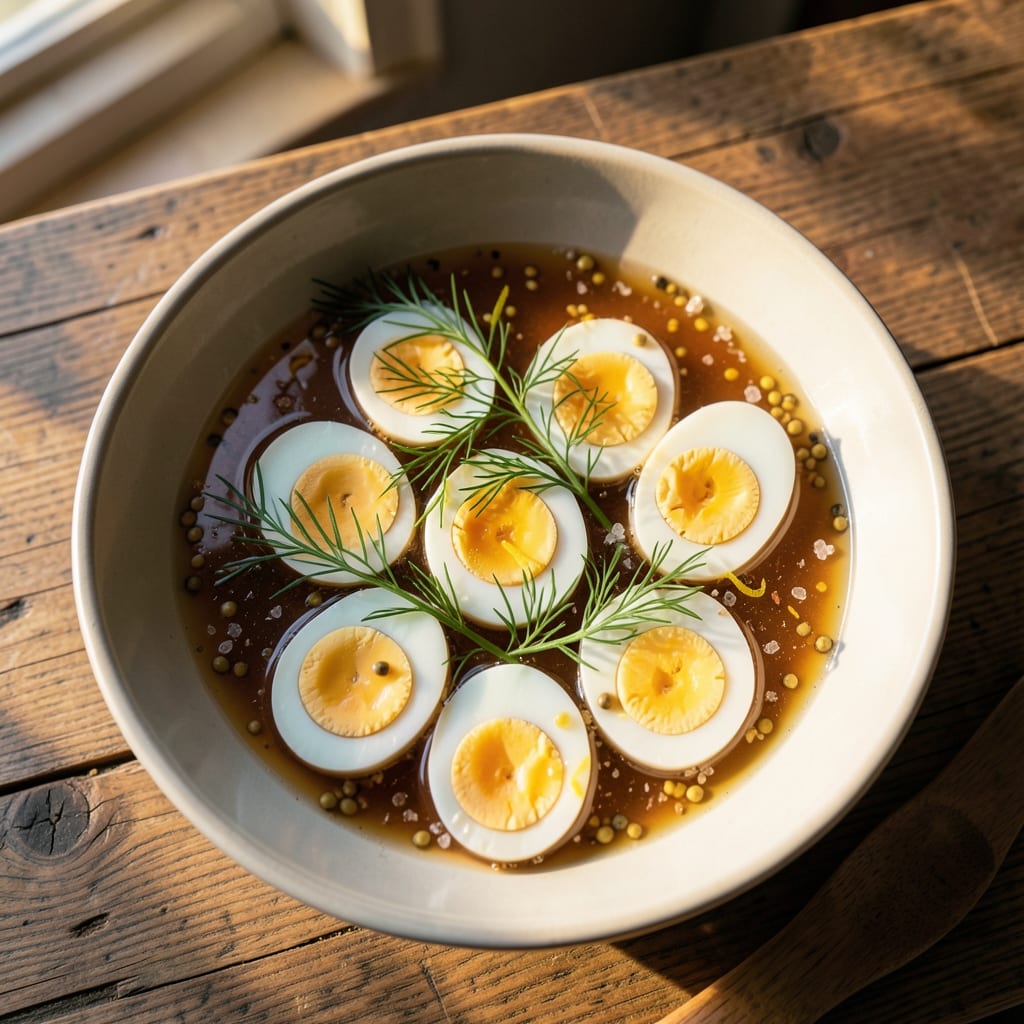
This bar-style pickled eggs recipe transforms ordinary hard-boiled eggs into vibrant, tangy bites perfect for game day gatherings. The secret lies in the precise balance of vinegar, spices, and aromatics that create a bright, crisp pickle solution. I've perfected this method over years of hosting, ensuring every egg delivers that signature tangy crunch and creamy texture that keeps guests reaching for seconds.
The process is straightforward but requires patience—eggs marinate for at least 48 hours, allowing flavors to fully develop. You'll need just six simple ingredients: white vinegar, water, salt, sugar, mustard seeds, and dill, all combined in a ratio that guarantees crisp eggs and bold flavor. The key is maintaining the right temperature during the pickling process to prevent soggy yolks.
What you'll end up with are eggs that pop with color and flavor—golden yolks contrasting against the vinegar-bright liquid. The dill and mustard seeds add subtle complexity, while the tangy solution cuts through rich bar foods like wings or fries. These aren't just appetizers; they're conversation starters that elevate any spread.
Serve them chilled in a decorative bowl with toothpicks for easy grabbing, or pair with classic bar snacks like pretzels and beer. The recipe scales perfectly for crowds, and the leftovers keep well in the fridge for up to two weeks. Here's how to make them shine at your next gathering.
Ingredients for bar style pickled egg
Six ingredients transform hard-boiled eggs into vibrant, tangy bar bites perfect for game day spreads.
| Ingredient | Amount | Notes |
|---|---|---|
| Large Eggs 🥚 | 1 ½ dozen | Hard-boiled, peeled, room temperature |
| White Vinegar 💧 | 4 cups | Distilled white vinegar preferred |
| Water 💧 | 2 cups | Filtered or distilled preferred |
| Diamond Crystal Kosher Salt 🧂 | ¾ cup | Not table salt (use 1/3 less) |
| Granulated Sugar 🍚 | ½ cup | White or raw sugar works |
| Yellow Mustard Seeds 🌶️ | 2 tbsp | Whole seeds, not powder |
| Fresh Dill Weeds 🌿 | ½ cup | Chopped stems included |
The eggs are the foundation—start with room temperature hard-boiled eggs to prevent cracking during pickling. Costco sells pre-peeled eggs in bulk, which saves time, but peeling your own ensures fresher results. For the vinegar, distilled white vinegar gives the cleanest tang, but apple cider vinegar adds subtle sweetness if you prefer. The mustard seeds and dill are non-negotiable for that classic bar-style flavor—Penzeys Spices carries high-quality seeds if you want to splurge, but the grocery store variety works perfectly. Pro tip: Toast the mustard seeds in a dry pan for 30 seconds before adding to the brine for deeper flavor.
No fresh dill? Dried dill at half the amount works in a pinch, but the texture won't be as bright. Running short on vinegar? Lemon juice at 1:1 ratio adds zing, though the flavor profile shifts slightly. The sugar is optional but balances the acidity beautifully—skip it if you prefer extra tang. For large batches, double the brine recipe and use a glass jar with an airtight lid to prevent cloudiness. The eggs should be completely submerged; if not, add a small weight like a clean stone or glass bead. Temperature matters here—keep the brine below 70°F during pickling to maintain crisp yolks.
These eggs keep for up to 2 weeks in the fridge, with flavor intensifying over time. Store them in the original brine in an airtight container. For serving, transfer to a decorative bowl and cover with fresh dill sprigs. The brine itself is edible—pour it over deviled eggs or use as a tangy dressing. Freezing isn't recommended as it alters the texture, but you can freeze the brine separately for up to 6 months if you want to reuse it. Make a big batch and thank me later when you're the host with the most.
Why You'll Love This Recipe
- Pantry Magic: I swear by this recipe because it uses what I already have—no fancy shopping needed. White vinegar, salt, and sugar? That’s it. The eggs do all the heavy lifting, and honestly, the briny-sweet balance comes together faster than takeout.
- Crispy-Creamy Magic: That first bite—crisp shell, silky yolk—is what makes this worth it. The vinegar and salt work their magic overnight, giving you a tangy crunch that disappears the second you pop one in your mouth. (Yes, even on a Tuesday night.)
- Game for Any Gathering: These eggs disappear at parties, picnics, or lazy Sunday brunches. No reheating needed—just grab a jar and serve. My in-laws think I’m a genius because they’re always asking for the recipe, and I just smile and say, “Told you.”
- Zero Waste, All Win: Make a batch and keep it for weeks—no spoilage, no stress. The brine gets better over time, and I’ve had these last months in my fridge. Plus, eggs are cheap, so you’re not breaking the bank for a snack that’s always a crowd-pleaser.
Step-by-step instructions for bar-style pickled eggs
Transform simple hard-boiled eggs into vibrant, tangy bites perfect for game day spreads.
Prepare the Brine Mixture
In a large mixing bowl, combine the 4 cups white vinegar, 2 cups water, 0.75 cup Diamond Crystal kosher salt, and 0.5 cup granulated sugar. Stir vigorously with a wooden spoon until the salt and sugar dissolve completely. This creates the flavor base for your pickled eggs.
The brine should be clear with no visible salt or sugar crystals remaining. If you notice any undissolved salt, give it another 30 seconds of stirring. This step ensures even flavor distribution throughout the eggs. Set the brine aside while you prepare the eggs.
Add Aromatics and Mustard Seeds
To the prepared brine, add the 2 tablespoons yellow mustard seeds and 0.5 cup chopped fresh dill weeds. Stir gently to distribute the seeds and dill throughout the liquid. The mustard seeds will add a subtle peppery kick, while the dill provides fresh herbal notes.
Real talk: the mustard seeds should be whole, not powdered. Whole seeds release their flavor gradually as the eggs pickle, creating a more complex taste profile. Give the mixture one final stir to ensure everything is well incorporated before moving to the next step.
Pack the Eggs into Jars
Carefully place the 1.5 dozen peeled hard-boiled eggs into clean, sterilized quart-sized jars. Arrange them vertically in a single layer, making sure they're not touching each other. This allows the brine to fully penetrate each egg.
Don't overcrowd the jars. You want enough space for the brine to circulate around each egg. If you're using smaller jars, you may need to use two jars for this recipe. The eggs should be fully submerged in the brine once you pour it in.
Pour and Seal the Brine
Pour the prepared brine over the eggs in the jars until they're completely covered by about 1 inch of liquid. This ensures the eggs stay submerged and pickle evenly. Tap the jars gently on the counter to remove any air bubbles trapped between the eggs.
Seal the jars tightly with lids. The seal creates a vacuum that helps preserve the eggs and intensifies the pickling process. Place the jars on a tray in case any liquid spills during the process, then refrigerate immediately.
Pickle and Rest Before Serving
Let the eggs pickle in the refrigerator for at least 24 hours, but I recommend 48 hours for maximum flavor development. This resting period allows the vinegar to penetrate the eggs, creating that signature tangy bite.
After the initial pickling period, check the eggs periodically. They're ready when the whites become translucent and the yolks develop a slight golden hue. The flavor will continue to develop over time, so these eggs will keep well in the refrigerator for up to 2 weeks. Serve chilled for the best texture and flavor experience.
Pro Tips For Making Bar Style Pickled Egg
- USE ROOM-TEMPERATURE EGGS: Cold eggs from the fridge crack like glass when boiling—no one wants vinegar water everywhere. Let them sit in warm water for 10 minutes first. (Yes, even if you’re impatient like me.)
- DON’T SKIP THE BOILING WATER BATH: After cracking eggs into jars, pour boiling vinegar mix over them. Cold vinegar means lukewarm eggs when you’re ready to eat—this guarantees they’re fully set and crisp.
- MEASURE SALT BY VOLUME: Diamond Crystal kosher salt is fluffy—1 tablespoon isn’t 1 tablespoon. Use a scale (20g per cup of vinegar) or spoon it loosely. Packing it down ruins the balance.
- ADD SPICES AFTER COOLING: Toss in peppercorns, mustard seeds, or dill after jars cool to room temp. Hot vinegar burns spices, making them bitter—just wait 30 minutes before sealing.
Dietary considerations for this recipe
Gluten-Free Adaptations
This recipe is naturally gluten-free since it relies on vinegar, salt, sugar, and spices—no wheat or gluten-containing ingredients are used. The mustard seeds and dill are typically gluten-free, but always double-check labels if you're using pre-packaged spices. For extra safety, I recommend using certified gluten-free mustard seeds like those from Bob's Red Mill or Annie's. The eggs themselves are also gluten-free, so no modifications are needed beyond ensuring your vinegar and sugar are pure. ✨
Low-Sodium Options
If you're watching your sodium intake, reduce the kosher salt to 0.5 cup instead of 0.75 cup—this still adds enough flavor without overdoing it. For a deeper umami kick without salt, add 1 teaspoon fish sauce or ½ teaspoon soy sauce to the brine. I’ve found that a splash of lemon juice (about 2 tablespoons) also brightens the flavor while keeping sodium in check. The eggs will still taste tangy and vibrant!
Vegan-Friendly Swaps
While eggs are the star of this recipe, you can create a vegan-friendly version using tofu or chickpea-based egg substitutes. Firm tofu works best—cut into egg-sized pieces and boil for 15 minutes before pickling. Use the same brine recipe, but add 1 tablespoon turmeric to the brine for color. For texture, I like adding 1 tablespoon apple cider vinegar directly to the brine to enhance the tang. The result? A satisfying, crunchy bite that’s perfect for vegan game day spreads. 🌱
Allergy Considerations
If you're dealing with mustard allergies, skip the mustard seeds entirely and boost the dill to ¾ cup for extra herbal brightness. For dill allergies, replace it with ½ cup fresh parsley or ¼ cup dried tarragon—both add a fresh, aromatic note without the same allergenic risks. Always read labels on vinegar and spices to ensure no cross-contamination with allergens like soy or sesame. When in doubt, I recommend sticking to single-ingredient spices from trusted brands like McCormick.
Sugar-Free Versions
To make this recipe sugar-free, simply omit the ½ cup granulated sugar from the brine. The vinegar and salt will still create a tangy, flavorful pickle, though the balance will be sharper. For a touch of sweetness without sugar, add 1 tablespoon honey or maple syrup to the brine—it dissolves easily and adds depth. I’ve also had great success using 1 teaspoon erythritol or monk fruit sweetener for a zero-calorie option. The eggs will still pickle beautifully, just with a slightly sharper edge. 💡
Nutrition facts
Frequently asked questions
Why do bar-style pickled eggs need to marinate for 48 hours?
The 48-hour marinating time is key for developing that signature tangy crunch and vibrant flavor. During this period, the vinegar and spices fully penetrate the eggs, creating a perfect balance of acidity and texture. The longer they marinate (up to 2 weeks), the more intense the flavor becomes—ideal for game day appetizers that need to stand out!
Can I use apple cider vinegar instead of white vinegar?
Yes, but expect a slightly sweeter, milder flavor. Apple cider vinegar adds subtle fruity notes that complement the dill and mustard seeds beautifully. For a stronger tang, stick with white vinegar, but the swap works well if you prefer a smoother taste.
How do I prevent the eggs from turning rubbery?
Keep the eggs fully submerged in the brine and refrigerate immediately after sealing. Avoid overcrowding the jars, and use room-temperature eggs to prevent cracking. The cold temperature slows down the pickling process, preserving the creamy texture. For extra crispness, add 1 tablespoon lemon juice to the brine!
Can I reuse the brine for a second batch of eggs?
Yes, but only if the brine is still clear and has at least 1 inch of liquid left. Reuse it for a second batch of eggs, but avoid overusing it—after 2-3 batches, the flavor weakens. For best results, make a fresh brine for each new batch to ensure maximum tang and freshness.
What’s the best way to serve these pickled eggs at a party?
Transfer the eggs to a decorative bowl or platter and cover with fresh dill sprigs. Serve with toothpicks for easy grabbing, and pair with classic bar snacks like pretzels, wings, or beer. For a gourmet touch, arrange them on a slate board with a drizzle of the reserved brine. These eggs are perfect for game day or pub-style gatherings!