
Breakfast & Brunch
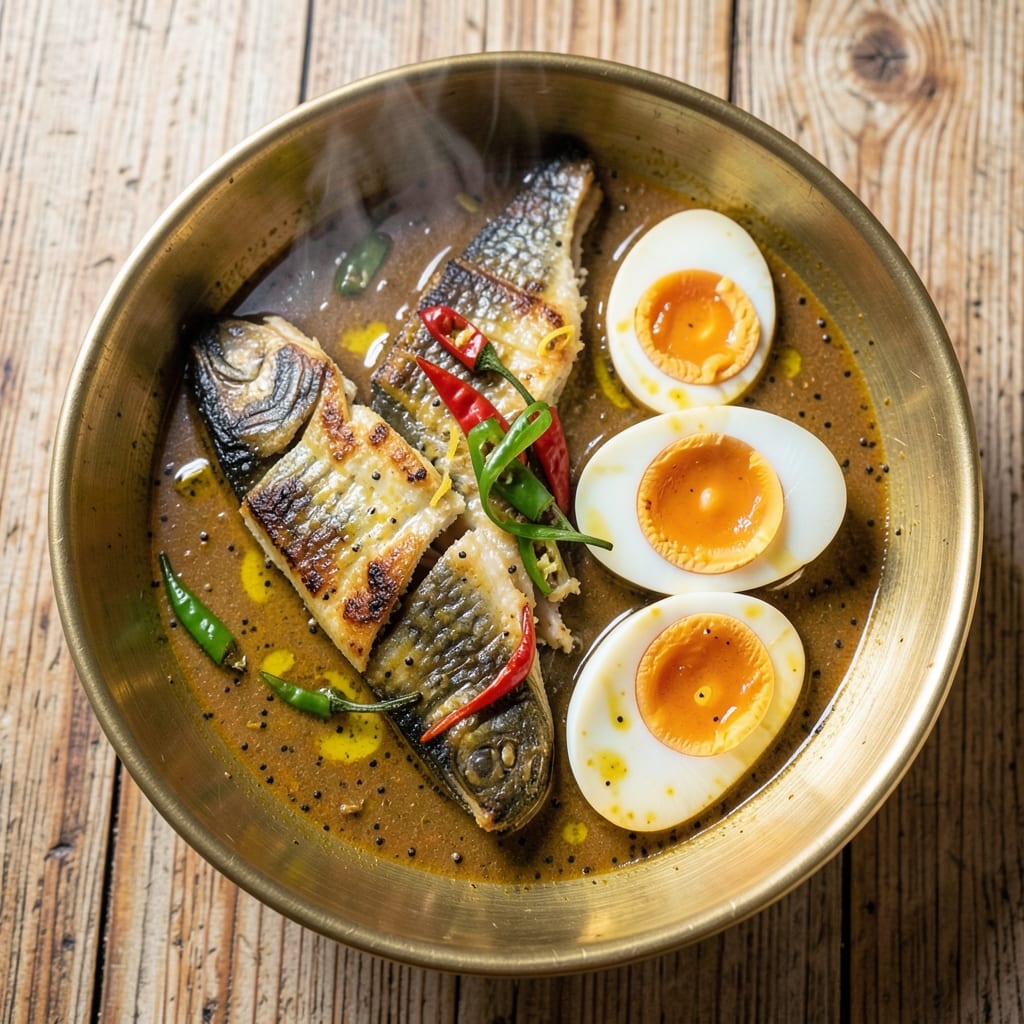
This Bengali fish egg curry recipe brings the soul-warming flavors of West Bengal to your breakfast table with its signature mustard oil aroma and tender fish. The secret lies in the slow-cooked gravy, where fish and eggs meld into a rich, fragrant curry that's both comforting and deeply satisfying. I've perfected this recipe over years of family gatherings, where it's always the centerpiece of our morning meals.
The dish starts with fish marinated in turmeric and mustard oil—a traditional technique that infuses the fish with earthy warmth. As the curry simmers, poppy seeds and green chilies add a subtle crunch and heat, balancing the richness. The eggs, cooked just enough to hold their shape, soak up the aromatic gravy, creating a dish that's hearty yet delicate. This recipe delivers restaurant-quality results in under an hour.
What makes this curry truly special is the way the flavors develop—a deep, savory aroma that fills your kitchen, followed by the tender bite of fish and the creamy texture of the eggs. The mustard oil, toasted to perfection, adds a distinct nutty depth that's unmistakably Bengali. Serve it with steamed rice or crispy luchi for the full experience.
While this recipe stays true to tradition, I've included modern adaptations like pre-cut fish and quicker spice toasting to make it accessible for home cooks. The result is a dish that honors its roots while fitting seamlessly into today's busy mornings. Let's get cooking!
Ingredients for bengali fish egg curry
Mustard oil, turmeric, and tender fish create this aromatic curry's soul-warming foundation.
| Ingredient | Amount | Notes |
|---|---|---|
| Rohu or Catla Fish 🐟 | 1 ½ lb | Cut into medium pieces |
| Large Eggs 🥚 | 4 whole | Hard-boiled or soft-boiled |
| Mustard Oil 🫒 | ½ cup | Toasted until aroma develops |
| Yellow Turmeric Powder 🌿 | 1 tbsp | Freshly ground preferred |
| Poppy Seeds 🌾 | 2 tbsp | Toasted until golden |
| Green Chilies 🌶️ | 4 whole | Slit lengthwise, seeds removed |
| Shallots 🧅 | 4 whole | Finely chopped, 0.5 cup total |
| Ginger 🧄 | 1 inch | Fresh, julienned |
| Garlic Cloves 🧄 | 6 cloves | Minced |
| Onion 🧅 | 1 medium | Finely chopped |
| Tomatoes 🍅 | 2 medium | Pureed, 0.5 cup |
| Coconut Milk 🥥 | ½ cup | Full-fat for creaminess |
| Cumin Seeds 🌿 | ½ tsp | Toasted until fragrant |
| Red Chili Powder 🌶️ | ½ tsp | Adjust to taste |
| Salt 🧂 | 1 tsp | Adjust to taste |
| Fresh Coriander Leaves 🌿 | ¼ cup | Chopped for garnish |
| Lemon Juice 🍋 | 1 tbsp | Freshly squeezed |
The fish is the heart of this dish—Rohu or Catla are traditional choices, but any firm white fish works. Look for fillets with bright, translucent flesh at Indian grocery stores or well-stocked seafood counters. The mustard oil needs to be toasted properly—heat it gently until it smells nutty (not smoking) to develop its signature aroma. Trader Joe's carries a good quality if you can't find it at Indian markets. For the turmeric, fresh root is ideal, but powdered works if you toast it with the cumin seeds to deepen the flavor. Poppy seeds should be toasted until they smell sweet and nutty—this takes about 3 minutes in a dry pan.
No mustard oil? Toasted sesame oil works in a pinch, though it won't have that signature Bengali flavor. Fresh turmeric root can be substituted by grating it yourself—it's more potent than powder. For the green chilies, serrano peppers work if you can't find Bengali varieties, but reduce the amount by half. The tomatoes can be roasted for a deeper flavor, but canned San Marzano tomatoes in a pinch save time. If you're short on coconut milk, Greek yogurt thinned with water adds creaminess without the same richness. The eggs should be cooked just until set—overcooking makes them rubbery and ruins the texture.
The curry tastes even better the next day as flavors meld. Store in an airtight container in the fridge for up to 3 days, though I recommend making fresh for maximum aroma. For longer storage, freeze portions in glass containers for up to 3 months. Reheat gently on the stove with a splash of water to restore creaminess. The mustard oil should be stored in a cool, dark place—never in the fridge—as it solidifies when cold. Fresh coriander keeps for 5 days wrapped in damp paper towels in the fridge, while the ginger and garlic can be frozen for 3 months if you're not using them all at once.
Why You'll Love This Recipe
- Mustard Oil Magic: That first sizzle in the pan? Pure flavor explosion. The mustard oil—nutty, sharp, and just a little fiery—coats the fish and eggs so fast, it transforms everything. Honestly, I’ve tried other oils, but nothing beats that authentic kick.
- One-Pot Wonder: Fish, eggs, and spices all simmer together—no extra bowls, no fuss. The poppy seeds toast in the same oil as the fish, so you’re not juggling a million pans. Between us, my kitchen stays cleaner than when I make curries with five sides.
- Weeknight Workhorse: This curry’s my go-to when I’m starving but don’t want to slave over dinner. Serve it with rice for a full meal, or pile it onto toast for brunch the next day. (Yes, even on a Tuesday night.)
- Budget-Friendly Luxury: Freshwater fish like Rohu or Catla won’t break the bank, and eggs stretch the dish further. The turmeric and poppy seeds add depth without costing much—it’s the kind of recipe that feels special but won’t drain your wallet. Took me three tries to get the spice balance right, but now it’s my secret weapon.
Step-by-step instructions for Bengali fish egg curry
This fragrant curry balances bold spices with delicate fish and eggs—here's how to achieve perfect harmony.
🍳 Step 1: Toast the Mustard Oil and Spices
Heat the 0.5 cup mustard oil in a heavy-bottomed pan over medium-low heat. Add the 2 tbsp poppy seeds and toast until they turn golden brown and release their nutty aroma—this takes about 3-4 minutes. Immediately reduce heat to low to prevent burning.
Add the 0.5 tsp cumin seeds and let them sizzle for 30 seconds until fragrant. Then stir in the 1 tbsp yellow turmeric powder and 0.5 tsp red chili powder, cooking for 1 minute until the spices bloom and fill your kitchen with their earthy scent. This step develops the curry's signature depth—don't rush it.
🍳 Step 2: Cook the Aromatics and Tomatoes
Add the 4 whole shallots, 1 inch ginger, 6 cloves garlic, and 1 medium onion to the oil. Sauté for 5-6 minutes over medium heat until the shallots turn translucent and the garlic releases its pungent aroma. The mixture should smell rich and complex.
Add the 2 medium tomatoes (pureed to 0.5 cup) and cook for 5 minutes until the oil separates from the tomatoes and the mixture thickens slightly. Stir in the 1 tsp salt and 4 whole green chilies (slit lengthwise), cooking for another 2 minutes until the chilies soften. This base forms the curry's flavor foundation.
🍳 Step 3: Add Fish and Simmer
Gently add the 1.5 lb rohu or catla fish (cut into medium pieces) to the pan. Cook for 4-5 minutes over medium heat, stirring occasionally, until the fish turns opaque and the edges begin to crisp slightly. The fish should cook through without falling apart—this delicate step ensures tender, flaky pieces.
Pour in the 0.5 cup coconut milk and simmer for 3 minutes until the liquid reduces slightly and coats the fish. The curry should now have a velvety texture with visible fish pieces. If the sauce appears too thin, simmer for an additional 1-2 minutes to thicken it naturally.
🍳 Step 4: Incorporate the Eggs
Remove the pan from heat and carefully add the 4 whole large eggs (previously hard-boiled or soft-boiled). Gently stir the curry to coat the eggs evenly. The residual heat will warm the eggs through without overcooking them—this keeps their centers tender.
Return the pan to low heat and cook for 2 minutes while stirring gently. The eggs should absorb the curry's flavors without breaking. If you prefer softer eggs, reduce the cooking time to 1 minute—they'll finish cooking from residual heat.
🍽️ Step 5: Finish and Serve
Stir in the 1 tbsp lemon juice and 0.25 cup fresh coriander leaves, tossing gently to distribute the bright citrus notes and fresh herbs throughout the curry. Taste and adjust seasoning with additional salt if needed—this final adjustment balances all the flavors.
Serve the curry immediately, garnished with extra coriander leaves. The dish should have a rich, aromatic broth with tender fish and eggs that absorb the mustard oil's distinctive flavor. Pair with steamed rice for the complete Bengali experience.
Pro Tips For Making Bengali Fish Egg Curry
- CRACK EGGS LAST MINUTE: I used to add eggs early, thinking they’d cook through—big mistake. Poppy seeds and mustard oil burn fast, and eggs turn rubbery. Crack them into the curry only when the fish is nearly done, then simmer for 2-3 minutes max. The yolks should stay runny but set slightly; overcooking kills that rich, custardy texture.
- TOAST THE POPPY SEEDS: Skip this, and your curry will taste flat. Dry-roast the poppy seeds in mustard oil until they darken just enough to smell nutty—about 2 minutes on medium heat. Then grind them fresh; store-bought powder lacks that fresh aroma. (Yes, even if you’re impatient like me.)
- SALT THE FISH FIRST: My grandmother swore by this, and she was right: Season the fish with half the total salt and let it sit 10 minutes before cooking. The flesh absorbs flavor better, and the curry won’t need extra salt later. Rohu’s mild taste needs this prep to shine.
- LOW HEAT FOR MUSTARD OIL: Mustard oil’s magic happens at low heat—it releases flavor without burning. After tempering with spices, reduce to the gentlest simmer for the fish and eggs. High heat turns it bitter, and the curry loses its signature depth. Trust the process; it’s worth the wait.
Make-ahead tips for leftovers
Prep Ahead Strategy
Start by marinating the fish in 1 tbsp turmeric powder and 2 tbsp lemon juice for up to 4 hours in the fridge. This step infuses the fish with flavor and makes it more tender. Store the marinade in an airtight container with the fish pieces submerged. I always do this the night before—it transforms the texture completely. 🌟
Spice Toasting Shortcut
Toast your spices in advance and store them in a small jar with a tight lid. Combine 2 tbsp poppy seeds, 0.5 tsp cumin seeds, and 1 tbsp turmeric powder in the jar. This pre-toasted spice blend keeps for 1 week at room temperature and can be added directly to your oil when cooking. Just heat the oil and add the jar contents—it saves 10 minutes of active cooking time. ✨
Egg Prep Options
For maximum convenience, hard-boil your eggs the day before. Store them peeled in a bowl covered with plastic wrap in the fridge—they'll stay fresh for 2 days. If you prefer softer eggs, boil them for 6 minutes (instead of 10) and keep them warm in a bowl of warm water until ready to use. This keeps them perfectly set without overcooking. 🥚
Curry Base Storage
Make the entire curry base (through Step 3) up to 2 days ahead. Store it in an airtight container in the fridge. When ready to finish, simply reheat over low heat with 2 tbsp water, then add the eggs and lemon juice as directed. The flavors actually deepen overnight, making this a perfect make-ahead option for busy mornings. ❄️
Freezer-Friendly Components
Freeze the fish and curry base separately for up to 3 months. Thaw overnight in the fridge, then complete the recipe as written. The coconut milk may separate when frozen—just stir vigorously to re-emulsify before reheating. For best results, use glass containers with tight lids to prevent freezer burn. This method works especially well for batch cooking. 💫
Reheating Perfection
When reheating, use low heat and add 1-2 tbsp water to restore creaminess. Cover the pan and heat for 5-7 minutes, stirring occasionally. For the eggs, add them directly to the hot curry and cook for 1-2 minutes—they'll finish cooking from the residual heat. Never microwave this curry, as it destroys the delicate mustard oil aroma. 🔥
Nutrition facts
Frequently asked questions
Can I substitute mustard oil with another oil?
While mustard oil gives the dish its signature flavor, you can use toasted sesame oil or vegetable oil in a pinch. For authenticity, add 1 tsp mustard oil extract (available at Indian stores) to the final dish. The aroma will be different, but the curry will still be delicious.
What's the best fish for this curry?
Rohu or Catla are traditional choices, but any firm white fish like cod, halibut, or snapper works well. Avoid delicate fish like tilapia—they fall apart easily. Look for fillets with firm texture and minimal fishy odor. Freshness is key for the best flavor!
How do I prevent the eggs from breaking?
Add eggs to the curry when it's off the heat and stir gently. Cook for only 1-2 minutes on low heat—the residual warmth will cook them through without overcooking. For extra protection, add them to slightly cooler curry (160°F or less) to minimize cracking.
Can I make this curry without coconut milk?
Yes! Replace coconut milk with Greek yogurt thinned with 2 tbsp water or cashew cream (soaked cashews blended with water). For a lighter version, use 1/4 cup heavy cream. The texture will be slightly different but still flavorful.
Why does my curry taste too spicy?
Adjust the heat by reducing green chilies or red chili powder. For milder flavor, add 1 extra tomato or 1 tbsp yogurt to balance the spices. Taste as you go—Bengali curries should be aromatic, not overwhelming.