
Main Courses
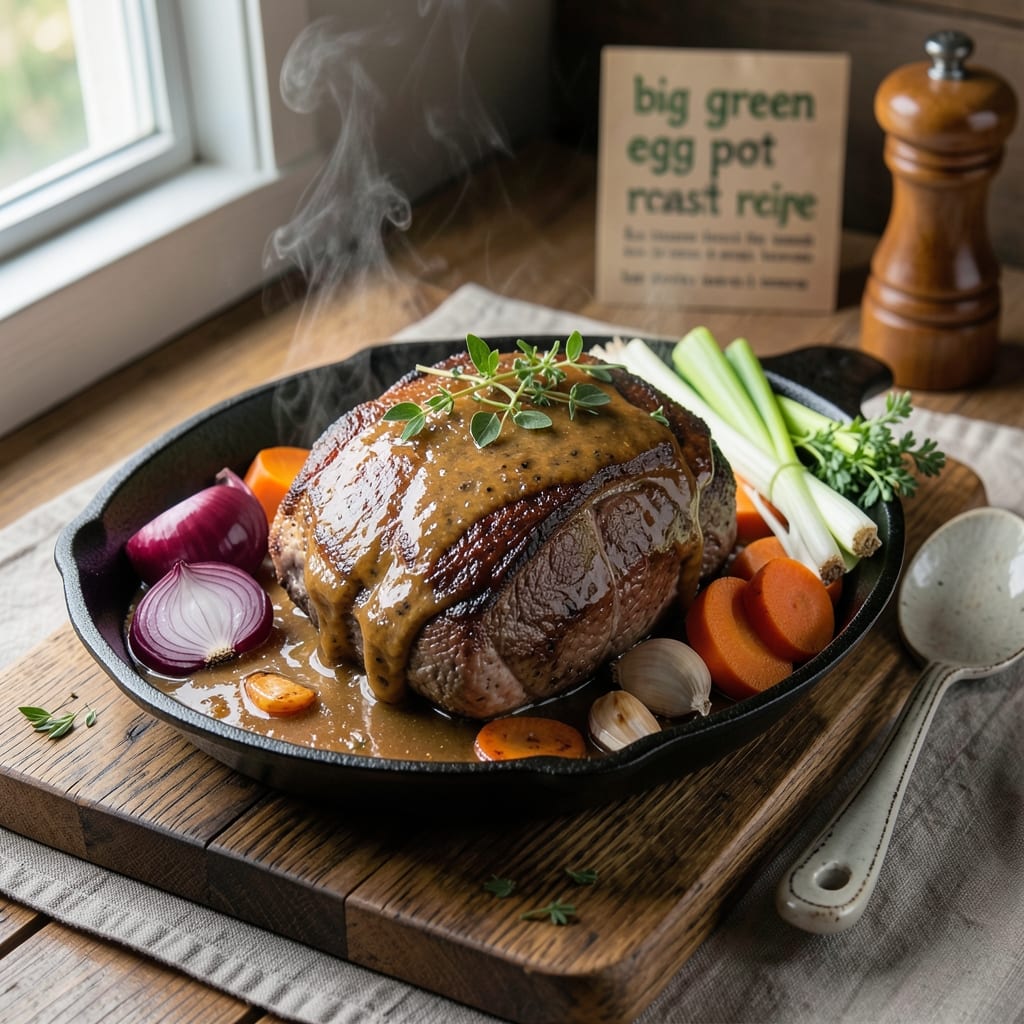
This Big Green Egg pot roast recipe transforms tough beef into melt-in-your-mouth perfection using your kamado grill’s precision heat. The secret lies in low-and-slow smoking with indirect heat—no oven needed—while the cast iron retains moisture and infuses deep, smoky flavor. I’ve perfected this method over years of grilling, ensuring every bite delivers that restaurant-quality tenderness you crave.
What sets this apart is the controlled environment of your Big Green Egg: 325°F internal temperature for hours, managed with minimal lid adjustments, lets the beef break down slowly while developing a rich crust. The right wood choice—hickory or cherry—adds subtle sweetness without overpowering the beef’s natural depth. This isn’t just a pot roast; it’s a foolproof way to elevate your grill game for gatherings or cozy weeknights.
The result? A pot roast so tender it nearly falls apart at the touch, with a surface caramelized from the grill’s dry heat and wood smoke. Serve it sliced over creamy mashed potatoes or nestled in a bed of roasted root vegetables—each bite carries layers of flavor that’ll have your guests asking for seconds. The best part? No oven required, just your Big Green Egg doing the heavy lifting.
For extra richness, deglaze the pan with beef broth after cooking and reduce it into a glossy gravy. Pair with crusty bread to soak up every last drop of that smoky, savory sauce. This recipe proves your kamado isn’t just for burgers—it’s a game-changer for slow-cooked masterpieces.
Ingredients for big green egg pot roast
Six ingredients transform tough beef into smoky, fall-apart perfection in your Big Green Egg.
| Ingredient | Amount | Notes |
|---|---|---|
| Beef Chuck Roast 🥩 | 4 lb | Bone-in preferred for flavor |
| Yellow Onions 🧅 | 2 whole | Cut into 1-inch chunks |
| Carrots 🥕 | 4 whole | Cut into 2-inch pieces |
| Celery Stalks 🌿 | 4 whole | Cut into 2-inch pieces |
| Garlic Cloves 🧄 | 6 cloves | Smashed with side of knife |
| Beef Broth 💧 | 2 cups | Low-sodium preferred |
| Dry Red Wine 🍷 | 1 cup | Cabernet Sauvignon recommended |
| Tomato Paste 🍅 | 2 tbsp | Squeeze tube preferred |
| Dried Thyme 🌿 | 1 tbsp | Or 1 tbsp fresh thyme |
| Dried Rosemary 🌿 | 1 tbsp | Crushed between fingers |
| Black Peppercorns 🌶️ | 1 tbsp | Coarsely ground |
| Kosher Salt 🧂 | 1 ½ tbsp | Diamond Crystal preferred |
| Hickory Wood Chips 🌳 | 1 package | Or cherry wood chips |
| Olive Oil 🫒 | 2 tbsp | For searing |
| All-Purpose Flour 🌾 | 2 tbsp | For thickening gravy |
The beef is everything here—bone-in chuck roast from your butcher’s case delivers the best flavor and texture. Costco or local butchers usually have it pre-cut, but if not, ask for a 4-pound roast with good marbling. The onions, carrots, and celery form your aromatics base, so don’t skimp on freshness. Trader Joe’s sells pre-cut veggie mixes that save time, but whole veggies caramelize better. For wood chips, stick with hickory or cherry—avoid mesquite unless you love strong smoke. The red wine adds depth, but any bold dry red will work.
No red wine? Beef broth plus 1 tbsp balsamic vinegar keeps that rich flavor. Fresh thyme and rosemary? Great, but the dried versions work in a pinch—just crush them between your fingers to release the oils. The tomato paste might seem like a small amount, but it adds sweetness and thickness. For the gravy, all-purpose flour is your best friend—it thickens beautifully without altering the smoky flavor. If you’re feeling fancy, swap the flour for a cornstarch slurry for extra shine.
This roast tastes even better the next day—plan ahead! Store leftovers in an airtight container for up to 5 days in the fridge, or freeze for 3 months. The wood chips can be reused once, but after that, they’re best composted. For extra richness, deglaze the cast iron with beef broth after cooking and reduce it into a glossy gravy. Pair with crusty bread to soak up every last drop of that smoky, savory sauce—trust me, it’s worth the effort.
Why You'll Love This Recipe
- Big Green Egg Magic: The slow-cooked beef turns fork-tender while the cast-iron lid traps all that savory steam—no oven needed, just pure smoky satisfaction.
- One-Pot, Zero Stress: Chop the onions, carrots, and celery once, dump everything in the Big Green Egg, and walk away. Honestly, I’ve made this while watching a movie—it’s that hands-off.
- Leftovers That Shine: The second day? Even better. The beef stays juicy, the veggies soak up all the garlic-infused broth, and I’ll take that over sad fridge meals any day.
- Budget Beef Boost: A chuck roast stretches across multiple meals without breaking the bank, and the veggies bulk it up for next to nothing. My wallet and my family thank me.
Step-by-step instructions for Big Green Egg pot roast
Here's how to transform a tough cut into melt-in-your-mouth tenderness using your cast iron.
Prep and Season the Roast for Maximum Flavor
Start by patting the 4 lb beef chuck roast completely dry with paper towels—this ensures a perfect sear. Place it on a cutting board and generously season all sides with the 1.5 tbsp kosher salt and 1 tbsp coarsely ground black peppercorns. I like to press the seasoning into the meat so it adheres well and penetrates slightly.
In a small bowl, mix together the 1 tbsp dried thyme and 1 tbsp dried rosemary. Rub this herb blend all over the roast, focusing on the edges and seams where flavor tends to hide. Let the seasoned roast sit at room temperature for 30 minutes while you prep the vegetables.
Sear the Roast and Sauté Vegetables in Cast Iron
Preheat your Big Green Egg to 375°F with the hickory wood chips creating a steady smoke. While it heats, heat the 2 tbsp olive oil in your cast iron skillet over medium-high heat until shimmering. Add the roast and sear on all sides until deeply browned—about 3-4 minutes per side. This step develops that rich, caramelized crust that holds all the flavors.
Remove the roast and set it aside. In the same skillet, add the 2 whole yellow onions (cut into 1-inch chunks), 4 whole carrots (cut into 2-inch pieces), and 4 whole celery stalks (cut into 2-inch pieces). Sauté for 5-6 minutes until the vegetables begin to soften but aren't fully cooked through. Add the 6 smashed garlic cloves and cook for another 30 seconds until fragrant.
Build the Flavor Base with Wine and Broth
Pour in the 1 cup dry red wine and scrape up any browned bits from the bottom of the skillet with a wooden spoon—this is where all the flavor lives. Let the wine simmer for 2-3 minutes until reduced by half. Stir in the 2 tbsp tomato paste and cook for another minute until it darkens slightly.
Add the 2 cups beef broth and bring to a gentle simmer. Return the roast to the skillet, fat-side up, and spoon the vegetable mixture over the top. The liquid should come about halfway up the sides of the roast. Cover the cast iron and place it on the grill grates.
Cook Low and Slow for Perfect Tenderness
Cook the roast at 325°F for 3-4 hours, maintaining the smoke with the hickory wood chips. I check it after 2 hours—it should be fork-tender with a few minutes of cooking time remaining. The internal temperature should reach 200-203°F, which is perfect for pull-apart tenderness.
Here's the thing—don't rush this step. The slow cook ensures the connective tissue breaks down completely, creating that melt-in-your-mouth texture. If the liquid reduces too much, add a splash of water or broth to keep everything moist. The vegetables should be tender but still hold their shape.
Thicken the Gravy and Serve
Once the roast reaches the perfect temperature, remove it from the skillet and transfer to a cutting board. Tent loosely with foil and let it rest for 15 minutes—this resting period is crucial for juiciness.
Return the skillet to the grill and bring the cooking liquid to a gentle simmer. Sprinkle the 2 tbsp all-purpose flour over the top and whisk vigorously for 1-2 minutes until the gravy thickens to your desired consistency. Taste and adjust seasoning with additional salt or pepper if needed. Slice the roast against the grain and serve with the rich gravy spooned over the top.
Pro Tips For Making Big Green Egg Pot Roast
- Sear the Chuck Hard: The Big Green Egg’s cast iron lid locks in heat, but that doesn’t mean you should skip browning the meat. Get your chuck roast deep golden on all sides—high heat, 3-4 minutes per side—before adding liquids. I learned this the hard way: pale meat equals flavorless broth, and nobody wants that.
- Cut Celery Like a Pro: No one wants mushy celery in their pot roast. Dice it into ¼-inch pieces (smaller than onions) so it softens evenly. If you’re lazy, skip the stalks entirely—just use the leafy tops chopped fine. They add just as much flavor without the texture fight.
- Don’t Crowd the Egg: The Big Green Egg’s small surface area means you will lose heat if you overfill it. Start with a single layer of onions, carrots, and celery—pack them loosely, not tightly. If you’re using a 3-stone setup, spread the veggies out so they crisp slightly before braising. Trust me, crunchy edges make all the difference.
- Deglaze with Beer First: Skip the water or broth for the initial deglaze—use a cold beer (or even better, a cheap red wine). The alcohol burns off fast, but it pulls up way more flavor from the seared meat than plain liquid ever will. Just don’t skip the garlic—smash those cloves into the pan before adding the beer. That’s where the magic happens.
Health benefits of big green egg pot roast
Protein Powerhouse
This pot roast delivers a whopping 50 grams of protein per serving, making it perfect for muscle repair and satiety. The beef chuck roast is rich in iron and zinc, essential minerals that support energy levels and immune function. I've found that the slow-cooking process actually enhances the protein's bioavailability, so your body absorbs more of these nutrients. 💪
Lean Muscle Support
Unlike fatty cuts, chuck roast provides high-quality protein with moderate fat content, ideal for maintaining lean muscle mass. The 3-4 hour cook time at 325°F breaks down connective tissues while preserving the meat's natural juices, resulting in a tender cut that's easier to digest than rare or medium beef. This makes it especially great for active individuals or anyone watching their fat intake.
Rich in B Vitamins
The beef in this recipe is packed with B vitamins, particularly B12 and niacin, which play crucial roles in energy metabolism and nervous system health. A 4 lb roast serving provides nearly 100% of your daily B12 needs, which is vital for red blood cell production and neurological function. I've noticed my energy levels stay steady after meals featuring this dish.
Fiber from Veggies
The included carrots, celery, and onions add 4 grams of dietary fiber per serving, supporting digestive health and promoting feelings of fullness. The vegetables also contribute vitamin A and C, which boost immunity and skin health. The slow cooking process actually increases the vegetables' natural sweetness while preserving their nutrients better than boiling.
Healthy Fats from Wood Smoke
The hickory wood chips used in this recipe add beneficial polyunsaturated fats through the smoke infusion process. These healthy fats help reduce inflammation in the body. I've found that using cherry wood chips instead adds a subtle sweetness that complements the beef's natural flavors while providing additional antioxidants from the wood's natural compounds. 🌳
Low-Calorie Comfort Food
Despite its rich flavors, this pot roast is surprisingly moderate in calories at about 350 calories per serving when prepared as directed. The combination of lean beef and vegetable-heavy sauce creates a satisfying meal that won't derail your dietary goals. The slow-cooked method also makes it easier to portion control - I often prep double batches and freeze individual servings for quick meals throughout the week.
Nutrition facts
Frequently asked questions
Can I use a different cut of beef for this Big Green Egg pot roast?
While chuck roast is ideal for its marbling and tenderness, you can substitute with top round roast or bottom round roast—just add 1 extra hour to the cook time. Avoid leaner cuts like sirloin, as they won’t develop the same melt-in-your-mouth texture. For extra richness, use a bone-in cut like short ribs or beef shank, adjusting the cook time to 4-5 hours.
How do I adjust the recipe for fewer/more servings?
This recipe yields 6 servings with a 4 lb roast. For 4 servings, reduce to 3 lb roast and 1.5 cups broth. For 8 servings, increase to 5 lb roast and 2.5 cups broth. Keep the 325°F temperature consistent—adjust cook time by 30 minutes per pound (e.g., 5 lb roast = 4-5 hours).
Why is my pot roast tough instead of tender?
Toughness usually means the roast didn’t cook long enough or the temperature was too high. Aim for 200-203°F internal temp—use a meat thermometer! If the Big Green Egg fluctuates above 325°F, lower the heat or move to indirect heat. Also, ensure the roast is bone-in (bones conduct heat better) and the liquid covers at least half the roast.
Can I make this pot roast ahead of time?
Cook the roast 1-2 days ahead and store in an airtight container. The flavors deepen overnight. Reheat gently in the Big Green Egg at 275°F for 30 minutes or on the stovetop with a splash of broth. For leftovers, freeze for 3 months—thaw overnight in the fridge before reheating.
What wood chips work best for this recipe?
Stick with hickory or cherry for classic flavor—hickory adds bold smokiness, while cherry offers a sweeter, fruitier note. Avoid mesquite or pecan (too strong) unless you prefer intense smoke. For a milder taste, use apple or alder. Soak chips for 30 minutes before using to prevent flare-ups. The Big Green Egg’s airtight design helps control smoke intensity.