
Breakfast & Brunch
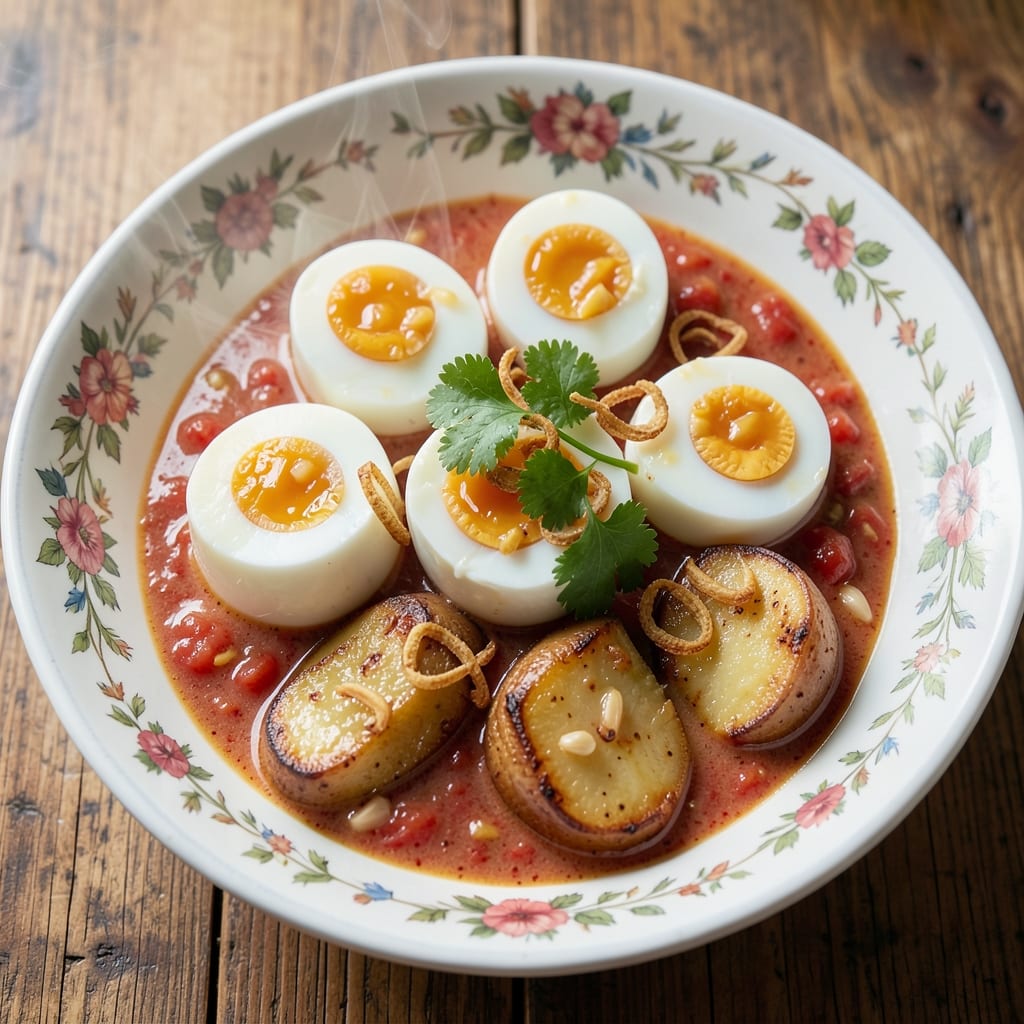
This one-pot boiled egg and potato curry delivers comfort in every spoonful, blending creamy coconut milk with aromatic spices for a dish that feels like a hug. The secret lies in gently simmering boiled potatoes and eggs in a rich tomato-coconut base, where the eggs soak up the flavors without overcooking. I developed this recipe during a particularly chilly morning when I needed something hearty yet simple—no fancy techniques, just bold spices and a single pot to clean afterward.
The foundation of this curry is a foolproof spice blend of cumin, coriander, and turmeric, toasted in oil until fragrant before adding onions and garlic. The potatoes absorb the flavors beautifully, while the boiled eggs add a satisfying texture contrast—soft yolks that melt into the creamy sauce. What makes this dish special is how it transforms humble ingredients into something restaurant-worthy, all while keeping prep under 30 minutes and cooking time to 45 minutes total.
By the time you serve this curry, your kitchen will smell like a bustling Indian restaurant, and every bite will deliver that perfect balance of creamy, spiced, and slightly smoky flavors. The eggs stay tender while the potatoes soften just enough to soak up the rich sauce, creating a meal that’s both satisfying and easy to customize. Pair it with steamed basmati rice or warm flatbread for the full experience—this is the kind of dish that turns a simple weeknight into a cozy feast.
One of the best things about this recipe is its versatility—swap in chickpeas for extra protein, add fresh cilantro for brightness, or adjust the spice level to your taste. It reheats beautifully too, making it perfect for meal prep or leftovers. Let’s get cooking—your taste buds (and your lazy Sunday mornings) will thank you.
Ingredients for boiled egg and potato curry
These hearty ingredients transform into a creamy, spiced hug in one pot.
| Ingredient | Amount | Notes |
|---|---|---|
| Large Russet Potatoes 🥔 | 2 lb | Cut into 1.5-inch chunks |
| Large Eggs 🥚 | 6 whole | Hard-boiled, peeled |
| Canned Crushed Tomatoes 🍅 | 1 15-oz can | San Marzano preferred |
| Coconut Milk 🥥 | 1 13.5-oz can | Full-fat for creaminess |
| Yellow Onion 🧅 | 1 whole | Medium size, diced |
| Garlic Cloves 🧄 | 6 cloves | Minced for depth |
| Ground Cumin 🌿 | 1 ½ tsp | Toasted for aroma |
| Ground Coriander 🌿 | 1 tsp | Freshly ground preferred |
| Turmeric Powder 🌶️ | ½ tsp | For vibrant color |
| Fresh Ginger Root 🌿 | 2 tbsp | Grated finely |
| Vegetable Oil 🫒 | 3 tbsp | High smoke point |
| Salt 🧂 | 1 ½ tsp | Diamond Crystal preferred |
| Black Peppercorns 🌶️ | ½ tsp | Freshly cracked |
| Fresh Cilantro 🌿 | ¼ cup | Chopped for garnish |
| Lemon Juice 🍋 | 1 tbsp | Freshly squeezed |
The potatoes and eggs are the stars here—Russet potatoes hold up best to simmering, while large eggs stay tender when cooked gently. For the best flavor, San Marzano crushed tomatoes add natural sweetness, but any high-quality canned tomatoes work. The coconut milk? Full-fat only—it creates that luscious, velvety texture. I grab mine from Trader Joe's or the Asian market, where they keep it well-stocked. Fresh ginger and garlic are non-negotiable for that bright, aromatic punch—Penzeys Spices carries pre-grated ginger if you're short on time, but nothing beats freshly grated.
No fresh cilantro? Dried oregano at half the amount works in a pinch, though it won’t have that same bright finish. Short on coconut milk? Greek yogurt or cashew cream adds richness, though the texture will be slightly different. The spices are where you can get creative—add a pinch of cinnamon for warmth or red pepper flakes for heat. For a deeper flavor, toast the cumin and coriander in the oil until fragrant—this step is worth the extra minute. The eggs should be boiled just until set (about 10 minutes) so they stay tender when simmered in the curry.
This curry tastes even better the next day as flavors meld together. Store leftovers in an airtight container for up to 5 days in the fridge or freeze for 3 months. I like to portion it into single servings before freezing—just reheat with a splash of water or coconut milk to restore creaminess. The potatoes and eggs reheat beautifully, soaking up any extra sauce. For extra comfort, serve with steamed basmati rice or warm naan bread—the contrast of textures makes every bite perfect.
Why You'll Love This Recipe
- Pantry Powerhouse: I swear by this when my fridge is bare—just onions, potatoes, eggs, and a can of tomatoes. No fancy shopping, no stress. The coconut milk turns it rich without needing a dozen spices.
- Creamy Crisp Magic: That contrast? Chef’s kiss. Soft-boiled eggs with runny yolks cutting through the velvety coconut-tomato sauce while the potatoes stay firm on the outside. It’s the kind of dish that makes you pause mid-bite.
- Lunchbox Hero: Pack it cold or reheat it—this curry holds up like a champ. My kids grab it for school lunches, and my husband takes it to work. (Yes, even the grown-ups love the eggy richness.)
- Budget Stretch: A single can of tomatoes and a carton of eggs feed four for under $8. Honestly, I make it just to prove you don’t need expensive ingredients for something this satisfying. Leftovers? Even better the next day.
Step-by-step instructions for boiled egg and potato curry
This spiced one-pot wonder transforms humble ingredients into a rich, aromatic curry with minimal effort.
Hard-Boil the Eggs and Prep the Potatoes
Place the 6 whole large eggs in a saucepan and cover with cold water by about 1 inch. Bring to a rolling boil over high heat, then immediately reduce to medium-low and simmer for exactly 9 minutes. This timing ensures perfectly set yolks without turning them green. Drain and transfer eggs to an ice bath for 5 minutes to stop cooking, then peel and set aside.
While eggs cook, cut the 2 lb large russet potatoes into 1.5-inch chunks—uniform size ensures even cooking. Rinse under cold water to remove excess starch, which can make the curry gummy. Pat completely dry with paper towels before adding to the pot.
Build the Spiced Base in One Pot
Heat 3 tablespoons vegetable oil in a large, heavy-bottomed pot over medium heat. Add the diced yellow onion and cook for 5 minutes until soft and translucent, stirring occasionally. Add the 6 cloves minced garlic and 2 tablespoons grated fresh ginger root, cooking for another 2 minutes until fragrant—this releases their full flavor.
Lower heat to medium-low and add the 1.5 teaspoons ground cumin, 1 teaspoon ground coriander, 0.5 teaspoon turmeric powder, 1.5 teaspoons salt, and 0.5 teaspoon freshly cracked black peppercorns. Stir constantly for 1 minute until the spices bloom and fill the kitchen with their warm, earthy aroma. This step is non-negotiable—it's where the magic happens.
Simmer the Potatoes in Tomato-Coconut Broth
Pour in the 1 15-oz can crushed tomatoes and 1 13.5-oz can coconut milk, stirring to combine. Add the prepared potato chunks and bring to a gentle simmer over medium-low heat. Cover partially and cook for 15 minutes, stirring occasionally, until potatoes are tender when pierced with a fork but not falling apart. The liquid should reduce slightly, creating a thick, velvety sauce.
Here's the thing—if the potatoes absorb too much liquid, add 2-3 tablespoons water to maintain the right consistency. You want a sauce that coats the back of a spoon but isn't watery. The potatoes should be fork-tender but still hold their shape when served.
Finish with Eggs and Fresh Herbs
Gently stir in the 6 peeled hard-boiled eggs, cutting each in half lengthwise before adding. Simmer for just 2 minutes—any longer and the yolks will overcook. Remove from heat and stir in the 1 tablespoon freshly squeezed lemon juice and 0.25 cup chopped fresh cilantro. The acidity brightens the flavors while the cilantro adds a fresh, herbal note that cuts through the richness.
Let the curry rest, covered, for 5 minutes before serving. This resting period allows the eggs to absorb some of the spiced sauce, ensuring every bite is packed with flavor. Serve immediately with warm naan or basmati rice to soak up that delicious, aromatic sauce.
Pro Tips For Making Boiled Egg And Potato Curry
- PARBOIL POTATOES FIRST: Russets break down into mush when simmered directly in curry sauce. Boil them whole in salted water for 8-10 minutes until fork-tender, then drain and halve before adding to the pot—this keeps their shape while absorbing flavors without turning to paste.
- SALT THE EGGS HARD: Cold eggs drop straight to the bottom and crack under heat. Salt them in ice water for 10 minutes first (yes, even if they’re fresh from the fridge), then boil for 9 minutes in fresh water. The shock prevents cracking, and the whites stay firm enough to hold their own in the sauce.
- STIR THE COCONUT MILK: Don’t just dump it in. After adding coconut milk, stir vigorously for 30 seconds—this breaks up the natural oils that would otherwise separate into an unappetizing layer on top. If you’re lazy, at least give it a quick whisk with a fork before pouring.
- SAVE THE STARCHY WATER: When draining your boiled potatoes, don’t pour that starchy water down the sink. Add ½ cup to your curry sauce later—it thickens the base naturally and gives the dish that silky, restaurant-quality body without extra flour or cornstarch. (I learned this after wasting three batches of thin, sad curry.)
Regional styles of boiled egg and potato curry
Indian Comfort Style
This curry draws inspiration from Mughlai cuisine, where eggs and potatoes are classic breakfast staples. In North India, you'll find similar dishes like anda bharta (spiced eggs with potatoes) but with a richer coconut twist. I add 1 tsp garam masala at the end for that signature Indian warmth—it's a game-changer. 🌶️
For extra authenticity, serve with homemade paratha instead of naan. The flaky layers soak up the sauce beautifully. I like to brush the paratha with melted ghee before serving for that restaurant-quality touch.
Sri Lankan Coconut Twist
Sri Lankan curries often use coconut milk as the base, and this version leans into that tradition. Add 1 tbsp curry powder (not curry leaves) and ½ tsp cinnamon to the spice blend for a more tropical flavor profile. The Sri Lankans also love to finish with mustard seeds—temper ½ tsp in 1 tbsp oil and pour over the curry just before serving.
Pair this with hoppers (appa) or string hoppers for a true Sri Lankan breakfast experience. The contrast of the steamed rice noodles with the creamy curry is unbeatable. I've made this version with red potatoes instead of Russets—they hold up better to the longer simmer and add a slightly sweeter note.
Caribbean-Inspired Fusion
This fusion version swaps turmeric for ½ tsp allspice and adds 1 tbsp soy sauce to the sauce for umami depth. The Caribbean version also includes 1 small bell pepper diced with the onions. Serve with festival (a Caribbean flatbread) or rice and peas for a full island-inspired meal.
For extra heat, add 1 Scotch bonnet pepper (seeds removed) to the spice blend. The eggs soak up the smoky-sweet flavors beautifully, creating a dish that's both familiar and exciting. I love making this version when I crave something bold and different from the classic Indian style.
Middle Eastern Eggplant Swap
For a Middle Eastern twist, replace half the potatoes with 1 lb eggplant cut into cubes. The eggplant absorbs the coconut sauce like a sponge while adding a meaty texture. Add 1 tsp smoked paprika and ½ tsp cumin seeds (toasted first) to the spice blend for that Mediterranean touch.
Serve with warm pita bread and a side of tzatziki for dipping. The cool yogurt sauce balances the rich, spiced curry perfectly. This version feels like a cross between a curry and a shakshuka—comfort food at its finest.
Nutrition facts
Frequently asked questions
Can I use sweet potatoes instead of regular potatoes?
You can try, but regular russet potatoes work best for this curry. Sweet potatoes have a different texture and can turn mushy when simmered in coconut milk. If you must use them, cut them slightly smaller (1-inch chunks) and reduce the simmering time to 12 minutes to avoid overcooking. The flavor will be slightly sweeter, which pairs well with the spices.
How do I prevent the eggs from turning rubbery?
Rubbery eggs happen when they overcook in the curry. To avoid this, boil them for exactly 9 minutes (not longer) and simmer them in the curry for just 2 minutes after adding. Also, use large eggs—they have a firmer texture and hold up better to the cooking process. If you're worried, you can even peel and halve them right before adding to the pot.
Can I make this curry without coconut milk?
Yes! For a lighter version, replace the coconut milk with 1 cup Greek yogurt or cashew cream, though the texture will be slightly tangier. If you want to keep it creamy without coconut, try ½ cup heavy cream + ½ cup water. The spices will still shine, but the richness will be more subtle. For a dairy-free option, use 1 cup vegetable broth + 2 tbsp cornstarch to thicken.
Why does my curry taste bland after adding the eggs?
The eggs absorb a lot of flavor, so you may need to adjust the seasoning afterward. After adding the eggs, taste the sauce and add more salt or spices if needed. A splash of lemon juice or a pinch of garam masala can also brighten the flavors. Stirring in extra cilantro or fresh herbs at the end adds freshness and balances the richness.
How do I reheat leftovers without drying out the eggs?
Reheat gently! Place the curry in a saucepan over low heat and add 2-3 tablespoons water or coconut milk to restore creaminess. Stir occasionally and keep the heat low to prevent the eggs from overcooking. For the microwave, cover with a damp paper towel and heat in 30-second intervals, stirring between each interval. The sauce will reheat faster than the eggs, so go slow!