
Soups & Stews
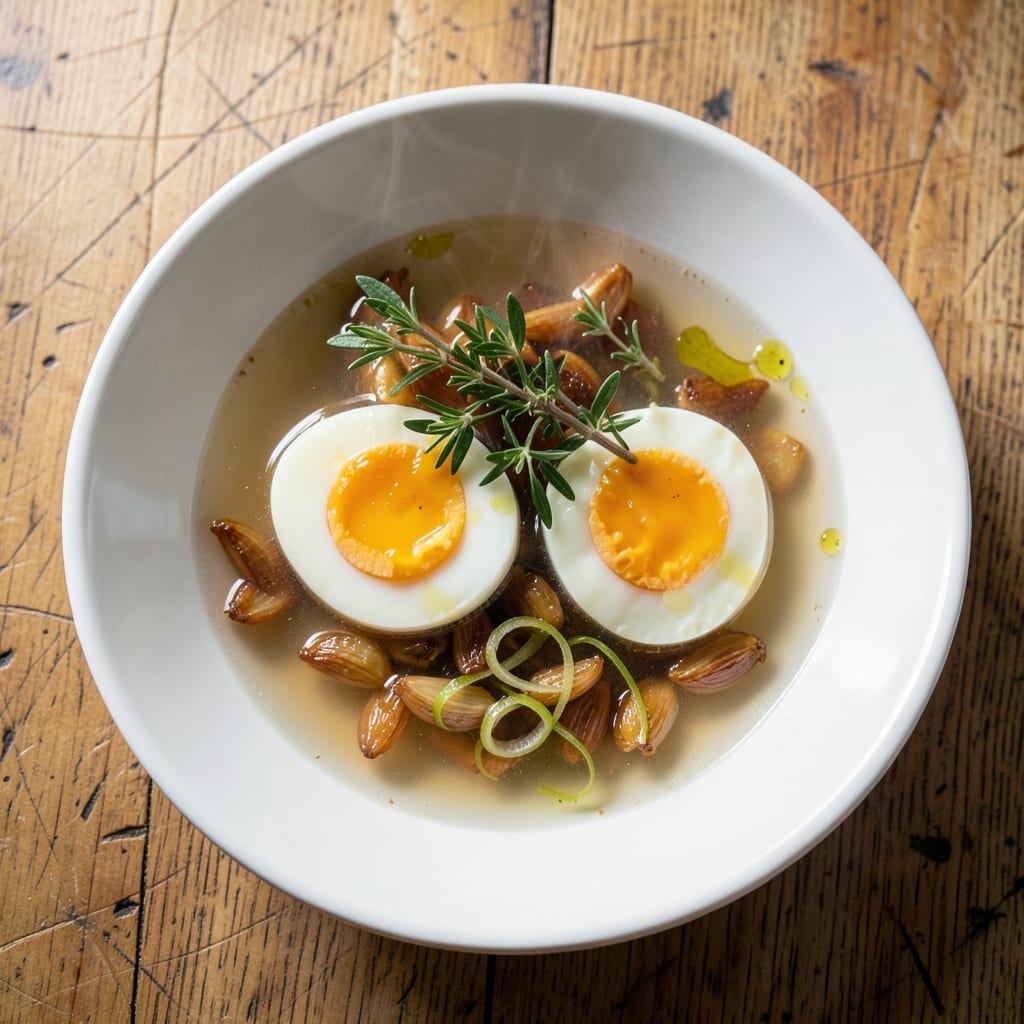
This boiled egg soup transforms simple ingredients into a velvety, comforting dish with layers of savory and silky texture. The secret lies in a fragrant ginger-shallot broth that simmers until aromatic, while perfectly boiled eggs add richness and elegance. What makes this recipe stand out is the delicate balance of flavors—bright from fresh herbs, warm from ginger, and creamy from the emulsified yolks.
The process is straightforward yet refined: start with a light broth infused with shallots and ginger, then gently poach eggs until just set. The key technique involves breaking the eggs directly into the hot broth, creating silky ribbons of yolk that swirl into the soup. This method ensures every spoonful delivers both texture and depth, making it a restaurant-worthy dish you can recreate at home.
What you’ll achieve is a soup that’s both visually stunning and deeply satisfying—golden broth with floating egg halves, their yolks blending into delicate strands. The aroma alone will fill your kitchen with warmth, while the first sip delivers a harmonious blend of savory, spicy, and creamy notes. It’s the kind of meal that feels indulgent yet remains light enough for any occasion.
Perfect for chilly evenings or as a comforting starter, this soup adapts effortlessly to dietary needs—swap the chicken broth for a vegetable or vegan alternative without sacrificing flavor. Garnish with fresh herbs or a drizzle of chili oil for extra flair. Ready in under 30 minutes, it’s a foolproof way to elevate everyday dining.
Ingredients for boiled egg soup
Simple ingredients elevate to restaurant-worthy silkiness with just eggs, broth, and aromatic base.
| Ingredient | Amount | Notes |
|---|---|---|
| Large Eggs 🥚 | 8 whole | Room temperature for even cooking |
| Vegetable Broth 💧 | 4 cups | Low-sodium preferred, homemade or quality brand |
| Shallots 🧅 | 4 whole | Minced, about 0.5 cup total |
| Fresh Ginger 🌿 | 1 ½ tbsp | Finely grated, about 1-inch piece |
| Extra-Virgin Olive Oil 🫒 | 2 tbsp | For gentle cooking and finishing |
| Fresh Thyme Leaves 🌿 | ¼ cup | Stems removed, loosely packed |
| Fresh Parsley Leaves 🌿 | ¼ cup | Chopped, for garnish |
| Garlic Cloves 🧄 | 2 cloves | Minced, about 1 tsp total |
| Salt 🧂 | ½ tsp | Diamond Crystal preferred |
| Black Peppercorns 🌶️ | ¼ tsp | Freshly cracked, coarse grind |
| White Wine Vinegar 🍶 | 1 tbsp | For brightness, optional |
| Cornstarch 🌾 | ½ tsp | For broth thickening |
| Cold Water 💧 | 2 tbsp | For cornstarch slurry |
The broth is the foundation—vegetable broth makes this vegetarian, but don’t skimp on quality. Homemade or low-sodium store-bought works best; avoid anything with added salt. Shallots and ginger should be fresh and vibrant—no shriveled roots here. Trader Joe's or Whole Foods bulk sections have great options. For the eggs, room temperature is key—they’ll cook more evenly. If you’re using frozen eggs, thaw them first. The thyme and parsley? Fresh is best, but dried works in a pinch at one-third the amount.
No fresh ginger? Substitute with 1 tsp ground ginger, but it won’t have the same depth. Out of white wine vinegar? Lemon juice works too, though it adds a slightly different tang. The cornstarch slurry is optional—skip it if you prefer a lighter broth. For extra richness, stir in 1 tbsp of coconut milk at the end. The eggs are non-negotiable though—farm-fresh or high-quality store eggs make all the difference. If you’re worried about overcooking, use older eggs (they’re easier to poach).
Broth keeps for 5 days in the fridge or 3 months frozen—make extra for future soups. The eggs should be used within 2 days for best texture. Store them in their carton in the coldest part of the fridge. For leftovers, reheat gently on the stove—never microwave, or the yolks will break. Garnish with fresh herbs right before serving, as they wilt quickly. The soup tastes even better the next day as flavors meld.
Why You'll Love This Recipe
- No Chopping Needed: The only prep is cracking eggs and slicing shallots—no dicing, no peeling, no fuss. I swear, I’ve made this while scrolling through emails, and it still tasted like I cared.
- Ginger-Garlic Punch: That fresh ginger and shallot base? It’s the kind of flavor that lingers just right—not overpowering, but enough to make you reach for another spoonful. The olive oil ties it all together like a warm hug in a bowl.
- Lunchbox Hero: Between us, this soup reheats beautifully and keeps for days. Pack it in a thermos for work, or let the kids assemble their own bowls—it’s the kind of meal that makes school lunches actually exciting.
- Eggs on a Budget: A dozen eggs and a jar of broth stretch this recipe for ages. Honestly, it’s my go-to when grocery money’s tight, but no one ever guesses it’s “cheap.” (Yes, even on a Tuesday night.)
Step-by-step instructions for silky boiled egg soup
Here's how to build a velvety soup where tender poached eggs melt into fragrant broth.
🍳 Step 1: Build the Ginger-Shallot Base
Heat the 2 tablespoons extra-virgin olive oil in a soup pot over medium-low heat. Add the 4 whole shallots and 1.5 tablespoons fresh ginger, cooking for 5-6 minutes until translucent and just beginning to soften. The shallots should release their sweet aroma without browning.
Add the 2 cloves garlic and cook for 30 seconds until fragrant. Here's the thing—don't let the garlic color. You want flavor, not bitterness. Immediately add the 4 cups vegetable broth and bring to a gentle simmer. The broth should bubble softly, not boil vigorously, to prevent cloudiness.
👨🍳 Step 2: Season and Thicken the Broth
Add the 0.5 teaspoon salt, 0.25 teaspoon black peppercorns, and 1 tablespoon white wine vinegar. Stir well and let the broth simmer gently for 10 minutes. This allows the flavors to meld and the broth to develop depth.
In a small bowl, whisk together the 0.5 teaspoon cornstarch with the 2 tablespoons cold water to create a slurry. Slowly ladle ¼ cup of the hot broth into the slurry while whisking constantly to prevent lumps. Return this mixture to the pot and simmer for 3-4 minutes until the broth thickens slightly—it should coat the back of a spoon without being gluey.
🥘 Step 3: Prepare the Eggs for Poaching
While the broth simmers, fill a medium bowl with 4 cups cold water and add 1 tablespoon white vinegar. This acidic water helps the egg whites coagulate more evenly. Crack each of the 8 large eggs into individual ramekins or small bowls—this prevents accidental mixing of yolks and whites.
Using a small whisk, gently stir each egg to combine the yolk and white without creating too many bubbles. The water should come up to within ½ inch of the top of the ramekins. This setup ensures the eggs poach perfectly without overflowing.
🍳 Step 4: Poach the Eggs Directly in the Soup
Carefully lower each ramekin into the simmering broth. The water should be at a gentle simmer—you should see small bubbles but no rolling boil. Poach the eggs for 3 minutes for runny yolks or 4 minutes for slightly set yolks. Watch closely—they cook faster than you might expect.
Using a slotted spoon, carefully remove each egg and place it in a bowl of ice water for 1 minute to stop the cooking process. This chilling step prevents the eggs from overcooking while you finish the soup. The broth should remain warm but not boiling during this process.
🥘 Step 5: Finish and Serve
Return the poached eggs to the pot with the broth. Stir in the 0.25 cup fresh thyme leaves and 0.25 cup fresh parsley leaves. Let the soup sit off the heat for 2-3 minutes to allow the herbs to infuse their aroma. The eggs should be just warm enough to create those signature silky ribbons when stirred.
Ladle the soup into bowls, ensuring each serving contains at least 2 whole eggs. Garnish with additional parsley leaves and serve immediately. The contrast of warm soup and cool yolk ribbons creates the perfect mouthfeel—creamy yet light, with bright herbal notes cutting through the richness.
Pro Tips For Making Boiled Egg Soup
- USE COLD EGGS: Fresh eggs from the fridge taste better, but they’re harder to peel. I learned this the hard way—drop them into ice water for 10 minutes first. The shock stops the yolk from spreading, and peeling becomes a breeze. (Yes, even if you’re impatient like me.)
- MINCE GINGER FINE: Skip the food processor—fresh ginger loses heat and sharpness when pulsed. Use a sharp knife and mince it into tiny, almost paste-like pieces. This way, it dissolves into the broth instead of sitting in chunks. (Your future self will notice the difference.)
- LOW SIMMER, NOT BOIL: Boiling broth makes eggs rubbery. Keep the heat at a gentle simmer—just enough to see tiny bubbles at the edges. If you’re unsure, dip a spoon in: if it’s too vigorous, lower the flame. Patience here guarantees tender eggs every time.
- SALT THE BROTH LAST: Adding salt early can make eggs toughen up. Wait until the broth is simmering and the eggs are almost done, then season. This keeps the whites silky and the yolks rich. (I know, I know—but trust the process.)
Troubleshooting great boiled egg soup
Broth Too Thin?
If your broth isn't thickening enough, try this trick: whisk 1 tablespoon cornstarch with 2 tablespoons cold water until smooth, then stir in 1 tablespoon at a time while simmering. For extra body, add ¼ cup heavy cream or coconut milk at the end—just don't boil it, or it'll curdle. I've also found that simmering broth uncovered for 5 extra minutes helps reduce it naturally. 💡
Eggs Overcooking?
Poached eggs cook faster than you think! For perfect 3-minute runny yolks, use a gentle simmer (tiny bubbles, not rolling). If your eggs turn out rubbery, they likely cooked too long. Try this: poach them in ice water first for 30 seconds before transferring to the broth—this jumpstarts the cooking process so they don't overcook later. 🥚
Broth Too Salty?
If your broth tastes too salty, don't panic. Add ½ cup cold water and simmer for 5 minutes to dilute the salt. For a more dramatic fix, stir in 1 tablespoon unsalted butter or 2 tablespoons heavy cream—the fat coats your taste buds and balances the saltiness. I've also had success with a splash of lemon juice to brighten the flavors. 🧂
Eggs Breaking?
Use room-temperature eggs and crack them gently into individual ramekins to prevent mixing yolks and whites. For extra stability, add 1 tablespoon white vinegar to the poaching water—it helps the whites set faster. If an egg does break, strain the broth through a fine-mesh sieve to remove any stray whites. 💫
Broth Too Cloudy?
Cloudiness usually means the broth boiled too vigorously. To fix it, strain the broth through a cheesecloth-lined sieve for a crystal-clear result. For a quicker fix, simmer the broth uncovered for 10 minutes—this helps evaporate excess moisture. I also recommend using a low-sodium broth—excess salt can cause cloudiness too. 💧
Herbs Not Infusing?
Add fresh herbs right before serving—they wilt quickly in hot broth. For stronger flavor, gently bruise thyme leaves with your fingers before adding them. If you prefer dried herbs, use ⅓ the amount and add them earlier in the cooking process. For extra aroma, infuse the broth with 1 cinnamon stick for 5 minutes before removing it. 🌿
Nutrition facts
Frequently asked questions
Can I make this soup without poaching eggs?
For a quicker version, boil the eggs for 9-10 minutes in a separate pot until fully cooked, then peel and gently warm them in the finished soup for just 1-2 minutes before serving. This keeps the yolks intact while adding egg flavor to the broth.
How do I adjust this for a vegan version?
Replace the eggs with 4-6 silken tofu cubes (soft, not firm) and use vegan vegetable broth. Simmer the tofu in the broth for 5 minutes instead of poaching, then garnish with sesame seeds or vegan fish sauce for umami depth. The texture will be different but still comforting!
Why does my broth turn cloudy?
Cloudiness usually means the broth boiled too vigorously or has excess starch. To fix it, strain through a cheesecloth-lined sieve or simmer uncovered for 10 extra minutes to evaporate excess moisture. Always use a gentle simmer (small bubbles) when cooking the aromatic base.
Can I make this soup ahead of time?
Prepare the broth and aromatics up to 2 days ahead, then reheat gently before adding fresh eggs. For the eggs, poach them just before serving to maintain their silky texture. Store the broth in an airtight container in the fridge—it tastes even better as flavors meld!
What's the secret to perfect egg ribbons?
The magic happens when you poach eggs at 185°F (85°C) for 3 minutes in a gentle simmer. Stir the warm soup gently but firmly just before serving—this creates the signature yolk ribbons. For extra drama, use room-temperature eggs and add a splash of vinegar to the poaching water.