
Breakfast & Brunch
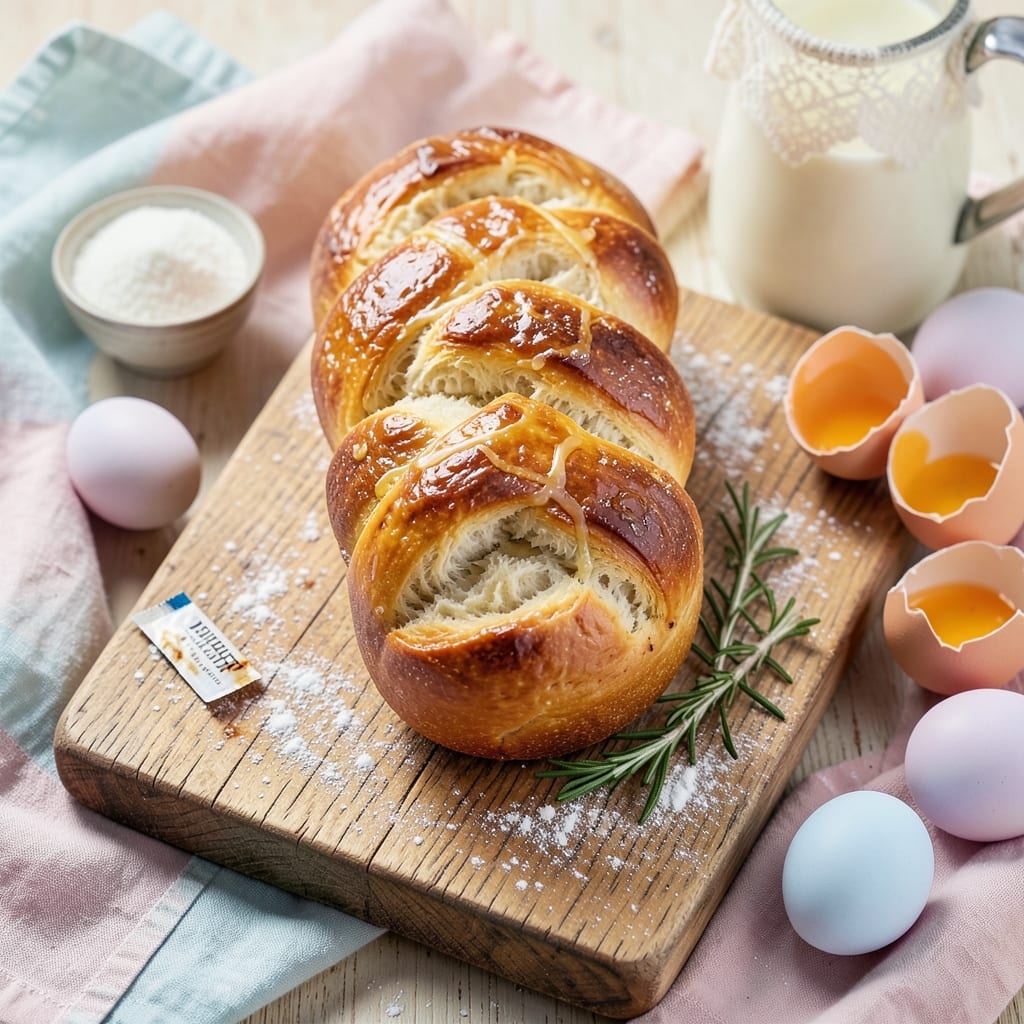
This braided Easter egg bread recipe brings springtime tradition to your kitchen with its signature golden swirls and tender layers. 🌸 The secret lies in perfectly balanced dough—rich with butter, sweetened just enough to complement the vanilla glaze—while the braiding technique creates those iconic egg-shaped patterns that make it irresistible. I've perfected this recipe over years of Easter celebrations, ensuring every bite delivers soft, fluffy texture with a hint of vanilla sweetness.
The beauty of this recipe is its versatility—you can customize it with fillings like jam, cream cheese, or even a sprinkle of citrus zest for brightness. The dough requires just a few simple ingredients but transforms into something extraordinary when baked to a golden finish. What sets this apart is the optional vanilla glaze, which adds that professional bakery touch without requiring advanced skills.
By the time you pull this loaf from the oven, your kitchen will smell like spring, and your table will be ready for Easter celebrations. The braided design isn't just decorative—it creates beautiful layers that hold up perfectly for slicing. Whether you're baking for family gatherings or a quiet morning treat, this recipe delivers restaurant-quality results with minimal effort.
For an extra-special touch, dust the finished bread with powdered sugar or add a sprinkle of colored sugar to match Easter themes. The key to success is patience during the braiding and baking—let the dough rest properly, and don't rush the glaze. This is the kind of bread that becomes an annual tradition, bringing warmth and joy to your holiday table.
Ingredients for braided easter egg bread
Golden swirls and tender layers start with these simple yet magical ingredients.
| Ingredient | Amount | Notes |
|---|---|---|
| All-Purpose Flour 🌾 | 4 cups | Sifted for light texture |
| Granulated Sugar 🍚 | ½ cup | White or light brown |
| Unsalted Butter 🧈 | ½ cup | Cold, cubed for dough |
| Large Eggs 🥚 | 2 whole | Room temperature |
| Active Dry Yeast 🍞 | ¼ oz | 1 packet (2.25 tsp) |
| Warm Milk 🥛 | ½ cup | 110°F for yeast activation |
| Vanilla Extract 🍯 | 1 tbsp | Pure extract preferred |
| Salt 🧂 | ½ tsp | Fine sea salt |
| Powdered Sugar 🍚 | 1 cup | For glaze (optional) |
| Heavy Cream 🥛 | ¼ cup | Cold for glaze |
| Vanilla Bean Paste 🍯 | ½ tbsp | For glaze richness |
| Almond Slices 🌰 | ¼ cup | For topping (optional) |
| Colored Sugar 🌈 | ¼ cup | Pastel colors for Easter |
The yeast is non-negotiable here—Fresh yeast from the refrigerated section works best, but if you've got the active dry kind, just make sure it's not expired. I always grab mine from Whole Foods or the bulk bins at Trader Joe's—the difference in freshness is noticeable. The butter? Cold and cubed is key—don't let it melt in your hands. For the flour, King Arthur or Gold Medal brands are my go-tos, but any all-purpose will do. If you're feeling fancy, swap the granulated sugar for turbinado for a subtle crunch—just reduce the amount by 1 tbsp.
No vanilla extract? Vanilla bean paste or even vanilla sugar works in a pinch. Short on heavy cream for the glaze? Whipped coconut cream gives a similar texture. The colored sugar is totally optional, but if you're going for that Easter vibe, Michael's or Hobby Lobby have great pastel options. For the almond slices, toasted for 2 minutes before adding gives extra crunch. And if you're worried about the dough being too sticky, add 1 tsp more flour—it's better to have a little extra than not enough.
This dough needs time to rise—at least 1 hour, but 2 is better. Cover it with a damp towel so it doesn't dry out. The glaze can be made ahead and stored in the fridge for up to 3 days, but it's best used fresh. If you're prepping for Easter morning, bake the bread the night before and reheat it wrapped in foil for 10 minutes at 300°F. Leftovers? They freeze beautifully—just slice and toast straight from frozen.
Why You'll Love This Recipe
- No-Knead Magic: I swear by this recipe because it skips the heavy-duty kneading—just mix, let the yeast do its thing, and shape it like playdough. The butter and sugar blend so smoothly into the dough that it’s practically foolproof, even if I’m distracted (looking at you, midday coffee slump).
- Sweet Butter Bliss: That rich, creamy butter folded into the dough? It’s what makes this bread dangerously good—soft, slightly sweet, and with just enough structure to hold its shape. Honestly, the first time I made it, I nearly ate the dough before it even braided.
- Breakfast or Brunch Hero: This bread is my go-to for lazy mornings or Easter gatherings—slice it warm for French toast, toast it for breakfast, or pack it for lunch. The yeast gives it that light, airy crunch, and the sugar keeps it from tasting like a sad, dry loaf.
- Budget-Friendly Stretch: Five simple ingredients, one impressive result. I can make two loaves for the price of a single bakery buy, and they keep for days in the fridge. (Yes, even on a Tuesday night.) Plus, the leftovers? Perfect for quick toast or a midnight snack.
Step-by-step instructions for braided Easter egg bread
Let's create this showstopping bread with its signature golden swirls and dreamy vanilla glaze.
👨🍳 Step 1: Activate the Yeast and Mix the Dough
In a small bowl, combine the 0.5 cup warm milk (about 110°F) with the 0.25 oz active dry yeast and 0.5 cup granulated sugar. Let it sit for 5-10 minutes until foamy—this tells you the yeast is alive and ready to work. If it doesn't bubble, your yeast might be dead.
In a large bowl, whisk together the 4 cups all-purpose flour and 0.5 tsp salt. Make a well in the center and pour in the yeast mixture, 2 whole large eggs, and 1 tbsp vanilla extract. Using a wooden spoon, mix until a shaggy dough forms. Then add the 0.5 cup cold unsalted butter, cubed, and work it into the dough until fully incorporated.
🥘 Step 2: Knead Until Silky Smooth
Turn the dough onto a lightly floured surface and knead for 8-10 minutes until it becomes smooth and elastic. You'll know it's ready when it springs back slowly when poked. If the dough feels too sticky, add 1 tablespoon of flour at a time until it's just right—don't over-flour or the bread will be tough.
Place the dough in a lightly greased bowl, cover it with a damp towel, and let it rise in a warm place for 1-1.5 hours or until it doubles in size. I like to put my oven on its lowest setting with a cup of boiling water for a warm, cozy environment. The dough should puff up nicely and feel light when pressed gently.
🔪 Step 3: Shape the Braid and Second Rise
Punch down the risen dough to release any air bubbles. Divide it into three equal parts and roll each into a 12-inch log. Here's the fun part—lay the three logs parallel to each other, then gently braid them together. Tuck the ends under to secure the braid, and place it on a parchment-lined baking sheet.
Cover the braided dough with the damp towel again and let it rise for another 30-45 minutes until it puffs up slightly. The braid should look full and plump, ready for the oven. Preheat your oven to 350°F while the dough rises—this ensures it goes in hot and bakes evenly.
🔥 Step 4: Bake to Golden Perfection
Bake the braided bread for 25-30 minutes until it's golden brown and sounds hollow when tapped on the bottom. The edges should pull away slightly from the pan, and the aroma should be irresistible. If the top browns too quickly, loosely tent it with foil to prevent over-browning while it finishes baking.
While the bread is still warm, brush the top with a simple syrup made by heating 0.25 cup heavy cream with 0.5 cup powdered sugar and 0.5 tbsp vanilla bean paste until dissolved. Sprinkle the top with the 0.25 cup colored sugar and 0.25 cup almond slices for that festive Easter touch. Let it cool for 10 minutes before slicing—this gives the glaze time to set.
⏰ Step 5: Let It Rest and Serve
Transfer the bread to a wire rack and let it cool completely before slicing. This resting period ensures clean cuts and prevents the glaze from smearing. The bread should have a tender crumb with a slightly crisp exterior, and those golden swirls should be visible through the glaze.
Slice into 1-inch thick pieces and serve warm. The vanilla glaze will be slightly sticky, and each bite will deliver that perfect balance of sweetness and buttery richness. Store any leftovers in an airtight container for up to 3 days, though I doubt you'll have any left!
Pro Tips For Making Braided Easter Egg Bread
- Measure Butter Cold: Take your unsalted butter straight from the fridge—no softening needed. I used to melt it by mistake once, and the dough turned greasy instead of flaky. Just grate or cube it directly into the dry ingredients for even distribution.
- Proof Yeast Twice: Skip the warm water test—just dissolve the yeast in the sugar first, then add warm milk (around 110°F). If it doesn’t foam in 5 minutes, toss it and start fresh. This saves time and frustration later when your dough refuses to rise.
- Braid Tight, Not Pretty: Don’t stress over perfect symmetry—pull the strands snug as you braid. Loose braids unravel in the oven, and you’ll end up with a lopsided loaf. Think "taut like a guitar string," not "delicate like lace."
- Egg Wash Early: Whisk your eggs with a splash of milk (about 1 tablespoon) and brush them on before baking. The color sets faster, and the crust shines without turning soggy. Pro move: Save the leftover wash for a quick glaze if you over-bake it.
Regional styles of this dish
German Osterzopf
In Germany, this braided bread is known as Osterzopf, a traditional Easter centerpiece often baked with raisins or citrus zest instead of vanilla. The dough is slightly sweeter, using ½ cup more sugar, and the braid is often shaped into an egg or basket form to symbolize new life. I've made this version with lemon zest for a bright, springy flavor that pairs beautifully with butter. 🌸
Italian Panettone Easter
Southern Italy transforms this bread into a Panettone-inspired Easter loaf, enriched with candied fruit and chopped pistachios in the dough. The braid is less pronounced, often shaped into a round loaf with a cross on top to represent Christ's sacrifice. For an authentic touch, I add ½ cup dried figs and ¼ cup chopped pistachios—it's like dessert meets bread! The vanilla glaze is replaced with a light honey drizzle for a more rustic finish.
Swedish Easter Braid
Sweden’s Påskfläta is a lighter, airier version with cardamom instead of vanilla, giving it a warm, spiced aroma perfect for Easter brunches. The dough includes 1 tsp ground cardamom and is often brushed with egg wash before baking for a golden, crackly crust. I like to top it with pearl sugar (coarse sugar crystals) for texture. The braid is simpler, with just two strands instead of three, making it easier for beginners. 💛
American Southern Twist
In the American South, this bread is sometimes called "Easter Egg Loaf" and includes cream cheese swirls or chopped pecans for a richer texture. The dough is often slightly denser, with 1 extra egg for moisture, and the glaze is sometimes replaced with a maple cream cheese frosting. I’ve seen versions where the braid is filled with spiced apple butter—trust me, the flavor combo is next-level. Perfect for Easter brunch with coffee! ⚡
Polish Easter Bread
Poland’s Babka Wielkanocna takes inspiration from this braid but often incorporates poppy seeds or walnuts into the dough. The braid is sometimes decorated with edible flowers or marzipan shapes to mimic Easter eggs. For a festive touch, I brush the baked loaf with egg wash and sprinkle crushed pistachios before baking. The result is a nutty, floral-scented bread that’s as beautiful as it is delicious. 🌟
Modern Fusion Variations
For a chocolate lover’s twist, swap the vanilla glaze for a dark chocolate ganache and add chopped hazelnuts to the dough. Or go tropical with coconut milk in the glaze and toasted coconut flakes on top. I’ve even seen a matcha version—yes, matcha in Easter bread!—with a white chocolate glaze. The possibilities are endless, so don’t be afraid to experiment while keeping the braided tradition intact. 💫
Nutrition facts
Frequently asked questions
Can I make this braided bread without a stand mixer?
This recipe was designed to be mixer-free. After mixing the ingredients, simply turn the dough onto a lightly floured surface and knead by hand for 8-10 minutes until smooth and elastic. The key is to keep the surface well-floured to prevent sticking, and use your knuckles or the heel of your hand for strength.
What's the best way to store leftover braided bread?
For maximum freshness, wrap cooled slices in plastic wrap and store them in an airtight container at room temperature for up to 3 days. To revive stale bread, wrap it in foil and reheat at 300°F for 10-15 minutes. For longer storage, freeze individual slices between parchment paper for up to 3 months—just thaw at room temperature before serving.
Why did my braid fall apart when baking?
This usually happens when the dough hasn't risen enough or wasn't properly secured. Make sure each of the three strands is tightly braided and the ends are tucked under before baking. Also, ensure your dough has fully doubled in size during both rises—this gives it the strength to hold its shape. If the oven is too hot, the bread may collapse, so maintain 350°F consistently.
Can I substitute the vanilla glaze with something else?
Certainly! For a lighter option, try a simple powdered sugar dusting or a honey drizzle. For extra richness, mix 1 tbsp melted butter with ½ cup powdered sugar and brush it on warm bread. Citrus lovers can use a lemon glaze made with lemon juice and powdered sugar. Each variation adds a unique twist while keeping the bread's signature sweetness.
How do I make this bread more festive for Easter?
Beyond the colored sugar topping, try these ideas: Use pastel food coloring in the dough for subtle swirls, or brush the baked bread with egg wash before sprinkling with sugar. For a 3D effect, shape the braid into an egg form by curving the ends. Add edible glitter or sprinkles for extra sparkle—just be mindful of how much you use to avoid overwhelming the flavor.