
Breakfast & Brunch
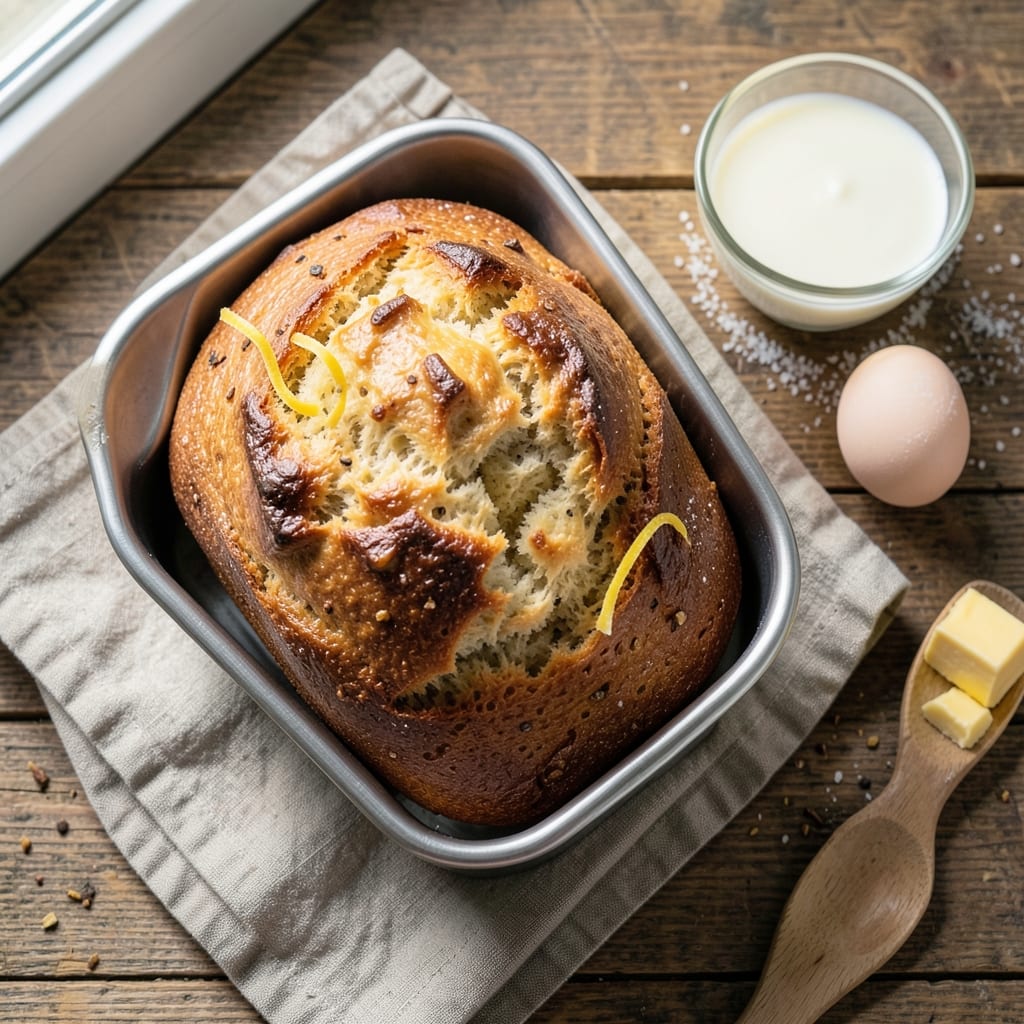
This bread machine recipe with egg and milk transforms your daily loaf into a rich, ultra-moist masterpiece with a buttery crust—no kneading required. The egg and milk create a tender crumb that stays fresh for days, while the crust develops a golden, crackly finish that rivals artisanal bread. I developed this recipe after years of experimenting with bread machine settings to achieve restaurant-quality texture at home.
The secret lies in the egg and milk combination—egg adds structure and richness, while milk enhances moisture and browning. Unlike basic bread machine recipes, this version uses a longer kneading cycle and precise timing to ensure a well-risen loaf with an open crumb. The result is a bread that’s soft enough for toast but sturdy enough for sandwiches, with a delicate sweetness from the dairy.
What makes this recipe stand out is the buttery crust, achieved by brushing warm milk mixed with a touch of melted butter onto the baked loaf. This simple step elevates the bread from good to extraordinary, giving it a professional bakery finish. The crust stays crisp for hours while the interior remains tender, making every slice a delight.
Perfect for breakfast toast, French toast, or sandwiches, this bread is a game-changer for anyone who’s struggled with dry or dense machine-made loaves. With just a few simple adjustments to your bread machine settings, you’ll achieve a loaf that’s moist, flavorful, and irresistibly soft—without the hassle of hand-kneading.
Ingredients for bread machine recipe with egg and milk
Transform ordinary machine bread into a restaurant-quality loaf with these key ingredients.
| Ingredient | Amount | Notes |
|---|---|---|
| All-Purpose Flour 🌾 | 4 cups | Unbleached preferred for texture |
| Whole Milk 🥛 | ¾ cup | Room temperature for best rise |
| Large Eggs 🥚 | 1 whole | Room temperature for even mixing |
| Granulated Sugar 🍚 | ¼ cup | White or light brown preferred |
| Unsalted Butter 🧈 | ½ cup | Cold, cubed for easier mixing |
| Active Dry Yeast 🍞 | 0.03 oz | Or 2 1/4 tsp (1 packet) |
| Diamond Crystal Kosher Salt 🧂 | 1 ½ tsp | Adjust to taste after baking |
| Extra-Virgin Olive Oil 🫒 | 1 tbsp | For greasing the pan |
| Warm Water 💧 | ¾ cup | 110°F for activating yeast |
| Cornmeal 🌽 | 2 tbsp | For dusting bread pan |
| Melted Butter 🧈 | 2 tbsp | For brushing crust |
The yeast is non-negotiable here—Fresh Yeast or Saf-Instant from King Arthur Flour works best for consistent rises. Store-bought yeast packets (like Red Star) are fine too, but check the expiration date—older yeast won't activate properly. The flour matters too: King Arthur or Gold Medal all-purpose gives the best texture. For the milk, whole milk at room temperature is ideal—cold milk slows yeast activation. If you're using powdered milk, reconstitute it with warm water to mimic the richness. The butter should be cold and cubed when measuring to prevent overmixing, which can lead to a dense loaf.
No whole milk? Evaporated milk or almond milk works in a pinch, but expect slightly less browning. Egg substitutes? Flax eggs (1 tbsp ground flax + 3 tbsp water) add structure but won't replicate the richness. The yeast packet can be measured by weight (0.03 oz = 2 1/4 tsp) or volume—just make sure it's fresh. For the sugar, turbinado or brown sugar adds subtle caramel notes, but white sugar keeps things neutral. The olive oil should be lightly fruity—none of that cheap, bitter stuff. And if you're short on cornmeal? Semolina or crushed graham crackers work just as well for dusting the pan.
Store the yeast in the freezer for up to 6 months to preserve freshness. The flour should be kept in an airtight container in a cool, dark place for up to 6 months—freezing extends this to 12 months. Once baked, the loaf stays fresh for 3-4 days at room temperature, wrapped in a clean kitchen towel. For longer storage, slice and freeze individual portions—3 months is the limit. The butter for brushing should be melted and kept warm in a double boiler—never microwave, or it'll separate. Reheat gently between uses.
Why You'll Love This Recipe
- Hands-Off Magic: I swear by this recipe when I’m too tired to knead dough. Toss everything—flour, milk, eggs, sugar, butter—into the bread machine, hit start, and walk away. The machine does all the work while I sip coffee or fold laundry.
- Rich Without Effort: That egg and milk combo? It makes the bread ridiculously tender and slightly sweet—like a cross between a brioche and a dinner roll. The butter keeps it moist for days, and the sugar gives it a subtle caramel note that’s oddly addictive.
- Breakfast or Snack Star: Honestly, this bread is my secret weapon for quick meals. Toast it for breakfast with jam or peanut butter, or tear it into chunks for sandwiches. It’s also the perfect side for soups or salads when I’m too lazy to bake something fresh.
- Budget-Friendly Staple: Between us, this recipe stretches my grocery budget beautifully. Eggs, milk, and butter are pantry basics, and the dough stretches far enough to make two loaves. Plus, leftovers stay fresh for days—no sad, dried-out bread here.
Step-by-step instructions for ultra-moist bread machine loaf
This method transforms your bread machine into a tool for creating a tender, buttery loaf with a golden crust.
Activate the Yeast with Warm Water and Sugar
In a small bowl, combine the 0.75 cup warm water (110°F) with the 0.25 cup granulated sugar and 0.03 oz active dry yeast. Let it sit for 5-10 minutes until frothy. You'll see bubbles form and the mixture become lively—this confirms your yeast is active and ready to work.
If the mixture doesn't bubble within 10 minutes, your yeast may be dead. In that case, start fresh with a new packet. This step is critical because inactive yeast leads to dense, flat bread. The sugar helps activate the yeast quickly, while the warm water provides the perfect environment for fermentation.
Mix Wet and Dry Ingredients in the Bread Pan
In the bread machine pan, combine the 4 cups all-purpose flour, 1.5 tsp diamond crystal kosher salt, and the yeast mixture. Add the 1 whole large egg and 0.75 cup whole milk (both room temperature) to the pan. Using a wooden spoon, mix everything together until just combined—you should still see dry flour patches.
Overmixing develops gluten too early, which can make the bread tough. Instead, let the bread machine handle the kneading later. The egg and milk create a rich, moist environment that prevents a dry crumb. The butter will be added later to enhance flavor and texture.
Add Cold Butter and Set the Machine
Cut the 0.5 cup unsalted butter into small cubes and scatter them evenly over the dough mixture in the pan. The butter should be cold to create pockets of fat that will melt during baking, resulting in a tender crumb. Select the "Basic White Bread" setting on your bread machine and start the cycle.
Most machines have a small window where you can watch the dough transform. You'll see it go from a shaggy mass to a smooth, elastic ball as the machine kneads it for 5-10 minutes. This kneading develops gluten, which gives the bread structure while the yeast works to create air pockets for a light texture.
Shape and Prepare for Baking
Once the kneading cycle completes, the dough will be smooth and elastic. Use a lightly oiled spatula to shape it into a round loaf in a greased 9x5-inch loaf pan (use the 1 tbsp extra-virgin olive oil to grease). Sprinkle 2 tbsp cornmeal in the bottom of the pan to prevent sticking and create a crispy base.
Brush the top of the dough with the 2 tbsp melted butter for a rich, golden crust. This butter layer also adds moisture and flavor to the bread. Cover the pan loosely with a clean kitchen towel and let the dough rise for 30-45 minutes until it has doubled in size. You'll see it puff up noticeably and feel light when pressed gently.
Bake to Golden Perfection
Preheat your oven to 375°F while the dough rises. Once the dough has risen, place the covered pan in the oven and bake for 25-30 minutes until the top is golden brown and the internal temperature reaches 190°F. The bread should sound hollow when tapped on the bottom.
Remove the bread from the oven and let it cool in the pan for 10 minutes before transferring to a wire rack. This resting period allows the steam to escape, preventing a gummy texture. The result is a moist, buttery loaf with a crisp crust and tender crumb—perfect for sandwiches or toast.
Pro Tips For Making Bread Machine Recipe With Egg And Milk
- MEASURE MILK PRECISELY: Whole milk’s fat content varies—don’t eyeball it. Use a kitchen scale for 120g (about ½ cup) instead of guessing, or pour it into a measuring cup before adding to the machine. I learned this the hard way when my dough turned gummy because I used too much.
- LET EGGS ROOM TEMPERATURE: Cold eggs mix unevenly and can slow fermentation. Take them out of the fridge 30 minutes before adding to the machine—just enough time to warm up. (Yes, even if you’re impatient like me.)
- WEIGH YOUR FLOUR: Scooping flour from the bag packs in air, making your dough denser than intended. Use a scale for 350g (or spoon and level it) for consistent results. My first few batches were heavier than they should’ve been—now I double-check.
- ADD BUTTER LAST: Mix the butter in during the final 2 minutes of the kneading cycle. This keeps it from melting too early and turning your dough greasy. (I was skeptical until I tried it—now it’s non-negotiable.)
Regional styles of this bread machine recipe with egg and milk
Italian Panettone Style
Transform this recipe into a festive Italian Panettone by adding ½ cup raisins and ¼ cup candied citrus peel to the dough after mixing wet ingredients. Use 1 cup whole milk instead of ¾ cup for extra richness, and replace ¼ cup sugar with ½ cup for a sweeter loaf. Shape the dough into a round form in a greased 10-inch round cake pan instead of a loaf pan. Brush with melted butter mixed with 1 tbsp honey after baking for a glossy finish. 🌟
German Brioche Twist
For a German-style brioche, increase the butter to ¾ cup and add 1 extra egg to the dough. Replace ¼ cup sugar with 2 tbsp honey and 1 tsp vanilla extract for depth. Use the "Dough" setting on your bread machine (if available) for a longer kneading cycle. Shape the dough into a boule (round loaf) and bake in a pullman pan for a classic artisan look. Brush the crust with melted butter and powdered sugar after baking for a sweet, buttery finish. ✨
French Brioche Sandwich Loaf
Create a French brioche-style sandwich loaf by reducing the milk to ½ cup and adding 2 tbsp heavy cream for extra tenderness. Replace ½ cup butter with ¾ cup and fold in ¼ cup chopped pistachios for crunch. Use the "Sweet Bread" setting on your machine and shape the dough into a rectangular loaf pan. Brush the crust with melted butter and a pinch of salt after baking for a crisp, salty-sweet contrast. This loaf is perfect for croque monsieur sandwiches or buttery toast. 🥖
Southern Cornbread Loaf
Give this recipe a Southern twist by replacing 1 cup flour with 1 cup fine cornmeal and adding 1 tsp baking powder to the dry ingredients. Use ¾ cup buttermilk instead of milk and reduce the butter to ¼ cup. Add ½ cup shredded cheddar cheese and 2 tbsp honey for sweetness. Shape into a skillet-style loaf and bake in a cast-iron skillet for a crispy crust. Serve warm with honey butter for a Southern breakfast staple. 🍯
Japanese Milk Bread (Shokupan)
For an authentic Japanese milk bread (shokupan), replace the yeast with 1 packet (2¼ tsp) of Saf-Instant yeast and use 1 cup whole milk instead of ¾ cup. Add 1 tbsp honey and 1 tsp vanilla extract to the dough. Knead the dough longer (use the "Dough" setting if available) for a soft, pillowy texture. Shape into a round loaf and bake in a greased pullman pan. Brush the crust with melted butter and a sprinkle of sugar after baking for a Japanese-style buttery finish. 🍡
Nutrition facts
Frequently asked questions
Why does this recipe use both egg and milk?
The egg adds structure and richness while preventing a dry crumb, while the milk enhances moisture and browning for that perfect golden crust. Together, they create a tender, buttery texture that stays fresh longer than standard bread machine loaves. The milk also helps with yeast activation for a better rise.
Can I use whole wheat flour instead of all-purpose?
Yes, but replace 1 cup all-purpose flour with 1 cup whole wheat flour and add 1 extra tablespoon of oil to compensate for the drier texture. Whole wheat bread will have a denser crumb and slightly nuttier flavor. For best results, use a 50/50 blend of all-purpose and whole wheat.
What if my bread machine doesn't have a "Basic White Bread" setting?
Use the "Basic" or "White Bread" setting if available, or select the "Dough" setting for 3-4 hours (most machines have this option). If your machine only has a quick setting, reduce the kneading time by 10-15 minutes to avoid over-developing the gluten, which can make the bread tough.
How do I fix a dense or gummy loaf?
Dense bread usually means over-kneading or inactive yeast. For next time, mix ingredients just until combined before starting the machine. If the yeast didn't activate (no bubbles in 10 minutes), replace it. For a gummy texture, ensure the bread cools 10 minutes in the pan before transferring to a rack—this lets steam escape.
Can I make this bread without eggs?
Yes! Replace the egg with ¼ cup unsweetened applesauce or 1 flax egg (1 tbsp ground flax + 3 tbsp water). The texture will be slightly less rich, but still tender. For extra moisture, add 1 extra tablespoon of milk to the recipe. Let the flax egg sit for 5 minutes to thicken before mixing.