
Breakfast & Brunch
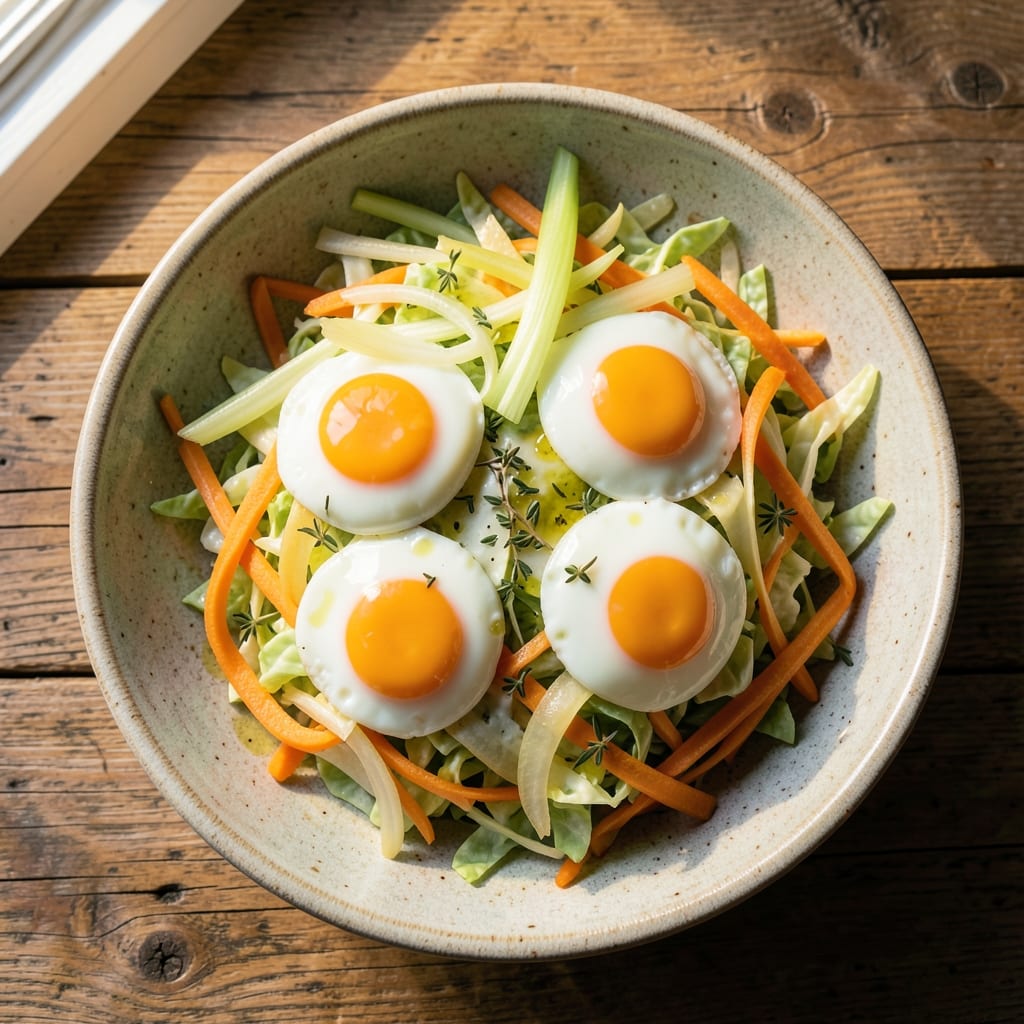
This cabbage, carrot, and onion egg recipe delivers crispy, savory bites that transform simple vegetables into a restaurant-worthy breakfast. The secret lies in perfectly sautéed vegetables paired with tender eggs, finished with crispy celery tops for an unexpected crunch. I developed this dish after realizing how often fresh vegetables get overlooked in morning meals—until now.
The technique is straightforward but yields restaurant-quality results: finely chopped cabbage, carrot, and onion are sautéed until tender-crisp, then topped with poached eggs that create a rich, velvety center. The celery topping adds a satisfying crunch that balances the dish perfectly. This recipe is ideal for brunch or a hearty breakfast that feels special without requiring advanced skills.
By the time you're done, you'll have a plate of golden, crispy vegetable bites topped with perfectly poached eggs—each forkful delivers a mix of textures and flavors. The cabbage adds a slight tang, the carrots bring natural sweetness, and the onions deepen the savory profile. The crispy celery tops elevate it from ordinary to extraordinary.
Serve these bites with crusty toast, over rice, or alongside a fresh salad for a complete meal. The dish is naturally vegetarian but easily adaptable—add smoked salmon or crumbled bacon for extra protein. Here's how to make it perfectly every time.
Ingredients for cabbage carrot onion egg
Transform simple vegetables into restaurant-quality bites with crispy celery-topped savory egg combinations.
| Ingredient | Amount | Notes |
|---|---|---|
| Green Cabbage 🥬 | 4 cups | Finely shredded, core removed |
| Carrots 🥕 | 2 medium | Julienned into matchsticks |
| Yellow Onion 🧅 | 1 medium | Thinly sliced, white and light green parts |
| Large Eggs 🥚 | 4 whole | Freshly poached for velvety texture |
| Celery Stalks 🥬 | 3 whole | Thinly sliced leaves and tender tops |
| Extra-Virgin Olive Oil 🫒 | ½ cup | High-quality, fruity variety |
| Unsalted Butter 🧈 | 2 tbsp | Cold, cubed for even cooking |
| Diamond Crystal Kosher Salt 🧂 | 1 ½ tsp | For seasoning and poaching |
| Freshly Ground Black Pepper 🌶️ | ½ tsp | Cracked peppercorns preferred |
| Fresh Thyme Leaves 🌿 | 1 tsp | Or 0.25 tsp dried thyme |
| White Vinegar 💧 | 1 tbsp | For egg poaching liquid |
| Crusty Bread 🍞 | 8 slices | For serving, optional |
The vegetables form the foundation of this dish, so freshness and even cutting are critical. For the cabbage, remove the core and shred into thin, even strips—a mandoline or sharp knife makes this easier. Carrots should be julienned into matchsticks about 1/8-inch thick for consistent cooking. Yellow onions should be sliced thinly, with the white and light green parts only. Trader Joe's or local farmers markets often carry pre-washed vegetables, which saves time. If using store-bought pre-shredded cabbage, rinse it well to remove excess moisture. Celery leaves and tender tops are often overlooked but provide that signature crunch—don't skip them.
No mandoline? A sharp chef's knife and steady hand work just as well. Substitute red onion for yellow if that's what's available—it adds a slightly sharper flavor. For the eggs, room-temperature eggs poach more evenly. If you're short on thyme, dried oregano at half the amount works in a pinch. The vinegar for poaching can be substituted with lemon juice, though white vinegar has a cleaner acidity. For extra richness, add a splash of high-quality vegetable broth to the poaching liquid. The butter should be cold and cubed to prevent the vegetables from steaming rather than sautéing.
Freshly cut vegetables keep best in airtight containers in the fridge for 3-4 days. The celery leaves can be stored separately in a damp paper towel to maintain crispness. Poached eggs should be used immediately or stored in a water bath for up to 2 days—they don't reheat well. The sautéed vegetable mixture reheats beautifully in a dry skillet for 2-3 minutes over medium heat. For meal prep, store components separately and assemble just before serving to maintain texture. This dish also freezes well for up to 1 month—freeze the sautéed vegetables without the celery topping, then add fresh celery when reheating.
Why You'll Love This Recipe
- Here’s what sold me: this keeps perfectly for days, whether packed in containers or reheated for breakfast. The eggs stay firm, the veggies hold their texture, and honestly? My kids actually eat their veggies when they’re hidden in this. (Yes, even on a Tuesday night.)
- One-Pan Magic: I swear by this recipe when I’m too tired to wash dishes—just toss chopped cabbage, carrots, onion, and celery into a pan, fry until tender, make little wells, crack in eggs, and cover until the yolks set. Boom. Done. The celery adds this subtle crunch that disappears just enough to make every bite feel like a surprise.
- Sweet-Savory Balance: Between us, the combo of caramelized onions and crisp-tender cabbage with the egg’s creamy yolk is ridiculously good. The carrots add natural sweetness that cuts through the cabbage’s bite, and that onion? It’s the glue holding everything together—like a hug in a skillet.
- Lunchbox Hero: Here’s what sold me: this keeps perfectly for days, whether packed in containers or reheated for breakfast. The eggs stay firm, the veggies hold their texture, and honestly? My kids actually eat their veggies when they’re hidden in this. (Yes, even on a Tuesday night.)
Step-by-step instructions for crispy celery-topped savory bites
Transform fresh vegetables into golden, crispy bites with velvety poached eggs—precision matters here.
Prepare the Vegetable Base
In a large mixing bowl, combine the 4 cups of finely shredded green cabbage, 2 medium julienned carrots, and 1 medium thinly sliced yellow onion. Add 1 teaspoon of fresh thyme leaves, 1.5 teaspoons of Diamond Crystal kosher salt, and 0.5 teaspoon of freshly ground black pepper. Toss gently with your hands until every vegetable is evenly coated in seasoning.
This step ensures even distribution of flavor and prevents any one ingredient from overpowering the others. The thyme adds an earthy depth that complements the bright cabbage and sweet carrots. Let the mixture sit for 5 minutes while you prepare the next components—this allows the salt to begin drawing out moisture, which will create a better sear later.
Poach the Eggs for Silky Texture
Bring a small saucepan of water to a gentle simmer, then reduce to the lowest possible heat where bubbles just break the surface. Add 1 tablespoon of white vinegar and stir to distribute. Crack each of the 4 whole large eggs into a small bowl, then carefully slide them into the simmering water using a slotted spoon. Poach for exactly 3 minutes for runny yolks or 4 minutes for firmer yolks.
The vinegar helps the eggs hold their shape while poaching, and the gentle simmer ensures they remain velvety rather than rubbery. Remove each egg with a slotted spoon and drain on a paper towel-lined plate. Keep them warm while you prepare the vegetables—overcooking here will ruin the delicate texture we're aiming for.
Create the Crispy Topping Mixture
In a separate bowl, combine the thinly sliced leaves and tender tops from 3 whole celery stalks with 0.5 cup of extra-virgin olive oil. Add the 2 tablespoons of cold cubed unsalted butter and toss until the butter melts slightly and everything is thoroughly coated. Sprinkle with an additional pinch of salt and pepper if desired.
This celery mixture is the secret to achieving that coveted crispy texture on top. The olive oil and butter create a rich, flavorful base that will caramelize beautifully when baked. The celery leaves add a delicate crunch that contrasts perfectly with the softer vegetables below—don't skip this step if you want that restaurant-quality finish.
Assemble and Bake for Crispy Perfection
Preheat your oven to 375°F. In a 9-inch oven-safe skillet, combine the seasoned vegetable mixture and press down gently to create an even layer. Spoon the celery topping mixture evenly over the vegetables, spreading it to the edges. Arrange the 4 poached eggs on top, spacing them evenly across the skillet.
Bake for 18-22 minutes until the edges are golden brown and the celery topping is crispy. The vegetables should be tender but still hold their shape—this balance is crucial. If the top isn't browning enough, broil for 1-2 minutes at the end, watching closely to prevent burning. The skillet should be hot enough that the vegetables release easily when you run a knife around the edges.
Serve Immediately with Crusty Bread
Transfer the skillet to a wire rack and let rest for 2 minutes before serving. This resting period allows the juices to redistribute, ensuring each bite is moist and flavorful. Divide the crispy vegetable bites among plates, placing 2 eggs per serving. Serve immediately with the 8 slices of crusty bread on the side for dipping.
The contrast between the crispy celery topping, tender vegetables, and silky eggs creates a textural experience that's truly special. Serve while hot to enjoy the perfect balance of temperatures and textures—each component should be at its peak when brought together on your plate.
Pro Tips For Making Cabbage Carrot Onion Egg
- CUT CABBAGE THINLY: I learned this the hard way—thick slices turn mushy while eggs cook. Use a sharp knife and slice cabbage paper-thin, almost translucent. The same goes for carrots: julienne them into matchsticks so they soften evenly without disappearing into the dish.
- SWEAT ONIONS LOW AND SLOW: High heat caramelizes onions too fast, burning them before they release sweetness. Keep the heat at a simmer and let them cook for 8-10 minutes, stirring occasionally, until they’re translucent and just starting to turn golden. This builds the flavor base for everything else.
- DON’T OVERSTIR THE EGGS: Once you crack those eggs in, resist the urge to poke and prod. Overmixing makes scrambled eggs rubbery. Let them sit undisturbed for 30 seconds, then gently fold with a spatula—just enough to combine, not scramble. The eggs stay creamy, not tough.
- SAVE TIME WITH FROZEN VEGETABLES: Yes, even if you’re skeptical. Frozen chopped cabbage and carrots (no ice crystals!) chop and cook just as well as fresh, and they’re pre-shredded. Just thaw them first—toss in a colander under warm water for 2 minutes—and they’re ready to go. Your knife will thank you.
Essential equipment for perfect results
Essential Skillet
You'll need a 9-inch oven-safe skillet with sloped sides—I recommend a stainless steel or cast iron skillet like the All-Clad Stainless or Lodge Cast Iron. These materials distribute heat evenly and handle the transition from stovetop to oven seamlessly. The sloped sides make it easier to arrange the vegetables and eggs without spillage. If you don't have an oven-safe skillet, use a regular skillet and transfer the assembled dish to a baking sheet for the final bake. 🔥
Precision Tools
A sharp chef's knife and cutting board are non-negotiable for this recipe. For even julienne strips, consider a mandoline slicer like the Benedict mandoline—it makes quick work of the carrots and onions. A slotted spoon is essential for poaching eggs without breaking them, and a fine-mesh strainer helps drain the poached eggs thoroughly. I also keep a small mixing bowl nearby for cracking eggs before poaching to prevent shells from slipping in.
Poaching Setup
Your poaching setup requires a small saucepan (2-3 quarts) with a lid and a thermometer to monitor water temperature. Maintaining a gentle simmer (around 180-190°F) is crucial—too vigorous a boil will scramble the eggs. I use a thermometer like the Thermoworks Thermapen to ensure accuracy. A small bowl for cracking eggs and a paper towel-lined plate for draining are also essential. Don't skip the vinegar—it helps the eggs hold their shape beautifully. 💫
Oven Prep
Ensure your oven has even heat distribution—a convection oven works best for crispy results. If your oven runs hot, reduce the temperature to 350°F to prevent burning. A wire rack is perfect for resting the skillet after baking, allowing air to circulate underneath. For extra crispiness, I sometimes place the skillet on the middle rack and use the broil function for the final minute. A spatula with a long handle helps with assembly and transfer without burning yourself.
Optional Extras
For garnishing, keep fresh parsley or chives nearby to add a pop of color. A small bowl of extra olive oil and lemon wedges on the table lets guests customize their bites. If you're serving a crowd, a large serving platter helps with presentation. I also recommend having extra crusty bread on hand—it's the perfect vehicle for soaking up any leftover egg and vegetable juices. 🥖
Nutrition facts
Frequently asked questions
Can I substitute any of the vegetables in this recipe?
For a milder flavor, swap the cabbage for green cabbage or Napa cabbage. Carrots can be replaced with zucchini or bell peppers for a different texture. Red onion works too, but it adds a sharper bite. Just adjust the cooking time if using softer vegetables like zucchini—they'll cook faster than cabbage.
How do I make this recipe without an oven?
No oven? No problem! Sauté the seasoned vegetables in a skillet over medium-high heat for 8-10 minutes until tender. Top with the celery-oil mixture and cook for another 2-3 minutes until crispy. Place the poached eggs on top and cover the skillet for 1-2 minutes to warm through. The texture will be slightly different but still delicious!
Can I prepare this ahead of time?
Yes, but with some adjustments. Sauté the vegetables and store them in an airtight container for up to 3 days. Poach the eggs fresh and assemble just before serving. For the celery topping, mix the oil and butter but don't add the celery until reheating—it loses crispness when stored. Reheat the vegetables in a skillet for 3-4 minutes, then add fresh celery and eggs.
What's the best way to make the celery topping extra crispy?
For maximum crispiness, use a mix of olive oil and butter (as in the recipe) and bake at 375°F for the full 18-22 minutes. For even more crunch, broil for 1-2 minutes at the end. Another trick: Toss the celery in 1 teaspoon cornstarch before mixing with the oil—it adds a light, crispy coating.
How can I make this dish more filling for a main meal?
Add cooked quinoa or rice under the vegetable layer before baking. For extra protein, top with crumbled feta cheese or toasted nuts like walnuts. Serve with a side of hummus or avocado slices for healthy fats. This turns it into a hearty vegetarian main dish perfect for lunch or dinner!