
Breakfast & Brunch
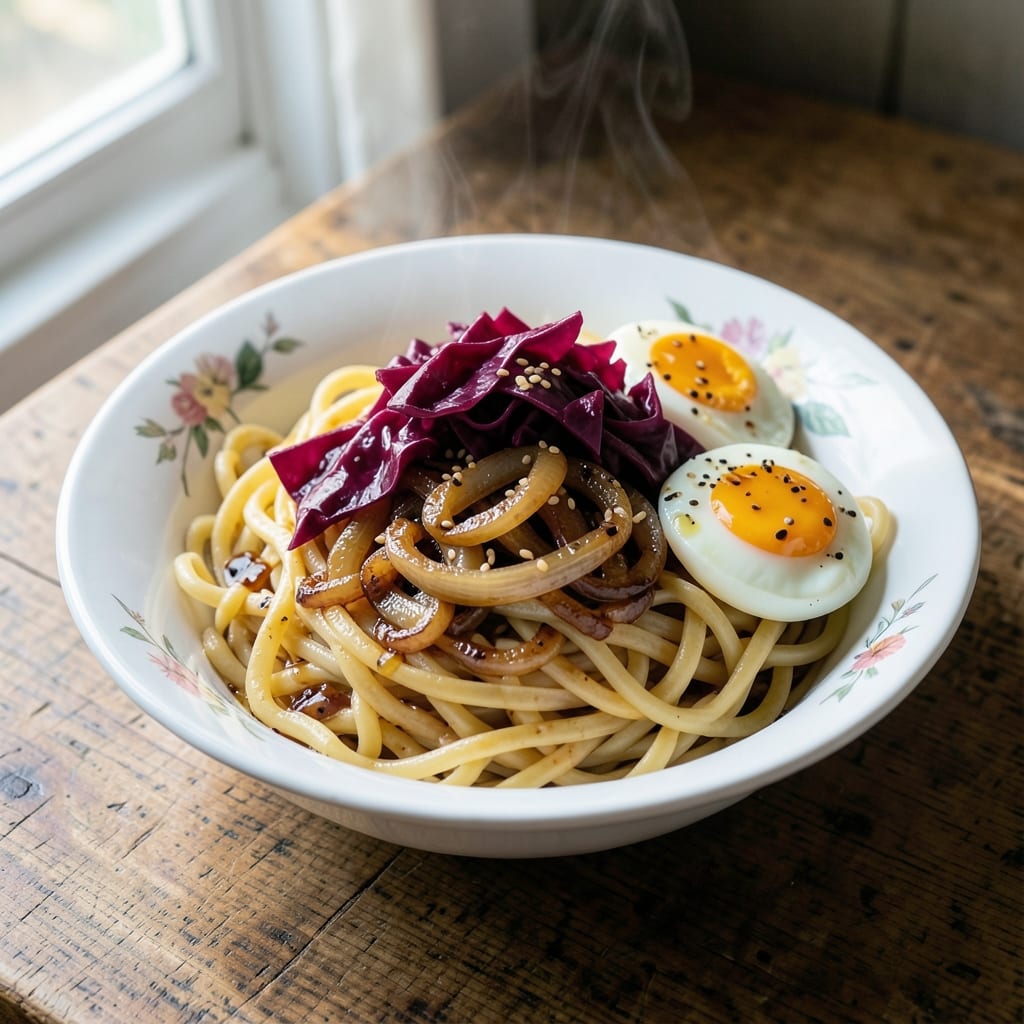
This cabbage, onion, and egg noodle recipe delivers a savory, comforting stir-fry that balances crisp-tender vegetables with silky egg ribbons in every bite. The secret lies in quick, high-heat cooking—wok-frying the cabbage and onions until caramelized while keeping the noodles al dente. I first tried this after discovering how a simple stir-fry could transform basic ingredients into a restaurant-worthy dish.
The dish starts with a simple yet flavorful base: thinly sliced cabbage and onions wilted until sweet and golden, then tossed with egg noodles that absorb the aromatic oils. The egg ribbons, cooked separately in a hot pan, add a delicate, custardy texture that contrasts perfectly with the crisp vegetables. This method ensures every component stays distinct yet harmonious on the plate.
What makes this recipe stand out is its versatility—it works as a hearty breakfast, light lunch, or even a quick dinner. The cabbage softens just enough to become tender-crisp, while the onions caramelize into sweet pockets of flavor. The egg ribbons, lightly seasoned with soy sauce and a touch of sugar, tie everything together with their silky texture.
Serve it with a drizzle of chili oil or sesame seeds for extra depth, or pair it with a side of pickled vegetables for brightness. The dish comes together in under 30 minutes, making it ideal for weeknight meals without sacrificing restaurant-quality results. Let’s get cooking!
Ingredients for cabbage onion egg noodle
Fresh cabbage, aromatic onions, and delicate egg ribbons transform simple stir-fry ingredients into restaurant-worthy harmony.
| Ingredient | Amount | Notes |
|---|---|---|
| Green Cabbage 🥬 | 1 lb | Thinly sliced, core removed |
| Yellow Onions 🧅 | 2 whole | Thinly sliced, white and yellow parts |
| Egg Noodles 🍜 | 8 oz | Fresh or dried, al dente preferred |
| Large Eggs 🥚 | 4 whole | Room temperature for even cooking |
| Vegetable Oil 🫒 | ½ cup | High smoke point for stir-frying |
| Soy Sauce 🍶 | 2 tbsp | Light or all-purpose variety |
| Sesame Oil 🫒 | 1 tbsp | Toasted for aroma, added at end |
| Granulated Sugar 🍚 | 1 tsp | Balances flavors, adjust to taste |
| Garlic Cloves 🧄 | 3 cloves | Minced, for aromatic base |
| Ginger Root 🌿 | 1 tsp | Freshly grated, for depth |
| Salt 🧂 | 1 tsp | Diamond Crystal preferred |
| Black Pepper 🌶️ | ½ tsp | Freshly ground for heat |
| Chili Oil 🔥 | 1 tbsp | Optional, for serving |
| Toasted Sesame Seeds 🌾 | 1 tbsp | For garnish, optional |
The cabbage and onions form the foundation of this dish, so choose firm, vibrant heads—avoid any with yellowing leaves or soft spots. Green cabbage offers a crisp texture that softens beautifully, while yellow onions caramelize into sweet pockets of flavor. Slice them uniformly for even cooking. For the egg ribbons, room-temperature eggs prevent cracking, and fresh egg noodles (like Martini brand) hold up better than dried. If using dried, cook them al dente and rinse in cold water to stop the cooking process. The vegetable oil should have a high smoke point—avocado or peanut oil work perfectly for wok-frying.
No fresh ginger? Powdered ginger at half the amount works in a pinch, though fresh provides that bright, zesty kick. Short on sesame oil? Toasted sesame seeds plus a splash of neutral oil mimic the aroma. The soy sauce can be swapped for coconut aminos if you prefer a gluten-free option. For extra depth, add a dash of white pepper to complement the black. The sugar balances the acidity—if you prefer less sweetness, reduce it to 0.5 teaspoon. And if you can't find fresh egg noodles, rice noodles or udon work as substitutes, though they'll have a different texture.
Prep the cabbage and onions first—they'll release moisture as they cook, so pat them dry before stir-frying. The egg ribbons should be cooked in a separate pan to maintain their delicate texture, then cut into thin strips. Store leftovers in an airtight container for 3-4 days, though they're best enjoyed fresh. For meal prep, cook the noodles and vegetables separately, then reheat with a splash of water to revive their texture. The chili oil and sesame seeds are best added fresh when serving, as they lose potency when stored. Freeze portions in single-serving containers for up to 2 months—just thaw and reheat gently.
Why You'll Love This Recipe
- No-Chop Nightmare: I swear, this recipe only asks for one knife skill: slicing onions. That’s it. The cabbage? You can tear it raw by hand—no fancy knife work, no crying. (Yes, even on a Tuesday night.)
- Sweet-Savory Magic: The caramelized onions and crisp-tender cabbage hit different—like a hug for your taste buds. Add the poached eggs, and suddenly you’re eating something that tastes restaurant-level without trying.
- Lunchbox Hero: Pack it cold for work or school—those egg noodles stay al dente, the cabbage holds its crunch, and the eggs? They’re the star. My kids actually finish their lunches now. (Small victories.)
- Pantry Goldmine: You’ve got cabbage? Onions? Eggs? Done. No specialty ingredients, no last-minute grocery runs. And leftovers? Reheat them with a splash of water—still delicious, still cheap, still filling. Budget win.
Step-by-step instructions for cabbage stir-fry with silky egg ribbons
Master this balance of textures and flavors with precise timing and technique.
Prepare the Vegetable Base
Heat the 0.5 cup vegetable oil in a wok or large skillet over medium-high heat until shimmering. Add the 2 whole yellow onions and 1 lb green cabbage, spreading them evenly in the pan. Stir-fry for 5-6 minutes until the onions soften and the cabbage begins to wilt—you're looking for vibrant green edges with just a hint of tenderness.
Add the 3 cloves minced garlic and 1 tsp freshly grated ginger root, stirring constantly for 30 seconds until fragrant. Immediately pour in the 2 tbsp soy sauce and 1 tsp granulated sugar, tossing to coat the vegetables evenly. Cook for another 3-4 minutes until the cabbage is bright green but still holds its shape—overcooking will turn it mushy. Remove the vegetable mixture to a plate and set aside.
Cook the Egg Noodles Al Dente
In the same wok, add 8 oz egg noodles and stir to coat with any remaining oil. Pour in 4 cups boiling water (or enough to fully submerge the noodles) and bring to a boil. Cook for 2-3 minutes until the noodles are al dente—test by tasting one; it should have a slight bite but be tender. Drain immediately and rinse briefly under cold water to stop the cooking process, then return to the wok.
Add the reserved vegetable mixture back to the wok and toss everything together over medium heat for 1 minute to combine flavors. Season with 1 tsp salt and 0.5 tsp freshly ground black pepper, adjusting to taste. Keep warm while you prepare the egg ribbons.
Create Silky Egg Ribbons
In a separate bowl, beat the 4 whole large eggs until just combined—no need to overbeat. Heat a clean nonstick skillet over medium-low heat (the pan should be hot but not smoking). Add the eggs and let them sit undisturbed for 10-15 seconds until the edges begin to set.
Using a spatula, gently tilt the pan and use the spatula to roll the eggs into thin ribbons, continuously lifting and folding until they form smooth, silky strands. Remove from heat once the eggs are just set—they should still be slightly runny in the center. Transfer to a plate and cover loosely with foil to keep warm.
Finish with Aromatics and Garnish
Return the wok to medium heat and add 1 tbsp sesame oil, swirling to coat the noodle mixture. Stir in the egg ribbons and toss gently to distribute evenly. Cook for 30 seconds to warm through without overcooking the eggs. Drizzle with 1 tbsp chili oil (if using) and garnish with 1 tbsp toasted sesame seeds. Serve immediately while the eggs remain silky.
This dish relies on perfect timing—vegetables should be vibrant, noodles al dente, and eggs just set. The balance of textures (crisp cabbage, chewy noodles, silky eggs) and flavors (umami soy, sweet sugar, nutty sesame) makes this a satisfying one-pan meal.
Pro Tips For Making Cabbage Onion Egg Noodle
- Cook Cabbage in Stages: Start by wilting the cabbage in a dry pan for 2-3 minutes before adding oil—this keeps it from turning soggy later. I learned this the hard way when my cabbage ended up mushy after sitting in oil too long.
- Slice Onions Thinly: Use a sharp knife and cut onions into paper-thin slices—this ensures they cook evenly and don’t turn bitter. My grandmother swore by this, and she was right: thick slices always end up chewy.
- Boil Noodles Al Dente: Pull egg noodles out 1-2 minutes before package instructions say—they’ll finish cooking in the pan and hold up better. Overcooked noodles turn to mush in this dish, and nobody wants that.
- Scramble Eggs Last: Push the cabbage and onions to one side of the pan, pour in beaten eggs, and let them set for 10 seconds before stirring—this keeps them creamy instead of dry. Sounds weird, but it works: scrambled eggs in this dish should be soft, not rubbery.
Make-ahead tips for this recipe
Prep Ahead for Efficiency
Slice the cabbage and onions the night before and store them in separate airtight containers in the fridge. This saves 15 minutes of prep time the next day. I like to sprinkle them with ½ teaspoon salt to draw out moisture, then pat dry before cooking for better caramelization. 🥬
Noodle Pre-Cooking
Cook the egg noodles one day ahead and store them in an airtight container with a splash of water to prevent sticking. Reheat them in the microwave for 1-2 minutes with a little water to revive their texture. For extra flavor, toss them with ½ tablespoon soy sauce before storing. This keeps them ready to stir-fry in minutes.
Egg Ribbon Prep
Beat the eggs ahead of time and store them in the fridge in a sealed container. Bring them to room temperature before cooking to ensure silky ribbons. I often make a double batch and freeze half in single-serving portions—just reheat in a dry pan for 30 seconds to restore their texture. 🥚
Flavor Base Prep
Mix the soy sauce, sesame oil, sugar, and minced garlic in a small bowl and store it in the fridge. This pre-mixed flavor base can be used for multiple meals and ensures consistent seasoning every time. Keep it in a glass jar with a tight lid for up to 5 days.
Storage Solutions
Store the cooked noodle mixture in an airtight container for 3-4 days in the fridge. To reheat, add 1 tablespoon water and microwave for 1-2 minutes, stirring halfway. For freezing, portion the dish into single-serving containers and freeze for up to 2 months. Thaw overnight in the fridge before reheating gently.
Freezer-Friendly Tips
Freeze the egg ribbons separately on parchment paper before adding them to the noodle mixture. This prevents sogginess when reheating. When ready to serve, reheat the noodles and vegetables first, then add the frozen egg ribbons to the pan for 30 seconds to warm through without overcooking. 💫
Nutrition facts
Frequently asked questions
Can I use dried egg noodles instead of fresh?
Yes! Dried egg noodles work perfectly—just cook them 1 minute less than package instructions for al dente texture. Rinse briefly in cold water after cooking to stop them from overcooking when stir-frying. For extra flavor, toss them with 1 teaspoon soy sauce before adding to the wok.
How do I make the egg ribbons extra silky?
Use room-temperature eggs and a nonstick pan heated to medium-low (not hot). Beat eggs just until combined, then let them sit undisturbed for 15 seconds before gently rolling with a spatula. Remove immediately when edges set but centers remain slightly runny. Cover loosely with foil to keep warm.
What if my cabbage turns mushy?
Overcooking is the usual culprit! Cook cabbage only until it's bright green with slight tenderness (about 5-6 minutes total). Start with medium-high heat and reduce to medium once onions soften. For extra crispness, add cabbage last to the stir-fry or toss with 1 teaspoon cornstarch before cooking.
Can I make this recipe gluten-free?
Swap egg noodles for rice noodles or gluten-free egg noodles (check labels for "100% gluten-free" certification). Use tamari or coconut aminos instead of soy sauce, and ensure your sesame oil is gluten-free. The dish will still have that satisfying chewiness.
What's the best way to reheat leftovers?
Add 1 tablespoon water to each serving and microwave for 1-2 minutes, stirring halfway. For stovetop reheating, use medium-low heat with a splash of water to prevent drying. Add egg ribbons last to avoid overcooking—just warm for 30 seconds in the pan.