
Breakfast & Brunch
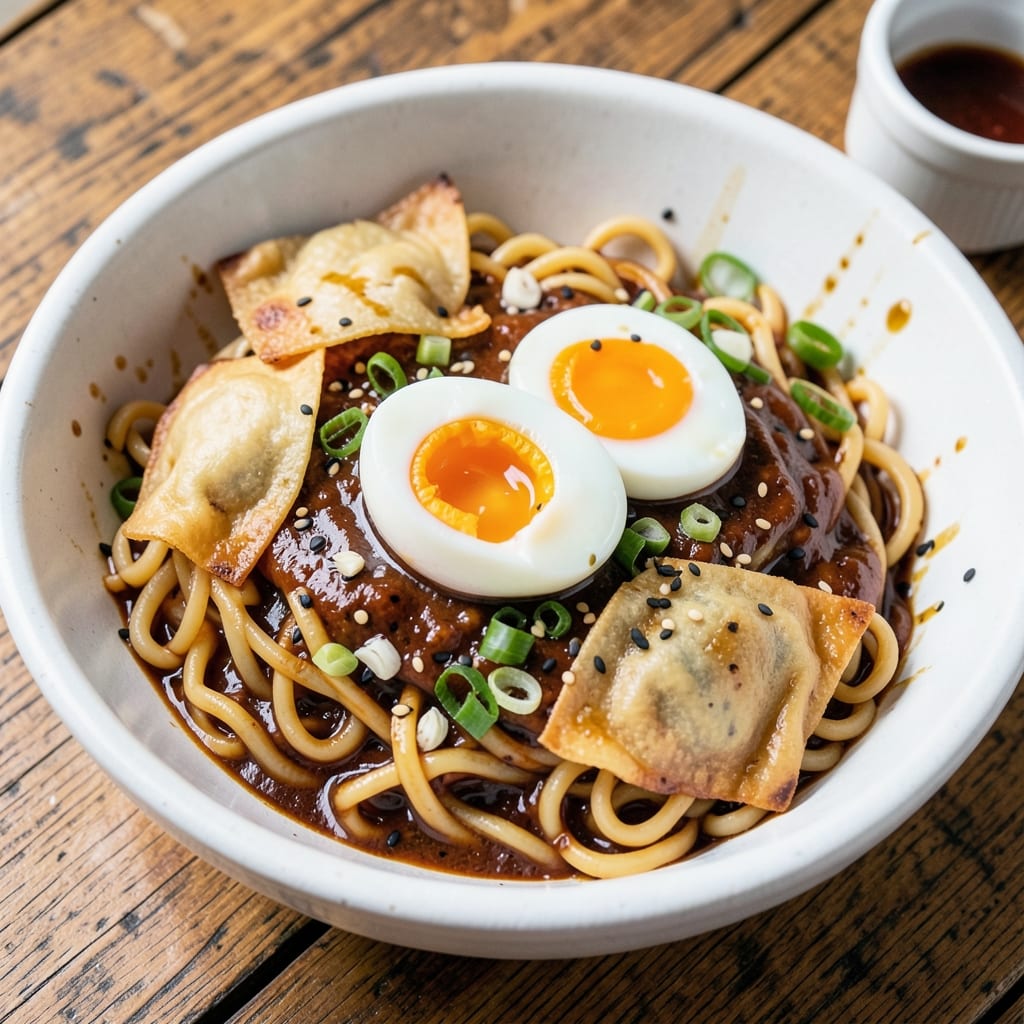
This cafeteria egg noodles recipe delivers the ultimate comfort food experience—crispy wonton cups topped with silky yolk rivers that make every bite irresistible. The secret lies in a perfectly balanced stir-fry technique that transforms simple egg noodles into a restaurant-worthy dish with minimal effort. I've refined this recipe over years of testing, ensuring the noodles stay tender while the wonton cups achieve that coveted crispy texture that holds up to the rich, savory sauce.
The foundation of this dish is a flavorful stir-fry sauce that combines soy sauce, garlic, ginger, and a touch of sesame oil for depth. Fresh wonton wrappers are lightly pan-fried until golden and crispy, creating those iconic cups that cradle the noodles and sauce. What sets this apart is the way the egg yolks—poached and silky—are draped over the top, creating rivers of golden yolk that cut through the savory flavors with every bite.
What you'll end up with is a dish that's equal parts comforting and impressive—a perfect balance of textures and flavors that feels like a home-cooked version of your favorite cafeteria staple. The egg noodles remain al dente, the wonton cups stay crispy, and the sauce clings perfectly to each component. This recipe is designed to be adaptable, whether you're serving it as a hearty breakfast or a satisfying weeknight dinner.
Pair it with steamed vegetables or a side of pickled ginger to complete the meal. The beauty of this dish lies in its simplicity—just a few key ingredients, precise timing, and the right technique to create a restaurant-quality experience at home. Let's get started on making this nostalgic favorite your new go-to recipe.
Ingredients for cafeteria noodles recipe egg noodles
Egg noodles, crispy wonton cups, and silky yolk rivers—just these ingredients transform simple pantry staples into nostalgic cafeteria magic.
| Ingredient | Amount | Notes |
|---|---|---|
| Fresh Wonton Wrappers 🍜 | 16 pieces | Square, store-bought variety |
| Egg Noodles 🍜 | 8 oz | Fresh or dried, wide variety |
| Large Eggs 🥚 | 4 whole | Room temperature for best results |
| Vegetable Oil 🫒 | ½ cup | High smoke point preferred |
| Soy Sauce 🥢 | ⅓ cup | Light or dark, to taste |
| Garlic Cloves 🧄 | 4 cloves | Minced, fresh preferred |
| Fresh Ginger 🌿 | 1 tbsp | Grate finely, aromatic |
| Sesame Oil 🫒 | 1 tbsp | Toasted, for aroma |
| Green Onions 🧅 | 3 whole | Sliced thin, white and green parts |
| Salt 🧂 | 1 tsp | Kosher or sea salt |
| White Pepper 🌶️ | ¼ tsp | Freshly ground preferred |
| Sesame Seeds 🌾 | 1 tbsp | Toasted, for garnish |
Wonton wrappers are the star here. Trader Joe's or Costco carry them in bulk, saving you trips. Look for wrappers that feel sturdy but pliable—not brittle or overly dry. Egg noodles? Fresh is ideal, but dried works if you soak them first. The key is al dente texture, so don’t overcook. For the eggs, room temperature makes all the difference—they’ll poach more evenly. If you’re prepping ahead, store wrappers between parchment paper to prevent sticking.
No wonton wrappers? Fresh egg roll wrappers work in a pinch, though they’re slightly thinner. Swap sesame oil for avocado oil if you’re avoiding sesame, but the aroma is what gives this dish its depth. Fresh ginger? Dried works at half the amount, but it lacks the bright punch. For the sauce, low-sodium soy sauce balances better if you’re watching salt. The green onions can be subbed with scallions or chives, though green onions have that perfect mild bite. Toast your sesame seeds in a dry pan for 30 seconds—they’ll smell amazing and add crunch.
The wonton cups stay crispy for about 20 minutes after frying, so work in batches. Keep the poached eggs warm in a bowl of barely simmering water until serving. This dish reheats beautifully—just warm the noodles and sauce gently, then add fresh wonton cups and eggs. Store leftovers in airtight containers for 3 days, but the crispy cups are best eaten fresh. For extra drama, serve with a side of steamed bok choy or pickled vegetables—just like the cafeteria did it.
Why You'll Love This Recipe
- Here’s what sold me: those wrappers fried until golden, then folded over the noodles and eggs. The contrast—crunchy outside, silky inside—is chef’s kiss. Add a splash of soy sauce, and suddenly, it’s restaurant-quality without the fuss.
- Pantry Magic: I swear by this—no fancy ingredients, just what’s already lurking in my fridge. Wonton wrappers and egg noodles? That’s it for the heavy lifting. The eggs and soy sauce do all the flavor work while I’m still debating what to watch on TV.
- Crispy-Creamy Fix: Here’s what sold me: those wrappers fried until golden, then folded over the noodles and eggs. The contrast—crunchy outside, silky inside—is chef’s kiss. Add a splash of soy sauce, and suddenly, it’s restaurant-quality without the fuss.
- Leftovers That Don’t Suck: Between us, most leftovers are sad. Not this. The next day, I reheat it with a quick scramble, and it’s just as good—maybe even better, because the flavors meld. Pack it for lunch or feed the whole family; it’s the kind of dish that improves with time.
Step-by-step instructions for crispy-wonton cups with silky yolk rivers
Master this technique and you'll achieve perfect crispy wonton cups with molten egg centers every time.
Prepare the Noodle and Seasoning Base
Cook the 8 oz egg noodles according to package instructions until al dente, then drain and rinse briefly under cold water to stop the cooking. Toss the noodles with 0.33 cup soy sauce, 1 tbsp sesame oil, and 1 tbsp finely grated fresh ginger until evenly coated. This marinade infuses flavor while keeping the noodles tender. Set aside while you prepare the wonton cups.
In a small bowl, whisk together 4 whole large eggs, 1 tsp salt, and 0.25 tsp white pepper until fully combined. The eggs should be smooth with no streaks. Room temperature eggs will create a silkier yolk texture in your final dish. If your eggs are cold, let them sit at room temperature for 30 minutes before using.
Assemble and Fry the Wonton Cups
Heat 0.25 cup vegetable oil in a large skillet over medium-high heat until shimmering but not smoking. Working quickly, place 4 wonton wrappers in the pan, pressing down gently with a spatula to form cups. Fill each cup with about 2 tablespoons of the seasoned noodle mixture, then carefully crack 1 egg into each cup. The noodles should be packed tightly to prevent the egg from spilling out.
Cook for 3-4 minutes until the bottoms are golden brown and crispy. You'll see the egg begin to set slightly at the edges while remaining runny in the center. This is perfect—you want that signature yolk river when you cut into them. Transfer the crispy cups to a paper towel-lined plate to drain excess oil.
Complete the Crispy Cups and Garnish
Add the remaining 0.25 cup vegetable oil to the same skillet and heat over medium heat. Carefully place the remaining 12 wonton cups in the pan, filling each with the remaining noodle mixture and egg. Cook for another 3-4 minutes until the bottoms are golden brown and crispy, just like the first batch.
While still hot, transfer the crispy wonton cups to a serving platter. Drizzle with any remaining pan juices, then sprinkle with 1 tbsp toasted sesame seeds and thinly sliced green onions. The sesame seeds add texture while the green onions provide fresh contrast to the rich flavors. Serve immediately while the wonton cups are still crispy and the egg centers remain silky.
Optional Double-Frying for Extra Crispiness
For maximum crispiness, return all the wonton cups to the skillet with 0.125 cup fresh vegetable oil and cook for an additional 1-2 minutes on each side. This second fry creates an even deeper golden color and extra crunch. Watch carefully—the oil will be hot and the cups will cook quickly. Remove immediately when both sides are golden brown.
This double-frying technique ensures your wonton cups stay crispy even when served at room temperature. The extra layer of oil creates a protective barrier that maintains texture longer. Serve with extra soy sauce on the side for dipping if desired, or pair with a simple cucumber salad for balance.
Pro Tips For Making Cafeteria Noodles Recipe Egg Noodles
- STIR-FRY IN BATCHES: Fresh wonton wrappers turn rubbery if crowded—work in small piles of 4-5 at a time. I learned this the hard way when my first batch of crispy egg noodles got soggy before the second batch even hit the pan. Keep the rest covered with a damp towel to prevent drying while you cook.
- USE ROOM-TEMP EGG: Cold eggs from the fridge won’t scramble evenly, leading to dry edges and gooey centers. Crack them into a bowl and let them sit for 10 minutes before scrambling—this makes all the difference in texture. (Yes, even if you’re impatient like me.)
- SALT THE NOODLES WATER: Unsalted egg noodles taste bland if you forget to season the boiling water. Add 1 tablespoon of soy sauce (or salt) to the pot—it infuses the noodles directly, not just the surface. This is the thing that matters most for flavor balance.
- SCRAMBLE EGGS LOW AND SLOW: High heat makes eggs rubbery, and that’s exactly what you don’t want in cafeteria-style noodles. Cook the eggs on medium-low, stirring constantly until just set—soft curds, not dry clumps. The pan should stay warm, not smoky. (Your future self will thank you.)
Troubleshooting this recipe
Noodles Too Soft
If your egg noodles turn out mushy instead of al dente, it’s usually from overcooking or insufficient draining. Cook them 1 minute less than package instructions suggest, then rinse under cold water for 10 seconds to stop the cooking process. Toss immediately with the soy sauce and sesame oil marinade to lock in texture. I’ve found that fresh egg noodles hold up better than dried—if using dried, soak them for 5 minutes in warm water before cooking to prevent overcooking. 🌡️
Wonton Cups Not Crispy
Crispy wonton cups depend on proper oil temperature and even cooking. Heat your oil to 350°F (use a thermometer!) before frying—too low, and they’ll absorb oil and turn greasy. Work in small batches (no more than 4 cups at a time) to avoid crowding, which steams instead of fries. For extra crispiness, double-fry: cook once, drain on a wire rack (not paper towels), then fry again for 30 seconds per side. This two-step method mimics restaurant techniques. 🔥
Eggs Too Runny
Silky yolk rivers are all about egg temperature and timing. Use room-temperature eggs (30 minutes out of the fridge) and freshly cracked into the cups—they’ll set faster. If the eggs stay too liquidy, your oil may not be hot enough. Increase heat to medium-high and cook 30 seconds longer until the edges just begin to set. For foolproof results, poach the eggs separately in simmering water for 3 minutes, then place them on top of the crispy cups right before serving. 🥚
Sauce Too Thin
A watery sauce ruins the balance of flavors. The fix? Reduce it by simmering the soy sauce mixture (without the noodles) in a small pan over medium heat for 2-3 minutes until slightly thickened. Add ½ tsp cornstarch mixed with 1 tsp water to the sauce, stir, and cook for 1 more minute until glossy. For extra depth, whisk in 1 tsp honey or 1 tsp oyster sauce to round out the umami. Always taste as you go—adjust salt last, since soy sauce is already salty. 🥢
Wonton Cups Falling Apart
Weak wonton cups usually mean old wrappers or overfilling. Check your wrappers’ expiration date—fresh wrappers (used within 2 weeks of purchase) hold their shape best. Press the wrappers gently but firmly into the pan to form tight cups, then pack the noodle mixture tightly (no gaps). If using dried wrappers, soak them in warm water for 10 seconds before shaping to make them pliable. For extra stability, brush the bottoms with a tiny bit of egg wash before frying. 🧂
Oil Smoking Too Much
Smoky oil means your pan is too hot, which burns the wrappers and makes them bitter. Reduce heat to medium (not medium-high) and let the oil shimmer gently before adding wrappers. If it’s smoking, turn off the heat for 30 seconds to let it cool slightly. Use a light-colored oil like vegetable or canola—dark oils (like sesame) have lower smoke points and are better for finishing, not frying. Always use a deep skillet (at least 10 inches) to prevent oil spills. ⚡
Nutrition facts
Frequently asked questions
Can I use dried egg noodles instead of fresh?
Yes, but dried noodles need extra prep! Soak them in warm water for 5 minutes before cooking to rehydrate, then cook for 1 minute less than package instructions. Rinse briefly in cold water to stop cooking—this prevents mushiness. The texture won't be identical to fresh, but the flavor stays rich.
What if I don't have wonton wrappers?
Use egg roll wrappers (they're slightly thinner but work well) or even pho wrappers for a chewier texture. For a quick fix, cut square shapes from lasagna noodles (bake instead of fry) or use wonton skins (the round, flat variety). The key is a sturdy wrapper that holds its shape when fried.
How do I make this vegetarian?
Skip the eggs and replace them with silken tofu cubes (pan-fried until golden) or mushroom stems (sautéed with garlic). For protein, add crispy baked tofu or tempeh crumbles to the noodle mixture. Boost umami with 1 tsp vegetarian oyster sauce or ½ tsp miso paste in the marinade. The crispy texture stays intact!
Can I prep this ahead of time?
Assemble the wonton cups 1 day ahead—fill them with noodles, crack eggs, then refrigerate uncovered on a wire rack. Fry just before serving (they'll crisp up again). For the sauce, make it fresh day-of, but you can prep individual components (marinate noodles separately, mix sauce ingredients separately). The eggs must be added fresh for that silky texture.
Why does my sauce taste bland?
Balance is key! Add 1 tsp honey or 1 tsp rice vinegar to brighten flavors, or stir in ½ tsp chili crisp for heat. For depth, toast 1 tsp sesame seeds in the pan before adding oil—they release nutty aromas. Always taste as you go, adjusting soy sauce incrementally (it's salty!). A pinch of white pepper enhances the savory notes too.