
Breakfast & Brunch
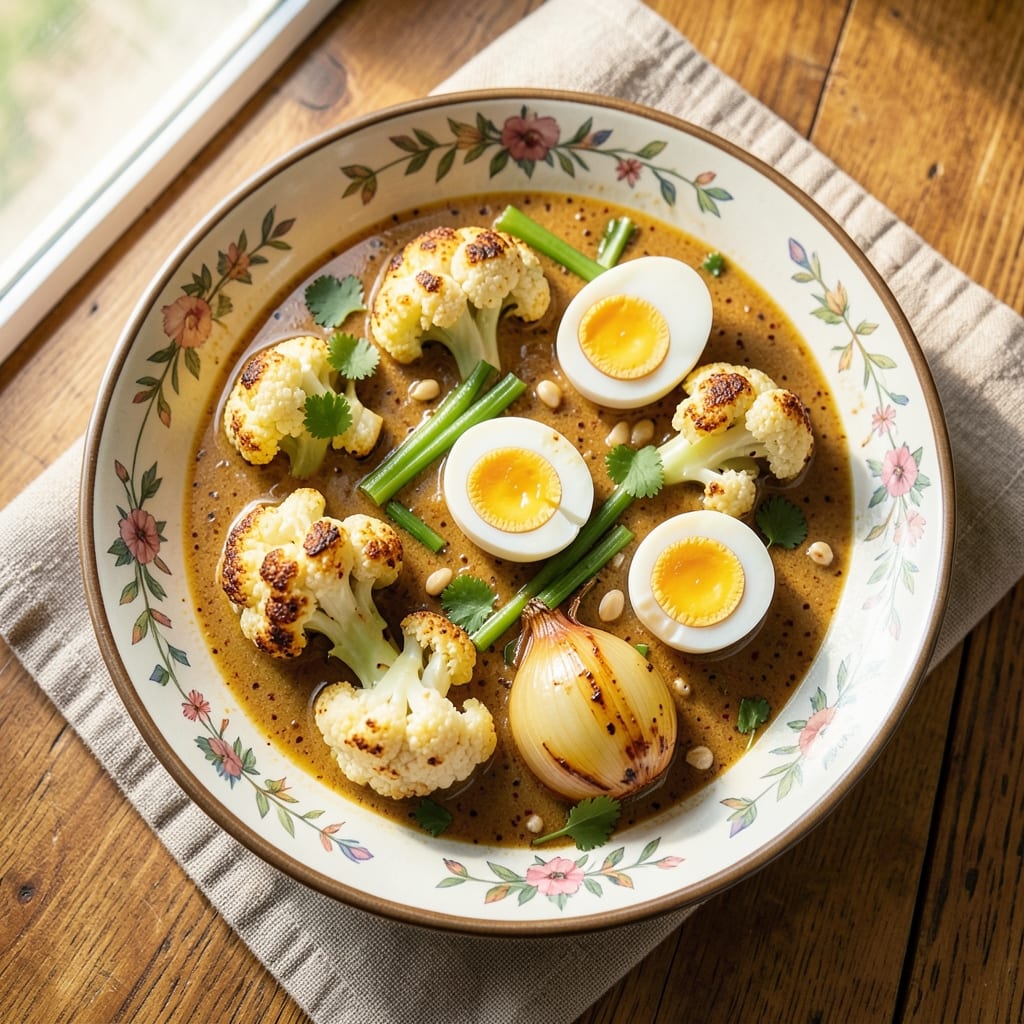
This cauliflower and egg curry transforms humble ingredients into a rich, aromatic dish that feels like a restaurant masterpiece. The secret lies in balancing earthy spices with creamy coconut milk, creating a velvety sauce that coats tender cauliflower florets and perfectly cooked eggs. I've perfected this recipe to deliver bold flavors without the heat—ideal for breakfast or brunch that satisfies even meat lovers.
The foundation starts with a fragrant spice blend of turmeric, cumin, and coriander, toasted until aromatic before simmering with coconut milk and cauliflower. Soft-boiled eggs add protein and a luxurious texture, while a crispy celery topping provides contrast. This vegetarian dish packs all the comfort of a curry while keeping prep simple—just 30 minutes of active time for a meal that feels indulgent.
What makes this curry special is how the flavors develop: the coconut milk mellows the spices into a harmonious base, while the eggs absorb the aromatic sauce. The celery topping adds a satisfying crunch that cuts through the richness, making every bite balanced. Serve with steamed basmati rice or warm naan to soak up every last drop of that fragrant sauce.
For those avoiding eggs, chickpeas or tofu make excellent substitutes, though the dish loses its signature protein boost. The recipe scales effortlessly—double it for leftovers or a crowd—and tastes even better the next day as flavors meld. This is the kind of meal that turns a simple weeknight into a flavor adventure.
Ingredients for cauliflower and egg curry
Earthy spices, creamy coconut milk, and tender cauliflower create a restaurant-worthy vegetarian curry with protein-packed eggs.
| Ingredient | Amount | Notes |
|---|---|---|
| Fresh Cauliflower 🥬 | 1 ½ lb | Cut into even florets |
| Large Eggs 🥚 | 4 whole | Soft-boiled, peeled |
| Coconut Milk 🥥 | 1 can | Full-fat, 13.5 oz can |
| Celery Stalks 🥬 | 4 whole | Thinly sliced for topping |
| Yellow Onion 🧅 | 1 whole | Diced, medium size |
| Garlic Cloves 🧄 | 4 cloves | Minced, fresh preferred |
| Ground Turmeric 🌿 | 1 tsp | Freshly ground preferred |
| Ground Cumin 🌿 | 1 tsp | Toasted for depth |
| Ground Coriander 🌿 | 1 tsp | Freshly ground preferred |
| Ginger Root 🌿 | 1 tbsp | Freshly grated |
| Extra-Virgin Olive Oil 🫒 | 2 tbsp | For toasting spices |
| Salt 🧂 | 1 ½ tsp | Diamond Crystal preferred |
| Black Pepper 🌶️ | ½ tsp | Freshly cracked |
| Lemon Juice 🍋 | 1 tbsp | Freshly squeezed |
| Basmati Rice 🍚 | 1 cup | Uncooked, long-grain |
The coconut milk is non-negotiable here—full-fat canned versions from Thai Kitchen or Native Forest deliver the richest texture. Look for brands with no additives, just pure coconut. Fresh ginger and turmeric make all the difference when toasted with the spices—avoid pre-ground, which loses potency quickly. The celery topping requires crisp stalks; organic celery from Trader Joe's stays crunchy longer. For the cauliflower, freshly cut florets cook more evenly than pre-riced versions, which release too much moisture.
No fresh ginger? Powdered at half the amount works in a pinch, though it lacks the bright zing. Substitute eggs with chickpeas or tofu cubes for a protein boost, but they won't absorb the sauce as beautifully. The spice blend can be pre-made (Madras Curry Powder from Penzeys works well), but toasting whole spices deepens the flavor dramatically. For extra richness, add 1 tbsp coconut cream at the end, but keep it optional—this curry shines on its own.
Store prepped spices in an airtight container for up to 2 weeks—they'll lose aroma faster if exposed to light. The coconut milk can be refrigerated for 5 days once opened, but the sauce tastes best made fresh. Celery topping should be added just before serving to maintain crispness. Leftovers keep for 3 days in the fridge, with flavors intensifying overnight. Freeze portions for up to 3 months—reheat gently to preserve texture.
Why You'll Love This Recipe
- One-Pot Magic: I swear by this recipe when I’m too tired to wash extra dishes—just chop the onion and celery, toss in the cauliflower and eggs, and let the coconut milk do the heavy lifting. No skillets, no pans, no stress.
- Creamy Crisp Contrast: That first bite of perfectly poached eggs against the tender cauliflower in a velvety coconut sauce? It’s the kind of balance that makes you pause mid-spoonful. The celery adds a fresh crunch that cuts through the richness.
- Lunchbox Hero: Between us, this curry is my secret weapon for meal prep. Pack it in jars for work lunches—warm it up, and the eggs stay creamy while the cauliflower soaks up all that flavor. (Yes, even on a Tuesday night.)
- Budget-Friendly Feast: Fresh cauliflower and eggs stretch farther than you’d think, especially with coconut milk’s richness. I’ve fed four people for under $10, and no one ever complains about leftovers—because they’re that good.
Step-by-step instructions for cauliflower and egg curry
This method delivers a perfectly balanced curry with tender cauliflower and silky eggs in aromatic coconut cream.
Prepare the Soft-Boiled Eggs
Place the 4 whole large eggs in a saucepan and cover them with cold water by about 1 inch. Bring to a gentle simmer over medium heat—this should take about 5-7 minutes. Once small bubbles form around the eggs, remove them immediately with a slotted spoon and transfer to an ice bath for 5 minutes to stop cooking. The yolks should be runny and the whites fully set.
Peel the eggs carefully, reserving any cooking water for potential adjustments later. Here's the thing—soft-boiled eggs should yield slightly when pressed gently with your thumb. If they're too firm, they've overcooked; if too runny, they need more time in the ice bath. The perfect texture is what makes this curry special.
Toast Spices and Sauté Aromatics
Heat 2 tablespoons extra-virgin olive oil in a large deep skillet over medium heat. Add the 1 whole yellow onion (diced) and cook for 5-6 minutes until softened and translucent. Add the 4 cloves garlic cloves (minced) and 1 tablespoon ginger root (freshly grated), cooking for another 1-2 minutes until fragrant.
Reduce heat to low and add the 1 teaspoon ground turmeric, 1 teaspoon ground cumin, and 1 teaspoon ground coriander. Toast the spices for 30 seconds until aromatic—you'll smell their warm, earthy notes. This step develops the complex flavor foundation for the entire curry. Don't let the spices burn; they'll turn bitter if overheated.
Cook the Cauliflower in Spiced Oil
Add the 1.5 lb fresh cauliflower (cut into even florets) to the skillet, tossing to coat in the spiced oil. Cook for 5 minutes to let the florets absorb the flavors. Pour in the 1 can coconut milk and add 1.5 teaspoons salt and 0.5 teaspoon black pepper. Stir gently and bring to a simmer over medium heat.
Reduce heat to low and let the curry simmer uncovered for 15-20 minutes until the cauliflower is fork-tender. The coconut milk should reduce slightly, creating a thick, velvety sauce. You'll know it's ready when the cauliflower easily breaks apart with gentle pressure. If the sauce looks too thin, simmer uncovered for another 5 minutes to thicken.
Finish with Eggs and Celery Topping
Gently stir in the peeled eggs and simmer for just 1-2 minutes—enough to warm through without overcooking. Remove from heat and stir in the 1 tablespoon lemon juice to brighten the flavors. The eggs should remain silky, with just a hint of warmth from the curry.
In a separate small pan, heat 1 tablespoon olive oil and sauté the 4 whole celery stalks (thinly sliced) for 2-3 minutes until crisp-tender. Spoon this celery topping over the curry just before serving. The contrast of crisp celery against the creamy curry adds an essential textural element that elevates the dish.
Serve with Steamed Basmati Rice
Cook the 1 cup basmati rice according to package instructions until tender and fluffy. Divide the rice among serving plates and top generously with the cauliflower and egg curry. Garnish with additional celery slices if desired. The rice should be perfectly cooked—each grain distinct yet clinging together slightly, providing a neutral base that lets the curry shine.
Serve immediately while the eggs remain warm and the celery maintains its crispness. This curry tastes best fresh, with the eggs' silky texture and the celery's satisfying crunch complementing the rich coconut sauce. The balance of flavors and textures makes each bite satisfying and complete.
Pro Tips For Making Cauliflower And Egg Curry
- CHAR THE ONIONS FIRST: Don’t rush this—cook the onions and celery in 2 tablespoons of oil over medium-low heat until they’re deep golden, not just soft. I used to skip this step to save time, but undercooked onions make the whole curry taste dull. (Yes, even if you’re impatient like me.)
- BREAK EGGS INTO COLD WATER: Crack eggs into a bowl of cold water first to check for freshness—any floaters or weak yolks mean they’ll turn rubbery in the curry. Fresh eggs hold their shape better and soak up the coconut milk flavor like a sponge.
- LOW AND SLOW FOR CAULIFLOWER: Once the cauliflower florets hit the pan, turn the heat down to medium-low and cover with a lid. High heat steams them unevenly, leaving some raw inside while others turn mushy. Keep stirring gently every 3-4 minutes—this keeps them tender-crisp.
- STIR IN COCONUT MILK LAST: Add the coconut milk only after the onions, celery, and cauliflower have cooked for 5 minutes—this prevents it from curdling from the heat. If it starts to split, whisk in 1 teaspoon of flour mixed with cold water to smooth it out. (Trust me, this saves cleanup.)
Regional styles of this recipe
South Indian Style
In Tamil Nadu and Kerala, this curry often incorporates tempered mustard seeds and curry leaves for a distinct aroma. Start by heating 1 tbsp mustard seeds, 1 dried red chili, and 5 curry leaves in oil until they pop. Add these to the spiced coconut milk base along with ½ cup grated coconut for extra richness. The eggs are typically hard-boiled and halved, then arranged on top of the curry before serving with steamed idli or dosa instead of rice. 🌶️
Bengali Egg Curry
Bengali households transform this into a mustard and poppy seed curry, using 1 tsp mustard oil instead of olive oil. The spice blend includes ½ tsp asafoetida (hing) for depth, and the curry is finished with 1 tsp poppy seeds toasted in the oil. Serve with steamed rice and a side of boiled potatoes for a heartier meal. The eggs are usually soft-boiled and added at the very end to keep them silky. 🥥
Punjabi Egg Curry
Punjabi versions often use ghee instead of coconut milk, creating a richer, creamier texture. The spice blend includes 1 tsp garam masala and ½ tsp fenugreek leaves for a distinct earthy flavor. The curry is finished with cashew paste (soaked and blended) for extra richness. Serve with roti or paratha and a side of pickled onions for a tangy contrast. The eggs are hard-boiled and sliced, then gently folded into the curry at the end. 💛
Goan Curry Adaptation
Goan cuisine adds a vindaloo twist by incorporating vinegar or tamarind for tanginess. The spice blend includes 1 tsp black peppercorns and ½ tsp cloves, toasted with the other spices. The curry is finished with 1 tbsp Goan vinegar and a pinch of sugar to balance the flavors. Serve with Goan rice or bread for a fusion of coastal and curry flavors. The celery topping is replaced with crispy fried shallots for added crunch. 🌿
Modern Fusion Twist
For a contemporary take, blend ½ cup Greek yogurt into the coconut milk base for a tangy creaminess. Add 1 tsp smoked paprika and ½ tsp cayenne for a subtle smokiness. Top with toasted pumpkin seeds and fresh cilantro instead of celery. This version pairs beautifully with quinoa or cauliflower rice for a lighter, protein-packed meal. 💡
Nutrition facts
Frequently asked questions
Can I use pre-riced cauliflower instead of fresh florets?
Pre-riced cauliflower works in a pinch, but fresh florets absorb flavors better and stay firmer. If using pre-riced, pat it completely dry first to prevent a watery sauce. Reduce simmering time to 10-12 minutes since pre-riced cauliflower cooks faster.
How do I adjust the spice level for kids or sensitive palates?
Reduce the black pepper to ¼ teaspoon and omit the cayenne if using the modern fusion twist. For extra mildness, add ½ teaspoon sugar at the end to balance any remaining heat. The coconut milk naturally mellows spice intensity, so this curry is already gentle compared to traditional versions.
What's the best way to reheat leftovers without drying out the eggs?
Reheat gently in a saucepan over low heat with 1-2 tablespoons water or coconut milk added to maintain moisture. Stir frequently and keep heat below medium-low to prevent eggs from becoming rubbery. Microwaving works too—cover with a damp paper towel and heat in 30-second intervals until warmed through.
Can I make this curry without coconut milk?
Yes! Substitute with 1 cup heavy cream plus ½ cup water for similar richness. For a dairy-free option, use 1 cup cashew cream (blended soaked cashews) or ½ cup Greek yogurt mixed with ½ cup water. The texture will be slightly lighter but still flavorful.
Why did my celery topping turn mushy instead of crispy?
Overcooking is the most common issue—celery should cook for just 2-3 minutes until tender-crisp. Use a separate pan with high heat and avoid stirring constantly. For extra crunch, add the celery to the curry just before serving or broil for 1 minute at the end. Fresh celery stays crispier than pre-cut varieties.