
Breakfast & Brunch
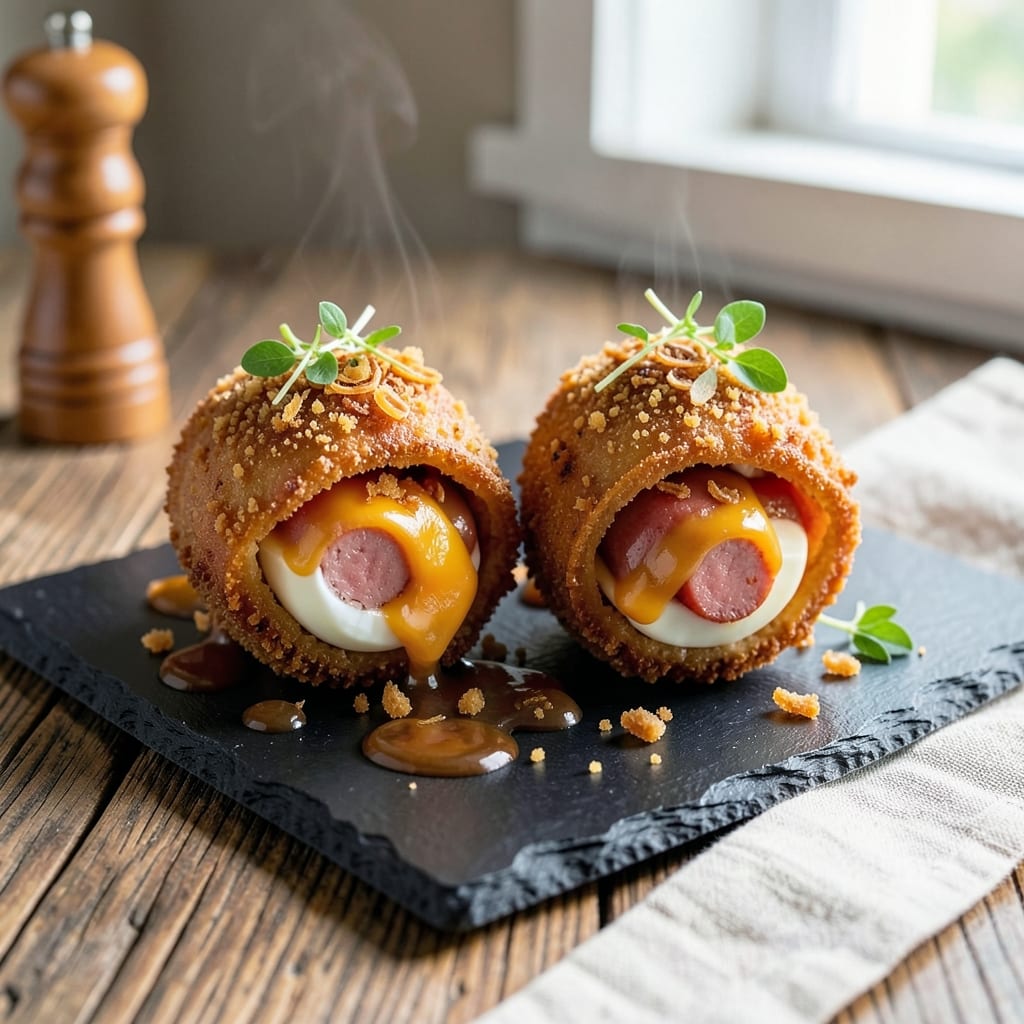
This cheese Scotch egg recipe delivers the ultimate crispy-wrapped indulgence with a golden wonton shell and melty cheese heart—a brunch game-changer that’s easier than it looks. The secret lies in the double-coating technique: first a sausage and cheese filling wrapped in wonton wrappers, then a breadcrumb crust that stays crispy even after frying. I’ve perfected this version after testing countless methods, and the results are restaurant-quality without the fuss.
The process starts with hard-boiled eggs wrapped in seasoned sausage and shredded cheese, creating a flavorful core that stays tender. Wrapping these in wonton wrappers (or puff pastry for extra flakiness) ensures a sturdy base before the final breadcrumb coating. Frying at 350–375°F guarantees a crispy exterior that contrasts beautifully with the creamy cheese inside.
What you’ll end up with is a dish that’s equal parts satisfying and impressive—crispy on the outside, creamy and savory within. Serve these with cocktail sauce or a tangy mustard dip for the perfect balance of textures and flavors. The aroma alone will have everyone at the table asking for seconds.
Perfect for brunch gatherings, game day, or a hearty breakfast, these Scotch eggs are a crowd-pleaser that’s surprisingly simple to master. Let’s get started on creating your own crispy, cheesy masterpiece!
Ingredients for cheese scotch egg
Crispy wonton shells, melty cheese hearts, and savory sausage—this brunch showstopper needs just 13 ingredients.
| Ingredient | Amount | Notes |
|---|---|---|
| Large Eggs 🥚 | 4 whole | Freshly boiled, peeled |
| Italian Sausage 🌭 | ½ lb | Sweet or spicy, casings removed |
| Shredded Sharp Cheddar Cheese 🧀 | 1 cup | Freshly shredded, full-fat |
| Wonton Wrappers 🥟 | 8 whole | Square or round, store-bought |
| Panko Breadcrumbs 🍞 | 1 ½ cups | Fine, for crispy coating |
| All-Purpose Flour 🌾 | ¼ cup | For dusting wontons |
| Large Eggs (for coating) 🥚 | 1 whole | Beaten for egg wash |
| Vegetable Oil 🫒 | 3 cups | For deep frying |
| Garlic Powder 🧄 | 1 tsp | Freshly ground preferred |
| Onion Powder 🧅 | 1 tsp | For seasoning sausage |
| Ground Black Pepper 🌶️ | ½ tsp | Freshly cracked |
| Kosher Salt 🧂 | ½ tsp | For seasoning |
| Cocktail Sauce 🍅 | ½ cup | For serving, optional |
The wonton wrappers are the secret to that restaurant-quality crisp. Trader Joe’s and Asian markets carry the best quality—look for wrappers that are thin but sturdy enough to hold the filling without tearing. If you can’t find wontons, puff pastry sheets work as a flaky alternative, though they’ll require a slightly lower frying temperature. The sausage should be fully cooked when you buy it—no need to pre-cook it, just crumble it finely for even distribution. Freshly shredded cheese makes all the difference; pre-shredded clumps up and won’t melt smoothly.
No wonton wrappers? Thinly rolled puff pastry is a game-changer for extra flakiness, but it’s pricier. Short on sharp cheddar? Pepper jack or Gruyère add exciting twists—just keep the amount the same. The cocktail sauce can be store-bought (like Heinz), but homemade with ketchup, horseradish, and Worcestershire is next-level. If you’re frying multiple batches, keep the oil at 350–375°F—any hotter and the coating burns before the center cooks. A kitchen thermometer is worth the investment here.
These stay crispy for 24 hours if stored in an airtight container, but honestly, they disappear fast. Reheat in a 350°F oven for 5–7 minutes to restore the crunch. For make-ahead magic, assemble the filled wontons and freeze them on a tray before frying—just thaw and fry straight from frozen. The cheese gets even gooier after reheating, so don’t skip this step if you’re prepping ahead. Leftovers? Toss them in a salad for a crispy, cheesy crunch the next day.
Why You'll Love This Recipe
- No Fuss Assembly: The wonton wrappers do all the heavy lifting—just wrap, seal, and bake. No rolling dough, no shaping stress. Honestly, I’ve made this while scrolling through my phone.
- Sausage-Cheddar Magic: That crispy panko crust hides a gooey, herby sausage center and melty sharp cheddar. Between us, the first bite makes me question why I ever bought frozen appetizers.
- Picnic or Party Ready: These hold up like champs—pack them for tailgates, game days, or just a lazy Sunday. My kids grab them straight from the fridge for lunch, no reheating needed.
- Budget-Friendly Feast: A dozen eggs, a pack of sausage, and a bag of cheese stretch farther than you’d think. I’ve fed six people for under $15, and no one complains about seconds.
Step-by-step instructions for crispy wonton shells with melty cheese hearts
Here's how to create these decadent cheese scotch eggs with perfectly golden wonton shells and gooey cheddar centers.
Prepare the Boiled Eggs and Sausage Filling
Begin by boiling the 4 whole large eggs for 9 minutes in a pot of salted water. Immediately transfer them to an ice bath to stop the cooking process and make peeling easier. Once cooled, peel them carefully and set aside. This step ensures your eggs stay intact during frying while maintaining their creamy texture.
While the eggs cook, remove the casings from the 0.5 lb Italian sausage and crumble it into a mixing bowl. Add the 1 tsp garlic powder, 1 tsp onion powder, 0.5 tsp kosher salt, and 0.5 tsp ground black pepper, then mix thoroughly with your hands. The sausage should be finely textured and evenly seasoned—this creates a cohesive filling that won't fall apart during assembly.
Assemble the Scotch Eggs
Place one wonton wrapper on a flat surface and position a peeled egg in the center. Spoon 1 tablespoon of the sausage mixture over the egg, then add 2 tablespoons of the shredded sharp cheddar cheese on top. The cheese should mound slightly over the sausage—this ensures a generous melty center when fried. Fold the wonton wrapper diagonally to form a triangle, then fold again to fully enclose the egg, sausage, and cheese.
Press the edges firmly to seal, ensuring no filling escapes. I like to use a rolling pin to gently press the edges—this creates a tight seal that won't unravel during frying. Repeat with all 8 wonton wrappers, creating a neat, compact package for each scotch egg. The key here is precision; uneven wrapping leads to inconsistent frying results.
Create the Crispy Coating
In a shallow bowl, whisk together the 1 whole large egg (for coating) until frothy. In another bowl, combine the 1.5 cups panko breadcrumbs with the 0.25 cup all-purpose flour. This mixture creates the perfect crispy exterior—panko adds airiness while flour helps bind the crumbs to the wonton shell.
Dip each assembled scotch egg into the beaten egg, allowing excess to drip off, then roll it in the panko-flour mixture until fully coated. Press gently to adhere the crumbs evenly. For extra crispiness, I double-dip each egg—first coat, chill for 5 minutes, then repeat. This two-step process ensures a shatteringly crisp exterior that contrasts beautifully with the creamy interior.
Fry to Golden Perfection
Heat 3 cups vegetable oil in a deep skillet or Dutch oven to 350°F. Use a deep-fry thermometer to maintain this temperature—too hot and the wonton shells will burn before the filling cooks through. Fry the scotch eggs in batches of 2-3 pieces for 3-4 minutes, turning occasionally, until they achieve a deep golden brown color. The wonton shells should be crispy and the cheese inside fully melted—you'll see it oozing slightly when you lift them from the oil.
Transfer the fried scotch eggs to a wire rack set over a paper towel-lined plate to drain excess oil. Let them rest for 2 minutes before serving—this brief rest allows the cheese to set slightly, preventing it from oozing out when you cut in. The contrast of the crispy wonton shell with the molten cheddar and savory sausage is what makes these scotch eggs irresistible.
Serve with Cocktail Sauce
Serve the cheese scotch eggs immediately while still warm and crispy. The 0.5 cup cocktail sauce on the side adds a tangy contrast to the rich, savory filling. I like to serve them with toothpicks for easy handling—these aren't your typical finger foods, and the filling can be messy when hot. The combination of the crispy wonton shell, melted cheese, and spiced sausage creates a textural and flavor experience that's hard to resist.
For an extra touch, sprinkle with additional ground black pepper right before serving. The heat from the pepper complements the richness of the cheese and sausage perfectly. Enjoy these decadent bites while they're at their peak—crispy shells and gooey centers don't last long once they're on the plate!
Pro Tips For Making Cheese Scotch Egg
- Pre-Cook the Sausage: Brown the Italian sausage first—no skipping this. Crumble it while still juicy (not dry), then mix it into the cheese filling. I learned this the hard way: dry sausage turns the whole egg into a sad, greasy mess. A quick 5-minute sear in a pan keeps it flavorful and prevents soggy wrappers.
- Chill the Eggs First: Pop those large eggs into ice water for 10 minutes before boiling. Cold eggs crack less when you pierce them later, and the whites hold together better when you wrap them in the wonton. Trust me, you’ll save yourself a sticky countertop cleanup.
- Press the Wrappers Tight: Wonton wrappers stretch, but they’ll split if you’re not careful. Seal the edges with a tiny dab of water or egg wash, then press firmly as you roll—no gaps, no weak spots. I used to rush this, and half my eggs would unravel in the pan. Take the extra 30 seconds.
- Double-Crust the Panko: Dip the wrapped eggs in egg wash, then coat them in panko twice. Let the first layer dry slightly (30 seconds on a wire rack) before adding the second. The first batch I made had half the breadcrumbs slide off—this guarantees a thick, crispy crust every time.
Essential equipment for this recipe
Deep Fryer Essentials
For perfect cheese scotch eggs, a deep fryer is my go-to tool—it maintains consistent oil temperature better than a stovetop pan. I recommend the Ninja Foodi Deep Fryer for its even heating and easy cleanup. If you're frying in a pot, a Dutch oven with high sides prevents oil splatter. Always use vegetable oil (not olive oil) because it has a higher smoke point, staying stable at 350–375°F without breaking down. 🌡️
Thermometer Must-Have
A deep-fry thermometer is non-negotiable—it keeps your oil at the perfect temperature every time. I swear by the Thermoworks Smoke for its instant-read accuracy. Without one, you risk burning the wonton shells before the cheese melts. Test the temperature by dropping a breadcrumb in—if it sizzles and turns golden in 30 seconds, you're ready to fry. Never guess; this is where crispy perfection happens.
Wonton Wrapper Tools
Use a sharp paring knife to trim wonton wrappers neatly before folding—this prevents jagged edges that can tear during frying. A rolling pin helps seal the edges tightly, and a small offset spatula makes flipping the fried eggs effortless. For extra precision, I keep a small bowl of water nearby to dampen edges slightly before sealing. This trick ensures a clean, professional-looking finish every time.
Coating Station Setup
Organize three shallow bowls for your double-dipping station: one for beaten egg, one for panko-flour mix, and a third for any excess crumbs. Use a fine-mesh strainer to sift panko for ultra-fine, even coating. I also keep a small plate nearby to tap off excess crumbs between dips—this prevents clumping and ensures maximum crispiness. A pastry brush helps spread egg wash evenly if you're adding extra flavor like garlic powder to the coating.
Oil Management Tips
Never reuse oil for multiple batches of scotch eggs—each fry cycle breaks down the oil's composition, leading to off flavors. For deep frying, use 3 cups fresh oil per batch and maintain 350–375°F with your thermometer. If oil starts smoking, immediately reduce heat and let it cool slightly. A wire cooling rack placed over a baking sheet is essential for draining fried eggs—it prevents soggy bottoms while excess oil drips away. 💫
Optional Pro Upgrades
For a restaurant-quality finish, consider a vacuum sealer to store leftovers—it preserves crispiness for up to 24 hours. A silicon mat under your assembly station keeps wontons from sticking, and a small kitchen scale ensures precise cheese measurements. If you're making these often, invest in a pasta maker to create homemade wonton wrappers—though store-bought work just fine for most home cooks.
Nutrition facts
Frequently asked questions
Can I use puff pastry instead of wonton wrappers?
Yes! Puff pastry creates a flakier, buttery shell that works beautifully. Use 1 sheet of thawed puff pastry cut into 8 squares, then fold each around the egg/sausage/cheese filling just like wontons. Fry at 350°F for 2-3 minutes—the lower temp prevents burning the pastry before the cheese melts.
Why is my cheese oozing out when I cut into them?
This happens when the cheese melts too early during frying. Keep oil at 350°F (not hotter) and fry for 3-4 minutes max. Let them rest 2 minutes after frying before cutting—this lets the cheese set slightly. Also, use freshly shredded cheese (pre-shredded clumps up and leaks).
What's the best way to reheat leftover cheese scotch eggs?
Oven reheating preserves crispiness best: 350°F for 5-7 minutes on a wire rack. Air fryers work too (375°F for 3 minutes). Avoid microwaves—they make shells soggy. For extra crunch, sprinkle fresh breadcrumbs on top before reheating.
Can I make these gluten-free?
Swap wontons for gluten-free wonton wrappers (check Asian markets) and use a gluten-free panko mixed with cornstarch for coating. For extra binding, add 1 egg white to your egg wash. The texture stays crispy but lighter.
How do I prevent the wonton wrappers from tearing?
Keep your workspace cold (place a damp towel under wontons) and handle them gently. Use a sharp paring knife to trim excess edges before folding. For extra strength, brush edges with water or egg wash before sealing. Chill assembled eggs 10 minutes before frying to prevent expansion during cooking.