
Breakfast & Brunch
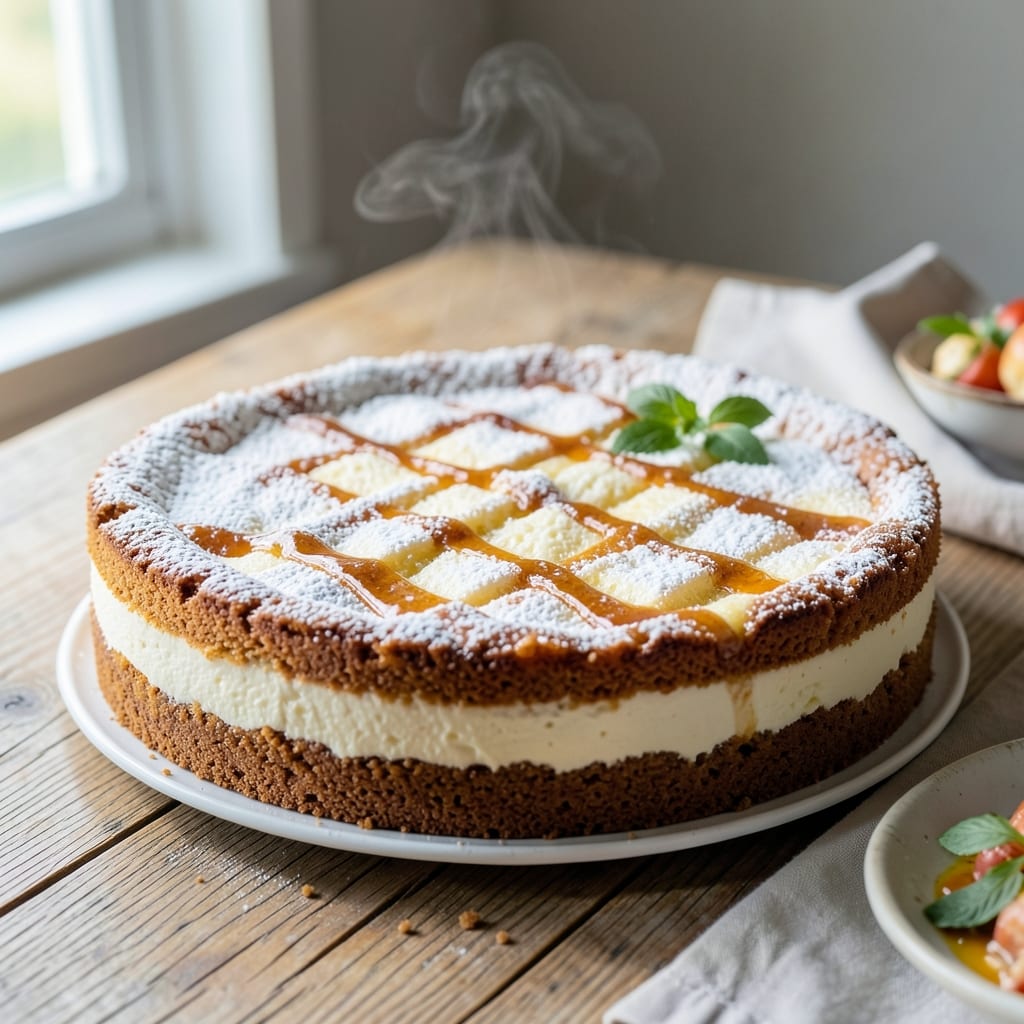
A cheesecake with egg yolks delivers that signature ultra-rich, velvety texture without the risk of overmixing. The secret lies in blending yolks with cream cheese and sugar until smooth, creating a filling that's impossibly tender yet sturdy enough to hold its shape. This technique has transformed my cheesecakes from good to legendary, with a dense yet creamy crumb that stays intact even when sliced.
The process begins with a classic graham cracker crust, baked until just firm enough to support the filling. Then comes the magic: room-temperature cream cheese whipped with sugar and egg yolks until completely smooth, followed by the addition of sour cream for that signature moisture. Baking in a water bath ensures even cooking without cracking, while proper chilling develops the perfect texture.
What you'll end up with is a cheesecake that's denser and richer than most recipes, with a smooth, almost custard-like texture that melts in your mouth. The crust remains crisp at the edges while staying tender in the center, and the filling holds together beautifully when sliced. This is the kind of cheesecake that earns second helpings and compliments from even the most critical dessert lovers.
For serving, a dusting of powdered sugar or fresh berries adds the perfect finishing touch. Whether you're making it for a special occasion or just treating yourself, this recipe delivers restaurant-quality results with minimal effort. Let's get started on creating your perfect slice.
Ingredients for cheesecake recipe with egg yolks
These twelve ingredients transform into a cheesecake so rich and velvety it'll fool even the most skeptical dessert lovers.
| Ingredient | Amount | Notes |
|---|---|---|
| Graham Cracker Crumbs 🍪 | 2 cups | Crushed finely, not too powdery |
| Unsalted Butter 🧈 | ½ cup | Melted, full-fat for richness |
| Granulated Sugar 🍚 | ½ cup | For crust sweetness |
| Large Egg Yolks 🥚 | 6 whole | Room temperature, ultra-rich |
| Full-Fat Cream Cheese 🧀 | 32 oz | Room temperature, high-fat |
| Granulated Sugar 🍚 | 1 ½ cups | For filling sweetness |
| Sour Cream 🥛 | ½ cup | Full-fat for moisture |
| Vanilla Extract 🌸 | 2 tsp | Pure, high-quality |
| Lemon Juice 🍋 | 1 tbsp | Freshly squeezed |
| Salt 🧂 | ¼ tsp | Fine sea salt |
| Powdered Sugar 🍚 | ¼ cup | For dusting |
| Fresh Berries 🍓 | 2 cups | Optional garnish |
The cream cheese is non-negotiable here—Philadelphia brand is my go-to, but any full-fat, high-quality block works. Grab 16 oz blocks (two total) and let them sit at room temp for 2-3 hours before whipping. The yolks? Room temperature is key—cold yolks won't blend smoothly. I always buy large eggs from Trader Joe's—they're consistent and affordable. For the crust, Honey Maid graham crackers (the original flavor) give the best texture, but any sturdy graham cracker works. Toast them lightly before crushing to prevent sogginess—350°F for 5 minutes does the trick.
No room-temperature cream cheese? Microwave it in 20-second bursts until just soft—don't melt it! Short on sour cream? Full-fat Greek yogurt works in a pinch, though it's slightly tangier. The vanilla extract should be pure, not imitation—McCormick or Nielsen-Massey are reliable brands. Lemon juice can be swapped for white vinegar if you're out, but fresh is always better. The powdered sugar? Confectioners' sugar is a must—Domino brand is my secret weapon for smooth dusting. For the berries, strawberries or raspberries add the most vibrant contrast, but blueberries are my backup when they're on sale.
This cheesecake keeps beautifully—up to 5 days in the fridge, though it's best within 3 days. For serving, bring it to room temp for 15 minutes before slicing—it's more forgiving that way. The crust stays crisp for 24 hours, but the filling gets even better after 24 hours of chilling. I always make a double batch—one for now, one for later—because it disappears faster than you'd think. Freeze individual slices for up to 3 months if you're planning ahead, just thaw overnight in the fridge.
Why You'll Love This Recipe
- I’ll be real: full-fat cream cheese and egg yolks might seem splurge-y, but this recipe uses just enough to stretch the dollars. That buttery crust? A handful of graham crackers crushed with store-brand butter does the trick. Leftovers? They last five days in my fridge, and I’m always the first to grab seconds.
- No-Yolk Stress: I swear by this recipe because it skips the fuss of separating eggs. Just crack those yolks straight into the bowl—no mess, no second-guessing. The butter-and-sugar crust mix is so quick I’ve made it while waiting for the oven to preheat, and that buttery graham crumble? It’s the kind of texture that disappears in seconds.
- Creamy Without Cracking: Here’s what sold me—the egg yolks keep this cheesecake silky smooth without the dreaded cracks. The full-fat cream cheese gives it that rich, velvety bite, while the sugar in the crust caramelizes just enough to add a subtle crunch. It’s the balance I’ve been searching for, honestly.
- Weeknight Potluck Star: Between us, this is my go-to for gatherings. The graham crust holds up perfectly for slicing, and the flavor? It’s bold enough for a dinner party but unfussy enough for a Tuesday night. I’ve even packed slices for work—no one questions why I bring dessert to the office.
Step-by-step instructions for cheesecake with egg yolks
Here's how to create a velvety, ultra-rich cheesecake without overmixing—every layer perfect.
Prepare the Crust with Perfect Texture
Preheat your oven to 325°F and melt the 0.5 cup unsalted butter in a small saucepan over low heat. Once fully melted, remove from heat and stir in the 2 cups graham cracker crumbs and 0.5 cup granulated sugar until evenly coated. Press the mixture firmly into a 9-inch springform pan, creating an even layer on the bottom and up the sides.
Use the bottom of a glass to press down firmly—this ensures the crust stays compact and doesn't crumble later. Bake the crust for 10 minutes until lightly golden. Let it cool slightly while you prepare the filling. The crust should be firm enough to support the weight of the cheesecake but not so hard it cracks under the filling.
Whip Cream Cheese and Sugar to Smooth Perfection
In a large mixing bowl, beat the 32 oz full-fat cream cheese on medium speed with an electric mixer until completely smooth. This can take 3-5 minutes—don't rush it. Add the 1.5 cups granulated sugar and beat until fully incorporated and the mixture is light and fluffy. Scrape down the sides of the bowl occasionally to ensure even mixing.
Here's the thing—this step is crucial. If you see any lumps of cream cheese, keep mixing until they disappear. The goal is a completely smooth batter that will give you that signature silky texture. The mixture should be thick but still pourable, almost like a thick pudding.
Add Egg Yolks and Sour Cream for Ultra-Richness
Add the 6 whole large egg yolks, one at a time, mixing well after each addition. Then stir in the 0.5 cup sour cream, 2 tsp vanilla extract, 1 tbsp lemon juice, and 0.25 tsp salt. Mix on low speed just until everything is combined—about 30 seconds. Be careful not to overmix, as this can incorporate too much air and cause cracks later.
This is where the magic happens. The egg yolks add incredible richness, while the sour cream provides moisture and a slight tang that balances the sweetness. The lemon juice brightens the flavors and prevents the cheesecake from tasting too heavy. The batter should be thick but still smooth enough to pour easily.
Bake the Cheesecake to Golden Perfection
Pour the filling over the prepared crust, spreading it evenly. Place the springform pan in a larger roasting pan and carefully pour hot water into the roasting pan until it reaches about halfway up the sides of the springform pan. This water bath helps create a smooth top and prevents cracking.
Bake in the preheated oven for 50-60 minutes until the edges are set and the center still jiggles slightly when shaken. The top should be golden brown, and the center should look just slightly underdone—this ensures it stays creamy. If the top browns too quickly, tent it loosely with aluminum foil to prevent over-browning.
Cool and Finish for Ultimate Creaminess
Remove the cheesecake from the water bath and let it cool in the oven for 1 hour with the door slightly ajar. This slow cooling helps prevent cracking. Once cooled, refrigerate the cheesecake for at least 6 hours, preferably overnight. This step is non-negotiable—it allows the flavors to meld and the texture to set properly.
Before serving, dust the top with 0.25 cup powdered sugar and arrange the 2 cups fresh berries on top. The contrast of the cool, creamy cheesecake with the fresh berries is incredible. Serve chilled, and enjoy every rich, velvety bite of this ultra-smooth cheesecake.
Pro Tips For Making Cheesecake Recipe With Egg Yolks
- Chill the Cream Cheese First: I learned this the hard way—room-temperature cream cheese is not your friend here. Pop those blocks in the fridge for 20-30 minutes before mixing, or they’ll turn your batter into a greasy mess. (Yes, even if you’re impatient like me.)
- Press the Crust Firm: Don’t just dump the graham cracker mix and call it a day. Pack it tightly into the pan—use a measuring cup or your palm to press it down evenly. That way, it won’t crumble when you pull the cheesecake out later. (Your crust’s structural integrity depends on this.)
- Whip the Yolks First: Beat the egg yolks alone with sugar until they’re pale and thick before adding the cream cheese. This step prevents curdling and gives you that silky texture everyone raves about. (Skip it, and you’ll end up with a rubbery center.)
- Water Bath, No Foil: Bake the cheesecake in a water bath, but skip the foil. The water should be hot (not boiling) and only come halfway up the pan. This keeps the edges from overcooking while the center stays creamy. (Foil traps steam and makes the crust soggy.)
Dietary considerations for this cheesecake recipe with egg yolks
Gluten-Free Adaptations
For a gluten-free version, swap the graham cracker crust for a gluten-free graham cracker crumb mix or blend 1.5 cups gluten-free digestive biscuits (like Schär brand) with 0.5 cup melted butter and 0.5 cup sugar. Press firmly into a 9-inch springform pan and bake at 325°F for 10 minutes—just like the original. The filling remains unchanged, so you still get that ultra-rich texture without gluten. 🌱
Dairy-Free Options
To make this cheesecake dairy-free, replace the cream cheese with 32 oz dairy-free cream cheese (like Kite Hill brand) and use full-fat coconut milk instead of sour cream. The egg yolks and sugar stay the same, but you'll need to add 1 tsp lemon zest for brightness. The texture will be slightly lighter but still creamy. Always check labels for hidden dairy in flavorings!
Lower-Sugar Versions
For a lower-sugar option, reduce the granulated sugar to 1 cup (instead of 1.5 cups) and add 0.25 cup honey or maple syrup to the filling. Use sugar-free vanilla extract (like Lake Champlain brand) and sweeten with 1 tbsp erythritol if needed. The crust can use 0.3 cup sugar instead of 0.5 cup. Taste before baking—this version is still rich but with fewer calories. 🍯
Egg-Free Substitutions
For an egg-free cheesecake, replace the 6 egg yolks with 1.5 cups silken tofu (blended smooth) and 2 tbsp ground flaxseed mixed with 6 tbsp water (let sit for 5 minutes to thicken). The filling will be slightly denser but still creamy. Add 1 extra tsp vanilla to compensate for the eggy flavor loss. This works best with a gluten-free crust for extra stability. 🥚
Vegan Adaptations
For a fully vegan cheesecake, combine 32 oz vegan cream cheese (like Miyoko's brand) with 1.5 cups coconut sugar, 1.5 cups full-fat coconut milk, and 1 tbsp agar-agar powder (for structure). Blend in 2 tbsp lemon juice and 2 tsp vanilla. Bake in a water bath for 50-60 minutes at 350°F—the agar-agar helps it set without eggs. Serve with fresh fruit for a bright contrast. 🌿
Nutrition facts
Frequently asked questions
Why do you use only egg yolks instead of whole eggs?
The yolks create that signature ultra-rich, velvety texture without adding excess moisture or risking overmixing. Whole eggs would make the cheesecake too light and potentially cause cracks. The yolks also enhance the natural fat content, giving you that luxurious, custard-like mouthfeel.
Can I make this cheesecake without a water bath?
Technically yes, but you risk cracking and uneven baking. The water bath creates gentle steam that helps the cheesecake cook evenly at the edges while keeping the center creamy. If you skip it, bake at 300°F instead of 325°F and check frequently—it'll take 10-15 minutes longer to set.
How do I prevent cracks in my cheesecake?
Cracks usually happen from overmixing or temperature shifts. Mix the filling just until combined, avoid opening the oven door during baking, and let it cool slowly in the oven for 1 hour after baking. Also, make sure your cream cheese and yolks are room temperature—cold ingredients cause uneven cooking.
Can I add mix-ins like chocolate or fruit to the filling?
Fold in 1 cup chopped dark chocolate or 1 cup berries (like raspberries or blackberries) after mixing in the sour cream. For chocolate, melt it first and let it cool slightly before adding. For fruit, toss it in a little sugar and lemon juice to prevent sinking. Just don't overmix once added—stir gently to keep the texture smooth.
How long does this cheesecake keep, and can I freeze it?
This cheesecake stays fresh for 5 days in the fridge when stored in an airtight container. For freezing, wrap individual slices tightly in plastic wrap and place them in a freezer bag. They'll keep for up to 3 months. Thaw overnight in the fridge—never at room temperature—to maintain texture.