
Breakfast & Brunch
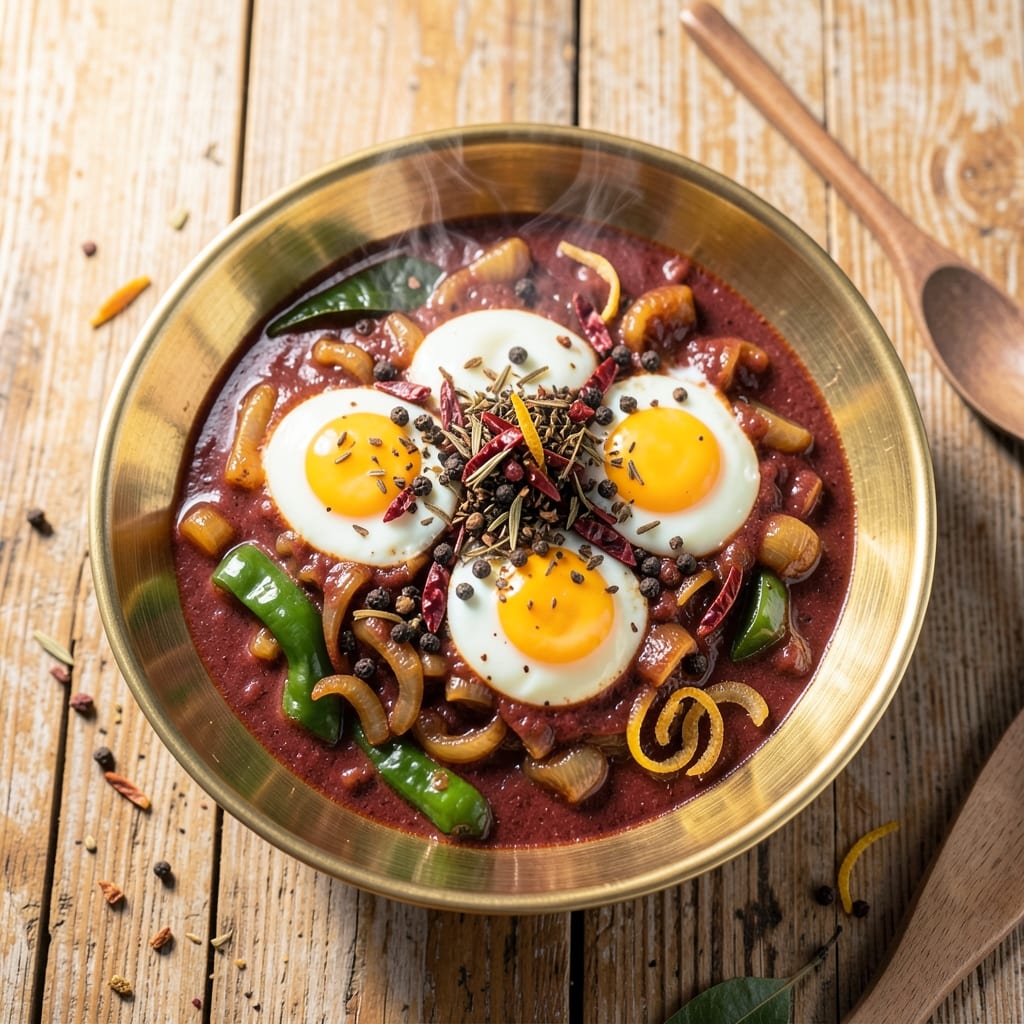
The Chettinad egg curry transforms humble eggs into a fragrant, spice-kissed masterpiece that balances bold heat with coconut cream richness—a dish born from Tamil Nadu’s legendary spice traditions. 🔥 Unlike milder curries, this version demands attention with its signature Chettinad spice blend (dry red chilies, black pepper, and fennel seeds), tempered to perfection in a sizzling thoran that infuses every bite with aromatic depth. The key lies in the slow simmer, where tamarind’s tang cuts through the spice while coconut milk lends a velvety contrast, creating harmony in every spoonful.
What sets this recipe apart is its authentic technique: eggs poached in the simmering gravy absorb the spice blend without breaking, while the thoran (tempering of mustard seeds, curry leaves, and asafoetida) develops layers of complexity. The result? A curry that’s spicy yet balanced, creamy yet not heavy—ideal for breakfast or lunch when paired with steamed rice or crispy appalam. No shortcuts here; every step, from toasting whole spices to adjusting tamarind for tang, ensures restaurant-quality results at home.
For those new to Chettinad flavors, the spice level can be adjusted by reducing dry red chilies or adding coconut milk, but the true magic happens in the tempering. Sautéing garlic, ginger, and the spice blend until fragrant unlocks flavors that store-bought mixes can’t replicate. The curry’s consistency should coat the back of a spoon—thick enough to cling to rice but light enough to let the eggs shine.
Ready to elevate your weeknight meals? This curry isn’t just a dish; it’s a spice journey that turns a simple ingredient into a centerpiece. Serve it with warm rice and a side of yogurt to cool the palate, and prepare to taste the soul of Tamil Nadu in every bite. Let’s begin with the spices—where the real transformation starts.
Ingredients for chettinad egg curry recipe in tamil
The heart of Chettinad egg curry lies in its spice blend and coconut harmony.
| Ingredient | Amount | Notes |
|---|---|---|
| Eggs 🍳 | 6 whole | Large, room temperature preferred |
| Coconut Milk 🥥 | 1 ½ cups | Full-fat for creaminess |
| Chettinad Spice Blend 🌶️ | 2 tbsp | Homemade or store-bought |
| Tamarind Paste 🍋 | 1 ½ tbsp | Adjust for tang preference |
| Mustard Seeds 🌿 | 1 tbsp | For authentic thoran |
| Curry Leaves 🌿 | ¼ cup | Fresh, lightly crushed |
| Asafoetida 🧂 | ¼ tsp | Dissolve in oil first |
| Ginger 🧄 | 1 inch | Fresh, peeled, grated |
| Garlic Cloves 🧄 | 6 cloves | Fresh, peeled, minced |
| Onion 🧅 | 1 whole | Medium, finely chopped |
| Tomato 🍅 | 1 whole | Medium, pureed |
| Green Chili 🌶️ | 2 whole | Slit lengthwise, optional |
| Salt 🧂 | 1 ½ tsp | Adjust to taste |
| Ghee 🫒 | 3 tbsp | For authentic flavor |
| Fresh Coriander Leaves 🌿 | ¼ cup | Chopped, for garnish |
The Chettinad spice blend is non-negotiable for authentic flavor. Penzeys Spices or MDH Masala carry excellent pre-mixed blends, but homemade versions using dry red chilies, black peppercorns, and fennel seeds deliver superior depth. Toast your whole spices in ghee until fragrant—this step unlocks their aromatic potential. For tamarind paste, Mamee brand is widely available and provides consistent tang. Fresh curry leaves are essential; dried versions lack the vibrant, citrusy notes. If unavailable, substitute with 1 tsp dried curry leaf powder, but the flavor won't be identical. Mustard seeds should be lightly toasted in hot oil before adding other aromatics to prevent bitterness.
Coconut milk quality dramatically impacts texture. Thai Kitchen brand cans provide reliable full-fat consistency, while Trader Joe's offers organic options. For a lighter version, reduce to 1 cup and add 0.5 cup water. Tamarind paste can be substituted with 1 tbsp lemon juice plus 0.5 tsp sugar, though the depth of flavor differs. Green chilies are optional but recommended for authentic heat—substitute with 0.5 tsp cayenne powder if unavailable. The tomato puree should be smooth; blend with 1 tbsp water if too thick. Fresh ginger and garlic are mandatory; powdered versions lack the necessary complexity. Asafoetida (hing) is crucial for that signature umami punch—never skip it in Chettinad cooking.
Store fresh curry leaves wrapped in damp paper towels in the fridge for up to 1 week. The spice blend keeps for 6 months in an airtight container. Coconut milk should be refrigerated after opening and used within 5 days. For best results, prepare the curry fresh, but it reheats beautifully—simmer gently with 1 tbsp water to restore creaminess. The eggs should be poached in the simmering gravy for 3-4 minutes to achieve perfect doneness. Garnish with fresh coriander just before serving to preserve its vibrant color and aroma.
Why You'll Love This Recipe
- Spice Blend Shortcut: That jar of Chettinad powder does all the work—no measuring individual spices, no second-guessing. Just toss it in with the mustard seeds and onions, and boom, you’ve got that signature tangy, slightly smoky depth without the fuss. (Honestly, I keep a bottle in my pantry just for this.)
- Creamy-Tangy Magic: The tamarind paste and coconut milk create this perfect balance—sour enough to cut through the richness, but silky enough to make every bite feel indulgent. That crispy egg edge? Chef’s kiss.
- Weeknight Workhorse: Serve it with rice for a full meal, or scoop it into parathas for a hearty breakfast. Even my picky-eating cousin devours it—proof it’s versatile enough for any day, any craving.
- Budget-Friendly Luxury: Eggs are cheap, coconut milk stretches far, and that spice blend lasts for ages. I’ve made this for $3 a serving, yet it tastes like a restaurant dish. Leftovers? They reheat like a dream, too.
Step-by-step instructions for Chettinad egg curry
Master this bold South Indian classic with precise technique and layered flavors.
🍳 Step 1: Temper the Mustard Seeds and Spices
Heat the 3 tbsp ghee in a heavy-bottomed pan over medium-low heat until it shimmers but doesn't smoke. Add the 1 tbsp mustard seeds and let them splutter for 30 seconds—this is your signal they're ready for the next ingredients.
Quickly add the 0.25 cup curry leaves and 0.25 tsp asafoetida, stirring constantly. The curry leaves should sizzle and darken slightly while the asafoetida dissolves completely into the ghee. This tempering process releases their essential oils, creating the aromatic base for your curry. Watch carefully—burnt curry leaves make the dish bitter.
👨🍳 Step 2: Build the Spiced Onion-Tomato Base
Add the finely chopped 1 whole onion to the pan and sauté for 5-6 minutes until translucent and just beginning to golden. Stir in the grated 1 inch ginger, minced 6 cloves garlic, and slit 2 whole green chili, cooking for another 2 minutes until fragrant.
Pour in the pureed 1 whole tomato and cook for 3-4 minutes until the oil separates from the mixture. This is your signal the raw acidity has cooked off. Sprinkle in the 2 tbsp Chettinad spice blend and stir for 1 minute to toast the spices—this activates their flavors and prevents bitterness.
🍳 Step 3: Create the Tangy Coconut Gravy
Reduce heat to low and add the 1.5 tbsp tamarind paste and 1.5 tsp salt, stirring until dissolved. Gradually pour in the 1.5 cups coconut milk while whisking continuously to prevent curdling. The mixture should simmer gently for 5 minutes until slightly thickened and fragrant.
Here's the thing—this is where the authentic Chettinad balance comes together. Taste and adjust seasoning: add more salt if needed, or a pinch of sugar to balance the tamarind's acidity. The gravy should coat the back of a spoon but still flow smoothly when stirred—this consistency ensures perfect egg coating later.
🥘 Step 4: Cook the Eggs to Perfect Tenderness
Crack the 6 whole eggs directly into the simmering gravy, stirring gently but constantly for 3-4 minutes until the whites are just set but yolks remain runny. The eggs should be fully coated in the spiced coconut mixture but not scrambled—this creates the signature "egg curry" texture.
I always use room-temperature eggs for this step—they cook more evenly and maintain their shape better. If you notice the eggs curdling too quickly, reduce heat to lowest setting and stir more gently. The moment the eggs form soft, creamy clumps is when you're ready for the final step.
⏰ Step 5: Finish and Garnish for Restaurant-Quality Results
Return the heat to medium-low and let the curry simmer for 2-3 minutes to meld all flavors. The eggs should be just set throughout with no trace of raw egg. Stir in the 0.25 cup fresh coriander leaves and remove from heat immediately—this preserves their vibrant color and fresh flavor.
Serve hot with steamed rice or appam, garnished with additional coriander if desired. The curry should have a perfect balance: rich coconut creaminess, bold Chettinad spice heat, and tangy tamarind brightness. Each bite should deliver tender eggs coated in aromatic gravy—this is authentic Chettinad egg curry at its finest.
Pro Tips For Making Chettinad Egg Curry Recipe In Tamil
- Bloom the Spices Low: After burning three batches of mustard seeds, I finally learned to toast them on the lowest heat setting—just until they sizzle, not pop. Too much heat turns them bitter fast, and you’ll taste it in the final curry. Keep the flame steady and patient.
- Soak Tamarind Properly: Skip the dry paste shortcut—soak tamarind pulp in warm water for 10 minutes first. This dissolves the fiber and gives you a smooth, tangy base. Strain it twice if you’re lazy, but at least soak it; dry tamarind paste clumps and ruins the texture.
- Cook Eggs Half-Done: Poach or soft-boil eggs for 5 minutes before adding them to the curry. They’ll finish cooking in the coconut milk’s heat, staying creamy—not rubbery. Overcooked eggs turn to gray mush, and no one wants that in their Chettinad masterpiece.
- Temper Coconut Milk: Heat the coconut milk separately to 180°F (80°C) before mixing it in. Cold milk cools the spices too fast, dulling their punch. A quick simmer in the same pot for 2 minutes keeps the flavors sharp and the curry silky.
Serving suggestions for leftovers
Rice Pairings
Serve this Chettinad egg curry with steamed basmati rice for the ultimate Tamil Nadu meal combo. The long grains absorb the coconut-spiced gravy beautifully, creating a perfect balance of textures. I recommend using Parboiled basmati rice from brands like Tilda or India Gate—their slightly firmer texture holds up better to bold flavors. Cook rice with 1:1.5 rice-to-water ratio and let it rest covered for 10 minutes after cooking for fluffier grains. 💛
Appam Serving
For a traditional South Indian breakfast, pair with appam—soft, lacy rice hoppers made from fermented rice batter. The crispy edges and fluffy centers contrast perfectly with the creamy curry. I love using MTR brand appam mix for convenience, but homemade versions taste even better. Cook appam in a small cast iron skillet over medium heat until golden brown on both sides. Serve with a dollop of coconut milk on the side for dipping.
Yogurt Balance
To cool the palate after the spicy curry, serve with plain yogurt mixed with a pinch of roasted cumin powder and salt. I use Dannon plain yogurt for its smooth texture, but Amul mango pulp yogurt adds a fruity twist that pairs wonderfully. The cool yogurt cuts through the richness while enhancing the tamarind's tang. Keep it chilled until serving to maintain its creamy consistency.
Spicy Accompaniments
Add a side of pickled onions or mango pickle to intensify the flavors. The sharp acidity of F&B pickled onions or homemade mango pickle complements the curry's heat and coconut notes. I also recommend papadums—crispy lentil wafers that add a satisfying crunch. Toast Haldiram's papadums in a dry pan for 20 seconds per side until puffed and golden for maximum crispiness. ✨
Beverage Pairings
Sip on filter coffee or masala chai to complete the meal. The strong, spiced filter coffee from Tamil Nadu's traditional Kadai-style brewing cuts through the curry's richness, while Tata Tea's masala chai adds a comforting contrast. For a refreshing option, serve with nimbu pani (Indian lemonade) made with real lime juice, roasted cumin powder, and a pinch of salt. The citrus notes cleanse the palate between spicy bites.
Nutrition facts
Frequently asked questions
What makes Chettinad egg curry different from regular egg curry?
The defining difference is the Chettinad spice blend and tempering technique. This version uses dry red chilies, black pepper, and fennel seeds toasted in ghee, creating a deeper, more complex heat profile. The thoran (mustard seed tempering) adds aromatic layers that regular egg curries often lack. Plus, the balance of tamarind tang and coconut creaminess gives it a unique South Indian character.
Can I make this curry less spicy?
Reduce the Chettinad spice blend to 1 tbsp instead of 2 tbsp and omit the green chilies. For extra mildness, add 0.5 cup more coconut milk at the end to dilute the heat. The tamarind and coconut will still provide that signature tangy-creamy balance without the spice intensity.
Why do the eggs need to be room temperature?
Room-temperature eggs cook evenly and maintain their shape better when poached in the gravy. Cold eggs release heat unevenly, causing the whites to set too quickly while the yolks remain runny. This creates an inconsistent texture in your curry. Simply take eggs out of the fridge 15-20 minutes before cooking for perfect results.
What's the best way to store leftovers?
Let the curry cool completely, then transfer to an airtight container. It keeps well in the fridge for 3 days or can be frozen for up to 1 month. When reheating, add 1-2 tbsp water and simmer gently to restore creaminess. The eggs may firm up slightly but will still be delicious. For best texture, reheat only what you'll eat immediately.
Can I substitute coconut milk with cream?
While heavy cream will work, it won't replicate the authentic coconut flavor and texture. For a close substitute, mix 1 cup cream with 0.5 cup water, but you'll lose the subtle sweetness and depth of coconut. The tamarind's tang will still shine, but the dish will taste more like a northern Indian egg curry. Stick with coconut milk for true Chettinad flavor.