
Breakfast & Brunch
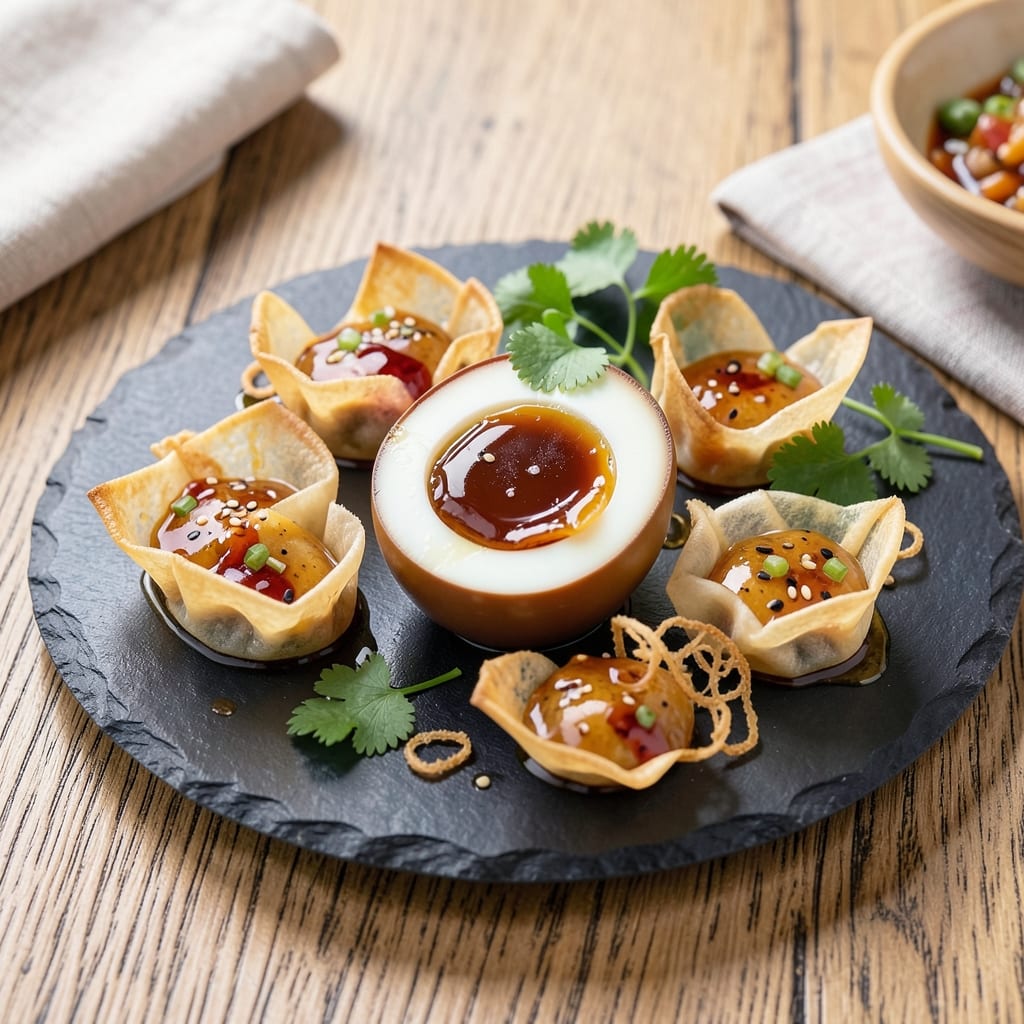
Chinese Silken Egg Recipe transforms delicate wonton cups into crispy edible vessels for the luxurious texture of century eggs—where the yolk remains molten and the white silky smooth. 💛 This dish bridges tradition and technique, offering a sophisticated breakfast that's surprisingly approachable for home cooks. The secret lies in properly preparing the preserved eggs and achieving that perfect crisp-to-tender balance in the wonton cups.
The process begins with properly peeling and marinating the century eggs in a sweet-savory sauce that enhances their natural umami depth. While traditional preparation involves months of preservation, we'll focus on the final presentation that delivers restaurant-quality results. The crispy wonton cups provide the ideal contrast to the eggs' silky interior, creating a textural experience that's both elegant and satisfying.
What makes this dish special is the harmony of textures—crispy wonton cups give way to reveal the creamy, jelly-like egg yolk that's neither fish nor fowl but something entirely unique. The marinade adds layers of flavor that complement rather than overpower the eggs' natural richness. This isn't just breakfast; it's a culinary experience that's perfect for brunch gatherings or special occasions.
While traditionally served as a savory dish, you can adapt the marinade to include sweeter elements like honey or soy sauce for a unique fusion twist. The recipe scales beautifully, making it ideal for sharing. Let's create this luxurious yet approachable dish that will impress your guests and elevate your breakfast repertoire.
Ingredients for chinese silken egg
Four preserved eggs and sixteen delicate wonton wrappers create this luxurious breakfast masterpiece.
| Ingredient | Amount | Notes |
|---|---|---|
| Century Eggs (Preserved Silken Eggs) 🥚 | 4 whole | Properly peeled and rinsed |
| Wonton Wrappers 🍡 | 16 pieces | Square, store-bought or homemade |
| Vegetable Oil 🫒 | ½ cup | High smoke point for frying |
| Soy Sauce 🍶 | ¼ cup | Light or dark, to taste |
| Rice Vinegar 🍶 | 2 tbsp | Seasoned preferred for depth |
| Sesame Oil 🫒 | 1 tbsp | Toasted for aroma |
| Granulated Sugar 🍚 | 1 tbsp | White or brown preferred |
| Fresh Ginger Root 🌿 | 1 tbsp | Finely grated, peeled |
| Garlic Cloves 🧄 | 3 cloves | Minced, fresh preferred |
| Scallions 🧅 | 3 whole | Thinly sliced, green parts |
| Cornstarch 🌾 | 1 tbsp | For crisping wonton cups |
| Sesame Seeds 🌰 | 1 tbsp | Toasted for garnish |
| Salt 🧂 | ½ tsp | Kosher or sea salt |
| White Pepper 🌶️ | ¼ tsp | Freshly ground |
The century eggs are the heart of this dish—look for properly preserved ones with silky whites and intact yolks. Asian grocery stores like H Mart or 99 Ranch Market carry high-quality preserved eggs, often sold in brine. If using store-bought, rinse thoroughly before peeling. The wonton wrappers should be thin and pliable—avoid pre-cooked varieties. For authentic texture, chill the wrappers for 15 minutes before shaping to prevent sticking. The ginger and garlic should be freshly grated and minced, as dried versions lack the aromatic depth needed to complement the eggs' umami richness.
No century eggs? Silken tofu marinated overnight in soy sauce, vinegar, and sesame oil creates a similar texture—though the flavor profile will differ. Substitute rice vinegar with apple cider vinegar in a pinch, though the tang won't be identical. For the wonton cups, cornstarch is non-negotiable—it creates that signature crispiness. If you can't find it, arrowroot powder works at double the amount. The sesame oil should be toasted, not regular—the aroma makes all the difference. For a fusion twist, add 1 tsp of honey to the marinade for a sweet-savory balance, though traditionalists may prefer to skip it.
Preserved eggs keep 2-3 weeks in the fridge once opened, submerged in brine. Wonton wrappers freeze beautifully—separate sheets with parchment paper to prevent sticking. The completed dish reheats best in a steamer for 3-4 minutes to restore crispness. For presentation, arrange on a platter with extra scallions and sesame seeds—the garnish elevates the dish from impressive to restaurant-worthy. Store leftovers in an airtight container for up to 3 days, though texture may soften slightly.
Why You'll Love This Recipe
- No-Chop Wraps: I swear by these when I’m too tired to chop anything. Just slice the century eggs (that creamy yolk is worth the effort), lay out the wonton wrappers, and you’re halfway there—no knife skills required.
- Umami Bomb: The century egg’s funky, salty depth paired with soy sauce and rice vinegar? It’s like a tiny flavor explosion in every bite. Honestly, I’ve tried other quick wraps, but nothing hits this hard.
- Lunchbox Legend: Between us, these are my go-to for packed lunches. The wrappers hold up, the filling stays intact, and my kids actually eat them—no sad desk lunches here. (Yes, even on a Tuesday night.)
- Budget Stretch: Century eggs last forever, and a box of wonton wrappers feeds my family for days. I make a big batch, freeze extras, and save money without sacrificing taste. Practical? Absolutely. Delicious? Ridiculously so.
Step-by-step instructions for crispy wonton cups with silken egg filling
Master this delicate balance of crispy wonton cups and silky preserved egg filling in precise steps.
👨🍳 Step 1: Prepare the Silken Egg Filling
Peel the 4 whole century eggs carefully, removing all the dark membrane and rinsing under cold water. The yolk should separate cleanly from the white—if it doesn't, gently coax it out with your fingers. Place the yolks in a bowl and mash them with a fork until completely smooth, creating a thick, custard-like consistency.
Add 1 tbsp sesame oil, 1 tbsp rice vinegar, 0.5 tsp salt, and 0.25 tsp white pepper to the mashed yolks. Mix thoroughly until fully combined. The filling should be silky and glossy, with a delicate balance of umami from the century eggs and bright acidity from the vinegar. Cover and set aside—this mixture will need to rest while you prepare the wonton cups.
🍳 Step 2: Create the Crispy Wonton Cups
Heat 0.5 cup vegetable oil in a wok or deep skillet over medium-high heat until it shimmers. Add 1 tbsp cornstarch to the oil and swirl to coat the bottom evenly—this creates a crispy base for your wonton cups. Working in batches, carefully press 4 wonton wrappers into the hot oil, using a small spoon or your fingers to shape them into shallow cups.
Fry for 2-3 minutes until the edges turn golden brown and crispy. Flip each cup once and fry for another 1-2 minutes on the other side. Transfer to a paper towel-lined plate to drain excess oil. Repeat with remaining wrappers, maintaining the same oil temperature for even crispiness. The cups should be sturdy enough to hold the filling without collapsing.
🥘 Step 3: Assemble and Fill the Wonton Cups
In a small bowl, combine 0.25 cup soy sauce, 1 tbsp granulated sugar, 1 tbsp finely grated ginger, 3 cloves minced garlic, and 3 whole thinly sliced scallions. Mix well to create a vibrant, aromatic sauce. This will be the flavor bridge between the crispy cups and the silken filling.
Fill each crispy wonton cup with 1 teaspoon of the prepared silken egg mixture. Drizzle 1 teaspoon of the ginger-scallion sauce into each cup, allowing it to pool slightly at the bottom. The sauce should coat the inside of the cup, enhancing the filling's flavor with every bite.
🔥 Step 4: Finish and Garnish for Perfect Texture
Heat a dry skillet over low heat and toast 1 tbsp sesame seeds for 1-2 minutes until fragrant and lightly golden. Immediately sprinkle the toasted sesame seeds over the filled wonton cups, pressing gently to adhere. The seeds should release their nutty aroma, adding a final textural contrast to the dish.
Serve immediately while the wonton cups are still crispy and the filling remains silky. The combination of the delicate preserved egg yolk, savory ginger-scallion sauce, and crunchy wonton cups creates a harmonious balance of textures and flavors. Each bite should deliver a satisfying contrast between the crispy exterior and the creamy, umami-rich filling.
Pro Tips For Making Chinese Silken Egg
- Peel Eggs Cleanly: Run the century egg under cold water while peeling—it softens the skin and keeps the yolk from breaking. I learned this the hard way after watching three yolks spill onto my cutting board like overripe custard.
- Pan-Fry Wrappers Fast: Use a dry, nonstick pan and high heat—just 15 seconds per side until golden. Overcrowding the pan makes them soggy, and that’s a texture crime in this dish.
- Skip the Vinegar Rush: Add rice vinegar after removing the pan from heat—it cooks off too quickly if you toss it in early. The result? A dish that’s sharp but balanced, not sour and flat.
- Slice Eggs Thin: Cut century eggs into ¼-inch slices for even cooking and better texture. Thicker pieces stay underdone inside while the edges crisp—no one wants a chewy surprise in their dumpling.
Dietary considerations for this recipe
Gluten-Free Adaptations
Traditional wonton wrappers contain wheat flour, but gluten-free alternatives work beautifully. Look for gluten-free wonton wrappers at Asian specialty stores or online—brands like King Arthur or Taste of Nature offer excellent options. These wrappers require slightly more care when shaping to prevent tearing during frying. For an extra crispy texture, brush the outside with egg wash before frying, as the protein helps create a stronger shell. 🥚
Vegetarian Substitutes
Century eggs are traditionally made with duck eggs, but silken tofu makes a surprisingly good substitute for vegetarians. Marinate 8 oz firm silken tofu in 3 tbsp soy sauce, 1 tbsp rice vinegar, 1 tsp sesame oil, and ½ tsp white pepper overnight. Drain and crumble gently before using as a filling. The texture won't be identical, but the umami depth from the soy sauce bridges the gap. For extra richness, add 1 tsp miso paste to the marinade.
Low-Sodium Options
Store-bought soy sauce can be high in sodium, so opt for low-sodium soy sauce (like Kikkoman Low Sodium) or reduce the amount to 2 tbsp while adding extra 1 tsp rice vinegar and ½ tsp honey for balance. Fresh ginger and garlic naturally enhance umami, so don't skimp on those—1 tbsp grated ginger and 4 cloves garlic will compensate for the reduced salt. Taste the filling before assembling to adjust seasoning.
Allergen-Friendly Tips
Sesame seeds and sesame oil are common allergens, but you can swap them for toasted pumpkin seeds or sunflower oil without sacrificing texture. For nut-free kitchens, ensure all garnishes (like sesame seeds) are prepared in a dedicated area. If using cornstarch substitutes, arrowroot powder works at double the amount, but test crispiness first—some brands may require 1 extra minute of frying time. Always check labels on store-bought wrappers for hidden allergens like soy or egg.
Sweet Variations
For a fusion twist, sweeten the ginger-scallion sauce by adding 1 tsp honey or ½ tsp maple syrup to the ¼ cup soy sauce. Replace 1 tbsp rice vinegar with 1 tsp black vinegar (common in Asian cooking) for depth. Garnish with crushed red pepper flakes for a sweet-spicy contrast. This version works beautifully as a dessert-like appetizer, especially with a drizzle of chili oil on the side for heat lovers. 🌶️
Nutrition facts
Frequently asked questions
What makes century eggs different from regular eggs?
Century eggs undergo a preservation process of 1-3 months in a mixture of clay, ash, salt, quicklime, and rice hulls. This transforms the egg whites into a jelly-like texture while the yolk remains creamy and dark. The unique flavor profile is umami-rich with a slightly funky, savory depth that's impossible to replicate with fresh eggs.
Can I use store-bought century eggs for this recipe?
Yes, but with caution! Look for eggs that are properly preserved with intact yolks and silky whites. Rinse them thoroughly before peeling to remove excess brine. Avoid eggs with cracks or broken yolks, as they won't hold their shape when mashed. For best results, choose eggs from reputable Asian markets where quality control is stricter.
How do I properly peel century eggs without breaking them?
Start by cracking the eggshell at both ends, then gently peel away the shell in one piece. The membrane inside can be tricky—use your fingernail to separate the white from the yolk carefully. For stubborn membranes, soak the peeled egg in warm water for 2 minutes to soften it. Never force the peel—patience prevents broken yolks!
Can I make this recipe without wonton wrappers?
For a crispy alternative, try using spring roll wrappers (cut into circles) or even phyllo dough (folded into cups). If you prefer a softer texture, use mini wonton wrappers (like dumpling skins) and steam instead of fry. The key is maintaining the crispy-to-silky contrast—adjust cooking methods accordingly.
How long do the filled wonton cups keep fresh?
Best served immediately for maximum crispiness, but they'll stay fresh in an airtight container for 2 days in the fridge. To reheat, steam for 3-4 minutes to restore crispness. For longer storage, freeze unfilled wonton cups separately and fill fresh when ready to eat. The silken egg filling keeps for 3 days in the fridge when stored properly.