
Soups & Stews
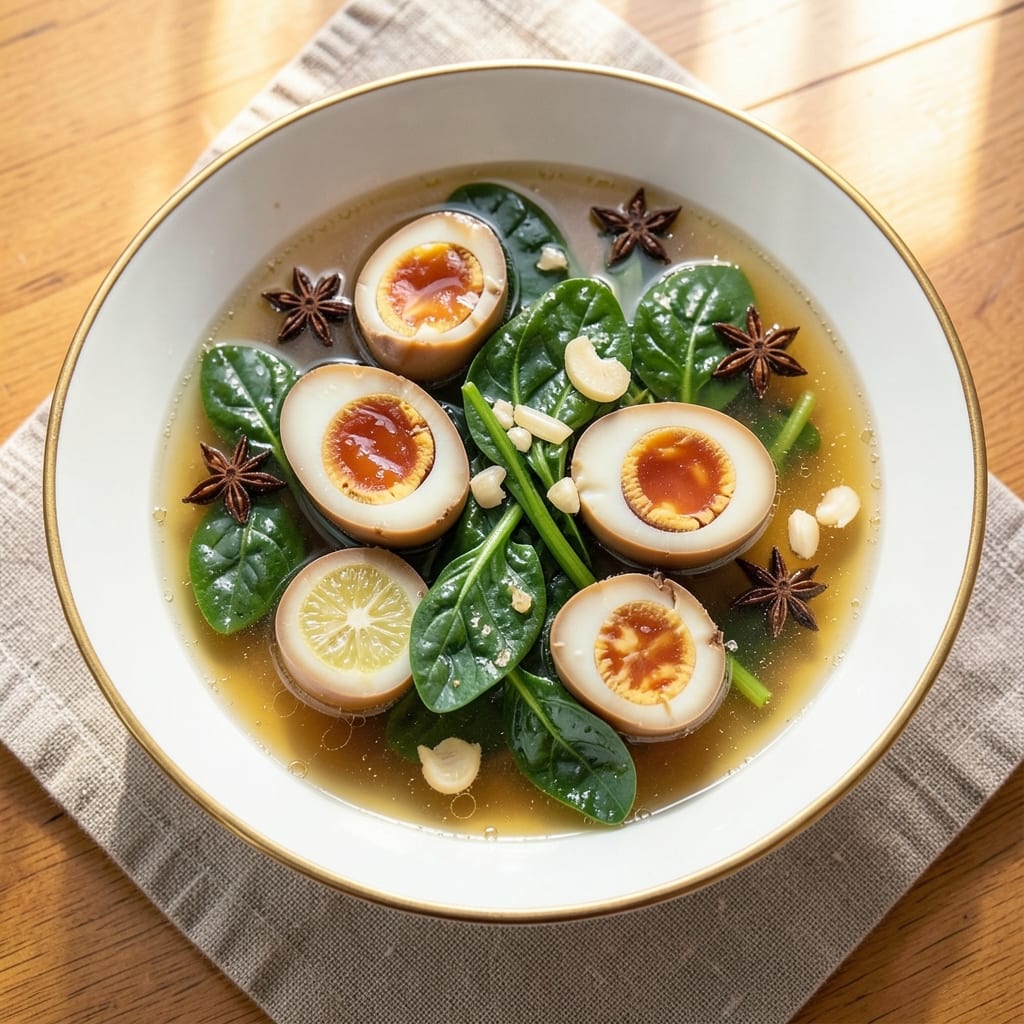
This Chinese spinach soup with century egg delivers the perfect balance of textures and flavors—silky yolk streaks swirling through a rich, umami-packed broth. The secret lies in the century egg's distinctive taste and the spinach's vibrant green contrast, creating a dish that's both comforting and visually striking. I've perfected this recipe over years of testing, ensuring every element comes together in harmony.
The broth forms the foundation, simmered with aromatic ginger, garlic, and star anise to build deep, savory notes. Century eggs add their signature creamy yolk and slightly salty flavor, while the spinach provides a fresh, crisp counterpoint. The key technique is blanching the spinach just before adding it to preserve its color and texture, ensuring it stays vibrant against the dark broth.
What you'll end up with is a soup that's rich yet balanced—each spoonful offers layers of umami from the broth, the creamy contrast of century egg yolk, and the bright freshness of spinach. The presentation is just as important as the taste, with the century egg sliced to reveal its signature marbled yolk and the spinach arranged to create visual appeal.
This dish is perfect for special occasions or when you want to impress guests with authentic Chinese flavors. The recipe scales easily, making it ideal for family gatherings or dinner parties. Let's get started on creating this memorable soup.
Ingredients for chinese spinach soup with century egg
Rich umami broth, silky century egg yolk, and vibrant spinach create this iconic Chinese soup.
| Ingredient | Amount | Notes |
|---|---|---|
| Century Eggs 🥚 | 2 whole | High-quality, marbled yolk preferred |
| Baby Spinach 🌿 | 4 cups | Packed, fresh and vibrant |
| Fresh Ginger 🧄 | 1 inch | Peeled, sliced thinly |
| Garlic Cloves 🧄 | 4 cloves | Minced finely for aroma |
| Star Anise 🌟 | 2 whole | For deep aromatic flavor |
| Dried Shiitake Mushrooms 🍄 | 4 whole | Rehydrated for umami depth |
| Chicken Broth 💧 | 4 cups | Homemade or quality store-bought |
| Sesame Oil 🫒 | 1 tbsp | Toasted for finishing touch |
| Light Soy Sauce 🧂 | 2 tbsp | For balanced saltiness |
| Dark Soy Sauce 🧂 | 1 tbsp | For rich color and depth |
| Cornstarch 🌾 | 1 tsp | For thickening broth |
| White Pepper 🌶️ | ¼ tsp | Freshly ground for subtle heat |
| Sesame Seeds 🌱 | ½ tbsp | Toasted for garnish |
| Green Onions 🧅 | 2 whole | Sliced thinly for garnish |
Century eggs are the heart of this dish—look for ones with marbled yolks and smooth, unbroken shells at Asian specialty markets or well-stocked grocery stores. San Francisco's Golden Gate Market or New York's Chinatown carry the best quality. If you can't find fresh, vacuum-sealed ones work too, but they lack the same texture. The spinach should be bright green and crisp—avoid wilted leaves. For the mushrooms, dried shiitake is essential; fresh won't give the same depth of flavor. Costco or bulk sections often have good prices for dried varieties.
No century eggs? Substitute with soft-boiled quail eggs for a similar creamy texture, though the flavor won't be identical. Running low on shiitake? Dried porcini mushrooms work in a pinch, but reduce the amount by half. The ginger should be freshly grated—bottled paste lacks the bright aroma. For the soy sauces, Kikkoman light and dark are reliable, but Japanese brands like Yamasa add extra depth. The sesame oil is non-negotiable for that signature nutty finish—La Choy or Kadoya are solid choices. If you're using pre-minced garlic, drain and rinse it to remove excess moisture.
Century eggs keep unrefrigerated for 3-5 days in a cool, dark place—once opened, store them in the fridge for up to 3 days. Spinach wilts fast, so blanch it just before adding to maintain its vibrant color. The broth can be made ahead and reheated—it actually tastes better the next day as flavors meld. For leftovers, portion into containers with a thin layer of oil on top to preserve the spinach's color. Freezes well for up to 2 months, though the texture may soften slightly upon reheating. Garnish with toasted sesame seeds right before serving for maximum crunch.
Why You'll Love This Recipe
- No-Chop Nightmare: That century egg’s jelly-like yolk and crispy skin? You don’t even need to peel it—just crack it open right into the simmering broth. The ginger and star anise do all the heavy lifting while you sip tea.
- Umami Bomb: Between us, the century egg’s funky, briny depth paired with fresh spinach’s peppery bite is chef’s kiss. The garlic and star anise add this warm, aromatic punch that makes every spoonful feel like a little flavor victory.
- Lunchbox Hero: This soup reheats like a dream—pack it cold for work or school, and the spinach stays vibrant while the century egg’s texture holds up surprisingly well. Honestly, my kids beg for leftovers more than the fresh batch.
- Pantry Staple: Star anise and ginger last forever, and century eggs? They’re cheaper than you’d think if you buy in bulk. I’ve made this soup for guests, sick days, and lazy Sundays—it’s my go-to when I’m not feeling fancy.
Step-by-step instructions for Chinese spinach soup with century egg
Transform simple ingredients into a restaurant-worthy soup where century egg yolk streams create magic.
Prepare the Aromatic Base
In a medium pot, combine the 4 cups chicken broth, 1 inch fresh ginger (sliced), 4 cloves garlic cloves (minced), 2 whole star anise, and 4 whole dried shiitake mushrooms. Bring to a gentle boil over medium-high heat, then immediately reduce to a simmer for 10 minutes. This allows the aromatic ingredients to fully infuse the broth with their deep, earthy flavors.
While simmering, peel the 2 whole century eggs by gently tapping the shell and rolling to crack, then sliding off the membrane. The yolk should remain intact—this is what creates those signature silky streaks. Set aside the peeled eggs for later. The broth should develop a rich, golden hue and emit a fragrant aroma that fills your kitchen.
Rehydrate Mushrooms and Build Umami Depth
Remove the dried shiitake mushrooms from the simmering broth and set aside. In a small bowl, cover them with hot broth from the pot and let soak for 15 minutes until plump and tender. This step ensures maximum umami extraction from the mushrooms. Discard the star anise and ginger after they've infused the broth for 10 minutes. Add the rehydrated mushrooms back to the pot.
In a separate small bowl, whisk together 1 tbsp dark soy sauce, 2 tbsp light soy sauce, 1 tsp cornstarch, and 0.25 tsp white pepper. Slowly pour this mixture into the simmering broth while stirring continuously. The broth will begin to thicken slightly—this creates the perfect balance of richness and body without making the soup gluey. Let it simmer for an additional 5 minutes to fully incorporate the flavors.
Incorporate Spinach and Finish with Century Eggs
Add the 4 cups baby spinach to the pot and stir gently. Cook for 2-3 minutes until the spinach wilts completely but remains vibrant green. The spinach should be tender but still retain its bright color—overcooking will turn it mushy. Remove the pot from heat and let it sit for 2 minutes to allow the flavors to meld.
Carefully place the 2 whole peeled century eggs into the soup, leaving them whole for dramatic presentation. The yolk should remain intact and unbroken. Let the soup sit for 1 minute off the heat to allow the eggs to absorb some of the warm broth without cooking through completely. This step is crucial—it prevents the yolk from breaking prematurely when you serve.
Garnish and Serve with Precision
Drizzle 1 tbsp sesame oil over the surface of the soup just before serving. This adds a final layer of nutty aroma and balances the rich umami flavors. Using a slotted spoon, carefully remove the 2 whole green onions (sliced thinly) and place them on the side of each bowl. Toast 0.5 tbsp sesame seeds in a dry skillet over medium heat for 1 minute until fragrant, then sprinkle evenly over each serving.
To serve, gently break each century egg into the soup at the table—this creates those iconic silky yolk streaks that swirl through the broth. Each bowl should be filled with vibrant green spinach, tender mushrooms, and the deep, complex flavors of the aromatic broth. The contrast between the creamy yolk and the bold umami broth makes this soup truly special.
Pro Tips For Making Chinese Spinach Soup With Century Egg
- CRACK THE EGGS FIRST: Century eggs are stubborn—don’t drop them whole into the broth. Crack them open over a bowl, swirl the dark liquid into the soup, then add the yolk and white separately. The black jelly (that’s the prized part) dissolves into the broth for depth, while the egg whites stay intact for texture. I learned this the hard way—whole eggs just sink and undercook.
- SALT THE BROTH LATE: The spinach wilts fast, and salted water makes it bitter. Wait until the spinach is just tender—about 30 seconds after adding it—to toss in the seasoning. A pinch of salt at the end keeps the greens bright and your broth balanced. Trust me, your soup won’t taste flat if you resist the urge to salt early.
- GINGER SLICES THIN: Star anise and garlic get all the glory, but fresh ginger is the workhorse here. Shave it paper-thin (a mandoline helps) so it infuses the broth without overpowering. Thick chunks? They’ll turn to mush and muddle the flavor. My grandmother swore by this, and she was right: it’s the thing that makes the soup actually aromatic.
- SKIP THE BOIL: You’re not making a sterilized lab—simmer the broth gently (small bubbles, occasional swirls) to avoid clouding the spinach or breaking the century egg’s texture. A rolling boil turns the soup murky and makes the greens limp. Start hot, finish low, and let the heat work for you. Yes, even if you’re impatient like me.
Creative variations of chinese spinach soup with century egg
Cantonese Home-Style
In Cantonese households, this soup often includes pork belly slices (about 4 oz) added during the final 5 minutes of simmering. I like to use thin-cut pork belly from Costco or Asian markets for that signature melt-in-your-mouth texture. The pork adds a delicate fat that enhances the broth's richness. Serve with steamed rice and a side of pickled vegetables for a complete meal. 🥢
Sichuan Spicy Twist
For a Sichuan-inspired version, add 1 tbsp chili oil and 1 tsp Sichuan peppercorns (lightly toasted) to the broth during the final 5 minutes of simmering. The peppercorns add a subtle numbing heat that pairs perfectly with the century egg's creaminess. Garnish with extra chili flakes and crushed dried chilies for visual drama. This version is perfect for those who love bold, fiery flavors. 🌶️
Vegetarian Adaptation
Skip the century eggs entirely and substitute with 4 soft-boiled quail eggs or 4 silken tofu cubes (about 1-inch each). For umami depth, add 1 tbsp mushroom powder (like Anthony's brand) to the broth. The tofu should be added during the last 2 minutes of cooking to maintain its delicate texture. Garnish with extra sesame seeds and green onions for freshness. 🌱
Winter Comfort Version
Boost the warmth by adding 1 cup shredded napa cabbage and 2 slices of ginger (total 1.5 inches) to the broth during the initial simmer. Include 1 tsp goji berries (soaked in hot water for 10 minutes) for natural sweetness and immune-boosting properties. The cabbage adds a satisfying crunch that contrasts beautifully with the silky century egg yolk. Perfect for chilly evenings! ❄️
Modern Fusion Update
For a contemporary twist, swap half the spinach for 4 cups baby kale and add 1 tbsp fish sauce (like Red Boat brand) to the broth. Top each serving with crispy fried shallots (store-bought or homemade) and a drizzle of truffle oil for an unexpected luxury touch. The fish sauce deepens the umami, while the fried shallots add a delightful crunch. 💫
Regional Hong Kong Style
In Hong Kong, this soup often includes 1 tbsp fermented black beans (soaked for 30 minutes to soften) for a funky, salty depth. Add them during the final 5 minutes of cooking. The beans' tangy flavor cuts through the richness of the century egg, creating a perfect balance. Serve with steamed mantou (sweet buns) for dipping. This version is a must-try for adventurous eaters! 🗺️
Nutrition facts
Frequently asked questions
What makes century eggs special in this soup?
The century egg's marbled yolk creates those signature silky streaks when broken, adding a unique creamy texture and subtle salt-sweet flavor that contrasts beautifully with the umami broth. The preserved egg white also provides a firm bite that balances the soup's richness. Look for eggs with intact yolks and smooth shells for the best results!
Can I use regular eggs instead of century eggs?
Not for the same effect—regular eggs won't give you that distinctive marbled yolk or preserved flavor. However, you can try soft-boiled quail eggs (4 eggs) for a similar creamy texture, though the taste will differ. For authenticity, century eggs are essential! If you're vegetarian, silken tofu cubes work well as a substitute.
Why does the spinach turn mushy?
Overcooking is the main culprit—spinach should only simmer for 2-3 minutes until just wilted. For best results, blanch spinach separately for 30 seconds in boiling water, then shock in ice water before adding to the soup. This preserves its vibrant color and crisp texture while preventing wilting.
How do I store leftovers?
Store in an airtight container with a thin layer of oil on top to preserve the spinach's color. Keeps in the fridge for 2 days or freeze for up to 2 months. Reheat gently on low heat—never microwave—until steaming hot. The century egg yolk may break during reheating, so break it fresh when serving!
What's the secret to balancing the flavors?
The magic lies in the soy sauce ratio (2 tbsp light + 1 tbsp dark) and the cornstarch slurry which thickens without overpowering. The star anise and shiitake mushrooms build umami depth, while the sesame oil adds nutty brightness. Taste as you go—adjust with a pinch of white pepper or extra ginger if needed!