
Breakfast & Brunch
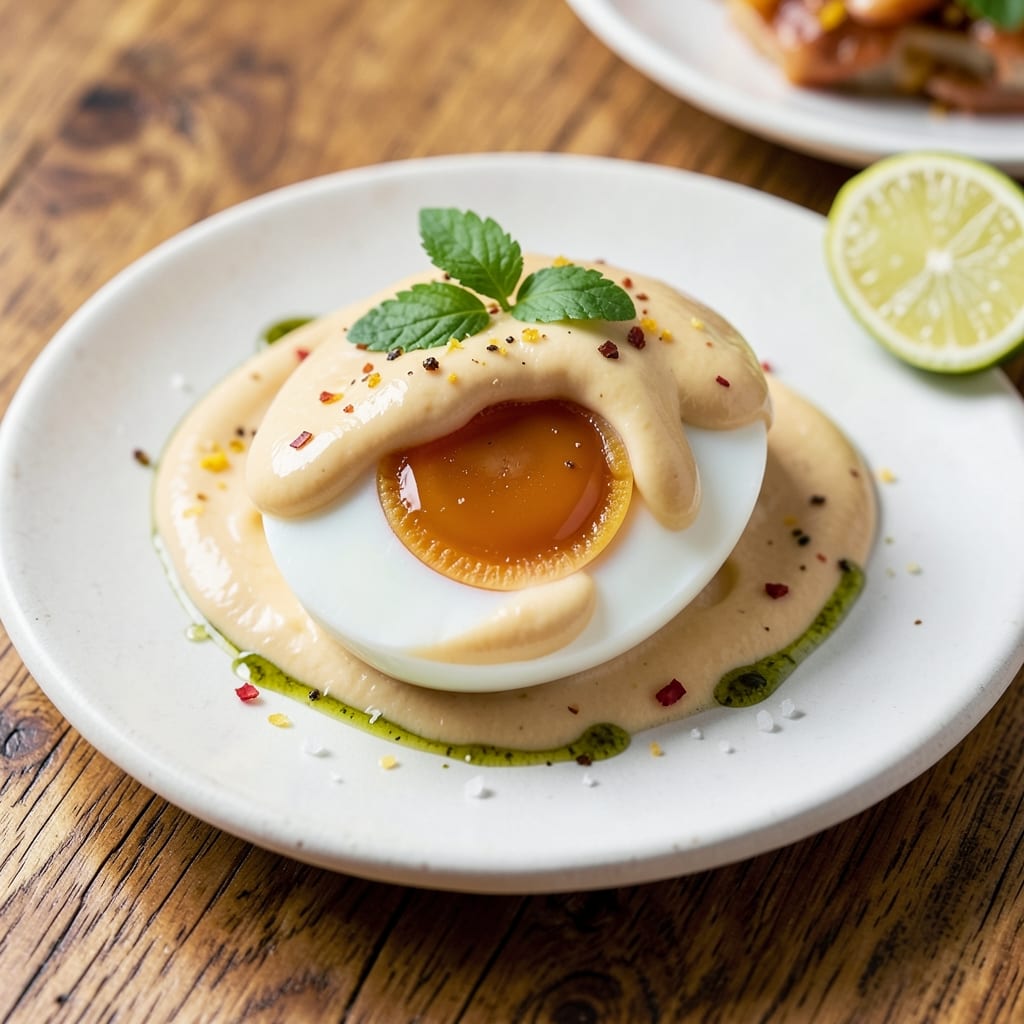
This cooked whole egg mayonnaise recipe transforms simple pantry staples into velvety, restaurant-quality sauce without raw eggs. The secret lies in precise emulsification—cooking eggs to perfection before blending them with oil creates a stable, silky texture that holds up beautifully. No more worrying about broken emulsions or raw egg concerns, just rich, creamy mayonnaise every time.
The process begins with gently cooking whole eggs until just set, then blending them with oil in a controlled manner. A touch of Dijon mustard adds depth, while lemon juice brightens the flavor. This method delivers a mayonnaise that's ideal for sandwiches, dressings, or dipping—with none of the traditional risks. The result is a luxurious, silky sauce that rivals store-bought versions.
What sets this recipe apart is its foolproof technique: no raw eggs mean no safety concerns, and the cooked base ensures a smooth, consistent texture. The emulsion stays stable for days, making it perfect for meal prep. Whether you're spreading it on sandwiches or drizzling it over salads, this mayonnaise delivers professional-quality results at home.
For extra flavor, try adding fresh herbs, smoked paprika, or a dash of honey. Store in an airtight container in the fridge for up to a week, or freeze for longer shelf life. The key to success? Patience and a steady hand—once you master this method, you’ll never buy mayonnaise again.
Ingredients for cooked whole egg mayonnaise
Eight essential ingredients transform humble eggs into velvety, restaurant-quality mayonnaise without raw egg risks.
| Ingredient | Amount | Notes |
|---|---|---|
| Large Whole Eggs 🥚 | 2 whole | Room temperature for best emulsification |
| Extra-Virgin Olive Oil 🫒 | 1 cup | Light or medium for smooth texture |
| Dijon Mustard 🌶️ | 1 tbsp | High-quality for flavor complexity |
| Fresh Lemon Juice 🍋 | 1 tbsp | Brightens flavor, freshly squeezed |
| Kosher Salt 🧂 | ½ tsp | Diamond Crystal preferred for purity |
| White Vinegar 💧 | 1 tsp | Balances acidity, white preferred |
| Granulated Sugar 🍬 | ½ tsp | Optional for subtle sweetness |
| Water 💧 | 1 tbsp | For thinning if needed |
The eggs are the foundation—use large, fresh eggs from the refrigerated section of your grocery store for optimal protein content. Pasture-raised eggs from specialty markets like Whole Foods or local farms yield richer flavor, but standard grocery store eggs work perfectly for this method. Avoid eggs with cracked shells or any cloudiness in the whites. For best results, let them sit at room temperature for 15-20 minutes before cooking, as this ensures even emulsification. The olive oil should be extra-virgin for its fruity notes, but light olive oil works if you prefer a milder taste—just avoid heavily flavored varieties like infused oils.
No Dijon mustard? Yellow mustard at half the amount works in a pinch, though it lacks the depth. Fresh lemon juice is ideal, but bottled lemon juice (like ReaLemon) is a convenient substitute—just add a pinch of sugar to compensate for the lack of freshness. The vinegar acts as a stabilizer, so apple cider vinegar can replace white vinegar if preferred, though it adds a slight fruity note. For extra flavor variations, consider adding smoked paprika or fresh herbs like dill or tarragon after emulsification. The sugar is optional but helps balance the acidity—honey or maple syrup can substitute at the same quantity.
This mayonnaise maintains its silky texture for up to 1 week when stored in an airtight glass jar in the refrigerator. For longer storage, freeze in ice cube trays—each cube makes a perfect single-serving portion. To reheat, gently warm in a saucepan over low heat, stirring constantly until smooth. Avoid microwaving, as it can break the emulsion. The emulsion is most stable when used within 3-4 days, though it remains edible for the full week. For meal prep, divide into small containers to preserve freshness—this method truly delivers restaurant-quality results at home.
Why You'll Love This Recipe
- No Fuss, Big Payoff: I swear, this takes less effort than store-bought mayo—just whisk eggs, oil, and lemon until it thickens. That’s it. No emulsifiers, no mystery ingredients, just pure, creamy magic in 10 minutes.
- Bright & Tangy Magic: The lemon juice cuts through the richness of the eggs, while Dijon mustard adds that little kick. Honestly, it’s the kind of mayo that makes you reach for seconds—even on plain toast.
- Meal Prep MVP: Slather it on sandwiches, toss it with pasta, or use it as a dip. It keeps for days in the fridge, so I make a big batch and forget about it. (Yes, even on a Tuesday night.)
- Budget-Friendly Luxury: Whole eggs and olive oil are cheap, but this tastes like a gourmet spread. I’ll be real: my grocery bill stays low, but my dinner guests think I’m some kind of mayo genius.
Step-by-step instructions for cooked whole egg mayonnaise
Here's the method that transforms simple ingredients into velvety, cooked egg mayonnaise with perfect emulsification.
Cook the Eggs to Exact Doneness
Place the 2 whole large whole eggs in a small saucepan and cover them with 1 cup of cold water. Bring to a gentle simmer over medium-low heat—you want small, steady bubbles just breaking the surface, not a rolling boil. Cook for exactly 6 minutes from the moment the water reaches a simmer. This precise timing yields yolks that are fully set but still creamy, not rubbery.
Immediately transfer the eggs to an ice bath to stop the cooking process. Once completely cooled (about 5 minutes), peel the eggs under running water. The yolks should be smooth and uniform in texture—no streaks or graininess. If you encounter any resistance while peeling, gently tap the egg against the counter to loosen the membrane. Reserve the whites for another use if desired.
Create the Emulsifying Base
In a heatproof mixing bowl, combine the cooked egg yolks with the 1 tablespoon Dijon mustard and ½ teaspoon kosher salt. Using a hand mixer or whisk, beat on medium speed for 1 minute until the mixture is completely smooth and pale yellow. The mustard acts as an emulsifier, helping the oil bind to the yolks. This initial blending is critical—any lumps will disrupt the emulsion later.
Add the 1 tablespoon fresh lemon juice, 1 teaspoon white vinegar, and ½ teaspoon granulated sugar to the yolk mixture. The acidity from the lemon and vinegar brightens the flavor while the sugar subtly balances the tang. Mix on low speed for another 30 seconds until fully incorporated. The mixture should be completely homogeneous with no visible streaks.
Gradually Incorporate the Olive Oil
With the mixer running on low speed, very slowly drizzle in the 1 cup extra-virgin olive oil—about 1 tablespoon at a time. This gradual addition is where the magic happens. The oil should be absorbed into the yolk mixture without breaking the emulsion. If the mixture begins to separate, immediately stop adding oil and whisk vigorously by hand to recombine.
Continue this process until all the oil is incorporated. The mayonnaise should thicken noticeably as you add more oil. If the texture becomes too thick to mix easily, add the 1 tablespoon water gradually to reach your desired consistency. The final product should coat the back of a spoon smoothly and hold its shape when drizzled.
Refine and Adjust the Texture
Once all the oil is incorporated, increase the mixer speed to high and whip the mayonnaise for 1-2 minutes until it becomes glossy and emulsified. You'll notice the texture transform from thick and grainy to silky smooth. This final whipping incorporates air, giving the mayonnaise its characteristic lightness.
Taste and adjust seasoning if needed. You may want to add a pinch more salt or another splash of lemon juice to balance the flavors. The mayonnaise should have a bright, tangy flavor with a smooth, velvety texture. For best results, use immediately or store in an airtight container in the refrigerator for up to 5 days. The flavor will continue to develop as it sits.
Pro Tips For Making Cooked Whole Egg Mayonnaise
- COOK EGGS LOW AND SLOW: The moment the whites turn opaque, drop the heat to medium-low and keep them there. I learned this the hard way—rushing it turns the yolks rubbery or even curdles the whites when you add the oil later. A gentle simmer keeps everything silky.
- USE ROOM-TEMP EGG WHITES: Cold whites from the fridge won’t emulsify smoothly with the yolk. Pop the eggs out of the shell, separate them into a bowl, and let them sit for 10 minutes before cooking. Your future self will thank you when the mayo comes together without a fight.
- SALT THE WATER LIGHTLY: Skip the heavy salt in the cooking water—it’ll make the yolks tough and the whites tougher. Just a pinch is enough to season the water, not preserve a ham. The real salt happens later, when you’re emulsifying.
- STRAIN THE COOKED YOLKS: After cooking, strain the yolks through a fine-mesh sieve before mixing. It removes any stray bits of white or cooked membrane that’ll make your mayo grainy. I was skeptical until I tried it—now I can’t imagine skipping it.
Storing and reheating this recipe
Fridge Storage Tips
Store your homemade mayonnaise in an airtight glass jar—I prefer Ball mason jars for their tight seals. Keep it refrigerated at 40°F or below for up to 7 days, though the texture remains silkiest within 3-4 days. The glass preserves flavor better than plastic, which can absorb odors. Always leave ½ inch of headspace to prevent oxidation. 🥫
Freezing for Longer Shelf Life
For extended storage, freeze in 1-tablespoon portions using ice cube trays. Once frozen, transfer cubes to a ziplock freezer bag and flatten to save space. Thaw overnight in the fridge before use. The texture may separate slightly after freezing, but whisking with 1 teaspoon warm water restores smoothness. Freeze for up to 3 months for best quality. ❄️
Reheating Without Breaking
Gently reheat in a small saucepan over low heat—never microwave—stirring constantly until reaching body temperature. Add 1 teaspoon water if it thickens too much. For sandwiches, spread immediately after reheating for optimal texture. If reheating for dressings, whisk in ½ teaspoon lemon juice to revive brightness. 🔥
Thinning or Thickening
Need it thinner? Whisk in ½ teaspoon water at a time until reaching desired consistency. Too thick? Add 1 teaspoon warm water while mixing on low speed. The key is gradual additions—never pour all at once. For extra richness, stir in ½ teaspoon olive oil if needed. This method works like a charm every time. 💫
Reviving Broken Emulsions
If your mayonnaise separates, don't panic! Place the jar in a bowl of warm water (not hot) for 2 minutes to gently raise the temperature. Then whisk vigorously with a hand mixer until smooth. The heat helps realign the oil and yolk molecules. For stubborn cases, add 1 teaspoon Dijon mustard and whisk again. This trick saves countless batches! ✨
Meal Prep Strategy
Divide into small 4-ounce portions in glass ramekins for easy grab-and-go use. Label with dates to track freshness. Store in the coldest part of your fridge (usually the back of the bottom shelf). For sandwich prep, keep a ramekin on hand—spread directly from the fridge for cold applications. This keeps your mayonnaise fresh and ready for up to 5 days. 📅
Nutrition facts
Frequently asked questions
Why cook the whole eggs instead of using raw yolks?
Cooking the whole eggs eliminates any risk of salmonella while creating a stable, silky texture. The gentle cooking process breaks down proteins just enough to bind with oil perfectly, without the raw egg's potential for breaking. This method also delivers a richer, more consistent flavor that holds up beautifully in dressings or spreads. Plus, it's perfect for those who prefer not to work with raw eggs!
Can I make this mayonnaise without Dijon mustard?
Yes! Substitute with 1 tbsp yellow mustard or ½ tsp dry mustard powder mixed with 1 tsp water. The mustard acts as an emulsifier, so any type will work—just know Dijon adds deeper flavor. For a completely mustard-free version, use 1 tsp honey or ½ tsp sugar to help stabilize the emulsion. The texture may be slightly less stable without it.
What's the secret to preventing a broken emulsion?
Add oil extremely slowly (1 tbsp at a time) while mixing on low speed. If it separates, immediately stop adding oil and whisk vigorously by hand. For stubborn cases, add ½ tsp lemon juice or 1 tsp Dijon mustard to help re-emulsify. Temperature matters too—work in a cool environment and use room-temperature ingredients. Patience is key!
How can I use this mayonnaise beyond sandwiches?
Try it as a creamy dressing for salads, a dip for fries or veggies, or a base for coleslaw. It also works beautifully in deviled eggs, potato salad, or even as a topping for tacos. For extra flavor, mix in chopped herbs, smoked paprika, or hot sauce after emulsification. The possibilities are endless!
Why does my mayonnaise taste different from store-bought?
Homemade mayonnaise has a fresher, brighter flavor since it's made with real ingredients. The cooked egg base adds subtle richness store versions often lack. For a more familiar taste, add ½ tsp sugar or ¼ tsp onion powder. Remember, homemade mayonnaise develops deeper flavor over time—let it sit in the fridge for 24 hours before using for best results.