
Breakfast & Brunch
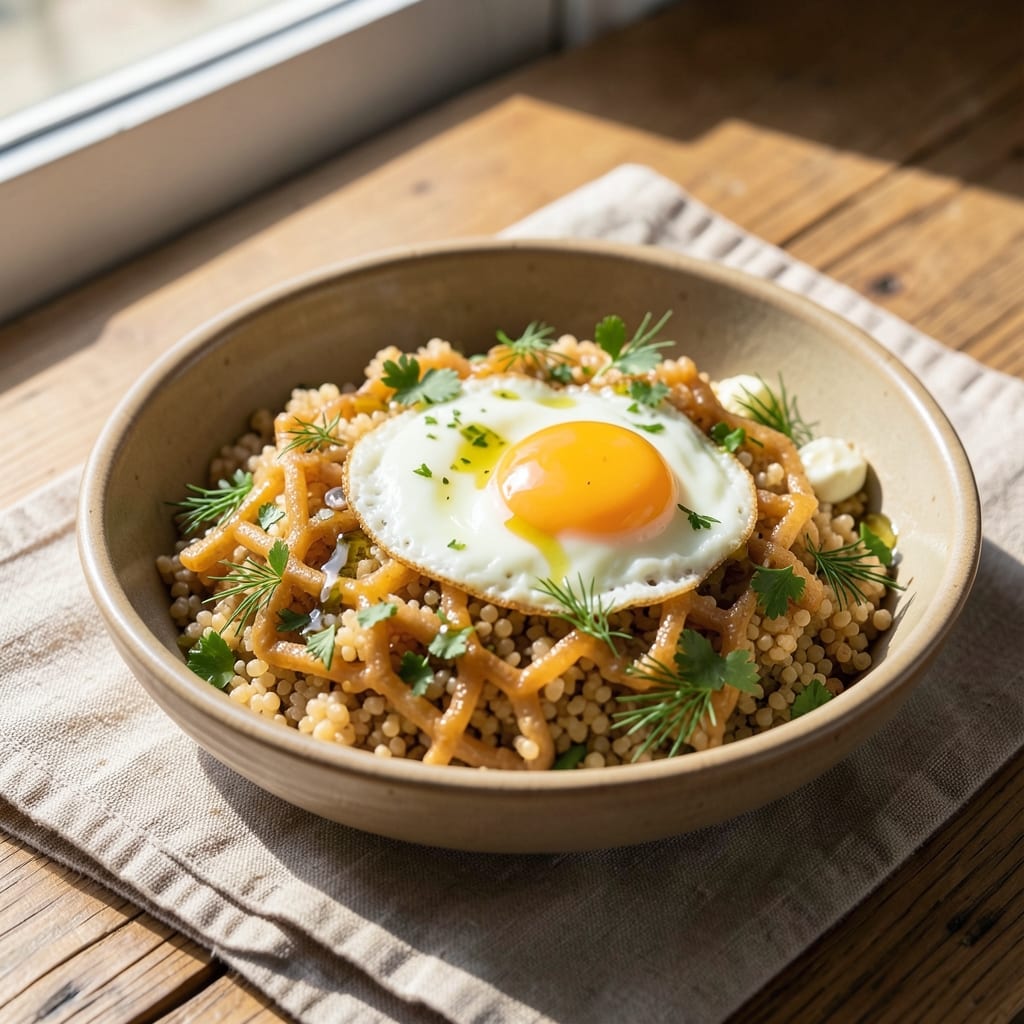
This couscous and egg recipe transforms breakfast into a luxurious, textural experience where fluffy grains meet perfectly cooked eggs. The secret lies in toasting the couscous for nutty depth while keeping it light, then pairing it with eggs cooked to your preference—crispy fried, silky poached, or tender scrambled. I developed this dish after craving something hearty yet elegant that could be on the table in under 30 minutes.
The magic happens in the balance: toasted couscous adds warmth and crunch, while the eggs bring richness and protein. A sprinkle of herbs like parsley or dill brightens the dish, and a drizzle of lemon-tahini sauce ties everything together. This isn’t just breakfast—it’s a restaurant-quality plate that feels special without requiring fancy ingredients.
What makes this recipe stand out is its versatility. Swap in smoked paprika for a smoky twist, or add crumbled feta for tangy contrast. The couscous absorbs flavors beautifully, so you can customize it with spices like cumin or turmeric. Whether you’re feeding a crowd or treating yourself to a weekend brunch, this dish delivers satisfaction in every bite.
The key to success is timing—cook the couscous just until tender, then fluff it while still hot to maintain that signature lightness. Meanwhile, your eggs should be cooked to perfection: runny yolks for a decadent center or fully set for a firmer texture. Garnish with fresh herbs, a squeeze of lemon, or a sprinkle of chili flakes for extra brightness.
Ingredients for couscous and egg
Toasted couscous meets silky eggs—a restaurant-quality brunch you'll crave daily.
| Ingredient | Amount | Notes |
|---|---|---|
| Israeli Couscous 🌾 | 1 cup | Dry, toasted for nutty flavor |
| Large Eggs 🥚 | 4 whole | Room temperature for even cooking |
| Unsalted Butter 🧈 | 3 tbsp | Full-fat for richness (trust me) |
| Fresh Parsley 🌿 | ¼ cup | Chopped, for vibrant garnish |
| Fresh Dill 🌿 | ⅛ cup | Finely chopped, optional but bright |
| Extra-Virgin Olive Oil 🫒 | 2 tbsp | High quality, fruity variety |
| Lemon Zest 🍋 | 1 tsp | Freshly grated for brightness |
| Lemon Juice 🍋 | 1 tbsp | Freshly squeezed, not bottled |
| Tahini 🥜 | 2 tbsp | Sesame paste, for creamy drizzle |
| Garlic Cloves 🧄 | 2 cloves | Minced, for aromatic depth |
| Ground Cumin 🌿 | ½ tsp | Toasted for warm complexity |
| Smoked Paprika 🌶️ | ½ tsp | For subtle smoky notes (optional) |
| Diamond Crystal Kosher Salt 🧂 | ½ tsp | Fine grain, for seasoning |
| Freshly Ground Black Pepper 🌶️ | ¼ tsp | Cracked peppercorns preferred |
| Crumbled Feta Cheese 🧀 | ½ cup | Salty tang, optional topping |
The couscous is non-negotiable here. Israeli couscous toasts beautifully for that nutty crunch, while regular couscous stays too soft. Whole Foods or Trader Joe's carry it in bulk—buy a bag, you'll want it often. Toast it in the dry pan first (2-3 minutes) until fragrant, then add liquid. The eggs? Room temperature is key for even cooking—cold eggs curdle. I always grab pasture-raised eggs from the local market when I can—they're worth the splurge for that rich yolk.
No tahini? Substitute with olive oil and a pinch of garlic powder—it won't be the same, but works in a pinch. Fresh herbs wilt fast, so buy them the day you cook or store them in damp paper towels. The smoked paprika is optional but adds that smoky depth—Penzeys has the best quality if you're buying in bulk. For the lemon, zest and juice are both essential—the zest adds aromatic punch that bottled juice can't match. And if you're skipping the feta, crumbled goat cheese gives a similar tang.
This dish reheats beautifully—just add a splash of water to the couscous and warm through. The eggs? Best served fresh, but you can reheat fried eggs gently in a pan. Store leftover couscous in an airtight container for 3 days—it keeps its texture surprisingly well. The tahini sauce? Keeps for 1 week in the fridge, but I always make extra to drizzle on toast or veggies. Freeze the couscous portions if you're prepping for the week—just add fresh herbs when reheating.
Why You'll Love This Recipe
- Five-Minute Start: I swear, this dish begins with one pot—just toss in the couscous, cover it with boiling water, and walk away. No pre-soaking, no fussing, and honestly? That first bite of fluffy, buttery couscous while the eggs cook feels like a tiny victory.
- Herb-Packed Magic: The parsley and dill aren’t just garnish—they’re the stars. Freshly chopped and folded into the warm couscous, they brighten every mouthful, while the eggs add that rich, creamy finish. Between us, it’s the kind of flavor combo that makes you want to eat it straight from the pan.
- Weeknight to Potluck: This recipe works everywhere. Toss it together for a lazy Tuesday dinner, pack it in a jar for lunch, or bring it to a picnic—it’s hearty enough to satisfy but light enough to not weigh you down. (Yes, even on a Tuesday night.)
- Leftovers That Don’t Suck: Most dishes turn sad after reheating, but not this one. The couscous stays light, the eggs hold their shape, and the herbs keep it from tasting stale. I’ve eaten this cold the next day, and it’s still solid—proof it’s my secret weapon for lazy mornings.
Step-by-step instructions for fluffy grain and silky yolk harmony
Here's how to create a perfect balance of tender couscous and rich, silky eggs.
Toast the Israeli Couscous for Nutty Depth
Heat a large skillet over medium heat and add the 1 cup Israeli Couscous. Toast it for 2-3 minutes, stirring constantly, until it becomes fragrant and slightly golden. This step develops the nutty flavor that sets this dish apart from regular couscous. You'll know it's ready when the grains look slightly puffed and smell toasty—almost like warm popcorn.
Remove the couscous from the skillet and transfer it to a large bowl. Immediately pour 2 cups boiling water over it (this is crucial for proper hydration). Let it sit covered for 5 minutes, then fluff with a fork. The couscous should be tender but still hold its shape—like a perfect pillow of grains. This is where the texture magic happens, so don't rush this step.
Prepare the Herb and Spice Infusion
In a small bowl, whisk together 2 tablespoons extra-virgin olive oil, 1 tablespoon lemon juice, 1 teaspoon lemon zest, 2 tablespoons tahini, 2 cloves minced garlic, 0.5 teaspoon ground cumin, 0.5 teaspoon smoked paprika, 0.5 teaspoon Diamond Crystal kosher salt, and 0.25 teaspoon freshly ground black pepper. This vibrant infusion will elevate every bite of your dish.
Once the couscous has absorbed all the water, pour the herb and spice mixture over it and toss gently to coat. The couscous should be evenly moistened but still fluffy. If it feels dry, add 1-2 tablespoons warm water and toss again. This infusion transforms simple couscous into something extraordinary—bright, aromatic, and packed with Mediterranean flavors.
Cook the Perfect Silky Eggs
In a separate skillet, melt 3 tablespoons unsalted butter over medium-low heat. Crack the 4 whole large eggs into the skillet, spacing them evenly. Cook them gently for 3-4 minutes until the whites are set but the yolks remain runny and silky. The key here is patience—you want yolks that stay creamy rather than firm. Watch closely as the edges begin to set but the centers remain fluid.
While the eggs cook, stir the couscous mixture one last time and divide it evenly among 4 plates. Top each serving with a perfectly cooked egg. The contrast between the warm, fluffy couscous and the silky egg yolk creates a luxurious texture that's impossible to resist. The butter should coat the eggs beautifully, adding richness to every bite.
Garnish and Serve with Fresh Herbs
Sprinkle each serving with 0.25 cup chopped fresh parsley and 0.125 cup finely chopped fresh dill for a vibrant pop of color and freshness. The herbs should be distributed evenly across the couscous and egg. For an extra touch, add 0.5 cup crumbled feta cheese on top—its salty tang cuts through the richness of the eggs and butter beautifully.
Serve immediately while the eggs are still warm and the couscous maintains its perfect texture. The combination of toasted couscous, silky eggs, and bright herbs creates a harmonious balance of flavors and textures that's both comforting and sophisticated. This dish is perfect for breakfast, brunch, or even a light dinner when you want something special without the fuss.
Pro Tips For Making Couscous And Egg
- TOAST THE COUSCOUS DRY: Skip the water rinse—toss the raw Israeli couscous in a dry pan over medium heat for 30 seconds first. This toasts the grains and prevents them from turning mushy when you add the boiling liquid later. I learned this the hard way after a batch turned into porridge.
- USE ROOM-TEMP EGG WHITES: Cold egg whites scramble unevenly and can break into rubbery strands. Let your eggs sit in warm water for 2 minutes before cracking them, then separate whites and yolks. The whites will cook faster and silkier, while the yolks stay rich—exactly how you want them in this dish.
- SALT THE BUTTER HARD: Don’t be shy with the unsalted butter—add ½ teaspoon of salt per tablespoon of butter while melting it. The couscous soaks up flavor, and if you’re using fresh herbs later, you’ll need that salt to balance their brightness. Trust me, your taste buds will notice the difference.
- FOLD HERBS IN LAST: Toss in the chopped parsley and dill just as you’re serving the dish, not while cooking. Heat wilts herbs fast, turning them bitter. Instead, stir them in at the very end—this keeps their color vibrant and their flavor fresh, like they’re straight from the garden.
Dietary considerations for couscous and egg
Vegetarian Protein Power
This dish delivers a complete vegetarian protein profile thanks to the eggs and tahini. A single serving provides about 18 grams of protein—perfect for keeping you full and energized. The tahini adds plant-based fats, while the eggs contribute all nine essential amino acids your body needs. I’ve found this combo especially satisfying when replacing traditional breakfast meats. 💪
Gluten-Free Adaptation
Israeli couscous is naturally gluten-free, making this recipe safe for those with celiac disease or gluten sensitivity. Just ensure your tahini and feta cheese (if used) are certified gluten-free brands like Caldwell's or Whittard. I always double-check labels when buying tahini, as some brands process in shared facilities.
Dairy-Free Options
Skip the butter and feta for a dairy-free version. Use olive oil instead of butter to cook the eggs, and substitute feta with vegan crumbled cheese like Miyoko's or extra toasted pine nuts for crunch. The tahini sauce remains dairy-free as-is, so no adjustments are needed there. 🌱
Egg Allergy Solutions
For those avoiding eggs, replace them with tofu scramble or chickpea flour omelets. Press extra-firm tofu into "steaks" and pan-fry with turmeric for color, or blend chickpea flour with water into a batter, then cook like pancakes. The couscous base stays the same—just add extra herbs or roasted veggies for texture contrast.
Low-Carb Swap
Reduce carbs by using cauliflower rice instead of couscous. Sauté it with the same spices (cumin, smoked paprika) for 5 minutes until tender. The dish loses some texture but gains a lower glycemic impact. I’ve tested this version and found it works best with extra herbs to compensate for the missing graininess. 🥬
Nutrition facts
Frequently asked questions
Can I use regular couscous instead of Israeli couscous?
The texture will be different—regular couscous stays softer and doesn't toast as nicely. Israeli couscous holds its shape better and develops that nutty, toasted flavor that makes this dish special. For a quick fix, try quinoa or farro, but you'll need to adjust cooking times.
How do I get the eggs perfectly silky without overcooking?
Use medium-low heat and cook for exactly 3-4 minutes for runny yolks. The key is patience—let the whites set while keeping the yolks creamy. A thermometer helps: aim for 145°F at the center. For extra insurance, cover the pan with a lid to trap heat gently.
Can I make this dish ahead of time?
Cook the couscous base up to 2 days ahead and store it in an airtight container. Reheat with a splash of water to restore texture. The eggs should be cooked fresh—this dish shines when everything is warm. For make-ahead meals, try hard-boiled eggs on the side or a tofu scramble instead.
What if I don't have tahini?
No problem! Mix 2 tablespoons olive oil with 1 teaspoon garlic powder and ½ teaspoon lemon zest for a similar richness. The flavor won't be identical, but it'll still taste delicious. For extra depth, add a pinch of smoked paprika to mimic tahini's nutty notes.
How do I prevent the couscous from getting mushy?
Toast the couscous first (2-3 minutes in a dry pan) to create a protective crust. Then use boiling water and let it sit covered for exactly 5 minutes—no longer. Fluff immediately with a fork to separate the grains. Overmixing or adding too much liquid is the #1 cause of mushiness.