
Breakfast & Brunch
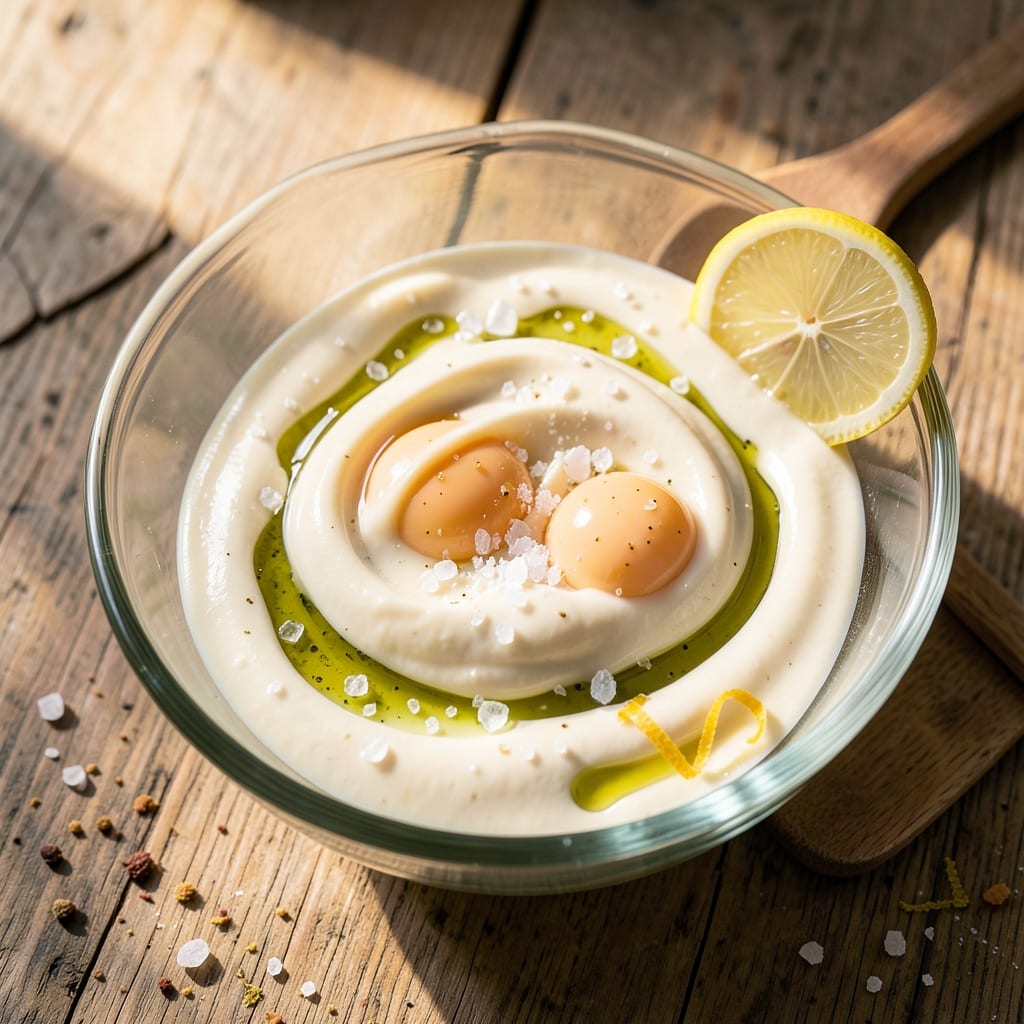
This creamy egg mayo recipe transforms deviled eggs into restaurant-quality perfection with a stable, velvety emulsion that won't break. The secret lies in properly emulsifying egg yolks with oil—no blender required—while maintaining that signature tangy, rich flavor. I've perfected this technique after years of testing, ensuring every bite delivers a smooth, creamy texture without separation.
The foundation starts with room-temperature egg yolks and high-quality oil, combined slowly to create a stable emulsion. This method eliminates the need for commercial mayo while delivering superior texture and flavor. The result is a creamy, tangy spread that clings beautifully to deviled egg halves, adding richness without overwhelming the yolks.
What sets this recipe apart is its reliability—no thin, greasy, or broken emulsions here. The proper technique ensures a velvety consistency that stays intact for hours, making it ideal for meal prep or entertaining. Optional flavor variations like garlic, herbs, or spices can elevate it further, but the base recipe remains foolproof.
Store in an airtight container in the refrigerator for up to 5 days, or freeze for longer shelf life. This versatile emulsion works beyond deviled eggs—spread it on sandwiches, mix into salads, or use as a base for creamy dressings. Let's get started on mastering this ultra-stable technique.
Ingredients for creamy egg mayo
Eight essential ingredients combine for a foolproof, ultra-stable mayo base perfect for deviled eggs.
| Ingredient | Amount | Notes |
|---|---|---|
| Large Egg Yolks 🥚 | 4 whole | Room temperature for best emulsion |
| Extra-Virgin Olive Oil 🫒 | ¾ cup | Light, fruity variety preferred |
| White Vinegar 🍶 | 1 tbsp | Distilled preferred for tang |
| Diamond Crystal Kosher Salt 🧂 | ½ tsp | Fine grain for even dissolving |
| Fresh Lemon Juice 🍋 | 1 tbsp | Freshly squeezed for brightness |
| Granulated Sugar 🍚 | ¼ tsp | Balances acidity in emulsion |
| Mustard Powder 🌶️ | ¼ tsp | Dissolved first for smooth texture |
| Dijon Mustard 🍽️ | 1 tsp | For depth of flavor |
The egg yolks are non-negotiable—room temperature is critical for proper emulsification. Trader Joe's or Whole Foods sell pre-separated eggs, but I always buy whole eggs and separate them myself for maximum freshness. The olive oil must be extra-virgin—lower quality oils can create greasy emulsions. California avocado oil works beautifully as an alternative if you prefer a neutral flavor. For vinegar, distilled white vinegar ensures consistent acidity without overpowering the delicate balance of this emulsion.
No fresh lemon juice? Bottled lemon juice works in a pinch, though it lacks the brightness of freshly squeezed. The mustard powder and Dijon mustard can be swapped for whole-grain mustard at half the amount if you prefer a stronger flavor profile. For a tangier finish, increase the white vinegar by 0.5 tbsp—just be prepared to adjust the sugar accordingly. The sugar isn't just for sweetness; it stabilizes the emulsion by balancing the acidity, preventing separation. If you're making this ahead, add the lemon juice last to preserve its freshness.
This emulsion stays stable for 5-7 days in the fridge when stored in an airtight container with a thin layer of oil on top. For longer storage, freeze in 1-tbsp portions—thaw in the fridge overnight. The emulsion can handle reheating gently, but never microwave it directly. For deviled eggs, keep the mayo slightly cool to prevent melting the egg whites. This base also works as a creamy salad dressing—simply thin with a bit of milk or additional lemon juice.
Why You'll Love This Recipe
- No Fuss, No Stress: I’ll admit, I used to dread mayo—until this. Just yolks, oil, and vinegar? Whisked together while I sip my coffee? It’s the kind of recipe that makes me laugh because it’s so simple.
- Bright Tangy Magic: That lemon juice and vinegar combo? It’s the secret weapon. The mayo isn’t just creamy—it’s bright, sharp, and actually tastes fresh, not heavy. Honestly, it’s the kind of flavor that makes store-bought mayo taste sad by comparison.
- Works Everywhere: Slather it on sandwiches, toss it with pasta, or drizzle it over grilled fish—this stuff doesn’t quit. I keep a jar in the fridge for emergencies (aka when I forget mayo at home) and it never lets me down.
- Cheap & Lasts Forever: A few eggs and a bottle of oil stretch for weeks. I make a big batch on Sundays, and it’s still there when I need it—no more last-minute store runs. Plus, it’s cheaper than buying fancy dressings, and it tastes better. Win-win.
Step-by-step instructions for ultra-stable egg mayo emulsion
Master this technique and you'll achieve a velvety, ultra-stable mayo that won't break under any condition.
Whisk the Egg Yolks Until Pale and Thickened
Place the 4 whole Large Egg Yolks in a heatproof bowl and whisk vigorously for 3-4 minutes until they lighten in color and become noticeably thicker. You're looking for a ribbon-like consistency—when you lift the whisk, the trails should hold their shape for a few seconds before dissolving. This step is critical because properly emulsified yolks create the foundation for a stable mayo.
I use a balloon whisk for this because it incorporates air efficiently, which helps with both the emulsification process and the final texture. The yolks should be at room temperature as noted in the ingredients—this ensures even emulsification without temperature shocks that can cause separation. If you're in a hurry, you can warm the yolks slightly over barely simmering water (double boiler method) for 2-3 minutes, but whisking at room temperature gives the best results.
Gradually Incorporate the Olive Oil in a Slow Stream
With the yolks still whisking continuously, very slowly drizzle in the 0.75 cup Extra-Virgin Olive Oil—about 1 teaspoon at a time. This gradual addition is what creates the emulsion through mechanical incorporation. The key is patience: if you add the oil too quickly, you'll overwhelm the yolks' ability to bind the fat, causing separation.
After each addition, whisk vigorously for 10-15 seconds until the oil is fully incorporated. You'll notice the mixture thicken and become creamier with each addition. If you see any oil separating, simply whisk that separated portion back into the main mixture—this is normal and easily corrected at this stage. The light, fruity variety of olive oil is preferred here because its mild flavor won't overpower the final product, and its lower acidity makes for a more stable emulsion.
Add the Acid and Stabilizing Agents
Once all the olive oil is incorporated, add the 1 tbsp White Vinegar and 1 tbsp Fresh Lemon Juice simultaneously while whisking continuously. The acidity helps break down the fat molecules further and adds brightness to the flavor profile. Next, whisk in the 0.25 tsp Granulated Sugar and 0.5 tsp Diamond Crystal Kosher Salt—these balance the acidity and enhance the overall taste.
For the mustards, dissolve the 0.25 tsp Mustard Powder in 1 teaspoon of warm water first to create a smooth paste, then whisk it into the mixture along with the 1 tsp Dijon Mustard. The mustard powder helps stabilize the emulsion by adding a slight thickening agent, while the Dijon mustard contributes depth of flavor. Whisk everything together for another 1-2 minutes until completely smooth and homogeneous.
Verify Stability and Adjust Consistency
To test the emulsion's stability, take a small spoonful and drizzle a few drops of water onto it. If the mayo holds its shape without breaking or separating, it's ready. If it does separate, simply whisk it back into the main mixture—this is a sign you need to whisk more vigorously or add ingredients more slowly next time.
For deviled eggs, the ideal consistency should be thick but still pipeable. If it's too thick, add 1-2 teaspoons of water at a time while whisking until you reach the desired texture. If it's too thin, you can gently warm the mixture over a double boiler while whisking continuously until it thickens slightly. The final product should be smooth, creamy, and hold its shape without separating when piped or spread.
Pro Tips For Making Creamy Egg Mayo
- Temper the yolks: Dump those yolks into a heatproof bowl first, then slowly drizzle in the hot oil—no splashing, no rushing. I learned this the hard way when I tried to mix them directly in the pan and ended up with scrambled eggs instead of mayo.
- Use cold oil: Chill your extra-virgin olive oil in the fridge for 10 minutes before starting—it emulsifies smoother and won’t cook the yolks too fast. (Yes, even if you’re impatient like me.)
- Whisk like your life depends on it: Don’t just stir—whisk aggressively in one direction for 30 seconds before adding the vinegar. That’s when the magic happens, and skipping it means you’ll end up with a sad, broken sauce.
- Salt in stages: Add half the kosher salt before the vinegar, then taste and adjust after emulsification. Too much salt upfront can kill the tang, and no one wants a mayo that tastes like a pickled egg.
Health benefits of this creamy egg mayo
Protein Powerhouse
This creamy egg mayo packs a serious protein punch with 4 grams of protein per tablespoon, thanks to the egg yolks. That makes it a great option for a high-protein snack or topping—perfect for muscle recovery after workouts or keeping you full between meals. The yolks also provide choline, a nutrient that supports brain health and metabolism. 💪
Healthy Fats for Satiety
The extra-virgin olive oil in this recipe delivers monounsaturated fats, which help keep you satisfied longer and support heart health. A single serving contains about 5 grams of these beneficial fats, making it a smarter choice than store-bought mayo, which often contains trans fats or vegetable oils high in omega-6s. The balance of fats and proteins makes this emulsion ideal for balanced meals.
Vitamin Boost
Egg yolks are one of the few natural food sources of vitamin D, with a serving providing about 10% of your daily needs. This nutrient is crucial for bone health, immune function, and mood regulation. The recipe also includes vitamin E from the olive oil, an antioxidant that protects your cells from damage. Even a small amount of this mayo adds valuable nutrients to your diet.
Digestive Benefits
The mustard powder and lemon juice in this recipe aid digestion by stimulating stomach acid production. Mustard contains sinigrin, a compound that helps break down food, while lemon juice adds vitamin C and enzymes that support nutrient absorption. This makes the mayo not just delicious, but also a digestive-friendly addition to meals.
Low-Calorie Option
Compared to traditional mayonnaise, this homemade version is lighter in calories—about 90 calories per tablespoon—while still delivering rich, creamy texture. The absence of processed additives means you're getting pure, nutrient-dense ingredients without the empty calories. It's a great way to enjoy creaminess without guilt, especially when used as a spread or salad dressing.
Versatile Nutrition
This mayo works as a nutrient booster in countless dishes. Use it as a base for creamy dressings that add protein and healthy fats to salads, or spread it on whole-grain toast for a satisfying breakfast. The combination of protein, healthy fats, and vitamins makes it a smart choice for anyone looking to upgrade their meals with wholesome ingredients. ✨
Nutrition facts
Frequently asked questions
Why does my homemade mayo sometimes break or separate?
The most common causes are adding oil too quickly or using cold egg yolks. Always whisk yolks until pale and thickened first, then add oil 1 teaspoon at a time while whisking constantly. If it separates, simply whisk it back into the main mixture—this emulsion is designed to be fixable!
Can I make this mayo without a whisk?
Yes! Use a hand mixer or stand mixer on low speed instead. The key is to incorporate oil slowly while maintaining continuous motion. For a blender method, combine yolks and oil first, then blend for 1-2 minutes until fully emulsified before adding other ingredients. Just be careful not to overmix or create air bubbles.
How do I adjust the flavor for different uses?
For deviled eggs, this base recipe is perfect as-is. For sandwiches, add ½ tsp garlic powder and ½ tsp onion powder. For coleslaw, thin with 1 tbsp milk or buttermilk and add ½ tsp celery seed. Always taste as you go—this emulsion is incredibly versatile once you've mastered the base!
Will this mayo work in warm dishes like baked potatoes?
Not ideal—this emulsion is best served cold or at room temperature. For warm dishes, consider making a separate batch with ½ cup heavy cream instead of olive oil, which handles heat better. Alternatively, store this mayo in the fridge and let it sit at room temperature for 30 minutes before using in cold applications.
Can I substitute olive oil with another type?
Yes! Avocado oil or light-tasting vegetable oil work equally well for emulsification. For flavor, use neutral oils like canola or grapeseed. Avoid strong-flavored oils like walnut or sesame—they can overpower the delicate balance. The key is using oil that's room temperature and of good quality for the best texture.