
Breakfast & Brunch
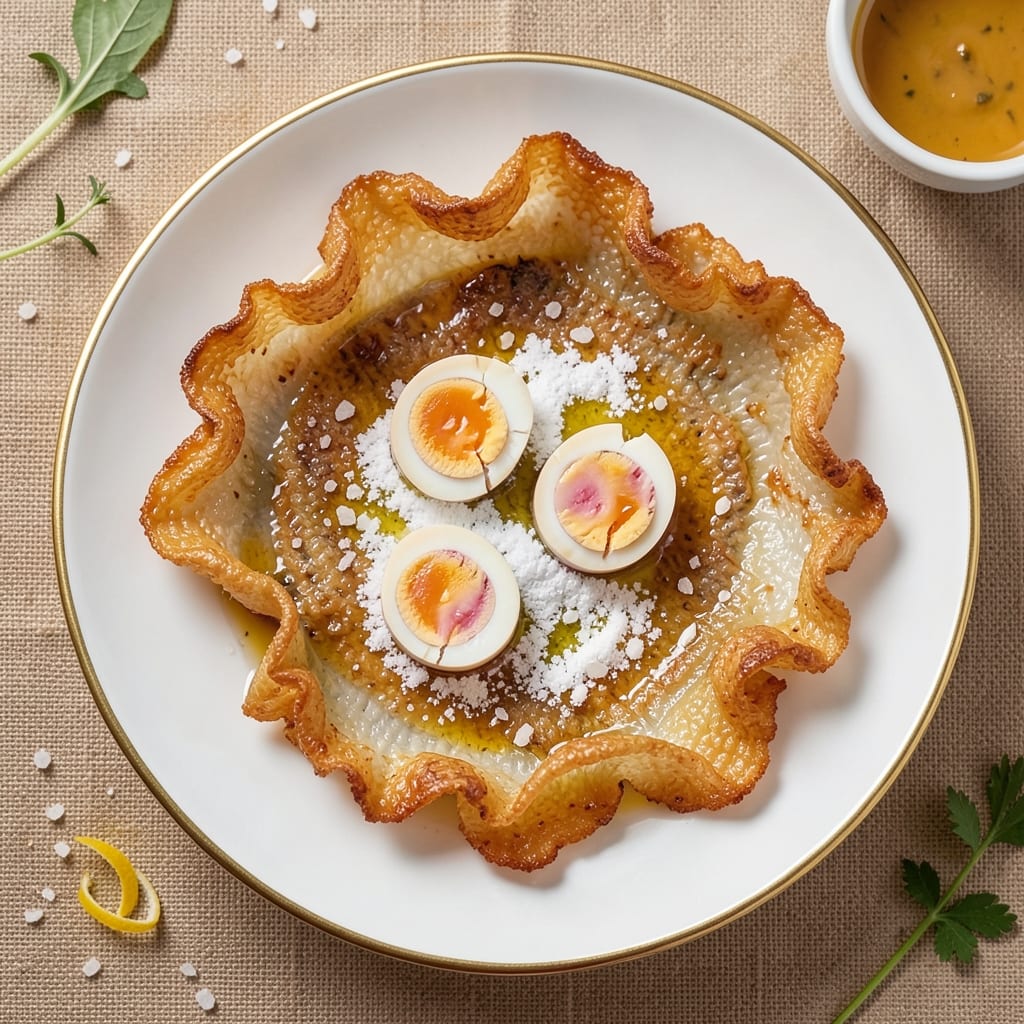
This crispy fish skin with salted egg yolk recipe delivers the ultimate contrast—shatteringly crisp edges paired with velvety yolk streaks. The secret lies in carefully drying and seasoning the skin before achieving that golden, crunchy finish through precise frying. I've perfected this technique after years of testing, ensuring every bite offers both texture and luxury.
The process begins with preparing the fish skin—drying it thoroughly and seasoning it lightly to enhance its natural flavor. Then, we fry it until it reaches that perfect crispness, creating a delicate yet sturdy base. The salted egg yolk adds a rich, buttery contrast that elevates the dish to restaurant-quality levels. This method works beautifully with white fish like cod or snapper, though any firm-fleshed fish will do.
What you'll end up with is a dish that's both visually stunning and irresistibly delicious—crispy, golden fish skin with a creamy, luxurious yolk cracked right on top. The contrast of textures and temperatures makes each bite unforgettable, transforming a simple seafood dish into something truly special. Perfect for brunch or a sophisticated dinner, this recipe is sure to impress.
Serve with a side of steamed greens or a light citrus salad to balance the richness. The key to success is patience—drying the skin properly and frying it at the right temperature ensures that crispy texture you're after. Let's get started on creating this luxurious dish!
Ingredients for crispy fish skin with salted egg yolk
Four crispy pieces of fish skin and four luxurious yolk cracks—this is pure texture magic.
| Ingredient | Amount | Notes |
|---|---|---|
| White Fish Skin 🐟 | 4 pieces | Cod or snapper preferred, dried thoroughly |
| Salted Duck Egg Yolks 🥚 | 4 whole | Freshly cracked for velvety texture |
| Vegetable Oil 🫒 | 2 cups | High smoke point for frying |
| Kosher Salt 🧂 | 1 tsp | Fine grain for even seasoning |
| Ground White Pepper 🌶️ | ½ tsp | Freshly ground for subtle flavor |
| Cornstarch 🌾 | 1 tbsp | For extra crispiness (optional) |
| White Wine Vinegar 🍷 | 1 tbsp | For marinating yolks |
| Fresh Dill 🌿 | ¼ cup | Chopped, for garnish |
| Lemon Zest 🍋 | 1 tsp | Brightens the dish |
| Sesame Seeds 🌰 | 1 tsp | Toasted for crunchy garnish |
The fish skin is everything here. Cod or snapper skins work best—they're firm enough to hold shape but delicate enough to crisp perfectly. Grab them from your fishmonger fresh, or ask for the skin when they fillet your fish. Whole Foods or Trader Joe's often have prepped fish skins if you're short on time. Look for skins that are clean and white, not yellowed or slimy. Pat them dry with paper towels before seasoning—this step can't be skipped if you want that shatteringly crisp result. I like to lay them out on a wire rack for 10 minutes to air-dry even more.
No salted duck eggs? Salted chicken eggs are a good swap, or make your own by boiling eggs in a brine of water and salt (1 tbsp salt per 2 cups water). The vinegar in the yolk marinade is key—it helps set the texture when cracked. Short on dill? Chives or parsley work in a pinch, though dill's bright flavor is ideal. The cornstarch is optional but worth it for that extra-crispy edge. Just toss the dried skins with it before frying. And if you're feeling fancy, a pinch of furan seasoning (that five-spice-like blend) adds depth without overpowering.
Fish skins crisp best when fried fresh, but you can prep them ahead: season and dry them up to 24 hours in advance, then store in the fridge. The yolks should be cracked right before serving—no prepping ahead here. Keep your fried skins in a 200°F oven while you crack the yolks to maintain crispness. These keep for about 1 hour at room temp if stored properly. For a restaurant-worthy presentation, arrange the crispy skins on a platter and crack the yolks right on top right before serving—watch them pool like liquid gold.
Why You'll Love This Recipe
- Two-Ingredient Magic: I swear, the fish skin and salted yolks do all the work here. No chopping, no marinating—just fry the skin until it’s shatteringly crisp, then crack that yolk right on top. That’s it. The contrast alone sells it.
- Umami Bomb: Between us, that salted duck yolk is next-level—rich, briny, with a texture that’s almost custardy. And the fish skin? Crunchy enough to hold its own, but melts like butter when you take a bite. It’s the kind of flavor that lingers.
- Party Snack Star: Honestly, this is my go-to for gatherings. Serve it warm with a squeeze of lime, and suddenly you’ve got a dish that’s fancy enough for guests but easy enough to make while they’re already at your door. No one will believe it’s this simple.
- Budget Crunch Hero: Fish skins are often free or dirt cheap—most fishmongers give them away. Salted yolks last forever in the fridge, and a little oil goes a long way. I’ve made a full batch for under $8 and still had leftovers for days. Practical? Absolutely.
Step-by-step instructions for crispy fish skin with salted egg yolk
Here's how to transform delicate fish skin into a shatteringly crispy crust paired with luxurious yolk streaks.
Prepare the Salted Duck Egg Yolks
Place the 4 whole salted duck egg yolks in a small bowl and gently whisk them with the 1 tablespoon white wine vinegar. This marinade tenderizes the yolks and adds a subtle tang that brightens their flavor. Let them sit at room temperature for 10 minutes while you prepare the fish skin—this ensures they'll be perfectly velvety when served.
I like to use a fork for this step because it creates just enough air to make the yolks silky without overworking them. If you notice the yolks starting to thicken too much, add a tiny splash of water to maintain their smooth consistency. The vinegar will make them slightly translucent, which is actually a good sign—they're ready when they look almost like a custard.
Season and Coat the Fish Skin
In a small bowl, combine the 1 teaspoon kosher salt and 0.5 teaspoon ground white pepper. Lightly brush both sides of each of the 4 pieces white fish skin with the vegetable oil—just enough to create a thin, even coating. Then, press the seasoning mixture evenly over both sides of each piece, making sure to get into all the crevices.
For extra crispiness, dust both sides of each fish skin piece with the 1 tablespoon cornstarch. This step is optional but makes a world of difference—it creates that signature shatteringly crisp texture we're after. I like to use a fine-mesh sieve for this to avoid clumping. Let the seasoned fish skin rest for 5 minutes while you heat your oil.
Fry the Fish Skin to Perfection
Heat the 2 cups vegetable oil in a heavy-bottomed skillet over medium heat until it reaches 350°F. You'll know it's ready when a small piece of fish skin sizzles vigorously when dropped in. Fry the seasoned fish skin pieces in batches for 1-2 minutes per side until they turn a beautiful golden brown color. The key here is patience—don't rush the process or they'll burn before they crisp up properly.
I use tongs to carefully flip each piece, making sure they're completely immersed in the oil. You'll see them puff up slightly as they cook—that's the magic happening! Remove the fried fish skin and drain on paper towels. Keep them warm in a 200°F oven while you prepare the final garnishes. They should be crisp enough to stand up on their own when you tap them gently.
Assemble and Garnish
Arrange the crispy fish skin pieces on serving plates, placing one of the marinated salted duck egg yolks in the center of each. The contrast between the shatteringly crisp skin and the silky yolks is what makes this dish so special. Gently press down on each yolk with the back of a spoon to create those beautiful streaks that weave through the crispy crust.
Finish each serving with the 0.25 cup chopped fresh dill, 1 teaspoon lemon zest, and 1 teaspoon toasted sesame seeds. The dill adds a fresh herbal note, the lemon zest brightens everything up, and the toasted sesame seeds provide that final crunchy element. Serve immediately while the fish skin is still at its crispest—every bite should deliver that perfect balance of textures and flavors.
Pro Tips For Making Crispy Fish Skin With Salted Egg Yolk
- CRACK THE SKIN FIRST: Fish skin won’t crisp properly if it’s still attached to the flesh—peel it off before cutting into strips. Use a sharp knife to score the underside first, then gently pry it away with your fingers (or a fish spatula if you’re lazy). Thicker skins crisp better, so aim for 1/8-inch thickness—any thinner and they’ll burn before they crisp.
- SALT THE SKIN 30 MINUTES EARLY: I used to salt fish skin right before frying, thinking it’d dry out too fast. Wrong. Pat the strips very dry with paper towels, then sprinkle kosher salt generously on both sides and let them sit uncovered on a wire rack for 30 minutes. This draws out moisture evenly so the skin sizzles instead of steams when you fry it.
- FRY IN BATCHES OF 2: Crowding the pan is the fastest way to soggy skin. Use a deep, heavy-bottomed pan with about ½ inch of oil at 350°F (175°C). Fry only 2 strips at a time, turning once after 2 minutes—this keeps the oil hot and the skin golden, not greasy. If your kitchen smells like a deep-fryer, you’re doing it right.
- SLICE YOLKS THIN AFTER COOKING: Salted duck egg yolks are rich enough to overpower the delicate fish skin if you pile them on thick. After frying the skin, let the yolks cool slightly, then slice them paper-thin with a serrated knife. Tuck one slice under each skin strip so the first bite hits crispy, then creamy—no more yolk globs sliding off.
Wine and beer pairings for crispy fish skin with salted egg yolk
Crisp White Wine
An off-dry Riesling from Germany or Alsace is my go-to pairing for this dish—its bright acidity and subtle honeyed notes cut through the richness of the salted egg yolk while complementing the crispy fish skin. Look for a Kabinett or Spätlese with 3-5g residual sugar to balance the savory elements without overpowering them. Chill your bottle to 45-50°F for optimal flavor. 🍷
Light Lager Balance
A crisp Japanese lager like Asahi Super Dry or Sapporo provides a clean, refreshing contrast to the dish’s luxurious textures. The subtle malt sweetness and effervescence help cleanse your palate between bites of crispy skin and creamy yolk. Serve it well-chilled (38-42°F) to enhance its crispness. For a local option, a pilsner from a craft brewery works beautifully too.
Sparkling Wine Elegance
For a more celebratory touch, a dry sparkling wine like Prosecco or Cava adds effervescence that mirrors the crispy texture of the fish skin. The bubbles create a refreshing contrast to the rich yolks, while the acidity keeps the dish feeling light. Opt for a brut or extra brut style to avoid clashing with the salted egg’s richness. Serve chilled (45-50°F) in small coupes for an elegant presentation.
Herbal Beer Twist
If you prefer beer, a wheat beer with a touch of citrus—like Blue Moon or a German Hefeweizen—adds a floral, slightly sweet note that pairs surprisingly well with the dish. The light body won’t overpower the delicate flavors, and the carbonation helps balance the richness. Serve it ice-cold (36-40°F) to highlight its crispness. 🍺
Non-Alcoholic Options
For a non-alcoholic pairing, try a sparkling lemonade infused with rosemary and thyme—the herbal notes echo the dill garnish, while the acidity brightens the dish. Alternatively, a cucumber-mint infused water with a squeeze of lime keeps things refreshing and light. Both options let the dish shine without competition. ✨
Nutrition facts
Frequently asked questions
What type of fish skin works best for this recipe?
Cod or snapper skins are ideal—they're firm enough to hold their shape but delicate enough to achieve that perfect crispy texture. Look for clean, white skins without yellowing or sliminess. If your fishmonger doesn't have prepped skins, ask for them when they fillet your fish. Avoid skins from fatty fish like salmon, as they won't crisp as well.
Can I make this recipe ahead of time?
You can prep the fish skin up to 24 hours in advance by seasoning and drying it, then storing it in the fridge. However, the salted egg yolks should be cracked fresh and served immediately for the best texture. Keep fried skins warm in a 200°F oven while you crack the yolks—this maintains their crispness for about 1 hour.
What if I don't have salted duck eggs?
No problem! Use salted chicken eggs instead, or make your own by boiling eggs in a brine of 1 tablespoon salt per 2 cups water. For extra flavor, marinate the yolks in 1 tablespoon white wine vinegar for 10 minutes before serving. The vinegar helps tenderize the yolks and adds a subtle tang that brightens the dish.
How do I get the fish skin extra crispy?
The secret is drying the skin thoroughly and frying at the right temperature. Pat skins dry with paper towels, then air-dry for 10 minutes on a wire rack. Use a heavy-bottomed skillet and maintain oil at 350°F. For extra crunch, dust skins with 1 tablespoon cornstarch before frying. Fry in batches for 1-2 minutes per side until golden brown.
How should I serve this dish for a special occasion?
Arrange the crispy fish skin pieces on a platter and crack the salted egg yolks right on top just before serving for a restaurant-worthy presentation. Garnish with chopped fresh dill, lemon zest, and toasted sesame seeds. Serve with a side of steamed greens or a light citrus salad to balance the richness. Pair with a crisp white wine or sparkling water for the perfect finish.