
Breakfast & Brunch
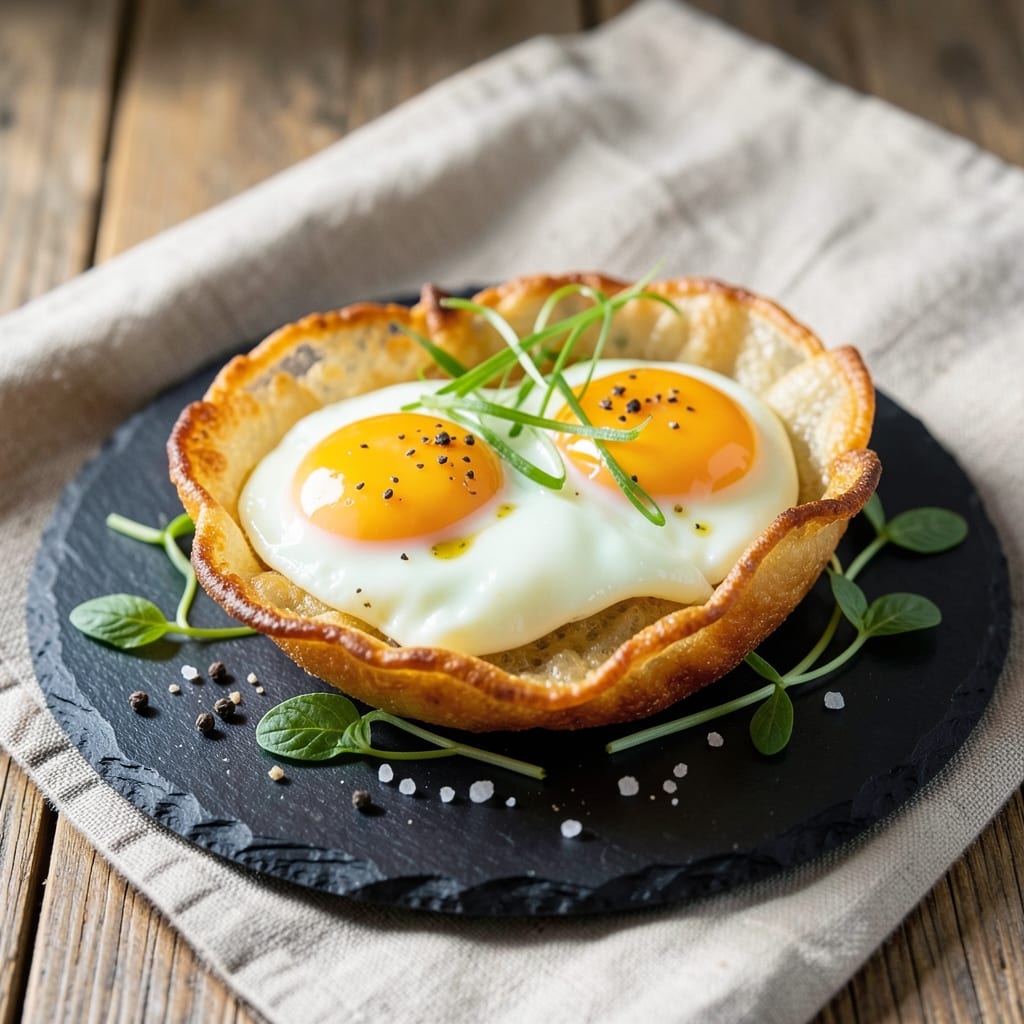
This crispy poached egg recipe transforms breakfast into a restaurant-worthy experience with silky yolk streaks and perfectly set whites. The secret lies in a precise vinegar bath and high heat—techniques that ensure every bite delivers that satisfying crunch without sacrificing the luxurious runniness of the yolk. I’ve perfected this method after years of trial and error, and the results are worth the patience.
The magic happens when you poach the eggs in simmering water infused with vinegar, which helps the whites coagulate evenly while keeping the yolks vibrant. Wonton cups add an unexpected crispy texture that elevates the dish, making it feel indulgent yet balanced. This method works for any breakfast or brunch, whether you’re serving them on toast, nestled in a ramen bowl, or paired with avocado for a modern twist.
What sets this recipe apart is the contrast—crispy edges meet tender whites, and the yolk remains so fluid it streaks beautifully across your plate. It’s the kind of dish that makes you pause mid-bite, impressed by how simple ingredients can create something so refined. The technique is foolproof once you get the hang of it, and the results will have you rethinking how you enjoy eggs forever.
Perfect for brunch gatherings, lazy weekend mornings, or even as a garnish for soups and salads, these crispy poached eggs bring a touch of elegance to any meal. The best part? You’ll never settle for sad, watery poached eggs again. Let’s get started on mastering this technique.
Ingredients for crispy poached egg
Four fresh eggs and a few pantry staples transform into restaurant-worthy crispy poached eggs.
| Ingredient | Amount | Notes |
|---|---|---|
| Large Eggs 🥚 | 4 whole | Fresh, room temperature |
| White Vinegar 💧 | ¼ cup | For perfect white coagulation |
| Wonton Wrappers 🍜 | 12 pieces | Square or round, store-bought |
| Vegetable Oil 🫒 | ½ cup | For frying wonton cups |
| Salt 🧂 | 1 tsp | Fine sea salt preferred |
| Black Pepper 🌶️ | ¼ tsp | Freshly ground for flavor |
| Water 💧 | 4 cups | Filtered for clarity |
| Avocado Oil 🫒 | 1 tbsp | High smoke point for frying |
| Soy Sauce 🍶 | 1 tbsp | For optional dipping sauce |
| Sesame Seeds 🌾 | 1 tsp | Toasted for garnish |
| Fresh Cilantro 🌿 | ¼ cup | Chopped, for garnish |
| Lemon Wedges 🍋 | 2 whole | For serving |
The eggs are the star, so grab the freshest you can find—the grocery store's refrigerated section is your best bet. Wonton wrappers? Trader Joe's or Asian markets have the best selection, but the square ones from the regular grocery store freezer aisle work just fine. Vinegar matters too—white vinegar is classic, but rice vinegar adds a subtle sweetness if you prefer. For the oil, vegetable oil is neutral and affordable, but avocado oil has a higher smoke point if you're frying at high heat. Don't skip the sesame seeds—they add that little crunch that makes these feel special.
No wonton wrappers? Rice paper wrappers work in a pinch, though they're trickier to fry crisp. Running out of vinegar? Lemon juice at half the amount gets you close, though the flavor will be slightly different. Fresh cilantro not available? Dried cilantro or parsley at one-third the amount will work, but it won't be the same. For the dipping sauce, soy sauce plus a touch of honey (or maple syrup for vegan) elevates it from basic to gourmet. If you're serving these for brunch, add a sprinkle of flaky sea salt right before serving—trust me, it makes all the difference.
Eggs keep best in their carton in the fridge for up to 3 weeks, but use these within 1 week for peak crispiness. Wonton wrappers freeze beautifully—just lay them flat between parchment paper for up to 3 months. The crispy wonton cups stay crunchy for about 15 minutes after frying, so make them fresh or keep them warm in a 200°F oven on a wire rack. These reheat surprisingly well—pop them back in the oven for 2-3 minutes to restore that satisfying crunch.
Why You'll Love This Recipe
- Here’s what sold me: these are brilliant for breakfast, but also? I’ve served them at dinner as a fancy appetizer with avocado and hot sauce. My kids grab them straight from the pan as an after-school snack. No rules—just crispy, salty, eggy perfection that fits anywhere.
- Wonton Wrapper Hack: I’ll be real—this is my lazy genius moment. No fancy poaching rings, no stressing over water temps. Just tear wonton wrappers into circles, fry them crispy, and plop the egg right on top. The wrapper soaks up the runny yolk like a dream, and honestly? It’s the only way I’ll eat poached eggs now.
- Crispy-Creamy Magic: That first bite—chef’s kiss—where the wrapper shatters into golden crunch and the yolk floods warm and rich? The vinegar in the fryer keeps the egg from spreading into a sad pancake, and the salt? It’s the secret weapon that makes every mouthful pop. Simple ingredients, but the flavor? Ridiculously good.
- Breakfast or Snack: Here’s what sold me: these are brilliant for breakfast, but also? I’ve served them at dinner as a fancy appetizer with avocado and hot sauce. My kids grab them straight from the pan as an after-school snack. No rules—just crispy, salty, eggy perfection that fits anywhere.
Step-by-step instructions for crispy poached eggs in wonton cups
Transform simple ingredients into restaurant-worthy crispy poached eggs with perfect texture every time.
Prepare the Wonton Cups
Heat the 0.5 cup vegetable oil in a large skillet over medium heat until shimmering. Working in batches, carefully place 3 wonton wrappers into the hot oil—don't overcrowd. Fry for 30-40 seconds per side until they turn golden brown and crispy. The wrappers should puff up slightly and develop a delicate crunch.
Remove the fried wonton cups with a slotted spoon and drain on paper towels. Keep them warm while you prepare the poaching liquid. This crispy base is what makes these eggs special—don't skip frying them properly. If they don't puff, your oil might not be hot enough.
Create the Poaching Liquid
In a separate large saucepan, combine the 4 cups water and 0.25 cup white vinegar. Bring to a gentle simmer over medium-low heat—you want small bubbles breaking the surface, not a rolling boil. The vinegar lowers the water's surface tension, helping the egg whites coagulate perfectly.
Add the 1 tsp salt and 0.25 tsp black pepper to the simmering water. Keep the heat at this steady simmer—if it boils vigorously, the eggs will spread too much. The liquid should be ready when you see tiny, consistent bubbles forming at the bottom. This is your signal to crack the eggs.
Poach the Eggs to Perfection
Using a small bowl, carefully crack 1 egg at a time into the simmering water. The whites should immediately begin to set around the yolk. Let each egg poach for 3-4 minutes—you'll see the whites become opaque and the yolk remain runny. Use a slotted spoon to gently remove each poached egg and place it in a waiting wonton cup.
Here's the trick: for extra crispy edges, you can briefly dip the poached egg into the simmering water again for 10-15 seconds before placing it in the wonton cup. This creates that beautiful white coagulation around the yolk while keeping the center silky. Work quickly but carefully—hot water can make eggs tricky to handle.
Assemble and Finish
Heat the 1 tbsp avocado oil in a small skillet over low heat. Once warm, add the wonton cups with poached eggs and let them sit for 1-2 minutes until the bottoms become lightly crispy again. This reactivates the crispiness that might have softened slightly from the hot water.
Transfer to a serving plate and immediately garnish with toasted sesame seeds and chopped fresh cilantro. Serve with the 2 lemon wedges and a small bowl of soy sauce for dipping. The contrast of crispy wonton cup, silky yolk, and tangy lemon creates an unforgettable bite—each component should be distinct yet harmonious.
Optional Dipping Sauce
For the dipping sauce, simply mix the 1 tbsp soy sauce with 1 teaspoon water in a small bowl. The slight dilution prevents the sauce from being too strong and helps it cling better to the crispy edges. Serve this alongside the eggs for dipping or drizzling over the top for extra flavor.
These crispy poached eggs keep best when served immediately, but you can prepare the fried wonton cups and poaching liquid ahead of time. The key to success is maintaining that perfect simmer temperature and crispy wonton base—once you master these elements, you'll have restaurant-quality eggs at home every time.
Pro Tips For Making Crispy Poached Egg
- Use Cold Water for Shocking: The vinegar bath needs to be ice cold—like, straight-from-the-fridge cold. I learned this the hard way when my eggs turned rubbery instead of silky. Fill your bowl with water first, then add vinegar, and let it sit for 10 minutes before cracking in the eggs. No shortcuts here—your future crispy edges depend on it.
- Cut Wrappers into Strips: Skip the whole wonton wrapper and cut it into 1-inch strips first. They crisp up faster and hold their shape better when you fry them in the oil. Toss them in a bit of salt before frying so they get that light, addictive crunch without burning.
- Fry Oil at 375°F: Too hot, and your wonton strips burn before the egg sets. Too cool, and they turn greasy. 375°F is the sweet spot—I use a thermometer now, but I used to eyeball it and end up with either charred strips or sad, limp ones. Let the oil shimmer like a calm lake before adding anything.
- Salt the Egg First: Crack the egg into a separate bowl, add a pinch of salt, and whisk it in before dropping it into the vinegar water. The salt helps the whites coagulate faster and gives the yolk that clean, bright finish. I was skeptical until I tried it—now it’s non-negotiable for me.
Flavor customization for this crispy poached egg
Herb-Infused Poaching
Elevate your poached eggs by infusing the water with aromatic herbs like thyme, bay leaves, or tarragon. Add 2 sprigs fresh thyme or 1 bay leaf to the simmering water along with the vinegar. The subtle herbal notes complement the egg's richness without overpowering it. For a brighter flavor, try ½ tsp dried dill—it pairs beautifully with the crispy wonton cups. 🌿
Spicy Kick Variations
Add heat by incorporating red pepper flakes or chili oil into the poaching liquid. Stir in ½ tsp crushed red pepper flakes with the vinegar for a gentle warmth. For a bolder kick, drizzle 1 tsp chili oil over the poached eggs before serving. The crispy wonton cups provide a satisfying contrast to the spice.
Citrus Zest Twist
Brighten the dish with lemon or orange zest in the poaching water. Add 1 tsp lemon zest (from about 1 lemon) along with the vinegar. The citrus enhances the egg's natural flavor and cuts through the richness. Garnish with lemon wedges for an extra pop of freshness. This works especially well with the sesame seeds and cilantro.
Umami Boost
Deepens the flavor profile with soy sauce or fish sauce in the poaching liquid. Add 1 tbsp soy sauce (or ½ tbsp fish sauce for a more pronounced umami) to the simmering water. This adds a savory depth that pairs perfectly with the crispy wonton cups. Reduce the salt in the water slightly if using soy sauce, as it's already salty.
Sweet-Savory Balance
Add a touch of sweetness to balance the savory elements. Stir 1 tsp honey or maple syrup into the poaching water along with the vinegar. The subtle sweetness enhances the egg's natural flavor and complements the crispy texture. Garnish with a sprinkle of toasted sesame seeds for a perfect finish.
Smoky Depth
Infuse the poaching water with smoked paprika or liquid smoke for a smoky twist. Add ½ tsp smoked paprika to the simmering water for a gentle smokiness. For a bolder flavor, add ¼ tsp liquid smoke (start small—it's potent!). This works wonderfully with the crispy wonton cups, creating a restaurant-quality dish at home. 🔥
Nutrition facts
Frequently asked questions
Why do my poached egg whites turn rubbery instead of crispy?
Overcooking is the most common culprit. Keep the water at a gentle simmer (just small bubbles) and poach for only 3-4 minutes. The vinegar helps, but too much heat or time makes whites tough. For extra crispiness, try the double-dip method: poach briefly, then dip again for 10-15 seconds before placing in wonton cups.
Can I use regular flour tortillas instead of wonton wrappers?
For a different texture, cut 4-inch circles from flour tortillas and fry them in oil until crispy. They won't puff like wonton wrappers but work beautifully as a sturdy base. Brush with oil before frying to prevent sticking. The key is getting them golden and crisp—just like the wonton cups.
How do I keep the yolk perfectly runny when serving?
Use room-temperature eggs and poach them in water that's no hotter than 160°F. Remove immediately when whites are set but yolks still jiggle slightly. For extra insurance, chill the poached eggs in ice water for 1 minute before serving. The cold slows yolk firming. Never overcook—runniness is all about timing!
What's the best way to reheat leftover crispy poached eggs?
Reheat in a 200°F oven for 2-3 minutes to restore crispiness. For microwave reheating, place on a paper towel and heat for 10 seconds at 50% power. The wonton cups soften quickly, so reheat just before serving. For best results, make fresh—these are at their peak when served immediately.
Can I make these eggs ahead of time for brunch?
Prepare the wonton cups and poaching liquid up to 1 day ahead, but poach the eggs fresh. Store fried wonton cups in an airtight container at room temp for up to 4 hours or refrigerate for 24 hours. Reheat gently to maintain crispiness. Keep the poaching liquid refrigerated and reheat to simmer before use. Freshly poached eggs make all the difference!