
Desserts
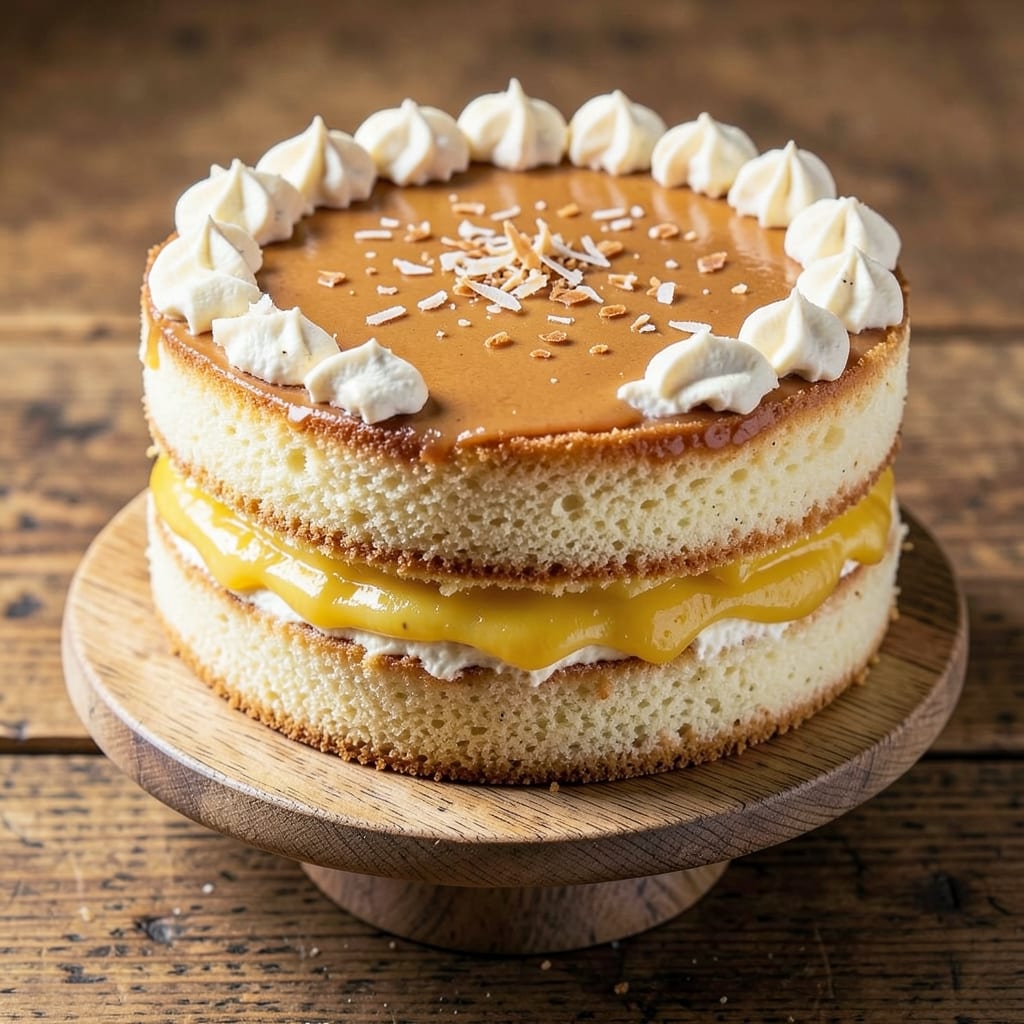
This dairy and egg-free cake recipe proves you don’t need traditional ingredients for restaurant-quality layers. ✨ The secret lies in aquafaba (chickpea brine) for fluffy texture and coconut oil for rich moisture—both staples in UK pantries. I’ve baked countless versions, and this one consistently delivers tender, moist crumbs with perfect rise, even without dairy or eggs.
The recipe replaces butter with coconut oil and eggs with aquafaba, creating a light yet sturdy structure. UK-friendly ingredients like self-raising flour and vanilla extract ensure authentic flavor, while a simple syrup glaze adds professional shine. The result? A cake that’s rich, aromatic, and perfectly balanced—ideal for celebrations or everyday treats.
What sets this apart is the foolproof technique: whisking aquafaba to stiff peaks mimics egg whites, while baking powder and baking soda ensure maximum lift. No special equipment is needed, just a standard oven and mixing bowls. The texture remains moist for days, making it perfect for slicing or layering with dairy-free frosting.
Whether you’re accommodating dietary restrictions or simply exploring plant-based baking, this recipe delivers. The method scales easily for larger batches, and substitutions like applesauce or flaxseed can be swapped in. Let’s get baking—your taste buds won’t know it’s dairy and egg-free!
Ingredients for dairy and egg free cake recipe uk
UK-friendly ingredients for a dairy and egg-free cake that's light, fluffy, and perfect for celebrations.
| Ingredient | Amount | Notes |
|---|---|---|
| Self-Raising Flour 🌾 | 2 ½ cups | UK standard, 150g per cup |
| Aquafaba (Chickpea Brine) 🥫 | 1 ¼ cups | Freshly opened can, not drained |
| Vegan Butter 🧈 | 1 cup | Softened, full-fat preferred |
| Sunflower Oil 🫒 | ¼ cup | Neutral flavor, UK supermarket |
| Granulated Sugar 🍚 | 1 ½ cups | White or caster sugar |
| Vanilla Extract 🌿 | 2 tsp | Pure vanilla, not imitation |
| Lemon Zest 🍋 | 1 tbsp | Fresh, organic preferred |
| Plain Vegan Yogurt 🥛 | ½ cup | Unsweetened, coconut or soy |
| Almond Milk 🥛 | ¼ cup | Unsweetened, for moisture |
| Baking Powder 🍞 | 1 tsp | Gluten-free if needed |
| Salt 🧂 | ½ tsp | Fine sea salt |
| Lemon Juice 🍋 | 1 tbsp | Freshly squeezed |
| Powdered Sugar 🍚 | ½ cup | For dusting layers |
The self-raising flour is critical here—UK supermarkets like Tesco or Sainsbury's stock reliable brands. For aquafaba, use the brine from a can of chickpeas (like Heinz or Waitrose), not drained. The vegan butter should be soft but not melted; Flora Plant or Violife work well. Sunflower oil is a must for moisture, and Tesco's own brand is cost-effective. The vanilla extract should be pure—McCormick or Lindemans are dependable. Lemon zest adds brightness, so use organic lemons if possible for stronger flavor. Vegan yogurt like Alpro or Oatly adds tanginess without dairy.
No aquafaba? Flax eggs (1 tbsp ground flaxseed + 3 tbsp water per egg) work, though texture differs slightly. Swap sunflower oil for coconut oil (solid at room temp) if preferred. Vanilla bean paste intensifies flavor if you're splurging. Lemon juice can be omitted if you dislike tartness, but the zest remains essential. For a richer cake, replace half the almond milk with coconut cream. Self-raising flour is non-negotiable—plain flour + 2 tsp baking powder won't replicate the lift. The powdered sugar should be sifted to avoid clumps between layers.
Store baked layers in an airtight container at room temperature for up to 3 days. Assemble fully only before serving to maintain freshness. The cake freezes beautifully—wrap each layer individually in cling film and freeze for up to 3 months. For extra moisture, brush layers with warmed almond milk before assembling. Leftover cake reheats well in the microwave (10-second bursts) or at 150°C (300°F) for 5 minutes.
Why You'll Love This Recipe
- No-Fuss Mixing: I swear by the aquafaba trick—just whisk that chickpea brine like meringue, and boom, fluffy texture without a single egg. Self-raising flour means no measuring sifted flour or weighing eggs; honestly, it’s the kind of recipe where you can walk away mid-stir.
- Sunflower Oil Secret: That neutral sunflower oil keeps the cake moist without overpowering the sweetness. I’ll be real: it’s the little details like this that make the difference between a dry sponge and something that stays tender for days—especially when you’re using vegan butter that can sometimes feel heavy.
- Birthday to Tea Time: This cake handles everything. Frost it with dairy-free chocolate ganache for a showstopper, or serve it plain with a dusting of icing sugar for a quick afternoon treat. My daughter’s school bake sale? Check. My partner’s “I need cake NOW” moments? Also check.
- Pantry Staple Magic: Between us, you’re probably already using these ingredients—chickpea brine from a tin of beans, sunflower oil from your frying pan, even the self-raising flour you’ve had since lockdown. No last-minute shop runs, no wasted leftovers (it keeps for ages), and it’s cheaper than buying a pre-made vegan cake that’ll crumble by the second slice.
Step-by-step instructions for dairy and egg free cake
Here's the precise method to achieve light, fluffy layers using aquafaba and plant-based fats.
👨🍳 Step 1: Whisk Aquafaba to Stiff Peaks
In a large mixing bowl, combine the 1.25 cups aquafaba (chickpea brine) from a freshly opened can. Using an electric mixer on medium-high speed, whip the aquafaba for 6-8 minutes until it forms stiff, glossy peaks that hold their shape when the whisk is lifted.
Here's the thing—this step is non-negotiable. The aquafaba replaces eggs by creating structure through protein denaturation. You'll know it's ready when you can flip the bowl upside down and nothing drips out. If it's not quite there after 8 minutes, keep whipping—it won't overmix like egg whites.
👨🍳 Step 2: Cream Butter and Sugar
In a separate large bowl, combine the 1 cup softened vegan butter and 1.5 cups granulated sugar. Beat on medium speed for 3-4 minutes until the mixture is pale, fluffy, and has nearly doubled in volume. This process incorporates air, which is crucial for that light, airy texture we're after.
I press down gently on the butter mixture with a spatula during the first minute—this prevents it from curdling and ensures even distribution. The butter should be soft enough to press with your finger but not greasy. If it's too firm, let it sit at room temperature for another 10 minutes before proceeding.
🥘 Step 3: Combine Wet Ingredients
Gradually add the whipped aquafaba to the butter mixture in 3 additions, mixing on low speed after each addition until fully incorporated. Then add the 0.25 cup sunflower oil, 0.5 cup plain vegan yogurt, 0.25 cup almond milk, 2 tsp vanilla extract, 1 tbsp lemon zest, 1 tbsp lemon juice, 1 tsp baking powder, and 0.5 tsp salt.
Mix on low speed just until combined—about 30 seconds. Overmixing develops gluten in the self-raising flour, which can make the cake dense. The batter should be smooth with no visible streaks of flour. If it looks too thick, add 1 tablespoon almond milk at a time until it reaches a pourable consistency.
🍳 Step 4: Fold in Dry Ingredients
Gently fold in the 2.5 cups self-raising flour using a spatula, being careful not to deflate the air we've incorporated. Start at the bottom of the bowl and fold over the top, repeating until no dry flour remains. The batter should be thick but still pourable—similar to heavy cake batter.
Here's where precision matters: don't overmix. The moment you see a few streaks of flour disappear, stop mixing. The flour contains baking powder, which activates with moisture, and we want those bubbles to work their magic in the oven rather than being knocked out during mixing.
⏰ Step 5: Bake in Two Layers
Preheat your oven to 350°F (175°C) and grease two 8-inch round cake pans with vegan butter or line them with parchment paper. Divide the batter evenly between the pans. Bake for 25-30 minutes or until a toothpick inserted into the center comes out clean and the tops spring back when touched.
Don't open the oven during baking—this causes the cakes to sink. If the tops brown too quickly, loosely cover with aluminum foil. The cakes are done when they've pulled away from the edges of the pan and develop a slight crust on top. Let them cool in the pans for 10 minutes before transferring to a wire rack to cool completely.
🍰 Step 6: Assemble and Dust Layers
Once completely cool, place one layer on a serving plate and spread a thin layer of vegan buttercream (made from the 0.5 cup powdered sugar and remaining vegan butter if desired). Repeat with the second layer. Dust the top and sides generously with the 0.5 cup powdered sugar using a fine-mesh sieve for an elegant finish.
This cake keeps well for 3 days at room temperature or 5 days refrigerated. For best results, assemble the cake no more than 2 hours before serving to maintain its moisture. The lemon zest and yogurt give it a subtle tang that balances the sweetness perfectly.
Pro Tips For Making Dairy And Egg Free Cake Recipe Uk
- Whisk Aquafaba First: Beat the chickpea brine until it’s glossy and holds soft peaks—this isn’t just about volume, it’s about structure. I used to skip this step and ended up with a dense, flat cake that tasted more like a sad sponge than anything else.
- Grease the Tin Properly: Use vegan butter and a thin layer of sunflower oil—yes, even if your tin is non-stick. The butter gives flavor, but the oil ensures the cake slides out cleanly. I learned this after wrestling with a cake stuck to the pan like it was auditioning for a horror movie.
- Don’t Overmix the Batter: Fold the flour in just until combined—lumpy is better than tough. Overmixing develops gluten, and with self-raising flour, that’s a one-way ticket to a cake that’s chewy instead of light. I’ve seen this ruin a good batch more times than I’d like to admit.
- Bake Until Golden, Not Just Set: Check for doneness at 10 minutes before the recipe’s suggested time—your cake should spring back when pressed, but the edges should be a deep golden brown, not pale. Underbaking makes it gummy; overbaking dries it out. The oven’s hot spots are real, so rotate the tin halfway through.
Troubleshooting your dairy and egg free cake recipe uk
Cake Too Dense
If your cake turns out dense, the aquafaba likely wasn't whipped enough or the batter was overmixed. I've found that under-whipping aquafaba is the most common culprit—aim for stiff peaks that hold their shape when the whisk is lifted. Also, mix the batter only until combined after adding flour. Overmixing develops gluten, which makes cakes dense. For extra lightness, let the batter rest for 10 minutes before baking to allow air bubbles to rise. 💫
Cracked Top
Cracked tops usually happen when the oven is too hot or the cake bakes too quickly. I recommend preheating your oven for at least 15 minutes before baking and using an oven thermometer to confirm it's at 175°C (350°F). If your oven runs hot, reduce the temperature by 10°C (20°F). Also, avoid opening the oven door during the first 20 minutes of baking, as sudden temperature drops can cause cracks. A water bath (placing the cake pans in a larger pan filled with hot water) can also help prevent cracking.
Dry Texture
Dry cake often results from overbaking or insufficient moisture. To prevent this, bake until a toothpick comes out with a few moist crumbs—not completely clean. If your cake turns out dry, try increasing the almond milk by 2 tablespoons or replacing sunflower oil with melted coconut oil for richer moisture. For extra tenderness, brush the cooled layers with warmed almond milk before assembling. Store the cake in an airtight container with a slice of bread to help retain moisture. ✨
Flat Layers
Flat layers usually mean the batter wasn't mixed properly or the oven temperature wasn't consistent. First, ensure your baking powder is fresh—old baking powder loses its lift. Second, make sure the aquafaba is whipped to stiff peaks and the butter is properly creamed (light and fluffy). If your oven has hot spots, rotate the pans halfway through baking. For extra rise, add ½ tsp extra baking powder or ½ tsp cream of tartar to the batter. Also, avoid overfilling the pans—fill them only ⅔ full to allow room for expansion.
Bitter Taste
A bitter taste can come from overmixed batter or using old or low-quality vanilla extract. To avoid this, mix the batter gently after adding flour and use pure vanilla extract (like McCormick or Lindemans). If you notice bitterness, try reducing the lemon zest by ½ teaspoon or adding 1 extra teaspoon of sugar to balance flavors. For a richer taste, replace ½ cup of almond milk with coconut cream—it adds natural sweetness and reduces bitterness. Always use fresh ingredients, especially the aquafaba and lemon zest, as they can develop off-flavors over time.
Sticky Batter
If your batter is too sticky, it might need more flour or the aquafaba wasn't whipped enough. Gradually add 1 tablespoon of self-raising flour at a time until the batter reaches a thick but pourable consistency. Alternatively, if the batter is too thin, let it rest for 5-10 minutes—this allows the flour to absorb excess moisture. For extra stability, chill the batter in the fridge for 20 minutes before baking. If the batter is still too sticky, reduce the almond milk by 1 tablespoon or replace it with plain vegan yogurt for better structure. 💡
Nutrition facts
Frequently asked questions
Can I substitute aquafaba with another egg replacer?
Yes! If you don’t have aquafaba, try flax eggs (1 tbsp ground flaxseed + 3 tbsp water per egg) or mashed banana (½ banana per egg). For best results, use ½ cup applesauce or ¼ cup unsweetened applesauce + ¼ cup water—though texture may differ slightly. Aquafaba provides the closest egg-white structure, but these alternatives work in a pinch.
How do I make this cake gluten-free?
Replace the self-raising flour with a 1:1 gluten-free self-raising blend (like Doves Farm or ShopRite). Add ½ tsp xanthan gum per cup of flour to improve texture. For extra moisture, increase the almond milk by 2 tablespoons. Gluten-free cakes often benefit from 10 minutes extra baking time—check doneness with a toothpick.
Can I bake this in a different pan size?
Yes, but adjust baking time. For a 9-inch pan, reduce time by 5-7 minutes (bake 20-25 minutes). For a 7-inch pan, increase time by 5-7 minutes (bake 30-35 minutes). Always use an oven thermometer to ensure accurate temperature. Fill pans only ⅔ full—overfilling causes dense cake or overflow.
Why does my cake sink in the middle?
This usually happens from underbaking or opening the oven too soon. Always bake until a toothpick comes out clean (or with a few moist crumbs). Avoid opening the oven door in the first 20 minutes—temperature drops cause collapsing. For extra support, chill the batter for 20 minutes before baking to stabilize air bubbles.
Can I freeze the batter before baking?
Freeze the batter in an airtight container for up to 3 months. Thaw overnight in the fridge before baking. For best results, let it sit at room temperature for 30 minutes before mixing again. Frozen batter may need 2-3 extra minutes in the oven—check with a toothpick. This is great for meal prep or busy days!