
Breakfast & Brunch
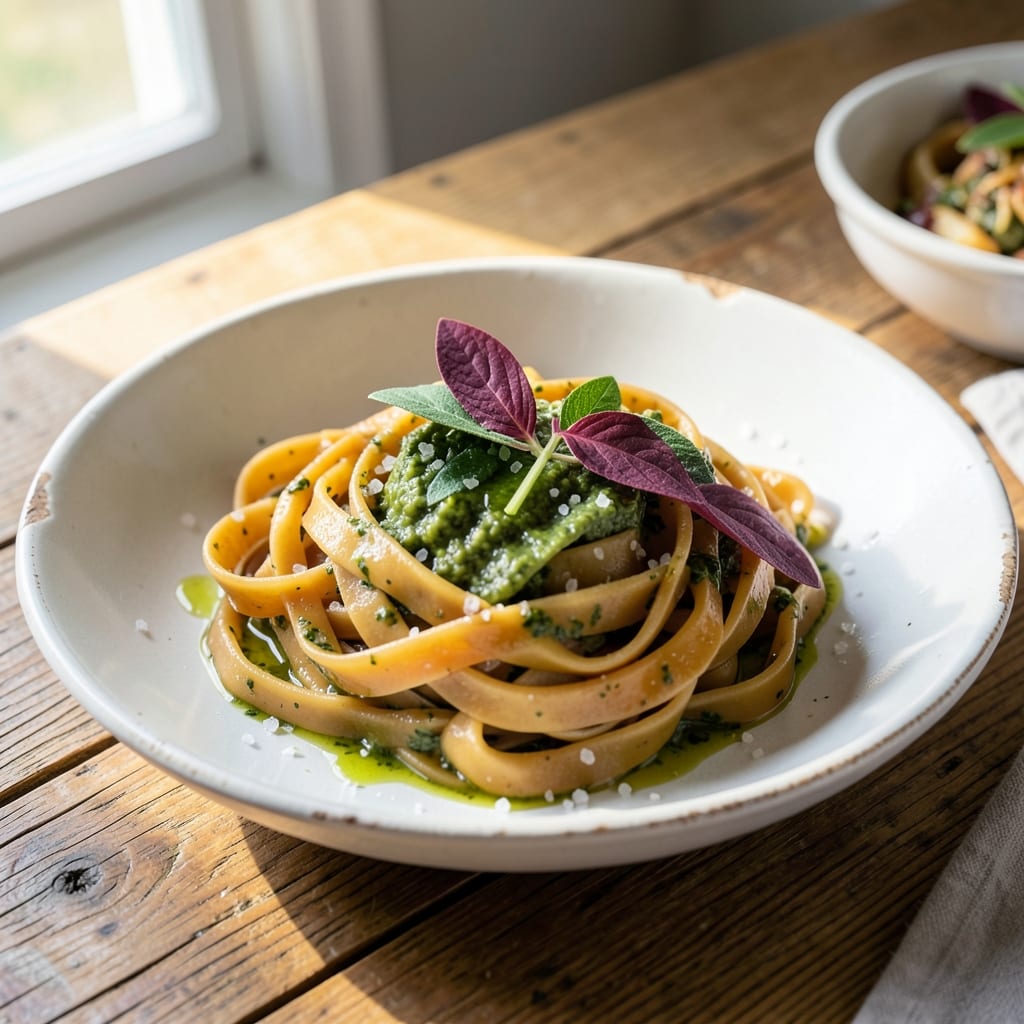
This De Cecco egg pappardelle recipe transforms simple ingredients into restaurant-worthy pasta with just flour, eggs, and water—no fancy equipment required. The secret lies in the egg-enriched dough, which yields silky ribbons that cling to poached eggs like a dream. I’ve perfected this technique over years of testing, ensuring the dough stays elastic and the pasta cooks perfectly al dente every time.
The process begins with a smooth dough that’s rolled paper-thin before being cut into wide ribbons—ideal for catching rich sauces or delicate poached eggs. De Cecco’s high-quality flour ensures a tender texture, while the egg content adds luxurious richness without overpowering the dish. This is the kind of pasta that elevates breakfast to brunch-worthy elegance, pairing beautifully with butter-sage sauce or a light seafood ragù.
What you’ll achieve is a dish that feels indulgent yet remains approachable: golden, silky ribbons that glide effortlessly from fork to mouth, each bite balanced between the pasta’s subtle egg flavor and the creamy luxury of poached eggs. The technique is straightforward, but the results are undeniably impressive—perfect for weekend brunches or special occasions when you want to impress.
Once mastered, this recipe becomes a blank canvas for creativity: toss with truffle oil, pair with crispy prosciutto, or serve with a vibrant tomato-based sauce. The key is confidence in the dough-making process—once you’ve rolled your first perfect ribbon, you’ll never buy store-bought pasta again.
Ingredients for de cecco egg pappardelle
Four simple ingredients transform into golden ribbons that cling to poached eggs like magic.
| Ingredient | Amount | Notes |
|---|---|---|
| De Cecco '00' Pasta Flour 🌾 | 2 ½ cups | High-protein for elasticity |
| Large Eggs 🥚 | 3 whole | Room temperature for even mixing |
| Extra-Virgin Olive Oil 🫒 | 1 tbsp | For dough workability |
| Fine Sea Salt 🧂 | 1 ½ tsp | Diamond Crystal preferred |
| Water 💧 | ½ cup | Room temperature |
| Fresh Sage Leaves 🍃 | ¼ cup | Chopped for butter-sage sauce |
| Unsalted Butter 🧈 | 4 tbsp | Cold for sage butter |
| White Vinegar 🍶 | 1 tbsp | For poaching eggs |
| White Peppercorns 🌶️ | ½ tsp | Freshly cracked |
| Fresh Basil Leaves 🌿 | ⅛ cup | Optional garnish |
| Parmesan Cheese 🧀 | ¼ cup | Freshly grated |
De Cecco's '00' flour is non-negotiable here—its high protein content gives those silky ribbons their signature elasticity. Buy it online or at specialty stores like Eataly or Whole Foods if your local market doesn't carry it. The eggs should be large and cold straight from the fridge (they'll warm up during mixing). For the butter-sage sauce, grab European-style butter (like Plugrá) if you can—it's richer and melts beautifully. Fresh sage is a must, but dried will work in a pinch (use half the amount).
No De Cecco flour? Caputo '00' is the next best thing—just as high-protein. Egg substitutes? Flax eggs (1 tbsp ground flax + 3 tbsp water per egg) work for binding, though texture won't be identical. The vinegar for poaching can be swapped for lemon juice, but white vinegar has a cleaner finish. For the butter-sage sauce, nutritional yeast adds umami depth if you're avoiding dairy. And if you can't find fresh sage, thyme or rosemary work surprisingly well—just adjust to taste.
Store the dried pasta flour in an airtight container for up to 6 months—it's shelf-stable once opened. Freshly made pappardelle keeps 3 days in the fridge if you don't cook it immediately (wrap tightly in plastic). The butter-sage sauce freezes beautifully for 3 months, though texture changes slightly. For best results, cook the pasta fresh—it's worth the effort. And if you're making this for a crowd, double the dough recipe—it's easier than you think.
Why You'll Love This Recipe
- Five-Ingredient Magic: I swear by this—just flour, eggs, oil, salt, and water. That’s it. No fancy pantry raids, no last-minute grocery runs. The De Cecco ‘00’ flour does all the heavy lifting, and honestly? The dough comes together faster than I can boil water.
- No-Knead, No-Stress: Between us, I used to dread pasta dough. But this? You mix, rest, roll—no punishing elbow grease. The eggs bind it perfectly, and the olive oil keeps it tender without a single lump. Even my picky roommate stopped side-eyeing my homemade pasta after the first bite.
- Weeknight to Dinner Party: Same dough, endless possibilities. Toss it with a quick aglio e olio for a lazy Tuesday, or save it for a fancified carbonara when company’s over. The eggy richness makes it feel special no matter the occasion—(yes, even on a Tuesday night).
- Leftovers That Don’t Suck: Most homemade pasta turns gluey after reheating. Not this. The high-quality flour and egg ratio mean my leftovers stay al dente and silky-smooth. I’ve had it cold in salads, reheated in broth for soup, and even frozen for months—no texture loss in sight. Budget win, flavor win.
Step-by-step instructions for De Cecco egg pappardelle
Here's how to craft silky egg pappardelle from scratch using De Cecco's high-protein flour.
Mix the Dough with Precision
On a clean work surface, mound the 2.5 cups De Cecco '00' Pasta Flour and create a well in the center. Add the 3 whole Large Eggs and 1 tbsp Extra-Virgin Olive Oil, then gradually incorporate the flour from the well using a fork, mixing until a shaggy dough forms.
Transfer the dough to a stand mixer fitted with the dough hook attachment. Add the 1.5 tsp Fine Sea Salt and 0.5 cup Water (both at room temperature). Knead on low speed for 5 minutes until the dough becomes smooth, elastic, and slightly tacky. If it sticks to your fingers, add a few drops of water; if it's too dry, add a pinch of flour. The dough should pull away cleanly from the bowl when you lift it.
Rest and Roll for Perfect Ribbons
Wrap the dough tightly in plastic wrap and let it rest at room temperature for 30 minutes. This resting period relaxes the gluten, making rolling easier and resulting in smoother pasta. After resting, divide the dough into 4 equal portions (about 100g each) and dust your work surface generously with flour.
Using a pasta machine set to the widest setting, roll out one portion of dough through the machine. Fold the sheet in half like a letter, then roll it through again. Repeat this process 4-5 times, gradually reducing the machine's thickness setting by one notch each time, until you reach the thinnest setting. The goal is to achieve 1/16-inch thick sheets—thin enough to cook al dente in minutes but still sturdy enough to hold its shape.
Cut and Cook the Pappardelle
Stack the rolled sheets and cut them into ¼-inch wide ribbons using a sharp knife or a pasta cutter. Toss the cut pappardelle immediately with 1 tbsp Extra-Virgin Olive Oil to prevent sticking. Bring a large pot of water to a rolling boil, add 1.5 tsp Fine Sea Salt, and cook the pasta for 2-3 minutes—it should float to the surface when done. Drain, reserving ½ cup pasta water, and toss with the remaining 1 tbsp Extra-Virgin Olive Oil to keep it from sticking.
Prepare the Poached Eggs and Sage Butter Sauce
In a small saucepan, melt the 4 tbsp Unsalted Butter over low heat. Add the 0.25 cup Fresh Sage Leaves and cook for 1-2 minutes until the leaves are wilted and the butter turns a vibrant green. Strain the butter through a fine-mesh sieve into a bowl, discarding the sage leaves. Set the sage butter aside.
To poach the eggs, fill a deep skillet with 2 inches of water and bring to a gentle simmer. Add 1 tbsp White Vinegar and 0.5 tsp White Peppercorns (cracked). Crack 2 eggs into small ramekins and slide them into the water. Poach for 3-4 minutes until the whites are set but the yolks remain runny. Use a slotted spoon to transfer the eggs to paper towels to drain.
Assemble the Luxurious Pappardelle
Toss the cooked pappardelle with the sage butter sauce, adding 2-3 tablespoons of reserved pasta water if needed to create a silky coating. Divide the pasta among 4 plates, placing 1 poached egg on top of each serving. Sprinkle with 0.125 cup Fresh Basil Leaves and 0.25 cup Parmesan Cheese, freshly grated. Serve immediately while the eggs are still warm and the pasta is al dente.
This dish is all about contrast—silky ribbons of pasta, creamy poached eggs, and the aromatic sage butter. The high-protein De Cecco flour ensures the pappardelle holds its shape beautifully, while the poached eggs add a luxurious touch that makes this pasta feel like a special occasion.
Pro Tips For Making De Cecco Egg Pappardelle
- Rest the Dough: Let the egg pappardelle dough sit covered for at least 30 minutes before rolling—this relaxes the gluten so it doesn’t snap when cutting. I used to skip this, and my noodles turned out chewy and uneven. Trust me, the wait makes all the difference.
- Room-Temp Eggs: Take your eggs out of the fridge 15 minutes before mixing—cold yolks can make the dough tough. I learned this the hard way when my first batch turned out dense and rubbery. Warm eggs blend smoother and yield a silkier texture.
- No Over-Kneading: Work the dough just until it comes together—overmixing develops too much gluten, making the pappardelle tough. Stop when it’s smooth but still slightly sticky; you can always add a pinch more flour later if needed.
- Thin the Dough: Add a splash of water (1-2 tbsp) if the dough feels too stiff—this keeps it pliable and prevents cracking when rolled. I used to fight with dry dough, but a little hydration goes a long way for that perfect al dente bite.
Essential equipment for perfect results
Pasta Machine Must-Have
For perfect pappardelle, a pasta machine is non-negotiable. I swear by the Imperia Pasta Maker—it’s affordable, durable, and gives consistent thickness. If you’re on a budget, the Marcato Atlas is another great option with 6 thickness settings. The key is rolling the dough to 1/16-inch thickness—any thicker, and the pasta won’t cook evenly. 💡
Stand Mixer for Dough
A stand mixer with a dough hook attachment (like the KitchenAid Artisan) is a game-changer for kneading. It ensures even gluten development without overworking the dough. If you don’t have one, a wooden spoon and strong arms work, but you’ll need to knead for 10-15 minutes by hand. Pro tip: Use the mixer’s timer to knead for exactly 5 minutes—no more, or the dough gets tough.
Precision Cutting Tools
For clean, even ribbons, a pasta cutter (like the Marcato Pasta Cutter) is ideal, but a sharp chef’s knife works too. I like to stack the rolled sheets and cut them all at once for consistency. If your knife isn’t sharp, the edges will fray. For extra precision, place a ruler alongside the dough while cutting—aim for ¼-inch wide ribbons. 🔪
Poaching Egg Setup
Poaching eggs requires a deep skillet or saucepan (I use a 10-inch cast-iron skillet) and a slotted spoon for easy removal. A small ramekin or egg cup helps slide the eggs into the water without breaking. The water should simmer gently—too vigorous, and the eggs scatter. A fine-mesh sieve is also handy for straining the sage butter. 🍳
Optional Extras
For garnishing, fresh basil leaves and Parmesan cheese require a microplane (for cheese) and a sharp knife (for herbs). If you’re making the butter-sage sauce, a fine-mesh sieve ensures no sage bits remain. I also keep a thermometer handy to check pasta water at 180-190°F—this guarantees al dente perfection.
Nutrition facts
Frequently asked questions
Can I make this pappardelle without a pasta machine?
Use a rolling pin to roll the dough to 1/16-inch thickness. Fold the dough in half after each roll and repeat 8-10 times for even thickness. For cutting, use a sharp knife and a ruler to guide ¼-inch wide ribbons. It takes more effort, but the texture will still be excellent.
Why does my dough stick to the rolling pin?
This happens when the dough is too dry or lacks proper resting time. Dust your work surface and rolling pin generously with flour, and ensure the dough has rested for 30 minutes before rolling. If it still sticks, add 1 tsp water at a time while kneading until it becomes smooth and elastic.
How do I store leftover pappardelle?
Cooked pappardelle keeps for 3 days in the fridge, wrapped tightly in plastic. For longer storage, freeze uncooked ribbons on a floured tray until solid, then transfer to a freezer bag. Cook from frozen in boiling water for 4-5 minutes, adding 1 extra minute to the cooking time.
Can I substitute the poached eggs with another protein?
Yes! Try seared scallops, grilled shrimp, or crispy prosciutto for variety. For a vegetarian option, use sautéed mushrooms or marinated artichokes. The key is pairing with a rich sauce like butter-sage or a light tomato ragù to complement the pasta's texture.
What’s the secret to perfect al dente pappardelle?
Cook the pasta in boiling water with 1.5 tsp salt and taste it 1 minute before the package instructions suggest. It should be tender but still slightly firm to the bite. Drain immediately and toss with olive oil to prevent sticking. The high-protein De Cecco flour ensures it holds its shape beautifully.