
Breakfast & Brunch
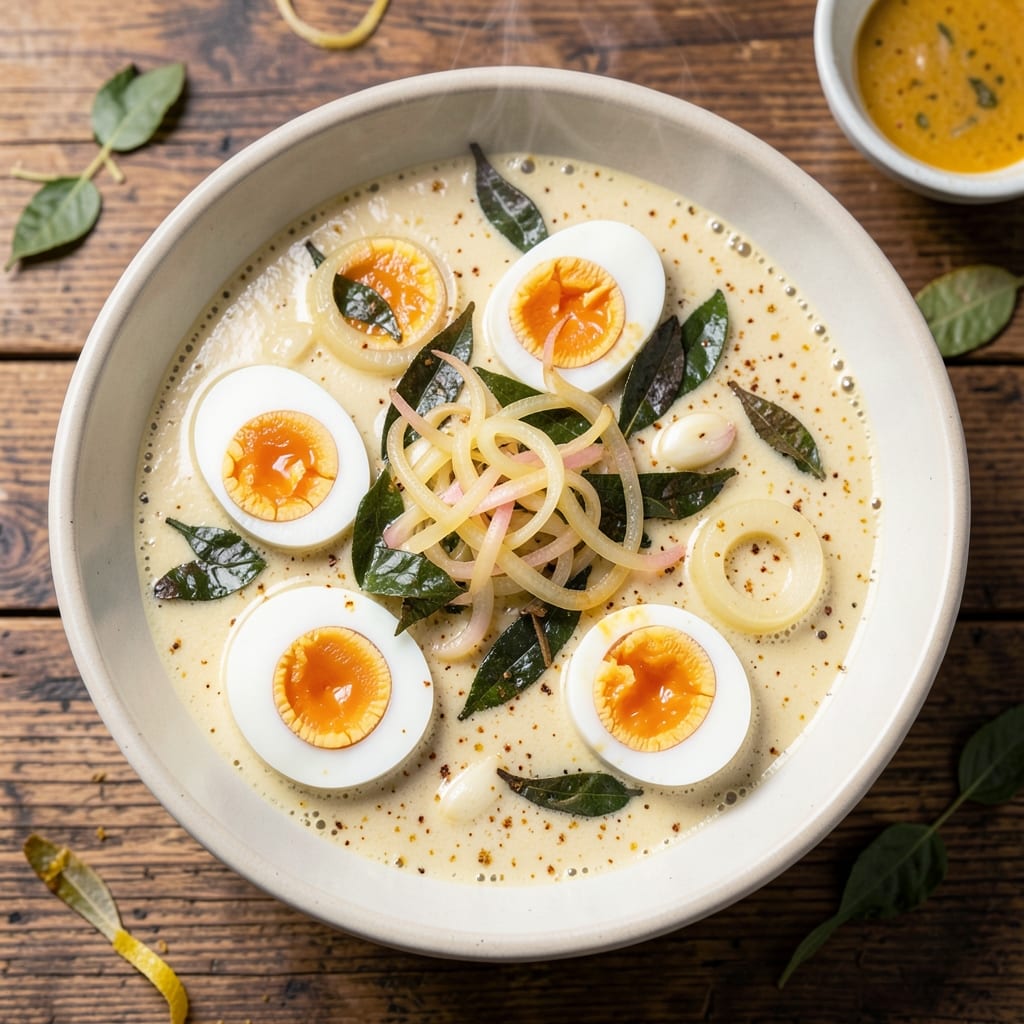
This different egg curry recipe transforms humble eggs into a luxurious, fragrant dish with golden yolk streaks swirling through a velvety coconut broth. 🌟 The secret lies in balancing traditional spice tempering with modern shortcuts—like using pressure cooking to tenderize the eggs—while keeping the aromatic base rich and complex. What makes this curry stand out is the way the eggs absorb the coconut-curry flavors without losing their natural richness, creating a dish that's both comforting and unexpectedly elegant.
At its heart, this recipe builds on classic techniques—sautéing onions until deep caramelized, blooming whole spices in hot oil, and simmering tomatoes until they melt into a fragrant paste. But instead of the usual heavy gravy, we lighten it with coconut milk, creating a broth that's creamy yet not overly rich. The eggs (boiled, poached, or even scrambled) are gently folded into this fragrant sauce at the very end, ensuring each bite delivers that signature yolk streak against a backdrop of warm spices, ginger, and garlic.
What you'll end up with is a dish that's equally at home on a weekend brunch table or a weeknight dinner—served with steamed basmati rice, warm naan, or fluffy roti. The aroma alone will have everyone gathering around the table, while the first bite delivers that perfect marriage of textures: tender eggs, silky coconut broth, and a subtle crunch from toasted spices. This isn't just another egg curry; it's a modern take that honors tradition while surprising your taste buds.
The best part? This recipe scales effortlessly—double it for a crowd, or halve it for a cozy meal for two. And with pantry staples like coconut milk, tomatoes, and spices, you can have it ready in under 30 minutes. Let's get cooking!
Ingredients for different egg curry
Fragrant spices, velvety coconut, and tender eggs create this restaurant-worthy vegetarian curry in 30 minutes.
| Ingredient | Amount | Notes |
|---|---|---|
| Large Eggs 🥚 | 8 whole | Hard-boiled, peeled for even cooking |
| Coconut Milk 🥥 | 1 can | Full-fat, unsweetened preferred |
| Yellow Onion 🧅 | 1 whole | Medium-sized, finely chopped |
| Fresh Ginger 🌿 | 1 inch | OR 2 tbsp grated fresh ginger |
| Garlic Cloves 🧄 | 4 cloves | Peeled, minced for aromatic depth |
| Curry Leaves 🌿 | ¼ oz | OR 1 tbsp dried curry leaves |
| Tomatoes 🍅 | 2 medium | Ripe, diced or blended smooth |
| Fresh Cilantro 🌿 | ¼ cup | Chopped, for garnish and brightness |
| Ground Turmeric 🌶️ | ½ tsp | Freshly ground for vibrant color |
| Ground Cumin 🌶️ | ½ tsp | Toasted for deeper aroma |
| Ground Coriander 🌿 | ½ tsp | Freshly ground preferred |
| Garam Masala 🌶️ | ½ tsp | Store-bought blend works fine |
| Salt 🧂 | 1 tsp | Diamond Crystal preferred |
| Black Pepper 🌶️ | ½ tsp | Freshly cracked for heat |
| Vegetable Oil 🫒 | 2 tbsp | High smoke point preferred |
The coconut milk is non-negotiable here—full-fat for richness, and Thai Kitchen or Native Forest brands work best. Fresh ginger and curry leaves are worth hunting down at Indian or Asian markets—they make all the difference. If you can't find curry leaves, 1 tbsp dried works, but the flavor won't be identical. For the tomatoes, San Marzano if you want to splurge, but regular grocery store tomatoes work fine if they're ripe. The eggs? Pasture-raised if possible, but any large eggs will do.
No fresh ginger? 2 tbsp grated fresh is the same as 1-inch piece—just measure carefully. Short on curry leaves? Dried oregano at half the amount gives a similar earthy note. For a quicker version, blend the tomatoes instead of dicing them. The garam masala blend matters—MDH or Everest are solid store-bought options. Want more heat? Add 1/4 tsp cayenne or a pinch of red pepper flakes. The spices should be toasted in oil for 30 seconds before adding to the onions—this deepens their flavor dramatically.
This curry tastes even better the next day—reheats beautifully on the stove or in the microwave. Keeps for 4-5 days in the fridge, or 3 months frozen. I always make extra to freeze for lazy weeknights. The eggs stay perfectly tender when reheated—just stir gently to avoid breaking. Garnish with extra cilantro right before serving, as it wilts quickly in hot dishes. Serve with steamed basmati rice or warm naan to soak up every last drop of that fragrant coconut sauce.
Why You'll Love This Recipe
- Pantry Staples Only: I keep a can of coconut milk and a jar of ginger-garlic paste in my fridge for this—no last-minute grocery runs. The eggs poach right in the simmering sauce, so no extra bowls or frying mess.
- Creamy Without Effort: That rich coconut milk turns velvety smooth with just a few minutes of simmering, and the onions caramelize into sweet, golden strands while you prep the rest. Honestly, the first bite makes me forget it’s supposed to be hard to make creamy curries.
- Leftover Goldmine: This curry tastes better the next day—thicker, flavors melded deeper. I double the batch on Sundays and freeze half; reheating it with a splash of water brings it back to life like magic.
- Budget Breakfast Boost: A dozen eggs stretch into three meals, and the onion-ginger base costs pennies. My college-student nephew calls it his "fancy cheap food" because it feels special but won’t break the bank. (Yes, even on a Tuesday night.)
Step-by-step instructions for spiced egg curry with coconut broth
Let's make this rich, velvety curry where silky egg yolks melt into fragrant coconut broth.
🍳 Step 1: Hard-Boil Eggs for Perfect Yolk Streaks
Place the 8 whole large eggs in a saucepan and cover with cold water by about 1 inch. Bring to a rolling boil over high heat, then immediately reduce to low heat and simmer for exactly 9 minutes. Set a timer—this precision ensures creamy yolks that won't overcook into scrambled bits.
Transfer eggs to an ice bath for 10 minutes to stop cooking. I peel them right away while still warm—this makes the shells slip off easily. Crack each egg in half lengthwise and gently separate yolks from whites. Place yolks in a small bowl and set whites aside (you won't use them). The yolks should be intact but still slightly runny at the edges—this is what creates those beautiful streaks in the curry.
👨🍳 Step 2: Build the Spiced Coconut Base
Heat the 2 tablespoons vegetable oil in a large skillet over medium heat until shimmering. Add the 1 whole yellow onion and cook for 5-6 minutes until soft and translucent. I like to press down with a spoon occasionally to help it caramelize slightly—that adds depth of flavor.
Add the 1 inch fresh ginger and 4 cloves garlic cloves, cooking for 1-2 minutes until fragrant. Here's where the magic happens: stir in the 0.25 oz curry leaves, 0.5 tsp ground turmeric, 0.5 tsp ground cumin, and 0.5 tsp ground coriander. Toast these spices for 30 seconds until you smell that warm, earthy aroma—don't let them burn, just let their flavors wake up.
🍳 Step 3: Simmer the Tomato-Coconut Sauce
Add the 2 medium tomatoes and cook for 3-4 minutes until they break down into a rough paste. Pour in the 1 can coconut milk and stir gently. Bring to a simmer over medium-low heat, then reduce heat to low and let it cook uncovered for 10 minutes—this allows the flavors to meld and the sauce to thicken slightly.
Season with the 0.5 tsp garam masala, 1 tsp salt, and 0.5 tsp black pepper. Taste the sauce—it should be rich and spiced but not overpowering. If it needs more depth, add a pinch of salt or a tiny bit more garam masala. The sauce should coat the back of a spoon but still be pourable.
🥘 Step 4: Cook the Eggs in the Curry
Gently add the egg yolks to the simmering sauce, stirring just enough to distribute them evenly. Here's the thing—don't overmix. You want those yolks to melt into beautiful streaks rather than disappear completely. Let the curry simmer gently for 3-4 minutes—just enough time for the yolks to soften and infuse the sauce with their creamy goodness.
If the sauce starts to thicken too much, add 2-3 tablespoons of water to maintain that luscious, velvety consistency. The curry should be rich but still coat a spoon lightly. Remove from heat and let it sit for 2 minutes—this resting period helps all the flavors come together.
🍽️ Step 5: Finish and Serve with Fresh Herbs
Garnish with the 0.25 cup fresh cilantro, giving it a gentle toss to distribute those bright green flecks throughout. The contrast of fresh herbs against the rich coconut sauce is what makes this dish pop. Serve immediately in warm bowls—this curry tastes best fresh while the yolks are still warm and silky.
I like to pair it with steamed basmati rice or warm naan bread. The rice soaks up the coconut broth beautifully, while the naan adds a perfect chewy contrast. Each bite should deliver that perfect balance of creamy egg yolks, aromatic spices, and velvety coconut—trust me, it's worth every step!
Pro Tips For Making Different Egg Curry
- PREP GINGER LIKE A PRO: Use a microplane or the side of your knife to grate ginger—no peeling needed. I learned this the hard way after burning my fingers trying to peel tiny slivers. The texture blends smoother and releases flavor faster in the oil.
- LOW AND SLOW FOR EGGS: Simmer the eggs in coconut milk on actual low heat after the initial sear—think 180°F (75°C), not medium. I used to rush it, and the yolks turned rubbery. Patience here makes the difference between creamy and sad.
- SALT THE COCONUT MILK: Add a pinch of salt to the coconut milk before combining it with the eggs. The curry’s richness needs balance, and salting early lets the flavor meld. Skipping this step makes the dish taste flat, even if everything else is perfect.
- CRACK EGGS DIRECTLY IN: Skip the bowl—crack eggs straight into the simmering coconut milk. The heat gently cooks them as they sink, and you avoid the mess of transferring. (Yes, even if you’re impatient like me.)
Health benefits of this dish
Protein Powerhouse
Eggs are a complete protein source, containing all nine essential amino acids your body needs for muscle repair and immune function. This curry delivers 24 grams of protein per serving—perfect for breakfast or dinner. The yolks add healthy fats and fat-soluble vitamins like A and D, while the coconut milk provides medium-chain triglycerides that support brain function. 💪
Coconut Health Perks
The full-fat coconut milk in this recipe offers lauric acid, a powerful antimicrobial compound that supports immune health. It also provides electrolytes like potassium and healthy fats that help stabilize blood sugar levels. I always choose unsweetened versions to avoid added sugars that can spike glucose.
Spice Benefits
Curry leaves contain antioxidants and anti-inflammatory compounds that may help reduce cholesterol levels. Turmeric adds curcumin, a compound with potent anti-inflammatory properties. The ginger and garlic in this recipe boost digestion and may help lower blood pressure. These spices work together to create a flavorful dish that's also good for you.
Low-Calorie Comfort
This curry clocks in at around 300 calories per serving—much lighter than traditional creamy curries. The egg yolks provide satiety while keeping calories in check, making it perfect for weight-conscious eaters. The coconut milk adds richness without the heavy cream's calorie load. It's a comforting dish that won't weigh you down.
Vitamin Boost
Each serving delivers significant amounts of vitamin B12 (from eggs) and vitamin C (from tomatoes and cilantro). The combination supports energy metabolism and collagen production. The curry leaves add vitamin K, important for bone health. It's a nutrient-dense dish that feels indulgent but is actually quite healthy.
Digestive Aid
The ginger and black pepper in this recipe stimulate digestion and may help relieve nausea. The coconut milk is gentle on the stomach while providing hydration. I find this curry particularly soothing after heavy meals. The spices work together to create a warming, comforting dish that aids digestion while delivering essential nutrients. 🌿
Nutrition facts
Frequently asked questions
Can I make this egg curry with scrambled eggs instead of boiled?
For a quicker version, scramble 6 large eggs in a separate pan until just set (2-3 minutes on low heat), then gently fold them into the finished coconut sauce. The texture will be creamier but less delicate than the yolk streaks. Add the eggs during the last 2 minutes of simmering to keep them tender.
How do I adjust the spice level for kids or sensitive stomachs?
Start by halving the garam masala and black pepper, then taste as you go. For extra mildness, omit the curry leaves and reduce the cumin and coriander to ¼ tsp each. Kids often love the coconut flavor, so the base is naturally appealing. Always serve with plain yogurt or rice to balance any residual heat.
Can I substitute coconut milk with something else?
For a dairy-free option, use cashew cream (blend 1 cup soaked cashews with ½ cup water) or light coconut milk (just add 1 tbsp cream at the end for richness). For a non-dairy alternative, try ½ cup Greek yogurt mixed with ½ cup water, but the texture will be thicker. The coconut flavor is key to this recipe's balance.
Why did my curry turn out too thick or too thin?
Too thick? Add 2-3 tbsp water or coconut milk while simmering. Too thin? Simmer uncovered for 5-10 extra minutes to reduce. The sauce should coat the back of a spoon but still be pourable. If using canned tomatoes, blend them first to prevent chunkiness. For extra control, start with ½ can coconut milk and add more later.
How can I make this a one-pot meal?
Combine everything in a single pot: Sauté onions, ginger, and garlic, then add spices and tomatoes. Pour in 1 cup water instead of coconut milk, simmer until thickened (10 minutes), then stir in the coconut milk. Add eggs last and cook as directed. For a heartier dish, include ½ cup cooked rice or lentils in the pot. Just reduce the final simmer time to 2 minutes after adding eggs.