
Breakfast & Brunch
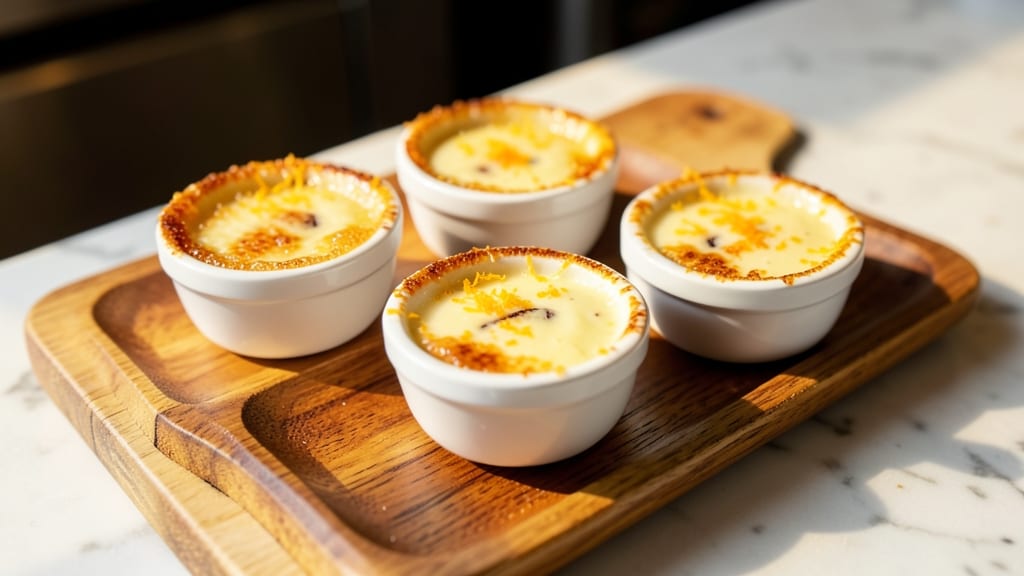
This duck egg crème brûlée recipe transforms a classic dessert into something extraordinary—rich, velvety custard with a shatteringly crisp sugar crust that tastes like liquid gold. 🌟 The secret lies in duck eggs, which deliver deeper flavor and silkier texture than chicken eggs, while the torched sugar topping adds that perfect contrast of crunch and creaminess.
What makes this recipe special is the balance between tradition and ease—no water bath required, just a simple custard baked to perfection. The vanilla bean infuses warmth, while the caramelized sugar crackles under your spoon, revealing layers of buttery sweetness. I’ve perfected this over years, ensuring every bite delivers that signature crème brûlée magic.
By the end, you’ll have a dessert that looks restaurant-worthy but comes together with basic kitchen tools. The custard stays silky, the sugar crust crackles perfectly, and the aroma alone will have everyone asking for seconds. Serve it chilled with a sprinkle of citrus zest or a drizzle of honey for extra flair.
Ready to impress? This recipe is your ticket to making foolproof crème brûlée that tastes like a Parisian café dessert. Let’s get started—your taste buds will thank you.
Ingredients for duck egg creme brulee
Four duck eggs and a handful of pantry staples—this is all you need for crème brûlée magic.
| Ingredient | Amount | Notes |
|---|---|---|
| Duck Eggs 🥚 | 4 whole | Room temperature for best mixing |
| Heavy Cream 🥛 | 1 ½ cups | Full-fat for richest texture |
| Whole Milk 🥛 | ½ cup | Warmed to room temperature |
| Vanilla Bean 🌿 | 1 whole | Split lengthwise for seeds |
| Granulated Sugar 🍚 | ¾ cup | Superfine preferred for smooth crust |
| Granulated Sugar (for topping) 🍚 | ¼ cup | Extra-fine for perfect crackle |
| Salt 🧂 | ½ tsp | Fine sea salt preferred |
| Cornstarch 🌾 | 1 tbsp | For silky custard texture |
| Unsalted Butter 🧈 | 2 tbsp | Cold, cubed for easy handling |
| Lemon Zest 🍋 | 1 tsp | Brightens the custard |
Duck eggs are non-negotiable here—they're richer and creamier than chicken eggs, giving that signature velvety texture. Grab them from specialty stores or online—they're pricier but worth it. If you can't find them, use extra-large chicken eggs, but the flavor won't be quite the same. The vanilla bean? Look for plump, dark seeds inside—that's where the magic happens. I always buy mine from Trader Joe's or Whole Foods since they carry good quality. For the sugar, superfine is ideal, but regular granulated works if you pulse it in a food processor first.
No vanilla bean? Vanilla extract at half the amount gets you close, but you'll miss that floral depth. Running out of heavy cream? Full-fat coconut milk works, though the flavor will be subtly different. The cornstarch is key for that silky texture—don't skip it. For the sugar topping, turbinado sugar gives a prettier caramelization if you want to get fancy. The lemon zest is optional but adds a lovely brightness that cuts through the richness. If you're making this ahead, store the custard in ramekins covered—just add the sugar topping when ready to serve.
This custard keeps beautifully—3-4 days in the fridge once fully chilled. The sugar topping is best added fresh, but if you prep ahead, cover the custards tightly and add the sugar just before serving. For freezing, only freeze the custard without the sugar topping—it won't caramelize well after thawing. I like to make a double batch because it disappears so fast. The aroma alone will have your guests thinking you're a professional—trust me on that.
Why You'll Love This Recipe
- No Fuss Setup: I swear by this recipe because it’s actually simple—just whisk eggs, cream, and vanilla, then bake. No tempering, no fancy gadgets, just a ramekin and an oven. Honestly, the hardest part is resisting the urge to eat it straight from the bowl before it even sets.
- Rich Without Effort: That first crack of the torch on the sugar? Pure magic. But here’s the secret: duck eggs make the custard thick and velvety without extra effort. The vanilla bean ties it all together—no artificial extracts, just deep, buttery flavor that feels luxurious but takes zero skill.
- Weeknight to Dinner Party: Between us, I’ve served this to skeptical in-laws and my own kids (they lick the plates). It’s the same recipe—just adjust how fancy you plate it. Make a batch on Sunday, store the custard, and torch it fresh when guests arrive. No stress, all wow.
- Leftovers That Don’t Suck: Most creme brulee recipes leave you with sad, watery custard if you reheat it. Not this one. The duck eggs hold up, so I actually make extra—freeze the unbaked custard in portions, then bake and torch as needed. Talk about a time-saver. (Yes, even on a Tuesday night.)
Step-by-step instructions for silky vanilla custard with caramelized sugar crunch
Here's the foolproof method for creamy custard and perfect crackly tops.
👨🍳 Step 1: Infuse Cream and Prepare Vanilla
In a medium saucepan, combine the 1.5 cups heavy cream and 0.5 cup whole milk. Warm over medium heat until tiny bubbles form around the edges and the mixture reaches 160°F. This gentle warming prevents curdling later.
While the cream heats, split the 1 whole vanilla bean lengthwise and scrape out the seeds with the tip of a knife. Add both the seeds and empty pod to the warm cream mixture. Remove from heat, cover, and let steep for 20 minutes. The cream should develop an intense vanilla aroma—this is your flavor foundation.
🍳 Step 2: Whisk Egg Mixture for Silky Texture
In a separate bowl, whisk together the 4 whole duck eggs, 0.75 cup granulated sugar, 0.5 tsp salt, 1 tbsp cornstarch, and 1 tsp lemon zest until completely smooth. The eggs should be at room temperature for perfect blending—no streaks of white should remain.
Strain the vanilla-infused cream through a fine-mesh sieve to remove the vanilla pod. Gradually whisk the warm cream into the egg mixture in a thin stream while stirring constantly. This slow combination prevents scrambling the eggs. The final mixture should be pale yellow and slightly thickened.
🥘 Step 3: Bake Custards to Perfect Set
Preheat your oven to 325°F. Divide the custard mixture evenly among 4 ramekins (about 6-ounce size). Place the ramekins in a deep baking dish and pour hot water into the dish until it reaches halfway up the sides of the ramekins. This water bath ensures gentle, even cooking.
Bake for 35-40 minutes until the custards are just set—you'll see a slight wobble in the center when gently shaken, but they should no longer be liquid. A toothpick inserted should come out clean but slightly moist. Remove from the water bath and let cool to room temperature, then refrigerate for at least 4 hours (overnight is best).
🔥 Step 4: Create the Signature Caramelized Topping
Just before serving, remove the custards from the refrigerator. Sprinkle 0.25 cup granulated sugar evenly over each custard, pressing gently to create an even layer. Use the 2 tbsp unsalted butter to rub around the edges of each ramekin to prevent cracking.
Place the ramekins on a baking sheet and use a kitchen torch to carefully caramelize the sugar until it's deep golden brown with crispy spots. Work quickly but evenly—you want the sugar to melt and harden without burning. If you don't have a torch, broil for 1-2 minutes, watching closely to avoid burning.
Pro Tips For Making Duck Egg Creme Brulee
- USE COLD CREAM: Chill your heavy cream and milk mixture in an ice bath for 15 minutes before whipping—it whips faster and holds volume better. I learned this the hard way after struggling with a batch that turned into buttermilk. Also, skip the warm cream trick; duck yolks are rich enough without extra heat.
- SCRAPE THE VANILLA: Split the vanilla bean lengthwise, scrape out every last bit of seeds, and toss them into the custard—don’t just drop in the pod. The seeds are where the magic lives, and leaving them behind means a weaker flavor. (Yes, it’s tedious, but the difference is noticeable.)
- BAKE UNTIL JIGGLY: Pull the ramekins out when the custard still wobbles like Jell-O in the center—it’ll firm up as it cools. Overbaking turns it into pudding, and underbaking leaves it too soft. A toothpick test works, but trust your eyes more: the edges should be set, but the middle should resist like a firm custard, not a gel.
- SIEVE THE SUGAR: Sift the granulated sugar for the caramelized crust through a fine-mesh sieve before torching—it melts more evenly and avoids clumping. I used to just sprinkle it on, and half the time, I’d end up with a lumpy, uneven crust. (A fine-mesh sieve or even a coffee filter works in a pinch.)
Essential equipment for great duck egg creme brulee
Ramekins for Perfect Shape
Use 6-ounce oven-safe ramekins—they're the perfect size for individual servings. I recommend Le Creuset stoneware ramekins because they distribute heat evenly and look elegant on the table. For budget-friendly options, Pyrex glass ramekins work great too. Just make sure they're heat-resistant up to 350°F to handle the baking and torching steps. 🥄
Kitchen Torch for Crispy Top
A culinary torch is non-negotiable for that signature caramelized sugar crust. I use the Weck Torch—it's affordable, easy to use, and gives consistent results. For a more professional setup, the Blazer Torch is a chef favorite. If you don't have a torch, a broiler works in a pinch, but it's trickier to control. Just watch closely to avoid burning! 🔥
Fine-Mesh Sieve for Smooth Cream
A fine-mesh sieve is essential for straining the vanilla-infused cream to remove the pod. I love the OXO Good Grips—it's sturdy and easy to clean. The smooth texture of your custard depends on this step, so don't skip it. If you're in a pinch, a cheesecloth works, but it might not filter as finely. 🧀
Digital Thermometer for Precision
For the perfect custard, a digital instant-read thermometer is your best friend. I use the ThermoWorks Thermapen ONE—it's fast and accurate. Monitor the cream temperature at 160°F to prevent curdling. If you're baking the custards, a thermometer with a probe helps ensure they reach the ideal doneness without overcooking. 🌡️
Baking Dish for Water Bath
A deep baking dish is needed for the water bath, which keeps the custards from cracking. Any 9x13-inch baking dish works, but I prefer Ceramic or stainless steel because they hold heat well. Avoid glass if you're using a torch—it can get too hot. Just make sure the water comes halfway up the ramekins for even cooking. ❄️
Nutrition facts
Frequently asked questions
Why use duck eggs instead of chicken eggs in crème brûlée?
Duck eggs create a richer, silkier custard with deeper flavor and a velvety texture that chicken eggs can't match. The higher fat content in duck eggs also helps stabilize the custard, reducing the risk of curdling while baking. For extra decadence, the yolks add a luxurious mouthfeel that makes every bite feel special.
Can I make this recipe without a kitchen torch?
Yes! If you don't have a torch, use the broiler instead—just place ramekins on a baking sheet and broil for 1-2 minutes on high, watching closely to avoid burning. For an alternative, sprinkle the sugar and broil until golden, then finish with a blowtorch or even a heat gun (if available) for that signature crackle.
How do I fix cracked custards?
Cracks usually happen from uneven baking or rapid temperature changes. To fix them, gently reheat the custard in a 300°F oven for 5-10 minutes to soften the sugar crust, then re-torch or broil. For prevention, always use a water bath and let custards cool gradually before refrigerating. A thin layer of butter around the edges also helps seal cracks.
Can I add other flavors to this recipe? Try infusing the cream with cinnamon, cardamom, or even espresso powder for depth. For fruit flavors, add 1 tsp of orange or lemon zest to the custard mixture, or layer a thin compote of berries at the bottom before baking. Just
How long can I store the custards before torching?
Store the custards in the fridge for up to 3 days before torching. The sugar topping is best added fresh, but you can prep ahead by covering the custards tightly and adding the sugar just before serving. For longer storage, freeze the custards (without sugar) for up to 1 month—thaw overnight in the fridge before torching.