
Breakfast & Brunch
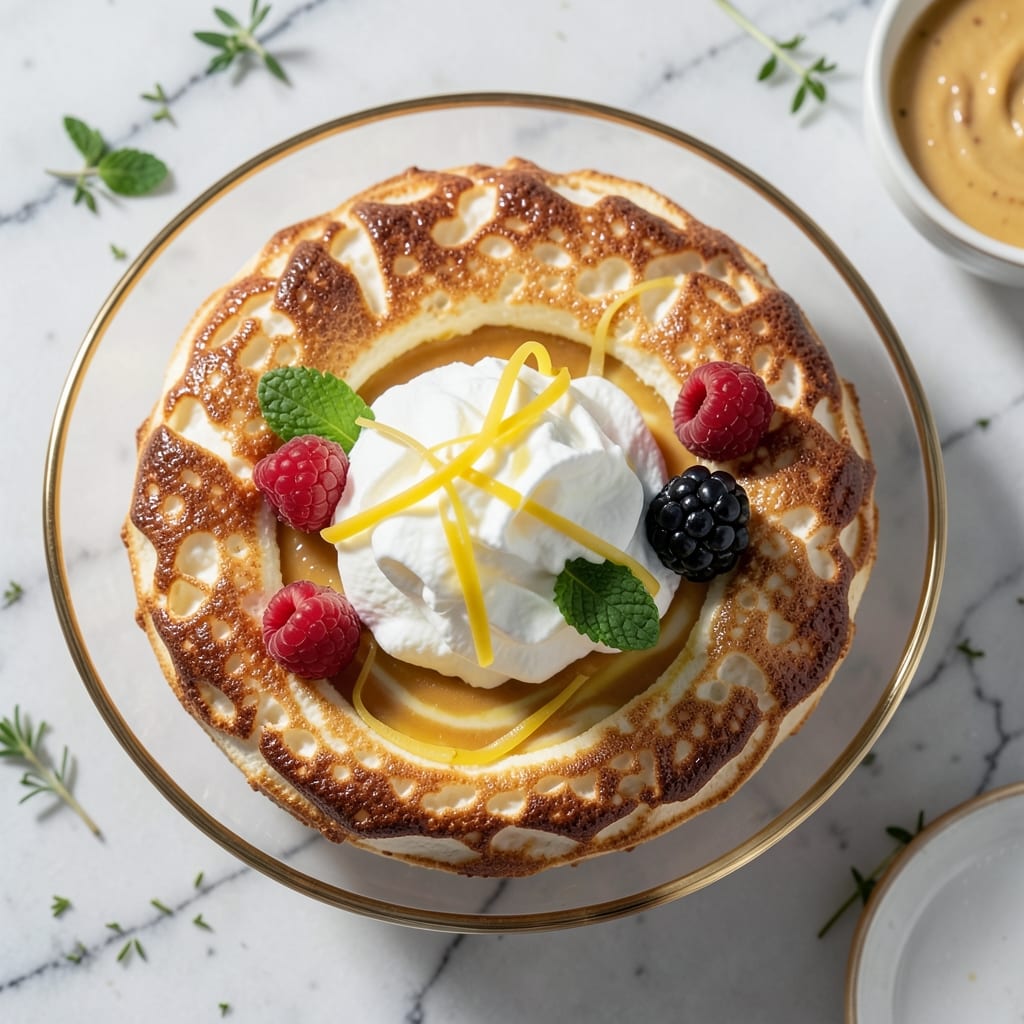
This duck egg pavlova recipe delivers a crispy meringue shell with rivers of silky duck yolk—richer and more luxurious than traditional versions. The secret lies in duck eggs, which provide bigger yolks and a deeper flavor that transforms this classic dessert into something truly special. Unlike chicken egg pavlova, the duck egg yolks add a velvety richness that pairs perfectly with whipped cream and fresh berries.
Creating the perfect pavlova requires patience and precision—whisking egg whites to stiff peaks at room temperature and baking at a low oven temperature (212–250°F) to ensure a crisp exterior without cracking. The key to avoiding a soggy center is baking for 1.5–2 hours, allowing the meringue to set gradually while maintaining its signature crispness.
Once cooled, the meringue shell becomes a canvas for toppings: whipped cream folded with vanilla, fresh berries for brightness, or even a sprinkle of citrus zest for a tangy contrast. The duck yolks are added just before serving, creating those signature rivers that make every bite decadent and unforgettable.
This recipe is perfect for special occasions or when you want to impress—it’s elegant yet approachable, with a technique that’s foolproof once you master the basics. Let’s get started on creating a dessert that’s as beautiful as it is delicious.
Ingredients for duck egg pavlova
Six ingredients transform into a luxurious dessert with crispy edges and velvety duck yolk rivers.
| Ingredient | Amount | Notes |
|---|---|---|
| Duck Egg Whites 🥚 | 5 large | Room temperature, separated carefully |
| Granulated Sugar 🍚 | 1 ½ cups | Superfine preferred for smooth texture |
| Cornstarch 🌾 | ½ tsp | For extra stability in meringue |
| White Vinegar 🍶 | 1 tsp | For acidity to stabilize meringue |
| Duck Egg Yolks 🥚 | 4 whole | Room temperature, for rivers |
| Heavy Whipping Cream 🥛 | 2 cups | Cold, full-fat for best whipping |
| Vanilla Extract 🌿 | 1 tsp | Pure vanilla for authentic flavor |
| Fresh Raspberries 🍓 | 2 cups | Maceraed for juicy topping |
| Lemon Zest 🍋 | 1 tsp | Brightens the meringue flavor |
| Unsalted Butter 🧈 | 2 tbsp | Softened, for greasing pan |
| Diamond Crystal Kosher Salt 🧂 | ¼ tsp | For finishing meringue |
Duck eggs are non-negotiable here—their rich yolks create the signature rivers that elevate this pavlova beyond traditional versions. Specialty grocery stores or Asian markets carry them fresh, often in the refrigerated section near other eggs. Look for plump, firm eggs with clean shells. If you can't find duck eggs, quail eggs offer a similar richness but won't yield the same dramatic rivers. For the egg whites, room temperature is critical—they whip to stiffer peaks when warm, creating that signature crisp texture. Separate them carefully to avoid any yolk contamination, which can prevent proper whipping.
Superfine sugar is ideal, but if you only have regular granulated, pulse it in a food processor for 30 seconds to break up the grains. The cornstarch acts as a stabilizer—don't skip it, especially in humid climates where meringue can weep. For the vinegar, white works best, but lemon juice at half the amount gives a brighter flavor. The duck yolks should be at room temperature when added—they should slide off the shell effortlessly. If your cream doesn't whip properly, chill your beaters first and make sure there's no residual grease in your bowl. Fresh raspberries are best, but frozen berries thawed and drained work in a pinch.
The meringue shell keeps best in a cool, dry place for up to 3 days, though it's best served the same day. Store it in an airtight container with parchment between layers if stacking. For the duck yolks, keep them refrigerated until just before serving—they should be slightly warm but not runny when added. The whipped cream can be made 1 day ahead and stored in the fridge, though it's best whipped fresh. Assemble the pavlova 30 minutes before serving to allow the yolks to soften slightly and create those beautiful rivers without making the meringue soggy.
Why You'll Love This Recipe
- No Whisk Arm Needed: I’ll admit, meringue scares some people—but this version? The duck egg whites whip up stupid easy. That extra protein makes them more forgiving, so even if my mixer gets a little lazy, the sugar and cornstarch team up to keep things stable. No more deflating disasters here.
- Rich Without the Effort: Here’s what sold me—the duck yolks in the topping. They turn the usual powdery sugar into a velvety, almost custard-like drizzle that clings to every crispy edge. It’s the kind of dessert where you take the first bite and think, “Wait, this is fancier than it looks.” (And it is.)
- Holiday Table Star: Between us, I’ve used this as a Thanksgiving centerpiece, a Christmas dessert, and even a “I’m hosting but don’t want to slave” summer party platter. The meringue holds up beautifully, and the duck yolk topping feels luxurious—like you put in hours when really, you just stirred for five minutes.
- Leftovers? Still a Win: Honestly, I’ve never had leftover pavlova last more than a day, but this version? The meringue stays crisp longer, and the yolk topping keeps it from getting soggy. Plus, you can make the base ahead, whip up the topping fresh, and still look like a hero. (My kids will eat it plain with whipped cream—no judgment here.)
Step-by-step instructions for duck egg pavlova
Mastering this delicate dessert requires precision—follow these steps for a crisp shell and luxurious yolk rivers.
Prepare the Meringue Base
Begin by separating the 5 large duck egg whites carefully, ensuring no yolk traces remain in the whites. Transfer them to a spotless, grease-free bowl—even microscopic fat prevents proper meringue formation. Add the 1.5 cups granulated sugar and 0.5 tsp cornstarch, then beat with an electric mixer on medium speed until soft peaks form.
Gradually increase speed to high and whip for 5-7 minutes until stiff, glossy peaks form that hold their shape when the beaters are lifted. The meringue should be thick enough to hold a peak that doesn't collapse immediately. This stage is critical—under-whipped meringue collapses, while over-whipped becomes tough.
Shape and Bake the Crisp Shell
Transfer the meringue to a piping bag fitted with a large round tip. Pipe a 6-inch circle onto a parchment-lined baking sheet, creating a mound with slightly higher edges. Use a spatula to smooth the top, then draw decorative lines with the tip of a knife for texture.
Preheat the oven to 275°F—lower heat prevents cracking while ensuring crispiness. Bake for 1 hour 15 minutes until the meringue is dry to the touch and golden. Turn off the oven, crack the door, and let it cool completely inside for 30 minutes to prevent moisture absorption. This gradual cooling prevents collapse.
Create the Duck Yolk Rivers
While the meringue cools, combine the 4 whole duck egg yolks, 2 cups heavy whipping cream, 1 tsp vanilla extract, and 1 tsp lemon zest in a chilled bowl. Whip on medium speed until soft peaks form, then increase to high for 2-3 minutes until stiff but still pourable. Fold in the 2 cups macerated fresh raspberries gently to avoid deflating the mixture.
Spread the yolk mixture evenly over the cooled meringue shell, creating a thin layer that reaches the edges. Place the pavlova in the refrigerator for at least 4 hours to set completely. The yolk rivers should be silky and glossy, with no separation between the layers.
Finish with Crisp Edges
Remove the pavlova from the fridge and use a kitchen torch to gently brown the edges until they develop a delicate golden crust. Alternatively, broil for 1-2 minutes on low heat, watching closely to avoid burning. Sprinkle with 0.25 tsp diamond crystal kosher salt and any reserved raspberry juice for brightness.
Serve immediately for maximum crispness, cutting with a sharp knife to reveal the creamy yolk rivers beneath. The shell should hold its shape with just a slight give at the edges—proof of perfect baking. Store leftovers in the fridge for up to 2 days, though the texture softens over time.
Pro Tips For Making Duck Egg Pavlova
- Whip Whites Slowly: Start your duck egg whites on low speed—too aggressive and they’ll trap air inconsistently. After they’re frothy, gradually increase to medium-high, but stop before they’re stiff. Duck whites are more delicate than chicken whites; overwhipping turns them grainy, and you’ll regret it when your meringue collapses.
- Sugar in Stages: Add granulated sugar to the whites in three batches—first when they’re soft peaks, then stiff peaks, then finally when they’re just holding shape. This keeps the meringue light instead of dense. I used to dump it all in at once; now I get that cloud-like texture I actually want.
- Vinegar First: Mix the white vinegar into the duck egg yolks before folding them into the meringue. The acid stabilizes the yolks so they don’t curdle when they hit the stiff whites. Skip this, and you’ll end up with a weird, lumpy mess—trust me, I’ve done it.
- Chill the Bowl: Place your mixing bowl in the fridge for 10 minutes before whipping the duck egg whites. The cold slows down protein breakdown, giving you a sturdier meringue. I was skeptical until I tried it—now it’s non-negotiable for anything beyond a sad, flat pavlova.
Flavor customization for this dish
Citrus Zest Variations
Swap the lemon zest for orange zest (½ tsp) to add a sweeter, floral note that pairs beautifully with duck yolks. For a more complex flavor, try 1 tsp lime zest—it brightens the dish while cutting through the richness. I’ve found that yuzu zest (½ tsp) from Asian markets adds an unexpected umami depth that elevates the entire dessert. 🍊
Spiced Cream Options
Infuse the whipped cream with ½ tsp ground cardamom for a Middle Eastern-inspired twist that complements the duck yolks. A pinch of cinnamon (¼ tsp) adds warmth, while 1 tsp espresso powder intensifies the vanilla flavor. For a boozy touch, fold in 1 tbsp Grand Marnier or 1 tbsp honey after whipping.
Fruit Topping Alternatives
Replace raspberries with kiwi slices for a tropical vibe—toss them with 1 tsp lime juice to prevent browning. Passion fruit purée (¼ cup) drizzled over the cream adds a tangy contrast. For a classic touch, use fresh strawberries macerated with 1 tsp rose water and a pinch of sugar. 🍓
Herbal Accents
Garnish with fresh mint leaves (finely chopped) for a refreshing herbal note that balances the richness. Basil leaves (torn) add a sweet, aromatic contrast, while thyme sprigs bring an earthy depth. I often sprinkle edible flowers like violets or pansies for a delicate, decorative flourish.
Boozy Enhancements
Add 1 tbsp aged rum to the whipped cream for a Caribbean-inspired twist. A splash of 1 tsp elderflower liqueur (like St-Germain) adds floral complexity. For a dessert-wine pairing, fold in 1 tbsp reduced Muscat or Pinot Noir reduction into the yolk mixture. Always add alcohol after whipping to avoid deflating the cream.
Nutrition facts
Frequently asked questions
Why use duck eggs instead of chicken eggs for pavlova?
Duck eggs create a richer, silkier texture thanks to their larger yolks and higher fat content. The yolks add luxurious rivers when melted over the meringue, while the whites whip to the same perfect stiffness as chicken eggs. Plus, duck eggs have a deeper flavor that elevates the dessert beyond traditional versions.
How do I prevent my pavlova from cracking during baking?
First, ensure your egg whites are at room temperature and whipped to stiff peaks. Avoid opening the oven door during baking, and use a low oven temperature (275°F) for gradual drying. For extra stability, add the 0.5 tsp cornstarch to the sugar mixture. Humidity is your enemy—bake on a dry day or use a dehumidifier if needed.
Can I make this pavlova ahead of time?
Yes! The meringue shell keeps for 3 days in an airtight container, while the yolk mixture can be prepared 1 day ahead and stored separately. Assemble the pavlova 30 minutes before serving to let the yolks soften slightly. The shell stays crispest when stored properly—never refrigerate it with toppings already added.
What's the best way to serve duck egg pavlova?
Serve immediately after adding the yolk mixture for maximum crispness. Use a sharp knife to slice through the creamy rivers cleanly. For presentation, place on a parchment-lined plate and garnish with extra zest or edible flowers. The contrast of warm shell and cool yolk rivers makes it perfect for special occasions.
What if my meringue turns out too soft?
Underbaked meringue is usually caused by insufficient drying time. Next time, bake for 10-15 minutes longer at 275°F or try 250°F for a slower, more even cook. For immediate fixes, place the baked meringue on a wire rack in a low oven (200°F) for 15-20 minutes to dry further. Avoid high heat—it causes cracking.