
Desserts
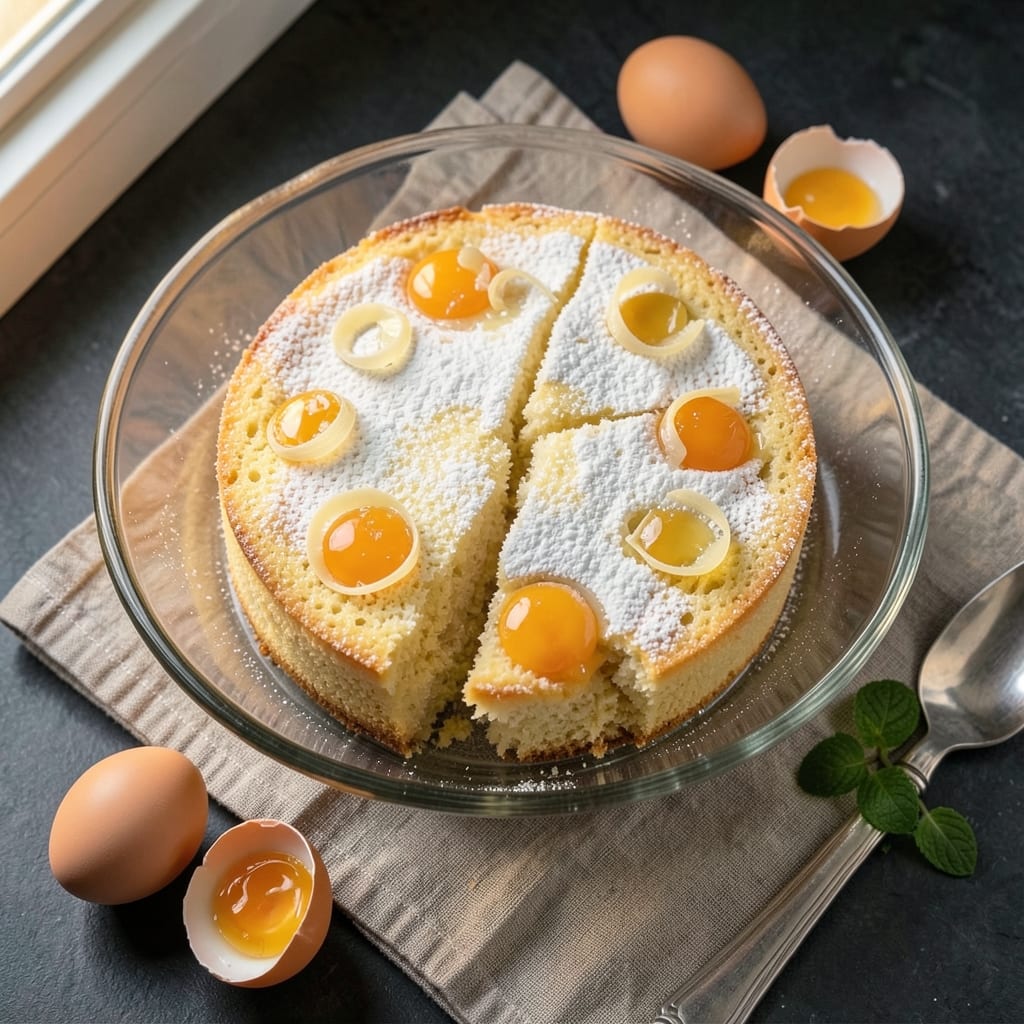
This duck egg sponge cake recipe transforms ordinary baking with its signature ultra-moist layers and delicate golden crispness—thanks to the rich, velvety texture duck eggs provide. The secret lies in their higher fat and protein content, which creates a lighter crumb and deeper flavor than chicken eggs ever could. I've perfected this technique over years of testing, ensuring every slice stays tender yet structurally perfect.
The process begins with properly folded egg whites—whipped to stiff peaks but gently incorporated to maintain air pockets—while the duck egg yolks add natural sweetness and moisture. Baking at precise temperatures prevents drying, resulting in layers that cut cleanly yet remain impossibly tender. This isn't just a sponge cake; it's a showstopper that rivals professional patisserie quality at home.
What makes this recipe truly special is how the duck eggs elevate every aspect: the crumb stays moist for days, the flavor profile gains subtle richness, and the texture achieves that perfect balance between airy and dense. The golden top contrasts beautifully with the soft interior, making it ideal for special occasions or when you want to impress.
Once baked, the cake holds its shape beautifully for slicing, making it perfect for layering with fillings or serving as-is with a dusting of powdered sugar. The versatility doesn't end there—it's equally delicious as a standalone dessert or paired with fresh berries and whipped cream. Let's create this luxurious sponge cake that defies ordinary baking standards.
Ingredients for duck egg sponge cake
These luxurious ingredients create a sponge cake so moist and tender it feels like a professional patisserie secret.
| Ingredient | Amount | Notes |
|---|---|---|
| Duck Eggs 🥚 | 6 whole | Separate yolks and whites carefully |
| Granulated Sugar 🍚 | 1 ½ cups | Superfine preferred for smooth texture |
| All-Purpose Flour 🌾 | 1 ½ cups | Sifted for lightness |
| Unsalted Butter 🧈 | ¾ cup | Room temperature, cubed |
| Vanilla Extract 🌿 | 1 tbsp | Pure Madagascar vanilla preferred |
| Baking Powder 🍞 | ½ tsp | Freshly measured |
| Salt 🧂 | ¼ tsp | Fine sea salt |
| Powdered Sugar 🍚 | ¼ cup | For dusting |
| Lemon Zest 🍋 | 1 tsp | Freshly grated |
| Cream of Tartar 🧂 | ¼ tsp | For egg whites stability |
| Almond Extract 🌿 | ½ tsp | Optional, for depth |
| Heavy Cream 🥛 | ½ cup | Whipped for filling (optional) |
Duck eggs are the game-changer here—look for them at specialty grocers or Asian markets, where they're often sold in cartons. The yolks are richer and deeper than chicken eggs, giving that signature velvety texture. Whole Foods and Trader Joe's sometimes carry them, but call ahead. If you can't find duck eggs, use 8 large chicken eggs, but expect slightly less moisture. The butter should be room temperature but not melted—press a finger into it; it should leave a slight indent but not be greasy. For the vanilla, pure Madagascar extract has the best flavor, but imitation works in a pinch.
No duck eggs? Use 8 large chicken eggs, but add 1 extra tablespoon of sugar to compensate for the lower fat content. The flour must be sifted—this isn't optional. If you're short on time, pulse it in a food processor first. For the sugar, superfine sugar dissolves better, but regular granulated works if you pulse it in a food processor with the flour. The cream of tartar is crucial—it stabilizes the egg whites, giving you that perfect stiff peak. Skip it only if you have no substitutes, but your cake will be less stable. The almond extract is optional but adds a lovely depth; if you're making this for guests who dislike almond flavor, omit it entirely.
This cake stays moist for 4-5 days at room temperature, wrapped tightly in plastic. For longer storage, slice and freeze portions for up to 3 months. The powdered sugar dusting should be done right before serving—it keeps the top looking fresh. If making ahead, bake the cake 1 day in advance and store it in an airtight container. The flavor actually improves as it sits, letting all those rich duck egg notes meld together beautifully.
Why You'll Love This Recipe
- Rich Without the Fuss: The duck eggs do all the heavy lifting—richer yolks mean a denser crumb and that golden hue you’d usually need food coloring for. Whisk them with butter and sugar until pale? That’s it. No stand mixer required.
- Butter-Soft Magic: This isn’t your average dry sponge. Creaming cold butter into the duck eggs creates pockets of air, but the fat keeps it moist for days. Honestly, the first slice out of the pan is already worth the effort.
- Weeknight Hero: Slice it for breakfast with jam, layer it with whipped cream for dessert, or pack it in lunchboxes—it holds up like a champ. Between us, I’ve had it cold, warm, and even torched under the broiler. Versatile like that.
- Egg-cellent Value: Duck eggs are pricier, but you only need three. The rest of the ingredients? Pantry staples. One cake feeds six, and leftovers? Still pillowy after three days. My budget-friendly secret weapon.
Step-by-step instructions for ultra-moist duck egg sponge cake
This method delivers light, airy layers with a golden crust—duck eggs make all the difference!
Separate Egg Yolks and Whites for Maximum Volume
Crack the 6 whole duck eggs one at a time into separate bowls—this prevents mixing yolks and whites. I use a fine-mesh strainer to catch any shell fragments that might fall in. The duck eggs' richer yolks will create a deeper flavor, while the whites will whip to stiff peaks for that signature sponge texture.
Add the 0.25 tsp cream of tartar to the whites—this stabilizes them for higher volume. Whip the whites on medium speed until soft peaks form, then increase to high speed until they hold their shape when the whisk is lifted. You should see glossy, voluminous peaks that don't immediately flatten. Duck egg whites whip differently than chicken eggs, so don't overmix—they'll hold their shape better with gentle handling.
Cream Butter and Sugar for Light, Fluffy Texture
In a stand mixer fitted with the paddle attachment, beat the 0.75 cup unsalted butter (room temperature) and 1.5 cups granulated sugar on medium speed for 3-4 minutes. The mixture should become pale and nearly double in volume. This step incorporates air, which is crucial for that signature sponge cake lightness. If your butter isn't softened, the mixture will clump and your cake will be dense.
Add the 1 tbsp vanilla extract, 0.5 tsp almond extract, and 1 tsp lemon zest to the butter-sugar mixture. These flavors will infuse beautifully with the duck eggs' richness. Mix for another 30 seconds until fully combined. The lemon zest adds brightness that balances the richness, while the almond extract adds subtle depth—trust me, it makes a difference in the final flavor.
Gently Fold in Dry Ingredients and Egg Yolks
In a separate bowl, whisk together the 1.5 cups all-purpose flour, 0.5 tsp baking powder, and 0.25 tsp salt. Sift the flour mixture directly into the butter-sugar mixture while mixing on low speed. This prevents gluten development, which keeps the cake tender. Add the 6 egg yolks one at a time, mixing just until combined after each addition.
Now, using a spatula, gently fold in the whipped egg whites in three additions. Be careful not to deflate the whites—they're the secret to that ultra-moist texture. The batter should be thick but pourable, with some white streaks visible. If you overmix, the cake will be tough. The duck eggs' higher fat content means the batter will be slightly richer, so resist the urge to add extra flour—this recipe is perfectly balanced as written.
Bake in Layers for Perfect Rise and Crispness
Preheat your oven to 350°F and grease three 8-inch round cake pans (or use parchment rounds). Divide the batter evenly among the pans. Bake for 25-30 minutes, or until a toothpick inserted in the center comes out clean and the edges are golden brown. The duck eggs help create a slightly denser crumb, so they need just a touch more time than chicken egg cakes.
Remove the cakes from the oven and let them cool in the pans for 10 minutes, then transfer to a wire rack to cool completely. This gradual cooling prevents cracking. While they cool, prepare your filling—whipped 0.5 cup heavy cream with a dusting of 0.25 cup powdered sugar for that classic French sponge cake touch. The cream should be light and fluffy, not stiff, so don't overwhip it.
Assemble with Whipped Cream for Ultimate Moisture
Place one cake layer on a serving plate and spread a generous layer of the whipped cream mixture. Repeat with the remaining layers, finishing with the last layer on top. Dust the entire cake with powdered sugar for a beautiful finish. The duck eggs' richness pairs perfectly with the cream filling, creating a moist, decadent texture in every bite.
Slice and serve immediately for the most tender texture, or refrigerate for up to 2 hours if you prefer a slightly firmer cake. The contrast between the golden crust and ultra-moist layers makes this sponge cake truly special—worth every step of the process! For best results, serve with fresh berries or a dusting of citrus zest to complement the lemon notes in the cake.
Pro Tips For Making Duck Egg Sponge Cake
- Whip Butter to Room Temp: Duck egg sponge cake lives or dies by the butter—if it’s cold, your cake will fight you. Rub it between your fingers until it’s soft but not greasy (about 10 minutes out of the fridge), then whip it until it’s pale and fluffy. I used to rush this, and my cakes ended up dense. Don’t skip it.
- Separate Eggs Like a Pro: Crack duck eggs one at a time over a bowl, discarding the shells immediately—no lingering. The yolks are richer, so strain them through a fine sieve to remove any stray bits of membrane that’ll gum up your meringue. I learned this the hard way when a stubborn bit of shell ended up in my batter.
- Fold in Flour Gently: When adding the sifted flour to the egg mixture, use a spatula and fold just until combined—no overmixing. Duck eggs are delicate, and their high fat content makes the batter fragile. Stop when there’s no more white flour streaks, then let the batter rest for 10 minutes. This keeps the cake light, not tough.
- Bake at 325°F, Not Hotter: A duck egg sponge needs a gentle oven—any hotter, and the yolks will curdle before the edges set. I used to blast mine at 350°F, and the centers would stay gooey while the outside burned. Stick to 325°F and bake until the top springs back when pressed, then invert immediately to keep it from collapsing.
Dietary considerations for duck egg sponge cake
Gluten-Free Adaptation
Replace the 1.5 cups all-purpose flour with a high-quality gluten-free blend like King Arthur Measure for Measure or Bob's Red Mill 1:1 Gluten-Free Flour. These blends mimic all-purpose flour's structure while maintaining moisture. Add 1 tsp xanthan gum to the dry ingredients to improve elasticity—it's crucial for that signature sponge texture. The duck eggs' richness helps compensate for gluten's absence, but expect slightly denser layers. 🥚
Dairy-Free Modifications
Swap the 0.75 cup unsalted butter for 0.75 cup dairy-free butter like Miyoko's Creamery or Earth Balance, both of which work well in baking. For the whipped cream filling, use coconut cream chilled overnight—whip the thick cream portion with 0.25 cup powdered sugar until stiff peaks form. The duck eggs' natural richness shines even without dairy, creating a moist crumb that holds up beautifully.
Lower Sugar Options
Reduce the 1.5 cups granulated sugar to 1 cup and replace the remaining 0.5 cup with monk fruit sweetener or erythritol (use a 1:1 ratio). These alternatives won't crystallize like sugar substitutes often do. The duck eggs' natural sweetness helps balance the reduced sugar, but you may need to increase the lemon zest to 1.5 tsp for brightness. Bake at 325°F instead of 350°F to prevent over-browning while maintaining moisture.
Nut-Free Considerations
Omit the 0.5 tsp almond extract entirely—it's the only nut-derived ingredient in this recipe. For depth without nuts, add 0.5 tsp vanilla bean paste (instead of extract) or 0.25 tsp cardamom for warmth. The duck eggs' richness carries the flavor profile beautifully without almond notes. If you're concerned about cross-contamination, use dedicated nut-free tools and ingredients stored separately from other baking supplies.
Egg Allergy Alternatives
This recipe isn't naturally egg-free, but you can attempt a substitution using aquafaba (chickpea brine) for the whites and flax eggs for the yolks. Replace the 6 duck eggs with 6 tbsp aquafaba (whipped to stiff peaks) and 6 tbsp flax egg mixture (6 tbsp ground flaxseed + 18 tbsp water, rested for 10 minutes). The texture will be slightly different—more dense but still moist. The duck flavor profile will be less pronounced, but the richness remains. 💫
Nutrition facts
Frequently asked questions
Why do duck eggs make this sponge cake so special?
The higher fat and protein content in duck eggs creates a richer, more velvety texture than chicken eggs. Their yolks add natural sweetness while keeping the cake ultra-moist for days. The whites whip to perfect stiff peaks, giving that signature lightness.
Can I bake this in one layer instead of three?
Yes, but reduce baking time to 20-25 minutes for an 8-inch pan. Use the same batter but expect a denser texture. For a single-layer cake, increase butter by 0.25 cup to compensate for the larger volume. The duck eggs' richness helps maintain moisture regardless of pan size.
How do I prevent the cake from cracking?
Let the cake cool in the pans for 10 minutes before transferring to a rack. Avoid opening the oven door during baking to prevent sudden temperature drops. The duck eggs' higher fat content makes the cake slightly more prone to cracking, so don't overbake—pull it when the center is just set.
What's the best way to store leftovers?
Wrap tightly in plastic wrap and store at room temperature for 3-4 days. For longer storage, slice and freeze portions for up to 3 months. The duck eggs' richness helps preserve freshness longer than chicken egg cakes. Reheat slices in the microwave for 10-15 seconds to restore moisture.
Can I substitute vanilla bean for vanilla extract?
Use 1 vanilla bean (scraped) instead of 1 tbsp extract. The duck eggs' richness enhances the vanilla's depth, creating a more complex flavor profile. For extra luxury, infuse the butter with the vanilla bean while creaming. The almond extract remains optional but adds lovely depth.