
Breakfast & Brunch
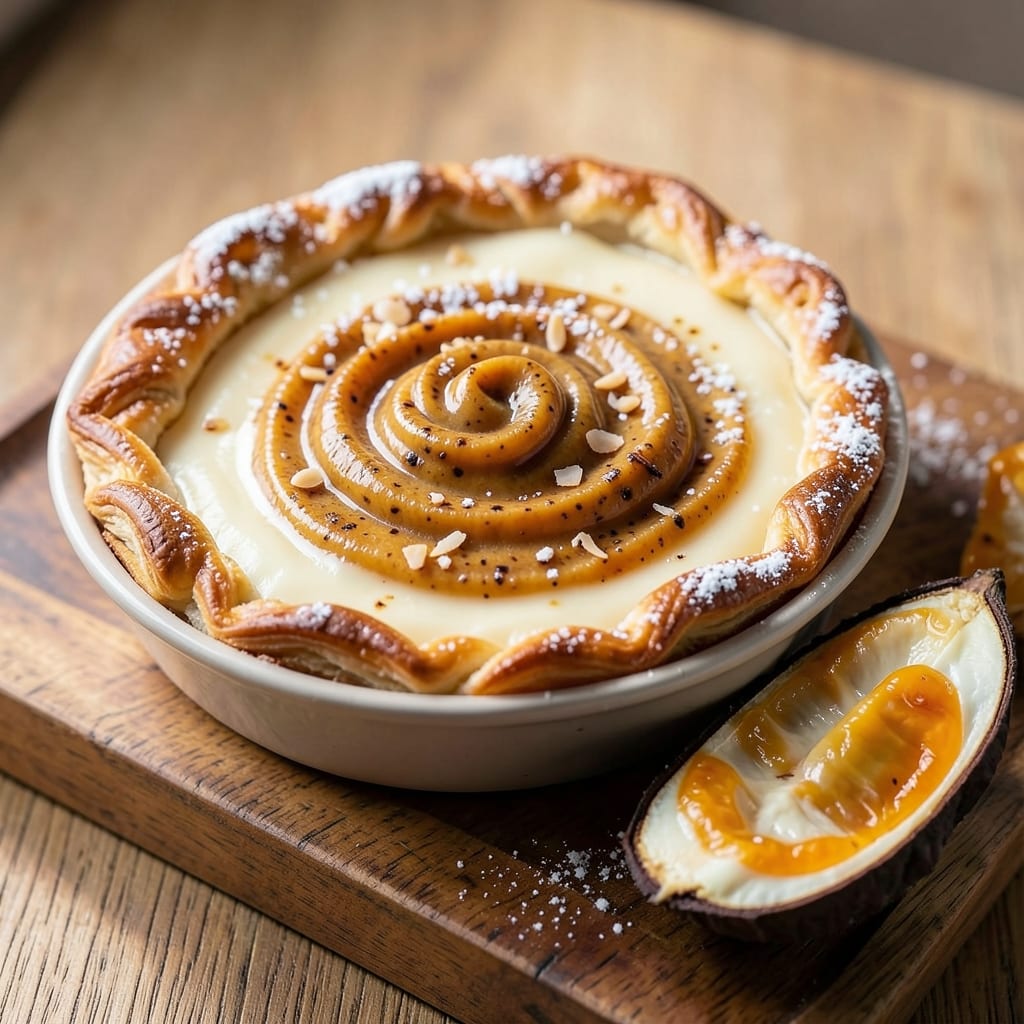
This durian egg tart recipe delivers a luxurious fusion of crispy golden pastry and creamy durian custard that’s become a cult favorite in Southeast Asia. ✨ The secret lies in balancing the tart’s signature flaky crust with the rich, custardy filling infused with durian’s signature sweet, creamy, and slightly pungent flavor—no artificial substitutes needed. Whether you’re a fan of the traditional version or prefer modern twists like condensed milk or chocolate, this recipe adapts seamlessly while keeping the authentic texture and aroma intact.
The process starts with a classic egg tart dough, rolled thin for that signature crispness, then filled with a velvety custard made from eggs, sugar, and durian puree or chunks. The custard must be silky yet firm enough to hold its shape when sliced, and baking at the right temperature ensures a golden crust without burning. What makes this recipe special is how it transforms durian’s bold flavor into a dessert that’s approachable for both purists and newcomers.
By the time you take that first bite—crispy shell giving way to a smooth, custardy center with hints of durian’s tropical sweetness—you’ll understand why these tarts are a must-try. The contrast between the buttery crust and the creamy, slightly caramelized filling creates a harmony that’s both comforting and indulgent. Perfect for brunch, dessert, or even a unique gift, this recipe brings a taste of Southeast Asia to your kitchen with minimal fuss.
For those new to durian, start with a mild variety to ease into its complex profile, or mix it with chocolate for a familiar twist. The key is patience—letting the custard set properly ensures every bite is as impressive as the first. Ready to bake?
Ingredients for durian egg tart
Six ingredients for the crust, six for the custard—durian's bold flavor meets classic egg tart perfection.
| Ingredient | Amount | Notes |
|---|---|---|
| All-Purpose Flour 🌾 | 2 cups | Sifted for light texture |
| Unsalted Butter 🧈 | 1 cup | Cold, cubed for pastry |
| Ice Water 💧 | ½ cup | For dough elasticity |
| Large Eggs 🥚 | 4 whole | Room temperature preferred |
| Granulated Sugar 🍚 | ½ cup | For custard sweetness |
| Durian Puree 🥭 | 1 cup | Mild variety preferred |
| Milk 🥛 | ½ cup | Whole milk for richness |
| Vanilla Extract 🌸 | 1 tsp | Pure vanilla preferred |
| Salt 🧂 | ½ tsp | Fine sea salt |
| Cornstarch 🌾 | 1 tbsp | For custard stability |
| Dark Chocolate Chips 🍫 | ¼ cup | Optional for twist |
| Egg Tart Molds 🍰 | 6 whole | Butter-flavored preferred |
The butter is non-negotiable here—use European-style if possible for higher fat content, which yields a flakier crust. Plugrá or Land O'Lakes work well for a reliable option. For the durian, mild varieties like Monthong are ideal for beginners, but any ripe durian will work. The egg tart molds? Butter-flavored ones are traditional, but silicone molds are a great alternative if you prefer ease. If you can't find durian puree, fresh durian flesh blended works just as well—just strain out any seeds or fibrous bits for a smoother custard.
No durian? Chocolate or pandan can mimic the tropical sweetness—just reduce the sugar slightly. For the custard, cornstarch is key—it prevents the filling from being too runny. If you're avoiding durian entirely, mango puree works surprisingly well. The vanilla extract can be swapped for pandan extract (about half the amount) for an authentic Southeast Asian twist. For the crust, if you're short on butter, vegetable shortening can replace up to half the amount, though the flavor won't be as rich.
The dough should be chilled for at least 30 minutes before rolling—this prevents shrinking. The custard can be prepped a day ahead and stored in the fridge, covered tightly. For the molds, butter them generously before filling to ensure easy release. Once baked, let the tarts cool completely before removing from the molds—they firm up as they cool. Store in an airtight container for up to 3 days at room temperature, or freeze for up to 1 month for longer shelf life.
Why You'll Love This Recipe
- No Fuss Pastry: I swear by the cold butter trick—just rub it into flour until it looks like breadcrumbs. No food processor, no stress, and that flaky crust? Chef’s kiss. The ice water keeps it from turning tough, and honestly, even if I mess up the ratio, it still comes out forgiving.
- Durian Magic: That first bite of creamy custard with durian’s rich, custard-like sweetness? It’s like dessert and breakfast had a baby. The sugar caramelizes just enough to balance the funk—no artificial flavors, just pure, addictive flavor. (Yes, even my durian-newbie friends beg for seconds.)
- Party in a Tart: These are my go-to for potlucks or last-minute gifts—no one expects durian, so they’re always the hit. Pack them in a box, and they stay fresh for days. I’ve brought them to office parties, brunch gatherings, and even as midnight snacks. They’re that good.
- Budget Breakthrough: Flour, butter, eggs—these are pantry staples that won’t break the bank. A single batch feeds four, and leftovers reheat beautifully. I make a double batch, freeze half, and pull them out whenever I crave something sweet without the guilt. (Spoiler: There’s always guilt.)
Step-by-step instructions for durian egg tarts
Here's the method for achieving that perfect balance of crispy golden crust and silky durian custard.
👨🍳 Step 1: Prepare the Durian Custard Filling
In a medium bowl, whisk together the 4 whole Large Eggs, 0.5 cup Granulated Sugar, 1 cup Durian Puree, 0.5 cup Milk, 1 tsp Vanilla Extract, and 0.5 tsp Salt until fully combined and smooth. The mixture should be pale yellow with no visible streaks of egg whites. If using the 0.25 cup Dark Chocolate Chips, gently fold them in at the end for a subtle twist.
Next, sprinkle the 1 tbsp Cornstarch over the mixture and whisk vigorously for 30 seconds to ensure it dissolves completely. The cornstarch acts as a thickener, giving that signature silky texture to the custard. For best results, use room-temperature eggs—they blend more smoothly and create a lighter filling.
🍳 Step 2: Make the Tart Dough
In a large mixing bowl, combine the 2 cups All-Purpose Flour and 0.5 tsp Salt. Cut in the 1 cup Unsalted Butter (cold and cubed) using a pastry cutter or your fingers until the mixture resembles coarse crumbs with pea-sized butter pieces remaining. This texture is crucial for creating flaky layers in the crust.
Gradually add the 0.5 cup Ice Water, one tablespoon at a time, mixing gently with a fork until the dough just comes together. Avoid overmixing—you want to preserve the gluten structure for a tender crust. Once the dough forms a shaggy mass, turn it out onto a lightly floured surface and knead it 5-6 times just to smooth it. Wrap in plastic wrap and chill in the refrigerator for 30 minutes.
🔥 Step 3: Roll and Shape the Dough
Preheat your oven to 375°F and position a rack in the middle position. Remove the chilled dough from the refrigerator and roll it out on a lightly floured surface to about 1/8-inch thickness. You want an even sheet that's slightly larger than your 6 whole Egg Tart Molds—this ensures full coverage when pressed into the molds.
Carefully press the dough into each mold, using your fingers to smooth it into the sides and bottom. Trim any excess dough hanging over the edges with kitchen shears. The dough should be taut but not stretched—this prevents shrinking during baking. Place the filled molds on a parchment-lined baking sheet.
🥘 Step 4: Fill and Bake the Tarts
Pour the prepared durian custard mixture evenly into each dough-lined mold, filling them about 3/4 full. The custard should sit just below the rim of the molds. Place the baking sheet in the preheated oven and bake for 18-20 minutes until the crust turns a beautiful golden brown and the custard is just set but still slightly wobbly in the center.
Here's the thing—durian custard can vary in consistency. If the custard looks too thick before baking, whisk in 1-2 tablespoons of milk to loosen it slightly. The tarts are done when the edges are crisp and the centers still have a gentle jiggle. Remove from the oven and let cool for 5 minutes before carefully removing them from the molds.
⏰ Step 5: Serve Warm for Best Texture
Transfer the durian egg tarts to a wire rack and let them cool for an additional 10 minutes before serving. The custard will continue to set slightly as it cools, but serving them warm ensures that signature creamy texture. Each tart should have a crisp, flaky crust that contrasts perfectly with the smooth, fragrant durian custard filling.
For the best experience, serve these tarts immediately after baking while the custard is still warm and the crust is at its crispiest. They pair beautifully with a cup of strong black tea or a refreshing glass of coconut water to complement the durian's rich, creamy flavor.
Pro Tips For Making Durian Egg Tart
- CHILL THE BUTTER FIRST: I learned this the hard way—using cold butter straight from the fridge for the pastry makes it harder to work with, but if you let it sit at room temp for 30 minutes (not melting), the dough will come together smoother without turning greasy. Trust me, your crust will be flakier when you skip the rush.
- USE ROOM-TEMP EGGS: Cracking cold eggs into the custard mix causes the filling to separate or curdle. Take them out of the fridge 15 minutes before using—just enough to warm them up. (Yes, even if you’re impatient like me.)
- STEAM THE TARTS LOW: The water in the steamer should barely simmer, not boil like a pot of pasta. Too much heat = rubbery custard. Cover the pot, then turn the heat down to medium-low once it starts steaming. Your egg tarts will set evenly without turning grainy.
- SIFT THE FLOUR TWICE: Durian custard is heavy, and if your pastry dough isn’t light, the filling will sink like a stone. Sift the flour before mixing it with butter and ice water, then sift it again when combining. It’s extra work, but the result is a crispier, more delicate crust. (Your future self will thank you.)
Common mistakes when making this dish
Overmixing the Dough
The biggest mistake is overworking the dough when combining flour and butter. Too much handling develops gluten, which makes the crust tough instead of flaky. I’ve seen beginners knead for minutes—just 5-6 gentle presses after mixing is enough. Keep the dough cold and handle it minimally to preserve those delicate butter layers. 🧈
Skipping the Chill
Never rush the 30-minute chill before rolling! Warm dough shrinks and cracks when pressed into molds. I once forgot this step and ended up with lumpy, uneven tarts. Place the dough between two sheets of parchment for easier handling and even colder storage. ❄️
Underfilling the Custard
Filling molds less than 3/4 full with custard risks a hollow center. The crust needs that weight to hold its shape during baking. I recommend using a small ladle to distribute the custard evenly—this ensures each tart has a perfect golden dome. 🍰
Baking at Wrong Temp
Ovens vary wildly, but 375°F is non-negotiable for this recipe. Too low, and the crust stays pale; too high, and the custard curdles. Invest in an oven thermometer—I’ve had my 350°F oven read 380°F before! Bake until edges are golden but centers still jiggle slightly. 🌡️
Using Unripe Durian
Durian flavor changes dramatically with ripeness. Underripe durian tastes bitter and harsh, ruining the custard’s silkiness. Look for durian with a strong, sweet aroma and slightly soft flesh. If using puree, check the label—some brands add preservatives that alter the taste. 🥭
Not Buttering Molds
Greasing molds with butter (not oil!) prevents sticking and adds extra flavor. I use a pastry brush to coat the insides thoroughly—this step is often overlooked but makes removal effortless. For extra insurance, dust with a little flour after buttering. 🧂
Nutrition facts
Frequently asked questions
Can I substitute durian puree with another fruit?
Yes! For a similar tropical flavor, try mango puree (reduce sugar slightly) or jackfruit puree (add a pinch of salt to balance sweetness). For a chocolate twist, replace ½ cup durian puree with ½ cup melted dark chocolate—it pairs surprisingly well with the custard. Always adjust liquid ratios if using chunky fruits.
Why did my custard turn grainy?
Over-whisking the eggs or using cold eggs can cause graininess. Always whisk eggs at room temperature until completely smooth, then fold in other ingredients gently. For extra silkiness, strain the custard through a fine-mesh sieve before pouring into molds. Cornstarch helps prevent this, but proper technique is key.
How do I store leftover durian egg tarts?
Store in an airtight container at room temperature for up to 3 days, or freeze for 1 month. Reheat frozen tarts in a 350°F oven for 5-7 minutes to restore crispiness. The custard may firm up slightly when cold—serve warm for best texture.
Can I make these tarts without egg tart molds?
Use 6-ounce ramekins or mini muffin tins lined with parchment cups. For a rustic look, bake in a 9-inch tart pan and cut into wedges after cooling. Just ensure your alternative containers are oven-safe and can handle the custard's expansion.
What's the best way to handle durian's strong smell?
Work in a well-ventilated area and keep durian puree refrigerated until use. For sensitive noses, try 1/3 cup durian puree mixed with 2/3 cup coconut milk puree to mellow the aroma. The smell dissipates completely once baked—only the delicious flavor remains!