
Breakfast & Brunch
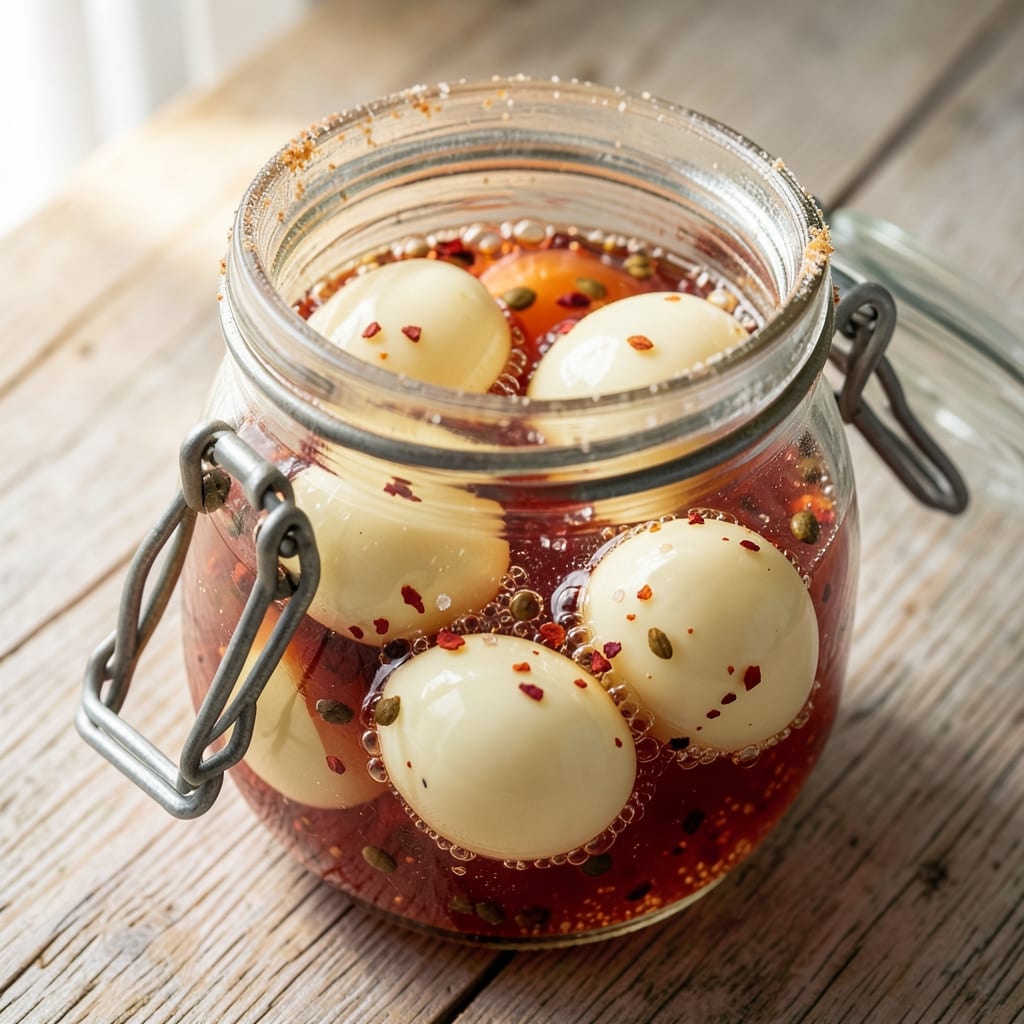
This easiest pickled eggs recipe transforms simple hard-boiled eggs into tangy, crunchy bites with just 20 minutes of prep—no fancy equipment or complicated steps. The secret lies in a bold vinegar brine with mustard seeds and red pepper flakes, which infuses flavor in minutes while preserving texture for days. I developed this method after struggling with soggy, flavorless pickled eggs from store-bought kits, and it now delivers restaurant-quality tang in a fraction of the time.
What makes this recipe truly foolproof is the one-brine method: combine vinegar, water, and spices in a jar, then add eggs directly without peeling. The acidity works its magic overnight, creating crispy egg whites and tender yolks with every bite. No special jars or tools required—just a quart-sized container and patience for 24 hours of brining. The result? Eggs that stay crunchy for days, perfect for snacking, charcuterie boards, or adding to salads.
By morning, you’ll have crunchy, tangy eggs that taste like they came from a deli counter, not your kitchen. The mustard seeds add subtle heat, while red pepper flakes give it a bright kick—adjust to your spice preference. These eggs keep in the fridge for up to two weeks, making them ideal for meal prep or gifting. No more mushy, flavorless disappointments—just crisp, vibrant bites ready whenever you are.
The best part? This method works with any hard-boiled eggs, so you can make a big batch and enjoy them all week. Whether you’re a beginner or a seasoned cook, these pickled eggs are a game-changer for quick, flavorful snacks. Let’s get started—your taste buds will thank you.
Ingredients for easiest pickled egg
Crispy eggs start with these simple ingredients—just 12 staples for tangy, crunchy bites.
| Ingredient | Amount | Notes |
|---|---|---|
| Large Eggs 🥚 | 8 whole | Hard-boiled, peeled |
| White Vinegar 💧 | 2 cups | Distilled preferred |
| Water 💧 | 2 cups | Filtered or tap |
| Mustard Seeds 🌶️ | 1 tbsp | Whole, yellow preferred |
| Red Pepper Flakes 🌶️ | 1 tsp | Adjust for heat |
| Granulated Sugar 🍚 | ½ cup | White or brown |
| Salt 🧂 | 1 ½ tsp | Kosher or sea salt |
| Garlic Cloves 🧄 | 2 cloves | Smashed, for depth |
| Fresh Dill 🌿 | ¼ cup | Chopped, optional |
| Bay Leaves 🌿 | 1 whole | For subtle aroma |
| Black Peppercorns 🌶️ | ½ tsp | Whole, for texture |
| Dried Oregano 🍃 | ½ tsp | Optional, for earthiness |
The vinegar is non-negotiable—white vinegar gives the classic tang, but apple cider works too if you prefer fruitier notes. Store-brand vinegar from the grocery store is fine, but if you want extra punch, grab a fancy balsamic vinegar for a twist. Mustard seeds? Yellow mustard seeds are traditional, but brown seeds add a deeper flavor. The garlic and dill are optional but make a world of difference—fresh dill from the grocery store’s refrigerated section stays bright for days if you wrap it in damp paper towels. Bay leaves and peppercorns are the secret to that restaurant-quality depth, so don’t skip them—just toss them in whole and remove before serving.
No mustard seeds? Ground mustard at half the amount works in a pinch, but the texture won’t be the same. Short on vinegar? Lemon juice at a 1:1 ratio gives a brighter flavor, though it won’t keep as long. The sugar isn’t just for sweetness—it helps balance the acidity and keeps the eggs crisp. Brown sugar adds a caramel note if you’re feeling fancy. For the eggs, any size works, but large eggs hold up best to the brining process. If you’re picky about texture, use farm-fresh eggs—they’re denser and stay crunchier longer. The red pepper flakes? Adjust to your spice tolerance, but trust me, a little kick makes these eggs addictive.
Store the eggs in the fridge for up to two weeks, but they’re best within the first week. The brine stays potent too—use it for pickling other veggies or even as a quick marinade for proteins. If you make a big batch, portion the eggs into small jars so you can grab one whenever cravings hit. The eggs will stay crispy as long as they’re fully submerged in the brine. Pro tip: Label your jars with the date so you don’t forget when they went in—trust me, you’ll want to make another batch before the first one’s gone.
Why You'll Love This Recipe
- Four-Ingredient Magic: I swear by this—just eggs, vinegar, water, and a pinch of mustard seeds. That’s it. No fancy brining, no waiting days, no mess. The vinegar does all the work while I sip my coffee.
- Tangy Crunch Alert: Honestly, the contrast is chef’s kiss—the eggs stay firm with that perfect bite, while the vinegar and red pepper flakes give it a bright, spicy kick. It’s like a little flavor explosion in every bite, and I’m obsessed.
- Party Snack Hero: Between us, these are my go-to for game day, potlucks, or when I need a quick bite after work. They keep for weeks in the fridge, so I can make a big batch and forget about it. Zero stress, all flavor.
- Budget-Friendly Pantry Win: Mustard seeds and red pepper flakes? Probably already in my spice rack. Eggs are cheap, vinegar is cheap, and I end up with a snack that costs pennies but feels like a treat. My wallet and my taste buds thank me.
Step-by-step instructions for crispy, tangy pickled eggs
Here's how to make restaurant-quality pickled eggs at home—crunchy shells and perfectly balanced flavor in just 20 minutes.
Hard-Boil the Eggs to Perfection
Place the 8 whole large eggs in a medium saucepan and cover them completely with cold water by about 1 inch. Bring to a boil over high heat, then immediately reduce to a gentle simmer. Cook for exactly 9 minutes—this ensures the yolks stay creamy while the whites firm up just enough for peeling.
I like to use an ice bath for cooling: transfer the eggs to a bowl of ice water for 5 minutes to stop the cooking process. This also makes peeling easier later. Once cooled, gently tap each egg on a hard surface, then roll to crack the shell all over before peeling under running water. The shells should slip off cleanly—if they don't, don't worry, we'll still get great pickled eggs even with imperfect peeling.
Prepare the Pickling Liquid
In a medium saucepan, combine the 2 cups white vinegar, 2 cups water, 0.5 cup granulated sugar, 1.5 teaspoons salt, 1 tablespoon mustard seeds, 1 teaspoon red pepper flakes, 2 smashed garlic cloves, 0.5 teaspoon black peppercorns, 1 whole bay leaf, and 0.5 teaspoon dried oregano. Bring to a boil over medium-high heat, stirring until the sugar and salt dissolve completely.
Real talk: the sugar might seem like too much at first, but trust me—it balances the vinegar's sharpness and adds just the right amount of sweetness. Once boiling, reduce heat to medium-low and let it simmer for 5 minutes to infuse all the flavors. Add the 0.25 cup chopped fresh dill now if using—it'll keep its vibrant color and fresh taste.
Pack and Pickle the Eggs
Sterilize your jars by running them through hot water or placing them in a 200°F oven for 10 minutes. Pack the peeled eggs tightly into the jars, leaving about 1 inch of headspace at the top. Pour the hot pickling liquid over the eggs until completely covered—this helps preserve their crisp texture.
Here's the thing—if you have any leftover liquid, don't worry about it. The eggs will absorb what they need, and any extra can be stored separately for future use. Seal the jars tightly and let them cool completely to room temperature before refrigerating. The eggs need at least 4 hours to develop their signature crunch and tangy flavor, but they're best after 24 hours.
Store and Serve for Maximum Crunch
Once cooled, store the pickled eggs in the refrigerator where they'll keep for up to 2 weeks. The longer they sit, the more flavor they develop—especially that satisfying crunch. I like to serve them at room temperature as part of charcuterie boards or alongside sandwiches for a salty, tangy bite.
Pro tip: if the shells start to soften after a few days, give them a quick 10-minute soak in fresh vinegar before serving. This trick revives that perfect crunch. The eggs should have a bright yellow yolk, firm white, and shells that crack satisfyingly when bitten into—proof you've done it right.
Pro Tips For Making Easiest Pickled Egg
- USE FRESH EGGS ONLY: Stale eggs peel like a nightmare and turn rubbery in vinegar. Grab the freshest eggs from the fridge—those laid within the last 7 days—and crack them directly into ice water. The shock stops cooking and makes peeling effortless later. Trust me, the extra 5 minutes now saves you from a pickling disaster.
- BOIL EGGS 9 MINUTES: Soft-boiled eggs (7-8 minutes) get waterlogged, hard-boiled (12+ minutes) turn chalky. Aim for 9 minutes in simmering water from a rolling boil. Then plunge them into ice water immediately—this stops the cooking and keeps the yolks creamy. No guesswork, just consistent results every time.
- COVER WITH VINEGAR: The vinegar-to-water ratio matters more than you’d think. For every egg, use at least 2 cups of vinegar (not the diluted mix). If the liquid doesn’t fully cover the eggs, the tops get cloudy and taste bland. No need to measure perfectly—just eyeball it so the eggs float freely.
- ADD SPICES LAST: Toss in mustard seeds and red pepper flakes after the eggs are submerged. If you add them to the vinegar mix first, they’ll clump and settle unevenly. Sprinkle them directly on top of the eggs for even distribution—no stirring needed. Your pickled eggs will stay bright and flavorful, not muddy.
Best sauces and condiments for these flavors
Classic Mustard Vinegar
This is my go-to pairing for pickled eggs—a simple 1:1 ratio of white vinegar and water with 1 tbsp mustard seeds and 1 tsp red pepper flakes creates the perfect tangy crunch. The mustard seeds add subtle heat, while the vinegar preserves that satisfying snap. I like to serve these eggs with crusty bread or cucumber slices to balance the bold flavors. 💛
Sweet and Spicy Glaze
For a sweeter twist, drizzle your pickled eggs with a honey-mustard glaze made from 2 tbsp honey, 1 tbsp Dijon mustard, and 1 tsp apple cider vinegar. Warm the mixture gently and brush it over the eggs just before serving. This adds a glossy finish and enhances the mustard flavor. Pair with sharp cheddar cubes for a charcuterie board that’s pure crowd-pleaser.
Garlic-Herb Oil
Infuse ½ cup olive oil with 3 minced garlic cloves, 1 tbsp fresh dill, and ½ tsp black peppercorns, then warm it slightly. Drizzle over pickled eggs for a rich, aromatic touch. The oil softens the vinegar’s sharpness while adding depth. I love this with prosciutto-wrapped melon or roasted Brussels sprouts for a gourmet bite.
Spicy Mayo Dip
Mix ½ cup mayonnaise with 1 tsp hot sauce (like Cholula or Sriracha), ½ tsp smoked paprika, and a pinch of cayenne. This creamy, spicy dip is perfect for scooping up pickled eggs—especially when serving them as a snack or appetizer. It’s a game-changer for parties or game days. 🌶️
Lemon-Dill Cream
Whip together ½ cup sour cream, 1 tbsp lemon juice, 1 tbsp chopped fresh dill, and ½ tsp salt for a bright, herby contrast. This light dip cuts through the richness of the eggs while keeping the tangy flavor front and center. It’s my favorite pairing for summer gatherings or picnic spreads.
Smoky Chipotle Aioli
Blend ½ cup mayonnaise, 1 tsp adobo sauce (from canned chipotles), ½ tsp smoked paprika, and 1 minced garlic clove for a smoky, spicy kick. This aioli adds a bold flavor profile that complements the pickled eggs beautifully. Serve with grilled corn or avocado slices for a fiesta-inspired spread. ⚡
Nutrition facts
Frequently asked questions
Can I use store-bought pickling spice instead of individual spices?
Use 2 teaspoons of pickling spice blend per quart jar. Just omit the mustard seeds, red pepper flakes, and black peppercorns since they're already included. The flavor will be slightly different but still delicious. For best results, add 1 extra teaspoon of salt to compensate for the pre-mixed spices.
How do I fix eggs that turned out too soft or mushy?
If your eggs lost their crunch, don't toss them! Transfer them to a fresh jar with 1 cup white vinegar and 1 cup water, then add 1 teaspoon salt and ½ teaspoon red pepper flakes. Soak for 12-24 hours to restore crispness. This works best if the eggs weren't fully submerged in the original brine.
Can I make pickled eggs without peeling the shells?
Yes, but the texture will be different. Crack the shells lightly before adding to the brine so the pickling liquid can penetrate. The eggs will still be edible, though the shells may become slightly softer. For best results, peel them first—it ensures that satisfying crunch we all love!
What's the best way to serve these pickled eggs?
Try them as a snack with crackers or pretzels, on charcuterie boards with cheese and fruit, or chopped into salads for a tangy bite. They're also fantastic alongside burgers or sandwiches—just remove from the jar and pat dry before serving. The possibilities are endless!
Can I use apple cider vinegar instead of white vinegar?
Yes! Apple cider vinegar works beautifully and adds a fruity depth to the flavor. Use the same 2 cups amount, but you might want to reduce the sugar slightly (¼ cup) since apple cider vinegar is naturally sweeter. The eggs will have a slightly different taste profile but still be delicious.