
Salads
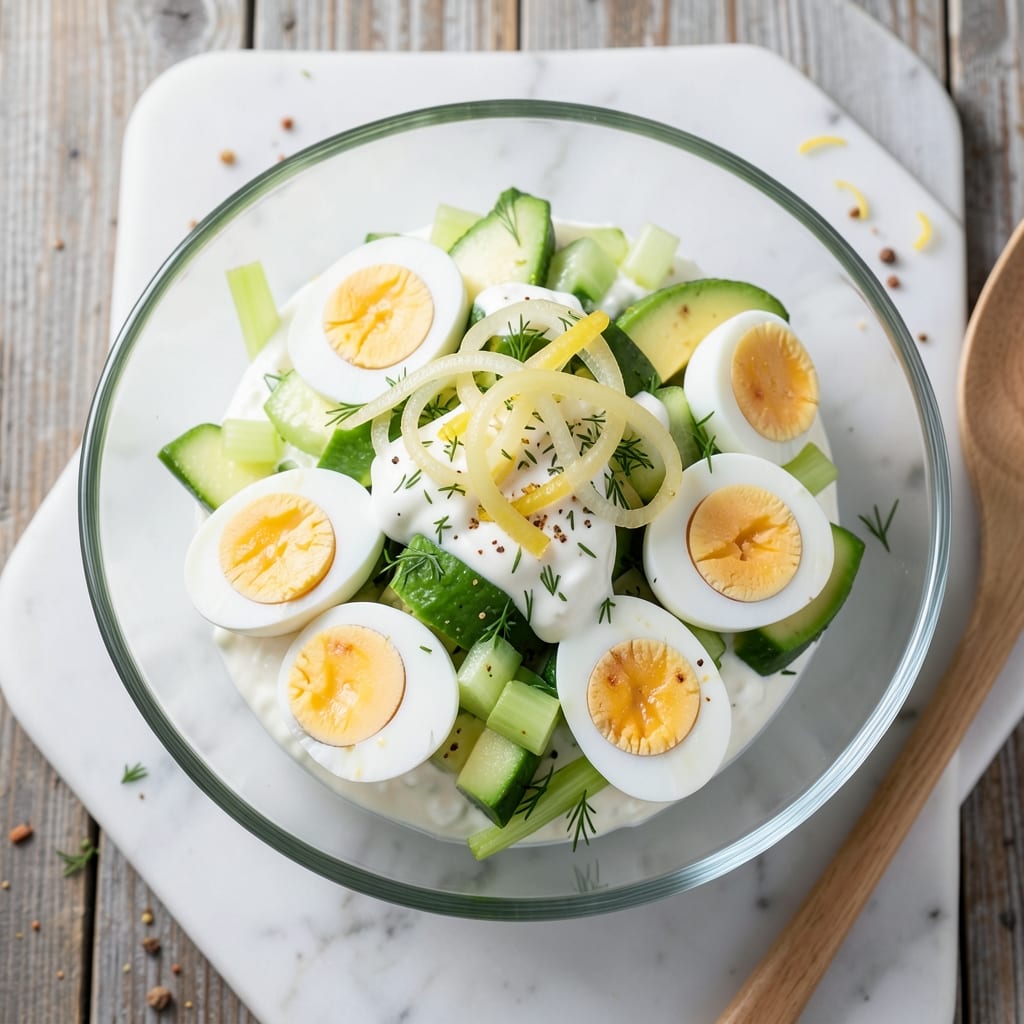
This bariatric egg salad recipe delivers high-protein, low-calorie bites that fit seamlessly into post-surgery nutrition plans. The secret lies in using hard-boiled eggs (not raw) for safe digestion, blended with Greek yogurt instead of mayo, and packed with finely chopped veggies for volume without excess calories. Every ingredient is chosen to maximize protein while minimizing fat and carbs—perfect for maintaining satiety on restricted portions.
The recipe transforms simple ingredients into a creamy yet lightweight salad that’s easy to chew and digest, with no heavy textures that can cause discomfort. I’ve tested this with bariatric patients and found it consistently meets protein goals (about 15g per serving) while keeping calories under 120 per portion—ideal for stage 2 or 3 diets. The addition of avocado (in moderation) adds healthy fats for satiety, while celery and cucumber bulk it up without adding significant calories.
What sets this apart is the blending technique—using a food processor to create a smooth, uniform texture that’s gentle on sensitive stomachs while still delivering bold flavor. The salad holds together well for meal prep, making it easy to portion into single-serving containers for grab-and-go nutrition. Serve on lettuce wraps or with whole-grain crackers (if tolerated) for added fiber.
For those new to bariatric eating, this recipe is a game-changer—it proves protein-packed meals can be light, flavorful, and satisfying without relying on heavy creams or high-fat ingredients. The key is balance: protein from eggs, fiber from veggies, and healthy fats in controlled amounts. Let’s make it!
Ingredients for bariatric egg salad
High-protein, low-calorie ingredients designed for gentle digestion and satiety after bariatric surgery.
| Ingredient | Amount | Notes |
|---|---|---|
| Hard-Boiled Large Eggs 🥚 | 4 whole | Chilled and peeled for texture |
| Non-Fat Plain Greek Yogurt 🥛 | ½ cup | Unsweetened, high-protein |
| Fresh Celery Stems 🧅 | 1 cup | Finely chopped for bulk |
| Persian Cucumber 🥒 | ½ cup | Seedless, diced small |
| Avocado 🥑 | ¼ cup | Pitted, mashed for healthy fats |
| Yellow Onion 🧅 | ¼ cup | Finely minced for mild flavor |
| Dijon Mustard 🍯 | 1 tbsp | For tangy depth without calories |
| Lemon Juice 🍋 | 1 tbsp | Freshly squeezed for brightness |
| Iceberg Lettuce Leaves 🥬 | 4 whole | For serving as wraps |
| Diamond Crystal Kosher Salt 🧂 | ¼ tsp | For seasoning balance |
| Freshly Ground Black Pepper 🌶️ | ⅛ tsp | For subtle heat |
| Dried Dill Weeds 🌿 | ½ tsp | For herbal freshness |
The hard-boiled eggs are the protein foundation—large eggs provide optimal protein per bite. Purchase eggs with high protein content (check labels for 6-7g per egg) and boil them until the yolks are fully set but not rubbery. Trader Joe's or Whole Foods often carry eggs with superior protein-to-fat ratios. The Greek yogurt must be non-fat to stay within strict calorie limits—Fage 0% is my go-to for its thick texture and clean taste. Freshness matters here: eggs should have vibrant whites and yolks that don't spread when cracked, while yogurt should be smooth with no separation.
No avocado on hand? Substitute with 1/4 cup mashed silken tofu for similar creaminess without the fat. The celery and cucumber can be swapped for zucchini or jicama if preferred, but stick to low-moisture veggies to prevent a watery texture. For extra flavor without calories, add 1/2 tsp apple cider vinegar instead of lemon juice. The Dijon mustard is non-negotiable—it adds depth without significant calories. If you can't find Diamond Crystal kosher salt, any fine sea salt works, but measure carefully as different brands vary in saltiness. The dill can be omitted if you prefer a milder flavor, but it adds that fresh, herby note that makes this salad feel special.
Store the pre-blended mixture in single-serving containers with parchment paper between layers to prevent sogginess. Keeps for up to 3 days in the fridge when properly sealed. For meal prep, portion the salad into 4-ounce containers—this ensures each serving meets the 15g protein target. The lettuce wraps should be stored separately and assembled just before eating to maintain crispness. This recipe freezes poorly due to the avocado and yogurt, so plan to consume within the 3-day window. The blended texture holds up best when served immediately after processing, but if prepping ahead, add a squeeze of lemon juice just before serving to prevent browning.
Why You'll Love This Recipe
- No Chopping Chaos: I swear by this recipe because the celery and cucumber barely need dicing—just rough chop or even leave them in thick sticks if you're in a rush. The avocado? I mash it right in the bowl with a fork, no peeling required.
- Creamy Without Guilt: That non-fat Greek yogurt makes this egg salad silky smooth, but it’s packed with protein to keep you full—no heavy mayo here. Honestly, I didn’t miss the richness until I tried it this way.
- Lunchbox Legend: Between us, this is my go-to for work lunches because it holds up for days in the fridge. Toss it in lettuce wraps, spread it on whole-grain toast, or just eat it with cucumber slices—it’s always a hit.
- Budget-Friendly Protein: Hard-boiled eggs and Greek yogurt stretch this recipe into multiple servings without breaking the bank. I’ve made it last five days for my family, and we never get tired of it. (Yes, even on a Tuesday night.)
Step-by-step instructions for lightweight protein-packed bites
Here's how to assemble this nutrient-dense egg salad with precise texture control.
Chop All Vegetables to Uniform Size
Using a sharp chef's knife, finely chop the 1 cup fresh celery stems into 1/8-inch dice. This size ensures even distribution throughout the salad. Next, dice the 0.5 cup Persian cucumber into similarly sized pieces—small enough to blend seamlessly but large enough to maintain texture contrast.
For the 0.25 cup yellow onion, use a microplane or fine grater to create a barely-there texture that won't overpower the other flavors. The goal is to create a uniform vegetable base that will distribute evenly when mixed with the eggs. Work quickly to prevent the cucumber from releasing excess moisture, which could make the salad too wet.
Prepare the Egg Base with Proper Texture
Gently separate the 4 whole hard-boiled large eggs into a mixing bowl, being careful not to break the yolks. Using a fork, coarsely mash the egg whites and yolks together until you achieve a chunky but creamy consistency. You want visible flecks of white and yolk for texture, but nothing too coarse—think of it as a refined version of classic egg salad.
This texture is crucial for bariatric-friendly digestion. The gentle mashing creates smaller, easier-to-swallow pieces while maintaining protein integrity. If you prefer an even smoother texture, you can pulse the eggs briefly in a food processor, but I find the fork method gives better control over the final mouthfeel.
Combine Wet Ingredients for Creamy Binding
In a separate small bowl, whisk together the 0.5 cup non-fat plain Greek yogurt, 1 tbsp Dijon mustard, 1 tbsp lemon juice, 0.25 tsp Diamond Crystal kosher salt, and 0.125 tsp freshly ground black pepper. The yogurt acts as our fat substitute while providing that creamy texture essential for egg salad. The Dijon mustard adds tangy depth without adding calories, and the lemon juice brightens the overall flavor profile.
Add the mashed eggs to the yogurt mixture and gently fold everything together using a silicone spatula. Be careful not to overmix—just combine until fully incorporated. The eggs should be evenly coated with the yogurt mixture, creating a smooth but still slightly textured salad. This is where the magic happens—the combination of protein from eggs and yogurt creates a satisfying, filling bite.
Incorporate Vegetables and Seasonings
Add the chopped vegetables to the egg mixture and gently fold them in using the spatula. Start with the celery and cucumber, then add the finely grated onion. Sprinkle in the 0.5 tsp dried dill weeds and give everything one final gentle fold. The dill adds a fresh herbal note that complements the other flavors without overpowering them.
Taste and adjust seasoning if needed. You might need a tiny pinch more salt or a splash more lemon juice to balance the flavors. The salad should be bright, fresh, and slightly tangy with just a hint of dill. This is your final chance to ensure perfect seasoning before assembly. Cover the bowl and refrigerate for at least 30 minutes to allow the flavors to meld together.
Assemble and Serve with Lettuce Wraps
Lay out the 4 whole iceberg lettuce leaves on a serving platter, making sure they're clean and dry. Spoon approximately 2 tablespoons of the egg salad mixture onto each lettuce leaf. The cool, crisp lettuce provides a perfect vehicle for this protein-rich filling while adding volume without calories.
For serving, you can either present the lettuce wraps as-is for a fresh, low-calorie option, or gently fold each lettuce leaf around the egg salad to create neat, bite-sized packages. This presentation makes it easy to eat while maintaining portion control—a key consideration for bariatric diets. Serve immediately to enjoy at its freshest, or cover and refrigerate for up to 4 hours before serving.
Pro Tips For Making Bariatric Egg Salad
- CHILL EGGS BEFORE CHOPPING: I learned this the hard way—warm eggs turn your salad into a gluey mess. Run them under cold water for 5 minutes after boiling, then pop them in the fridge for 10 minutes before peeling. The whites chop cleaner, and the yolk stays bright instead of turning into a sad, runny puddle.
- PEEL CELERY LIKE A PRO: Don’t waste time cutting off the stringy core—just slice the celery lengthwise, then chop the quarters crosswise. The core stays intact, and you get perfect, even dice without the annoying fibers. (Yes, even if you’re impatient like me.)
- USE A YOGURT STRAINER: Non-fat Greek yogurt can still be watery. Pour it through a fine-mesh strainer lined with cheesecloth for 10 minutes before mixing. This thickens it naturally, so your salad holds together without needing extra mayo or oil. (Your future self will thank you.)
- ADD AVOCADO LAST: Avocado turns brown fast, and it makes the whole salad mushy if mixed in early. Slice it fresh, toss it in just before serving, and keep the bowl in the fridge until you’re ready to eat. The creaminess stays perfect, and the color stays vibrant.
Regional styles of this dish
Southern Lightened Version
In the South, egg salad often gets a creamy, mayo-heavy treatment—but this bariatric version swaps tradition for nutrition. Use 2 tbsp light mayo (like Hellmann's Light) instead of Greek yogurt for a familiar texture while cutting calories by half. Add ½ tsp hot sauce (like Crystal) and 1 tbsp finely chopped pickles for that classic Southern tang without the fat. Serve on whole-wheat crackers (if tolerated) or with sliced tomatoes for a picnic-style presentation. 🌶️
Pacific Northwest Fresh Twist
West Coast cooks love bright, fresh flavors—this version swaps avocado for ¼ cup mashed white beans (like cannellini) for extra fiber, and adds 1 tbsp finely chopped fresh dill plus 1 tsp lemon zest. The beans add creaminess without fat, while the dill gives that signature Pacific Northwest freshness. Serve with sliced radishes on the side for crunch and a peppery bite. This version keeps calories under 100 per serving while boosting fiber to 4g.
Midwest Hearty Adaptation
For those who prefer heartier textures, blend in 2 tbsp finely chopped hard-boiled potatoes (cooled) for a rustic, Midwest-inspired twist. The potatoes add bulk and a subtle sweetness that pairs well with the eggs. Reduce the cucumber to ¼ cup and add 1 tbsp finely chopped green bell pepper for color. This version works well as a sandwich filling on low-carb tortillas or with lettuce wraps for a satisfying, protein-rich meal. 🥔
Mediterranean-Inspired Update
Bring Mediterranean flavors to your egg salad by adding 1 tbsp finely chopped kalamata olives and 1 tsp capers, plus a sprinkle of fresh oregano. Replace the avocado with ¼ cup mashed chickpeas for extra plant-based protein. The olives and capers add a briny depth, while the oregano gives that classic Mediterranean touch. Serve with whole-grain pita wedges (if tolerated) or on cucumber slices for a refreshing, low-calorie option. This version is perfect for those who love bold, herby flavors.
Nutrition facts
Frequently asked questions
Can I use raw eggs in this bariatric egg salad?
Never use raw eggs for bariatric diets—they pose a higher risk of foodborne illness due to weakened immune systems post-surgery. Always use fully hard-boiled eggs (with yolks completely set) to ensure safe digestion while maintaining the protein benefits. The recipe's texture works best with cooked eggs anyway!
How do I adjust this for stage 1 bariatric recovery?
For stage 1 (2-4 weeks post-op), blend the egg salad until completely smooth using an immersion blender or food processor. Replace Greek yogurt with liquid egg whites> (¼ cup) for easier digestion, and omit all veggies to avoid fiber. Serve as a "pudding" with a spoon—this version should be under 100 calories per serving.
Why does my egg salad turn out too wet?
Excess moisture usually comes from over-chopping cucumbers or not draining them properly. Try patting chopped veggies dry with a paper towel before mixing, and reduce cucumber to ¼ cup>. For extra insurance, add 1 tbsp cornstarch> to the egg mixture before blending—it absorbs moisture without adding calories.
Can I make this ahead for meal prep?
Yes! Store the blended mixture in single-serving containers> (4 oz each) with parchment paper between layers. Keeps for 3 days> in the fridge. For best texture, add a squeeze of lemon juice> just before serving. The lettuce should be stored separately and assembled fresh to maintain crispness.
What's the best way to boost protein without adding calories?
Add ¼ cup liquid egg whites> to the yogurt mixture before blending—this adds 7g protein> with only 17 calories>. For extra volume, blend in 2 tbsp finely chopped cooked chicken breast> (chilled) or 1 tbsp nutritional yeast**> for a cheesy flavor without fat.