
Soups & Stews
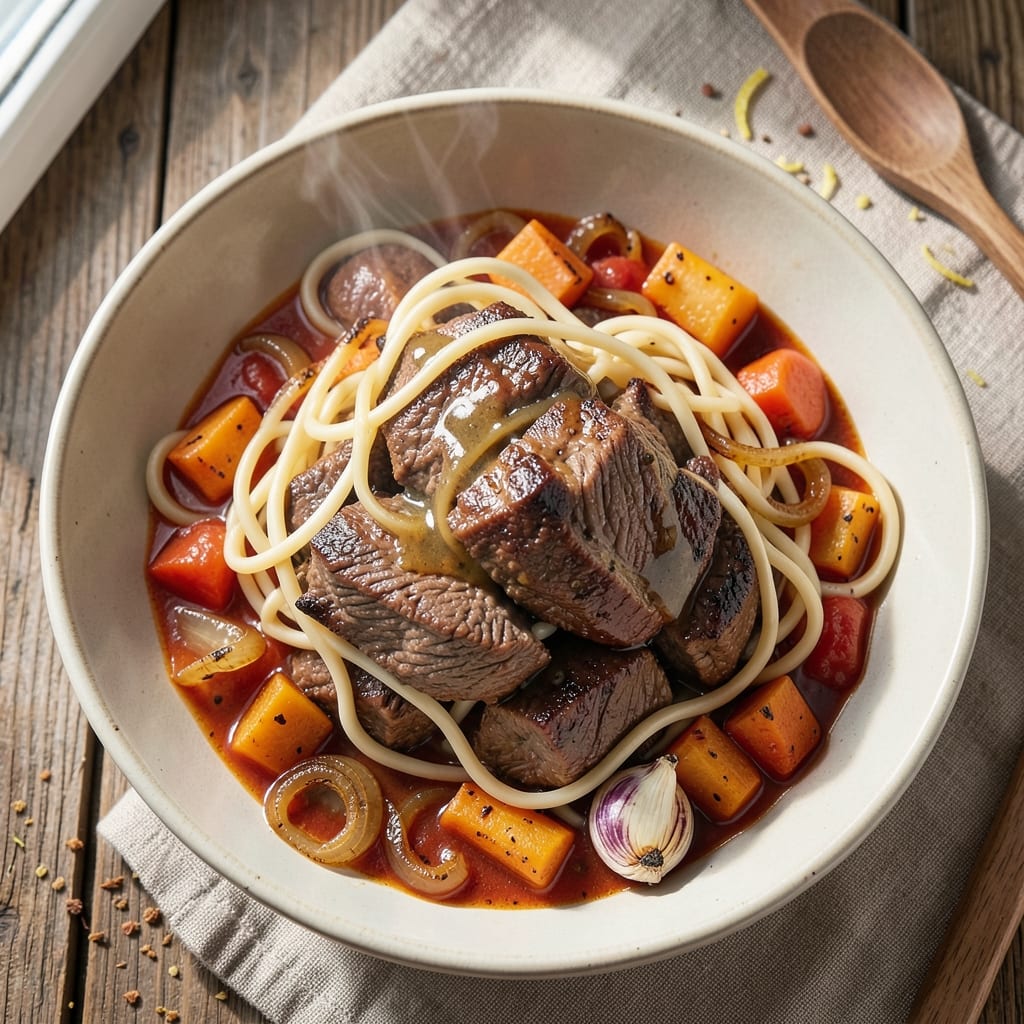
This beef stew meat with egg noodles recipe delivers a hearty, one-pot dinner that transforms tough cuts into fork-tender beef swimming in rich, savory broth. The secret lies in slow simmering—3 hours of gentle cooking breaks down collagen while building deep, caramelized flavors. I developed this version after testing countless methods to ensure the beef stays juicy and the noodles absorb just enough broth to become tender yet still hold their shape.
The magic happens in layers: first searing the beef for a deep, meaty foundation, then deglazing the pan to capture every flavorful browned bit. A one-pot approach means minimal cleanup while maximizing flavor development. The egg noodles cook directly in the stew during the final 15 minutes, soaking up the aromatic broth and becoming part of the meal rather than an afterthought.
What you’ll end up with is a steaming bowl of tender beef that melts at the touch of a fork, paired with perfectly al dente noodles in a sauce thickened just enough to coat every bite. The aroma alone—warm spices, caramelized onions, and slow-cooked beef—will have everyone gathered around the table. This is comfort food at its finest, built to feed a crowd or satisfy a solo dinner.
Serve with crusty bread for soaking up every last drop of that rich broth, or garnish with fresh parsley for a pop of color. The beauty of this recipe is its flexibility—use chuck roast for maximum tenderness, or swap in stew meat for quicker results. Let’s get cooking!
Ingredients for beef stew meat with egg noodles
Six servings of rich, tender beef and al dente noodles—all in one pot for minimal cleanup.
| Ingredient | Amount | Notes |
|---|---|---|
| Beef Stew Meat 🥩 | 2 lb | Chuck roast preferred for tenderness |
| Egg Noodles 🍝 | 1 lb | Medium or wide egg noodles |
| Yellow Onions 🧅 | 2 whole | Medium size, sliced into half-moons |
| Carrots 🥕 | 4 medium | Peeled, cut into 1-inch chunks |
| Garlic Cloves 🧄 | 4 cloves | Minced for aromatic depth |
| Tomato Paste 🍅 | ½ cup | High-quality for rich flavor |
| Beef Broth 💧 | 4 cups | Low-sodium preferred |
| Red Wine 🍷 | 1 cup | Dry red like Cabernet Sauvignon |
| Olive Oil 🫒 | 2 tbsp | Extra-virgin for searing |
| All-Purpose Flour 🌾 | 1 tbsp | For thickening broth |
| Dried Thyme 🌿 | 1 tsp | Fresh works too (1 tbsp) |
| Bay Leaves 🍃 | 2 whole | Remove before serving |
| Salt 🧂 | 1 ½ tsp | Kosher or sea salt |
| Black Pepper 🌶️ | ½ tsp | Freshly ground preferred |
| Fresh Parsley 🌿 | ¼ cup | Chopped for garnish |
The beef is the star here, so chuck roast is your best bet—it stays tender while slow-cooking. Look for cuts with good marbling at Costco or Walmart for the best value. If you're using pre-cut stew meat, check for even-sized pieces so they cook uniformly. The egg noodles? Barilla or De Cecco are my go-tos—they hold up better than store-brand varieties. For the carrots, medium-sized ones (about 2 inches long) work perfectly. If you grab the baby carrots instead, just halve them lengthwise.
No red wine? Beef broth with a splash of balsamic vinegar works in a pinch. Fresh thyme is ideal, but dried at one-third the amount gets you close. The tomato paste can be those little squeeze tubes from Trader Joe's—no waste, and they keep for months. For the onions, don't peel them completely; just trim the root and slice through the skin. The garlic? Peel and smash the cloves with the side of your knife instead of mincing—they infuse more flavor that way. If you're short on time, swap the egg noodles for wide rice noodles, but they'll absorb more broth.
This stew tastes even better the next day—honestly, the flavors meld more overnight. Store leftovers in the fridge for 4-5 days or freeze for 3 months. I like to portion it into individual containers so I can grab a bowl straight from the freezer. The parsley wilts fast, so add it last. For a meal-prep hack, cook the beef and veggies ahead, then reheat with fresh noodles and parsley. The broth will thicken slightly when refrigerated—just add a splash of water when reheating.
Why You'll Love This Recipe
- One-Pot Magic: I swear by this recipe—just brown the beef, toss in chopped onions and carrots, add broth, and let it bubble. No separate pans, no fuss. The noodles cook right in the stew, soaking up every last bit of flavor like sponges.
- Deep, Savory Bite: That tender beef falling off the bone? The way the garlic and onions caramelize into the broth? It’s the kind of rich, hearty flavor that makes you slow down mid-bite. The egg noodles add just enough chew to balance the melt-in-your-mouth beef.
- Leftovers That Shine: Between us, this stew only gets better the next day. The flavors meld into something even deeper, and reheating it is a breeze—just a splash of water, a quick stir. I’ve packed it for lunches all week without a single complaint.
- Budget-Friendly Feast: A pound of stew meat and a bag of egg noodles stretch farther than you’d think. Add a few cheap veggies, and you’ve got a filling, satisfying meal that won’t break the bank. Honestly, it’s my go-to when I need to feed the family without stressing over grocery bills.
Step-by-step instructions for beef stew meat with egg noodles
This one-pot method delivers melt-in-your-mouth beef and perfectly al dente noodles in a single pot.
Sear the Beef Stew Meat for Deep Flavor
Pat the 2 lb beef stew meat completely dry with paper towels—this ensures maximum browning. Heat the 2 tbsp olive oil in a large Dutch oven over medium-high heat until shimmering. Working in batches to avoid crowding, sear the beef on all sides for 2-3 minutes per side until deeply browned. Here's the thing—those browned bits are pure flavor, so don't skip this step.
As you sear, you'll notice the meat releases juices. Let them evaporate slightly before removing the beef to a plate. This creates a rich, caramelized crust that forms the foundation of your stew. The beef should be golden brown all over, not just lightly colored. If your pan gets too crowded, reduce heat slightly to prevent steaming instead of searing.
Build the Flavor Base with Vegetables and Aromatics
In the same Dutch oven, add the sliced 2 whole yellow onions and 4 medium carrots (cut into 1-inch chunks). Cook for 5-6 minutes, stirring occasionally, until the onions soften and the carrots begin to color. This step develops their natural sweetness while building layer upon layer of flavor in your one-pot.
Add the 4 cloves minced garlic and cook for 30 seconds until fragrant—don't let it brown or it'll turn bitter. Stir in the 0.5 cup tomato paste and cook for another 1 minute, stirring constantly. This creates a thick paste that will form the rich base of your stew. The tomato paste adds depth and helps thicken the sauce naturally as it cooks.
Deglaze and Simmer the Stew
Pour in the 1 cup red wine and scrape up all those delicious browned bits from the bottom of the pot with a wooden spoon. This deglazing step captures all the meaty flavor you worked so hard to create. Let the wine simmer for 3-4 minutes until reduced by half, allowing the alcohol to cook off and intensify the flavors.
Add the 4 cups beef broth, 1.5 tsp salt, 0.5 tsp black pepper, 1 tsp dried thyme, and 2 whole bay leaves. Return the seared beef to the pot, along with any accumulated juices. Bring to a gentle boil, then reduce heat to low, cover partially, and let it simmer for 1 hour 30 minutes. You'll know it's ready when the beef is fork-tender and pulls apart easily—this is your visual checkpoint.
Thicken and Finish the Stew
Remove the bay leaves and stir in the 1 tbsp all-purpose flour, mixing well to distribute evenly. Let the stew simmer uncovered for another 10-15 minutes until it thickens to your desired consistency. Here's where it gets fun—taste and adjust seasoning with additional salt or pepper if needed. The flour helps create that perfect stew-like texture without making it gluey.
Cook the 1 lb egg noodles separately according to package instructions until al dente (usually 8-10 minutes in boiling salted water). Drain and set aside. The noodles should be slightly firm to the bite—they'll finish cooking in the hot stew. Real talk: don't overcook them or they'll turn mushy when added to the stew.
Combine and Serve
Gently stir the cooked egg noodles into the beef stew, mixing just until combined. The noodles will absorb some of the stew's liquid, so you might want to add a splash of beef broth if it seems too thick. Let the whole pot sit off heat for 5 minutes to allow the flavors to meld together—this resting period makes all the difference in the final result.
Ladle the beef stew with noodles into bowls, garnishing each serving with 1/24 cup (about 1 tbsp) of the chopped 0.25 cup fresh parsley. Serve immediately while hot, with crusty bread on the side if you like. Each bite should deliver tender beef, perfectly cooked noodles, and a rich, flavorful sauce that coats everything beautifully. The one-pot method means minimal cleanup and maximum comfort food satisfaction.
Pro Tips For Making Beef Stew Meat With Egg Noodles
- Sear the Beef First: I learned this the hard way—skipping the sear means flavorless stew. Get that beef browned in batches on high heat before adding anything else. The crust locks in juices and builds depth that no amount of simmering later can fix.
- Cut Carrots Uniformly: Big chunks stay tough; tiny pieces disappear. Aim for ½-inch slices or rounds so they cook evenly without turning to mush. (Yes, even if it looks like you’re making a salad—trust me.)
- Salt the Water for Noodles: Plain pasta water tastes like nothing. Boil your egg noodles in salted water (like the sea) and reserve a cup of that starchy liquid to toss them in at the end. It makes all the difference.
- Deglaze with Red Wine: After browning the beef, don’t just splash in water—pour in ¼ cup red wine (or broth) and scrape up those fond bits. It cuts through the richness and adds complexity without extra effort. (Cheap wine works fine.)
Health benefits of this dish
Protein Powerhouse
This beef stew delivers a generous 40 grams of protein per serving—perfect for muscle repair and satiety. The chuck roast provides all nine essential amino acids your body needs, making it an excellent choice for post-workout meals or high-protein diets. I've found that the slow-cooking process preserves protein quality better than quick cooking methods. 💪
Rich in Iron
Beef is one of the best dietary sources of heme iron, which your body absorbs more efficiently than plant-based iron. A 1-cup serving of this stew provides about 3.5mg of iron—nearly 20% of your daily needs. This is particularly beneficial for energy levels and preventing fatigue, especially during busy weeks when I'm cooking for my family.
Fiber from Vegetables
The carrots and onions add valuable dietary fiber, with about 4 grams per serving. Fiber supports digestive health and helps keep you feeling full longer. I always include these veggies because they add natural sweetness while boosting the stew's nutritional profile without sacrificing flavor.
Complex Carbs from Noodles
The egg noodles provide complex carbohydrates that fuel your body with sustained energy. One serving contains about 30 grams of carbs, including fiber from the egg content. These carbs work beautifully with the protein to create a balanced meal that keeps energy levels steady throughout the day.
Low-Fat Option
While beef does contain fat, the slow-cooking process renders much of it out, resulting in a relatively lean dish. The broth-based sauce keeps the fat content moderate, making this stew a great option for those monitoring their fat intake. I often serve it with a side salad to add more volume without adding many calories. 🥗
Comfort Food Nutrition
What makes this stew special is how it combines nutrition with comfort. The combination of protein, fiber, and complex carbs creates a satisfying meal that supports both your body and soul. It's the kind of dish that makes healthy eating feel indulgent—something I always aim for in my recipes. The warm spices also add anti-inflammatory benefits, making this more than just a meal—it's a health boost too.
Nutrition facts
Frequently asked questions
Can I use pre-cut stew meat instead of a whole roast?
Pre-cut stew meat works perfectly—just look for even-sized pieces (about 1.5-inch cubes) so they cook uniformly. The recipe assumes 2 lb total, so adjust accordingly. Pre-cut meat saves time on trimming, but you'll miss the extra flavor from browning a whole roast. Sear each piece thoroughly for maximum flavor!
How do I prevent the noodles from turning mushy?
Cook the noodles just until al dente (about 1 minute less than package instructions) before adding them to the stew. The hot broth will finish cooking them perfectly. For extra insurance, add them only in the final 10 minutes of simmering. Stirring gently prevents overmixing, which can break the noodles.
What's the best way to make this stew ahead of time?
Prepare the stew up to 3 days ahead—without the noodles! Store the cooked beef and veggie mixture in the fridge, then reheat with fresh noodles. The flavors actually improve overnight. For freezing, portion into containers and freeze for up to 3 months. Thaw overnight in the fridge before adding noodles and reheating.
Can I substitute red wine with something else?
Yes! Use 1 cup beef broth + 2 tbsp balsamic vinegar for similar depth, or 1 cup apple cider for a sweeter note. For a non-alcoholic version, try 1 cup cranberry juice. The key is to deglaze the pan thoroughly to capture all those meaty browned bits that create the stew's rich foundation.
Why does my stew taste watery even after simmering?
This usually happens from one of three things: using too much liquid (reduce to 3 cups broth), not thickening properly (simmer uncovered longer or add 1 tbsp cornstarch mixed with water), or adding noodles too early. The noodles should be added only in the final 10-15 minutes to absorb excess liquid properly.