
Breakfast & Brunch
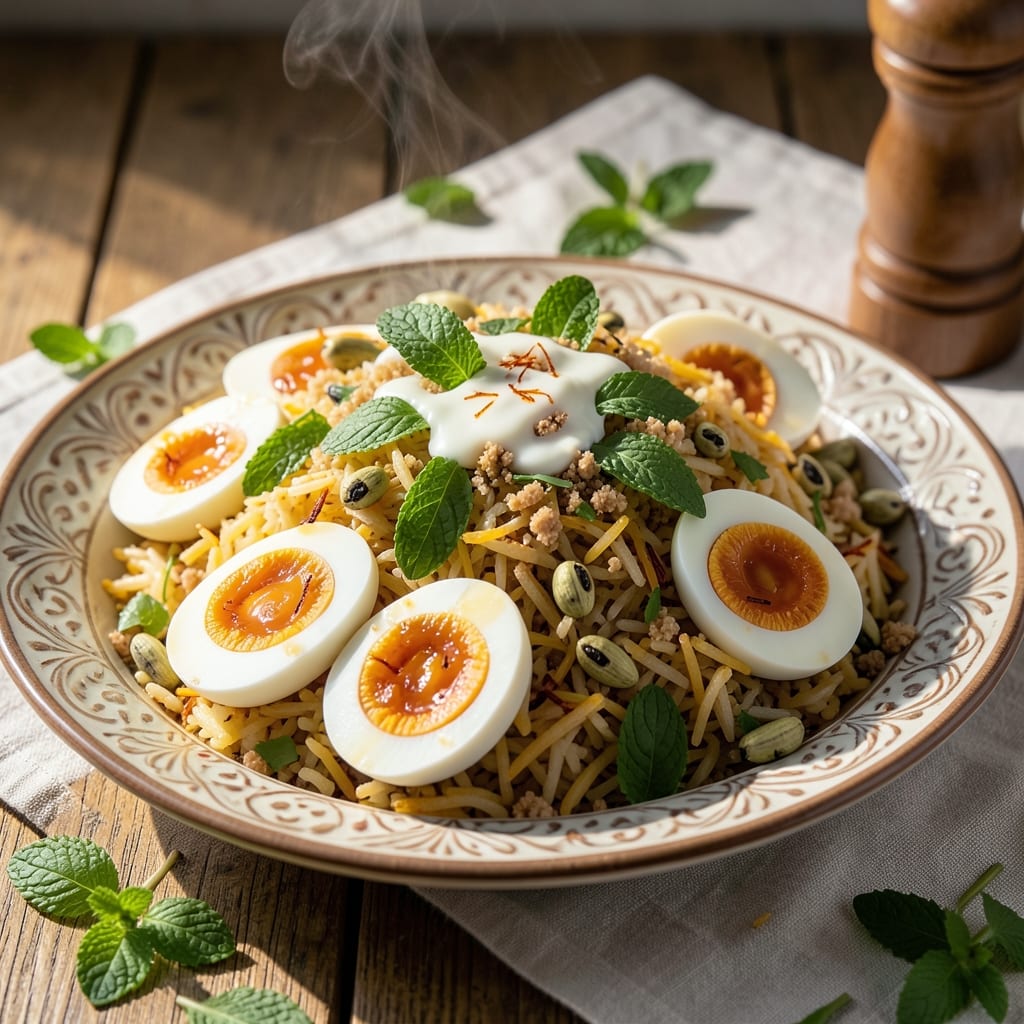
This boiled egg biryani recipe transforms a simple breakfast staple into a fragrant, layered masterpiece where soft-cooked eggs and saffron-infused basmati rice create a harmonious balance. The secret lies in slow-cooked layers—each bite delivers tender eggs, aromatic rice, and a symphony of spices that elevate this vegetarian dish to restaurant-quality status. Unlike traditional biryani, this version relies on boiled eggs as the protein, ensuring a lighter yet equally satisfying meal.
What sets this recipe apart is the dum cooking method, where the biryani steams in its own juices, locking in flavors and creating melt-in-your-mouth texture. Yogurt and mint brighten the dish, while saffron and cardamom add depth, making every mouthful a revelation. The process might seem intricate, but breaking it into steps ensures even home cooks can achieve professional results without stress.
By the time you uncover the lid, your kitchen will be filled with the intoxicating aroma of warm spices and blooming saffron, while the biryani reveals layers of golden rice and perfectly cooked eggs. The contrast between the creamy eggs and fragrant rice creates a texture that’s both satisfying and elegant—ideal for brunch or a light yet flavorful lunch.
Serve with a side of raita or a sprinkle of fried onions for extra crunch, and prepare to impress guests with a dish that feels luxurious yet is entirely homemade. The key to success? Patience and layering—each component plays a role in creating this vegetarian biryani that’s as nourishing as it is delicious.
Ingredients for boiled egg biryani
Pantry staples meet aromatic spices for this vegetarian showstopper—no exotic finds needed.
| Ingredient | Amount | Notes |
|---|---|---|
| Large Eggs 🥚 | 8 whole | Hard-boiled, peeled, room temperature |
| Basmati Rice 🍚 | 2 cups | Long-grain, uncooked preferred |
| Saffron Threads 🌼 | ¼ tsp | High-quality, soaked in 2 tbsp warm water |
| Plain Yogurt 🥛 | ½ cup | Full-fat, unsweetened |
| Fresh Mint Leaves 🌿 | ½ cup | Chopped, stems removed |
| Green Cardamom Pods 🍃 | 6 whole | Lightly crushed |
| Bay Leaves 🌿 | 2 whole | Fresh preferred |
| Cinnamon Sticks 🌿 | 2 whole | 2-inch pieces |
| Cloves 🌶️ | 4 whole | Whole, lightly crushed |
| Vegetable Oil 🫒 | ½ cup | High smoke point |
| Onion 🧅 | 1 whole | Medium, finely chopped |
| Garlic Cloves 🧄 | 6 cloves | Minced |
| Salt 🧂 | 1 ½ tsp | Adjust to taste |
| Water 💧 | 2 ½ cups | Room temperature |
| Lemon Juice 🍋 | 1 tbsp | Freshly squeezed |
Basmati rice is your foundation here. Indian Basmati from the bulk section has the best texture, but any long-grain will work. Saffron is non-negotiable—look for whole threads at Indian markets or specialty stores, not the powdered stuff. The yogurt should be thick and tangy; Fage or Siggi's work perfectly. For the spices, Penzeys or Spicewalla are great sources, but the grocery store's whole spices are fine if they're fresh (smell them—if they're dusty, toss them). The eggs? Room temperature is key for even cooking.
No saffron? Turmeric at half the amount gives color, though it lacks the floral depth. Fresh mint hard to find? Dried mint at one-third the amount works in a pinch, but it's not the same. The yogurt can be swapped for coconut yogurt if you're avoiding dairy. For the fried onions, Trader Joe's has pre-fried ones that save time—just sprinkle them on top. The cardamom and cloves? Toast them lightly in the oil first to wake up their flavors. And if you're short on time, pre-cook the rice separately and layer it in—just know the dum method gives the best texture.
This keeps beautifully—3 days in the fridge with the lid sealed tight. The flavors actually improve overnight as everything melds. For freezing, portion into single servings before sealing. Reheat gently with a splash of water to restore moisture. The fried onions? Make a big batch and store in the fridge—they're perfect on everything from salads to sandwiches. The saffron-infused water can be saved for 1 week if you want to use it in other dishes like risotto or paella.
Why You'll Love This Recipe
- Hard-Boiled Hack: I swear by this trick—boiling the eggs in the biryani pot means zero extra bowls. Just crack them in after the rice cooks, and they absorb that saffron-yogurt magic like a dream. (No peeling required if you’re lazy, but I won’t judge.)
- Saffron-Yogurt Magic: That first bloom of saffron in warm yogurt? It’s the secret weapon. The eggs get this silky, golden coating—creamy inside, with a whisper of floral warmth. Honestly, I’ve tried biryani without it, and I’m not going back.
- Lunchbox Legend: Between us, this is my go-to for packed lunches. The eggs stay firm for days, the rice fluffs up cold, and the mint keeps it bright. Toss in a handful of fried onions for crunch, and suddenly you’ve got a meal that feels fancy but costs pennies.
- Zero-Waste Feast: Make a big batch—it reheats like a champ. The rice stays separate from the eggs, so no soggy disasters. Leftovers? Perfect for office lunches, school lunches, or that night you just want to microwave something that doesn’t taste like regret. (Yes, even on a Tuesday night.)
Step-by-step instructions for boiled egg biryani
Here's how to make this fragrant, aromatic dish with perfectly soft eggs and fluffy saffron rice.
Prepare the Eggs and Flavor Base
Start by boiling the 8 whole large eggs for exactly 9 minutes in a pot of boiling water. This gives you just-cooked eggs that'll stay tender when layered with the rice. Drain and cool them under cold running water for 2 minutes to stop the cooking process, then peel and set aside at room temperature.
In a small bowl, soak the 0.25 teaspoon saffron threads in 2 tablespoons warm water for 10 minutes to release their vibrant color and aroma. This infusion will give your biryani its signature golden hue and delicate floral notes. While that steeps, crush the 6 whole green cardamom pods, 4 whole cloves, and lightly crush the 2-inch cinnamon sticks using a mortar and pestle or rolling pin.
Cook the Aromatic Rice
In a heavy-bottomed pot, heat 0.5 cup vegetable oil over medium heat. Add the finely chopped whole onion and cook for 5-6 minutes until golden brown, stirring occasionally. Add the minced 6 cloves garlic and cook for another 1 minute until fragrant.
Add the crushed spices, 2 whole bay leaves, and 1.5 teaspoons salt. Stir for 30 seconds until the spices sizzle and release their oils. Pour in the 2 cups basmati rice and stir to coat evenly with the spices. Cook for 2 minutes until the rice becomes translucent at the edges.
Layer and Steam the Biryani
Add the 2.5 cups room temperature water and the soaked saffron infusion to the pot. Bring to a gentle boil, then reduce heat to low and cover with a tight-fitting lid. Let it cook for 12 minutes without disturbing it—this allows the rice to absorb the water and steam properly.
After 12 minutes, turn off the heat and let the rice sit covered for 10 minutes. This resting period is crucial for developing the biryani's signature texture. Meanwhile, mix the 0.5 cup plain yogurt with the 1 tablespoon freshly squeezed lemon juice and set aside.
Assemble the Final Biryani
Gently fluff the rice with a fork, then spread half of it in an even layer on a large serving platter. Arrange the 8 peeled eggs in a single layer on top of the rice, slightly overlapping them. Sprinkle half of the chopped fresh mint leaves over the eggs.
Add the remaining rice over the eggs, gently pressing down to create a compact layer. Drizzle half of the yogurt-lemon mixture over the top, then sprinkle the remaining mint leaves. Cover with a clean kitchen towel and let it rest for 10 minutes before serving. This final resting step ensures all the flavors meld together perfectly.
Serve with Fresh Garnish
Remove the towel and fluff the biryani gently with a fork. Drizzle the remaining yogurt-lemon mixture over the top and garnish with any extra mint leaves. Serve immediately while the rice is still warm and fragrant. Each bite should deliver perfectly soft eggs, fluffy saffron rice, and a burst of aromatic spices—this is biryani at its best.
Pro Tips For Making Boiled Egg Biryani
- Boil Eggs 3 Minutes Past Soft: DESCRIPTION:
- Soak Rice 20 Minutes—Not 30: DESCRIPTION:
- Bloom Saffron in Yogurt: DESCRIPTION:
- Layer Eggs Last, Heat First: DESCRIPTION:
Pro cooking tips for boiled egg biryani
Egg Timing Secrets
The 9-minute boil for eggs is non-negotiable—any longer and they’ll turn rubbery when layered with rice. I use a timer and start cooling them immediately under cold water for 2 minutes to halt cooking. Room temperature eggs absorb flavors better, so let them sit for 10 minutes before assembling. 🥚
Saffron Infusion Hack
Never use powdered saffron—it’s bitter and lacks depth. Soak the 0.25 tsp threads in 2 tbsp warm water for 10 minutes to extract maximum color and aroma. I strain it through a fine mesh sieve before adding to the rice to avoid grit. Pro tip: Save the leftover infusion for 1 week—it’s perfect for risotto or paella. 🌼
Spice Toasting Trick
Lightly crush the cardamom pods and cloves in a mortar, then toast them in the oil for 30 seconds until fragrant. This wakes up their flavors and prevents bitterness. I add bay leaves and cinnamon sticks at the same time—they infuse the rice with subtle warmth. Remove them before serving to avoid chewing on tough pieces. 🍃
Dum Cooking Mastery
The dum cooking method is where magic happens. After adding water, cover the pot with a tight lid and cook on low heat for 12 minutes—no peeking! Then let it rest off the heat for 10 minutes. This steam bath creates the signature melt-in-your-mouth texture. I use a heavy pot to retain heat evenly. ⏰
Layering Like a Pro
Spread half the rice on a platter, arrange the eggs in a single layer, then top with remaining rice. Gently press down to create a compact layer—this prevents eggs from floating to the top. Drizzle the yogurt-lemon mix between layers for tangy brightness. Cover with a towel for 10 minutes before serving to let flavors meld. 🧂
Garnish for Impact
Fresh mint leaves and fried onions are non-negotiable for presentation. I sprinkle them just before serving to keep them crisp. For extra crunch, toast 1 tbsp sliced almonds in the same oil used for onions and scatter on top. The contrast of textures makes every bite exciting. ✨
Nutrition facts
Frequently asked questions
Can I use pre-cooked rice for this boiled egg biryani?
You can, but the dum cooking method relies on steaming the rice with spices for perfect texture. If using pre-cooked rice, layer it with eggs and spices in a heavy pot, then steam covered for 10 minutes with 2 tbsp water and 1 tbsp yogurt to restore moisture. The flavor won't be as deep as freshly cooked layers, but it's a good shortcut!
How do I prevent the eggs from turning rubbery?
Boil eggs for exactly 9 minutes (no longer!) and cool immediately under cold water for 2 minutes to stop cooking. Let them sit at room temperature for 10 minutes before layering—they'll stay tender. Overcooking or peeling too soon causes toughness. For extra insurance, add 1 tbsp lemon juice to the water while boiling.
What if I don't have saffron?
Use ½ teaspoon turmeric for color, but it won't replicate saffron's floral aroma. For depth, add ½ teaspoon rose water or 1 teaspoon orange blossom water to the yogurt-lemon mixture. Skip saffron entirely? Boost cardamom to 8 pods and add 1 cinnamon stick to the rice for warmth.
Can I make this biryani ahead of time?
Yes! Assemble the biryani (including the towel cover) and refrigerate for up to 3 days. Reheat covered in a 350°F (175°C) oven with 2 tbsp water for 20 minutes. For freezing, portion before adding the yogurt-lemon mix—thaw overnight in the fridge and reheat gently. The flavors actually improve overnight!
Why does my biryani look dry?
Undercooking or over-stirring releases starches too early. For fluffier rice: Don't stir after adding water, and cook on low heat only. If dry after cooking, fluff gently with a fork and add 2 tbsp warm milk or yogurt, then cover for 5 minutes. The dum method should yield moist rice—if not, reduce cooking time by 2 minutes next time.