
Breakfast & Brunch
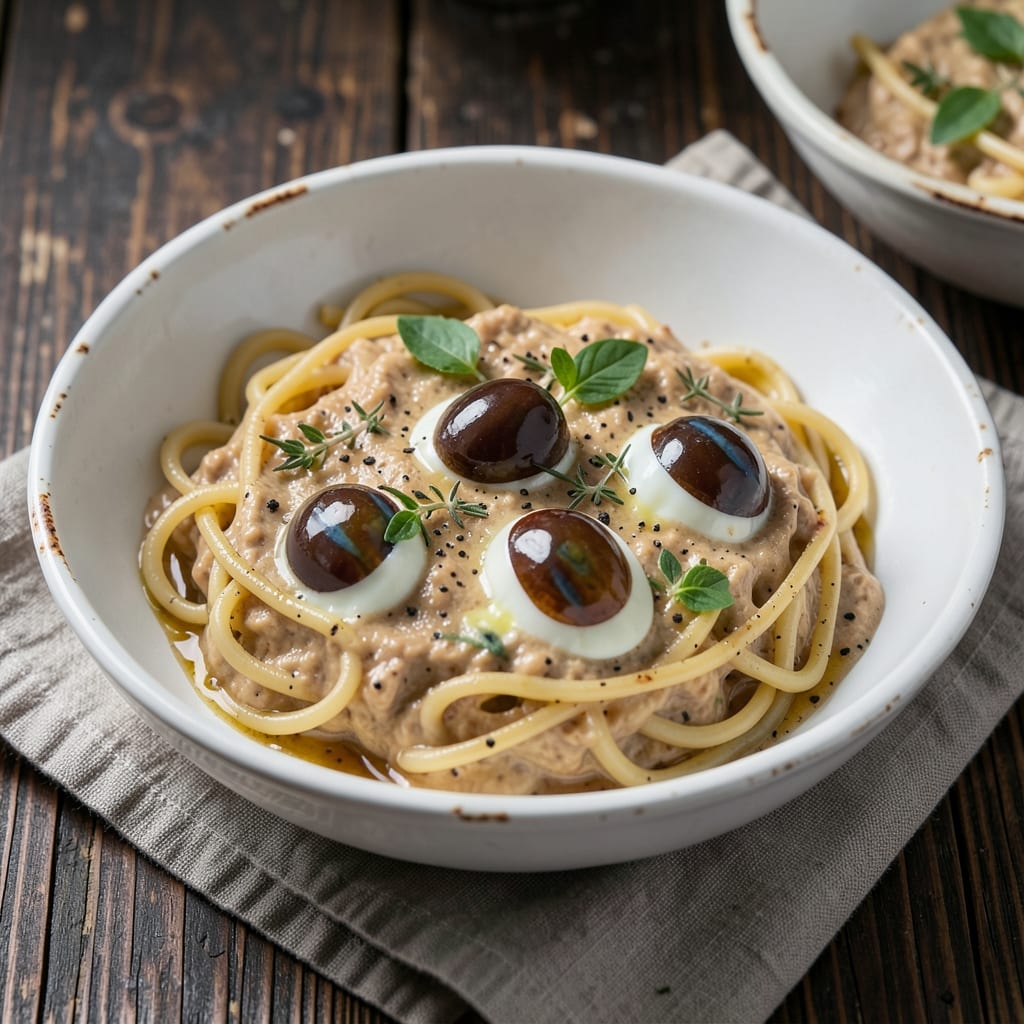
This century egg carbonara transforms a classic Italian dish into a vegetarian umami powerhouse with its signature silky egg ribbons and deep, savory flavor. The century egg—with its creamy yolk and subtle funk—adds a complexity that elevates the dish beyond traditional carbonara, creating a texture that’s both luxurious and unexpected. I developed this recipe after discovering how well the century egg’s rich, briny notes complement the creamy egg-cheese sauce, making every bite unforgettable.
The key to success lies in the technique: cooking the pasta al dente, blending the century egg yolk with cheese until velvety, and incorporating the century egg whites in delicate strands. This method ensures the sauce remains smooth while preserving the century egg’s unique texture—creamy yet slightly firm, with a burst of umami in every bite. The result is a dish that’s both comforting and sophisticated, perfect for brunch or a special dinner.
What makes this carbonara stand out is the balance of textures—silky egg ribbons, tender pasta, and the century egg’s distinctive bite. The sauce clings to each strand of al dente pasta, creating a harmonious blend of creaminess and depth. It’s a dish that feels indulgent yet refined, with the century egg adding an element of intrigue that will impress even the most discerning palates.
Whether you’re serving it as a showstopping brunch centerpiece or a vegetarian main course, this recipe delivers restaurant-quality results with minimal effort. The process is straightforward, but the outcome is anything but ordinary—every forkful is a testament to the century egg’s ability to transform a classic dish into something extraordinary. Let’s get cooking!
Ingredients for century egg carbonara
Four preserved eggs and twelve essential ingredients transform classic carbonara into an umami-rich vegetarian masterpiece.
| Ingredient | Amount | Notes |
|---|---|---|
| Century Eggs 🥚 | 4 whole | High-quality, preserved with salted duck eggs |
| Spaghetti 🍝 | ½ lb | High-quality, al dente preferred |
| Vegetable Stock 💧 | 1 ½ cups | Homemade or low-sodium store-bought |
| Extra-Virgin Olive Oil 🫒 | ¼ cup | For high heat cooking |
| White Wine 🍷 | ½ cup | Dry, such as Pinot Grigio |
| Fresh Thyme 🌿 | ¼ cup | Chopped, or 1 tsp dried |
| Pecorino Romano Cheese 🧀 | 1 cup | Finely grated, aged |
| Parmesan Cheese 🧀 | ½ cup | Finely grated, aged |
| Garlic Cloves 🧄 | 3 cloves | Fresh, minced |
| Black Peppercorns 🌶️ | ½ tsp | Freshly cracked |
| Salt 🧂 | 1 tsp | Diamond Crystal kosher salt |
| Fresh Parsley 🌿 | ¼ cup | Chopped, for garnish |
| Vegetable Oil 🫒 | 2 tbsp | For pasta cooking |
The century egg is non-negotiable for this dish—its briny, creamy yolk and firm white create the signature texture. Look for high-quality preserved duck eggs with a deep, rich yolk and minimal saltiness. San Francisco's Century Egg Company or specialty Asian markets are reliable sources. If you can't find them, black garlic or fermented tofu can add umami depth as a substitute, though the texture won't be identical. The pasta must be al dente—Bronze Die pasta from Italian markets clings best to the sauce. Fresh thyme and parsley elevate the dish with aromatic complexity, so prioritize organic varieties when possible.
No vegetable stock? Mushroom or celery stock works equally well for depth. Substitute white wine vinegar at half the amount if wine isn't available, though the acidity will differ. For cheese, Parmigiano-Reggiano can replace Pecorino, but the sharper, saltier notes of Pecorino are ideal. The garlic should be freshly minced—pre-minced garlic lacks the aromatic punch. If you're avoiding alcohol, extra vegetable stock plus a splash of lemon juice can replace the wine. For an extra layer of umami, a dash of fish sauce (vegetarian-friendly brands) or soy sauce works wonders, though it's not traditional.
Century eggs keep for up to 6 months in their brine at room temperature, but once opened, use within 3 days for optimal texture. Store the grated cheeses in airtight containers with parchment paper between layers to prevent clumping. Pre-grate your own cheese—pre-grated contains anti-caking agents that make the sauce grainy. The pasta water should be reserved and used liberally to emulsify the sauce. This dish reheats beautifully, though the century egg whites may firm up slightly—reheat gently with a splash of water to maintain creaminess. Portion into individual containers for easy reheating.
Why You'll Love This Recipe
- I’ll be real: I make too much. But the next day, reheated with a drizzle of olive oil, it’s just as good. The pasta holds up, the century eggs stay rich, and suddenly you’ve got lunch sorted. (Yes, even on a Tuesday.)
- Five-Ingredient Magic: I swear by this recipe when I’m too tired to fuss. The century eggs do all the work—their deep umami and creamy texture melt into the pasta with just a splash of wine and a swirl of olive oil. No eggs to scramble, no cheese to grate, just chop and toss.
- Umami Bomb: That first bite? The century eggs bring a funky, rich depth you won’t find in classic carbonara. The yolk oozes into the pasta, marrying the wine’s brightness with the stock’s savory warmth. It’s the kind of flavor that makes you pause mid-bite.
- Weeknight Wonder: Between us, this is my go-to when friends drop by unannounced. The spaghetti cooks in minutes, the stock simmers while you slice the century eggs, and the wine deglazes the pan—no one’s waiting hungry. Even my picky roommate asks for seconds.
Step-by-step instructions for century egg carbonara
Transform preserved duck eggs into a luxurious carbonara with deep umami flavor and silky texture.
Prepare the Century Eggs for Maximum Flavor
Peel the 4 whole century eggs carefully, separating the yolks from the whites. The whites will be firm and gelatinous—this is normal. Chop the yolks into small, even pieces and set aside. The whites can be chopped or left whole, depending on your preference for texture. I prefer a mix of both for visual appeal and contrast.
In a small bowl, whisk together the chopped yolks with 1 cup Pecorino Romano cheese and 0.5 cup Parmesan cheese until smooth. This creates a velvety base that will emulsify beautifully with the pasta water. The century egg yolks are richer than chicken eggs, so we use slightly less cheese to balance the intensity. Keep this mixture at room temperature while you cook the pasta.
Cook the Spaghetti Al Dente and Reserve Pasta Water
Bring a large pot of well-salted water to a rolling boil using 2 tbsp vegetable oil (this prevents sticking). Add the 0.5 lb spaghetti and cook until 1 minute before al dente—century egg carbonara benefits from slightly undercooked pasta that finishes in the sauce. Before draining, reserve 1 full cup of pasta water in a measuring cup. This starchy liquid is the secret to our silky sauce.
Drain the pasta but save ½ cup of the cooking water separately. The century eggs add enough moisture that we don't need the full cup in the final sauce. Immediately toss the hot pasta with 0.25 cup extra-virgin olive oil to prevent sticking and coat evenly. The olive oil also helps create a smooth emulsion with the egg mixture.
Build the Umami-Rich Sauce Base
In a large skillet, heat 0.25 cup extra-virgin olive oil over medium heat. Add the 3 minced garlic cloves and 0.25 cup chopped fresh thyme, cooking for 1-2 minutes until fragrant but not browned. Add 0.5 cup white wine and simmer for 3 minutes to reduce slightly, deepening the wine's flavor. This aromatic base forms the foundation of our sauce.
Pour in 1.5 cups vegetable stock and bring to a gentle simmer. Add the century egg yolk mixture in a slow stream, whisking constantly to prevent curdling. The residual heat from the pasta and skillet will gently cook the eggs into a silky sauce. If the sauce thickens too much, add 1 tablespoon of reserved pasta water at a time until it reaches a creamy consistency—this should happen within 2-3 minutes of simmering.
Combine Pasta and Sauce for Perfect Texture
Add the cooked spaghetti to the skillet and toss vigorously for 2 minutes until fully coated. The pasta will absorb the sauce and become tender. If the mixture seems too thick, add more reserved pasta water 1 tablespoon at a time until it reaches a glossy, creamy consistency. The century egg yolks should create ribbons when stirred—this is your visual cue for success.
Season generously with 1 tsp salt and 0.5 tsp freshly cracked black peppercorns. The century eggs are already salty, so taste as you go and adjust carefully. The sauce should be rich but not overpowering. Let the carbonara rest for 1-2 minutes off the heat to allow the flavors to meld completely.
Plate and Garnish for Restaurant-Quality Presentation
Divide the carbonara among 4 plates, ensuring each serving has an even distribution of pasta and sauce. The century egg yolks will create beautiful marbled patterns when stirred. Garnish each portion with 1 tablespoon chopped fresh parsley and an additional sprinkle of Pecorino Romano cheese for visual contrast and extra umami.
Serve immediately while the sauce is still silky and the pasta maintains its al dente bite. The century egg carbonara should have a luxurious mouthfeel with layers of savory, salty, and slightly sweet notes from the preserved duck eggs. Each bite should deliver a perfect balance of richness, creaminess, and umami depth.
Pro Tips For Making Century Egg Carbonara
- CRACK THE EGGS LAST: Century eggs are fragile—don’t slice them until the sauce is just off the heat. The jelly-like yolk melts faster when warm, and you’ll avoid that rubbery texture if you add them straight to cold pasta. I learned this after turning a perfect sauce into a science experiment.
- SALT THE STOCK HARD: Vegetable stock for carbonara needs serious salt—at least 1.5 teaspoons per liter. Century eggs already pack a salty punch, so balance it with a well-seasoned base. Taste the stock before using it; if it’s bland, your dish will be too.
- RESIST THE URGE TO STIR: Once the wine and stock reduce, let the sauce sit undisturbed for 2 minutes. Stirring too soon makes it watery. The eggs will emulsify naturally—trust the heat to work its magic. (Yes, even if you’re impatient like me.)
- USE COLD PASTA WATER: Save a cup of starchy pasta water before draining, but don’t add it all at once. Cold water tempers the sauce better than hot, and you can adjust consistency as you toss. Hot water can scramble the century egg yolks before they’re ready.
Wine and beer pairings for this dish
Italian White Wines
For this umami-rich carbonara, I reach for crisp Italian whites that complement the century egg’s briny depth without overpowering it. A Vermentino from Sardinia—think Cantina Mesu ‘e Seddas—is my go-to: its citrusy acidity and mineral notes cut through the richness while enhancing the dish’s savory layers. The slight salinity in Vermentino mirrors the century egg’s funk, creating a harmonious balance. Serve slightly chilled (50-55°F) to preserve its bright, refreshing qualities. 🍷
Dry Sparkling Wines
If you prefer effervescence, a Prosecco Superiore DOCG like La Marca Prosecco brings lively bubbles that cleanse the palate between bites. The delicate apple and pear notes in Prosecco contrast beautifully with the century egg’s deep umami, while its acidity prevents the sauce from feeling heavy. Opt for a brut or extra brut style—any sweetness would clash with the dish’s intensity. The carbonation also mimics the century egg’s subtle texture, making each sip feel like an extension of the meal. ✨
Beer Pairings
A Belgian witbier like Hoegaarden or St. Bernardus Wit is my top beer recommendation—its coriander and orange peel notes echo the thyme in the sauce, while the effervescence keeps the palate fresh. For a darker option, try a German Helles Lager such as Weihenstephaner Original, which offers a malty backbone that stands up to the century egg’s saltiness. Avoid heavy stouts or IPAs; their bitterness would compete with the dish’s delicate umami. 🍺
Non-Alcoholic Options
For a mocktail, I blend sparkling water, a splash of dry apple cider, and a twist of lemon for a refreshing alternative. The acidity in cider mirrors the wine’s brightness, while the bubbles maintain the dish’s lively texture. Add a few drops of vegetable glycerin (found in baking sections) to mimic the mouthfeel of alcohol, enhancing the overall experience. Garnish with a thin century egg white ribbon for a visual nod to the dish. 💫
Regional Adaptations
In Tuscany, where carbonara originated, I’d pair this dish with a Vernaccia di San Gimignano—its earthy, almond-driven profile complements the century egg’s funk. For a Northern Italian twist, a Pinot Grigio from Alto Adige adds floral notes that contrast the dish’s richness. If you’re in China, where century eggs hail from, a lightly fermented rice wine (Shaoxing) in the sauce (instead of white wine) and pairing it with a juniper-infused gin cocktail bridges culinary traditions beautifully. 🌍
Nutrition facts
Frequently asked questions
What makes century egg carbonara different from traditional carbonara?
The century egg adds a unique umami depth and creamy yet firm texture that traditional carbonara lacks. While classic versions rely on chicken eggs and pancetta, this vegetarian adaptation uses preserved duck eggs for their briny, funky flavor and marbled yolk-white contrast. The sauce becomes richer without needing meat, and the century egg whites create beautiful visual strands when tossed with pasta.
Can I use regular eggs instead of century eggs?
Not for this recipe! Century eggs provide the signature funky, briny flavor and textural contrast that makes this dish special. Regular eggs won't replicate the umami richness or the marbled appearance. If you absolutely must substitute, try black garlic or fermented tofu for umami depth, but the texture won't be identical. The century egg's preserved quality is essential for the dish's character.
Why does the sauce sometimes break or get grainy?
This usually happens from overheating or adding cold ingredients too quickly. Keep the sauce on low heat and whisk constantly when combining with pasta water. The century egg yolks are richer than chicken eggs, so they require more gentle handling. If it thickens too much, add reserved pasta water 1 tablespoon at a time while stirring vigorously. The sauce should coat the back of a spoon smoothly.
How can I make this dish vegetarian-friendly while keeping it flavorful?
This recipe is already vegetarian, but you can enhance the umami further by adding 1 tsp soy sauce or ½ tsp fish sauce (vegetarian-friendly brands) to the sauce base. For extra richness, stir in 1 tbsp nutritional yeast when combining the egg mixture. The century egg naturally provides deep savory notes, but these additions create a more complex flavor profile that mimics traditional carbonara's meaty depth.
Can I prepare this ahead of time for a brunch gathering?
While the sauce is best served immediately, you can pre-cook the pasta and sauce separately and assemble just before serving. Keep the sauce warm in a double boiler and reheat gently with a splash of pasta water. The century egg whites may firm up slightly when chilled, so plan to serve within 30 minutes of final assembly. For best results, cook the pasta and prepare the sauce components the night before, then combine everything fresh in the morning.