
Breakfast & Brunch
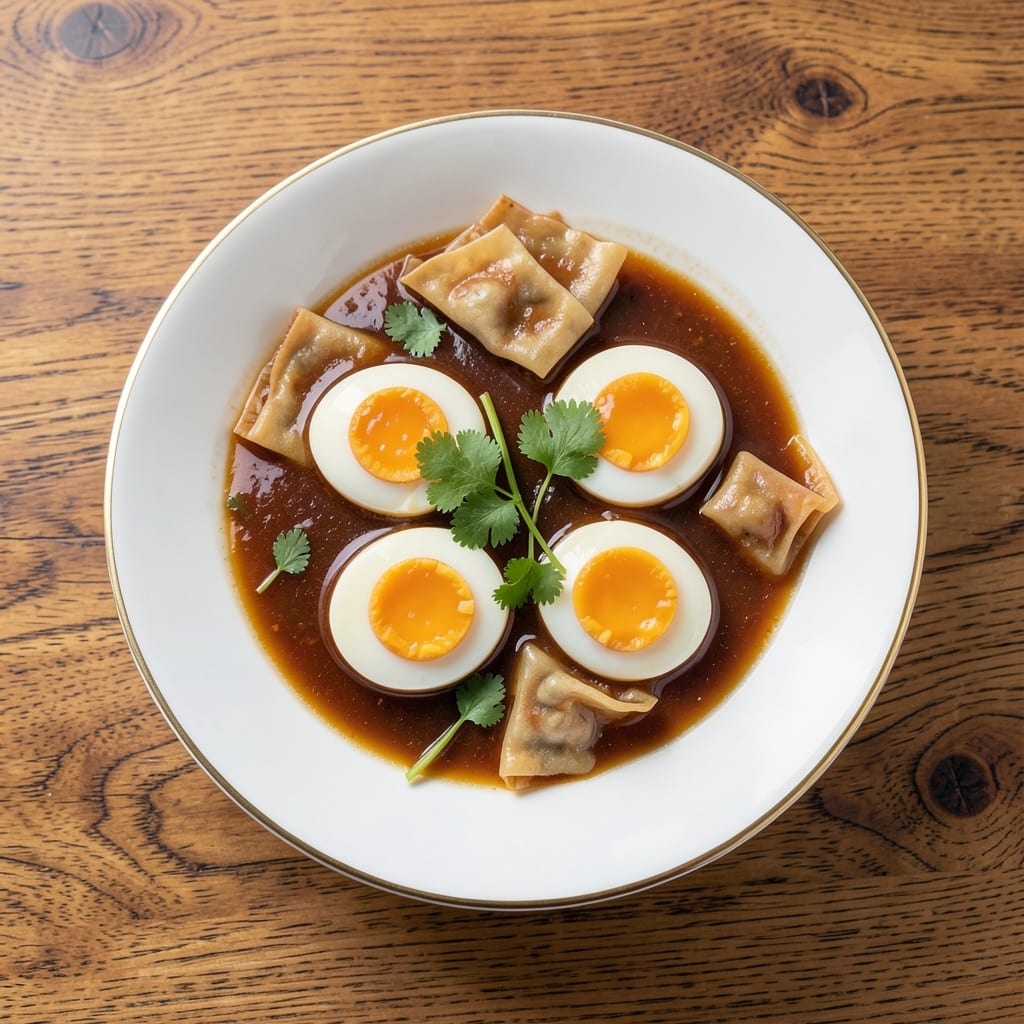
This Chinese braised egg recipe transforms simple eggs into a restaurant-worthy dish with tender yolks and crispy wonton wrappers. The secret lies in a slow simmer with soy sauce, sugar, and water that creates a silky texture while preserving the egg's natural richness. I've perfected this technique after countless attempts, and the results are always impressive.
What sets this dish apart is the perfect balance of flavors—savory from the soy sauce, subtle sweetness from the sugar, and a delicate crunch from the wonton wrappers. The braising process, which takes about 45 minutes, ensures the eggs cook evenly without becoming rubbery. This method also works well for meal prep, as the braised eggs keep beautifully in the refrigerator.
By the end, you'll have eggs with a velvety yolk that practically melts in your mouth and a crispy exterior that adds a satisfying texture. The aroma of the braising liquid alone will have everyone gathering around the table. This dish is not only delicious but also versatile—serve it as a breakfast staple, a light lunch, or even as a side dish for dinner.
Whether you're a seasoned cook or just starting out, this recipe delivers foolproof results with minimal effort. The key is patience and attention to detail, especially when it comes to the braising liquid and timing. Let's get started on creating this timeless Chinese classic!
Ingredients for chinese braised egg
Four eggs, twelve wrappers, and a few pantry staples transform into a restaurant-worthy dish.
| Ingredient | Amount | Notes |
|---|---|---|
| Large Eggs 🥚 | 4 whole | Room temperature preferred |
| Wonton Wrappers 🍜 | 12 pieces | Square, store-bought or homemade |
| Light Soy Sauce 🥢 | ½ cup | Kikkoman preferred for balance |
| Granulated Sugar 🍚 | 2 tbsp | White or light brown |
| Water 💧 | 1 ½ cups | Filtered or tap, room temp |
| Vegetable Oil 🫒 | 1 tbsp | Light, like canola or peanut |
| Cornstarch 🌾 | 1 tbsp | For crispy coating |
| Sesame Oil 🫒 | 1 tsp | Toasted, for aroma |
| Green Onions 🧅 | 3 whole | Thinly sliced, white and green |
| Garlic Cloves 🧄 | 3 cloves | Minced, for depth |
| Salt 🧂 | ½ tsp | Kosher or sea salt |
| White Pepper 🌶️ | ¼ tsp | Freshly ground |
The eggs are the star, so grab large, fresh eggs from the coldest part of your fridge—room temp cooks more evenly. For wonton wrappers, Trader Joe's or Asian markets have the best selection. Look for wrappers labeled 'square'—they crisp up perfectly. The soy sauce? Kikkoman light soy is my go-to, but any good-quality brand works. Don't skip the sesame oil—it adds that authentic aroma that makes this dish smell like home. If you're feeling fancy, toast the sesame seeds separately for garnish.
No wonton wrappers? Square phyllo dough works in a pinch, but they won't be as crispy. Short on soy sauce? Coconut aminos at half the amount gives a similar umami punch. The cornstarch is non-negotiable for crispiness—don't substitute with flour. For the braising liquid, if you're worried about the sugar caramelizing, use brown sugar instead. And if you've got leftover braising liquid, freeze it—it's perfect for stir-fries later. The green onions? Use the white parts too—they've got more flavor.
This keeps beautifully for 4 days in the fridge, sealed in its braising liquid. Reheat gently in a skillet with a splash of water to restore crispiness. For meal prep, portion into containers with a little sauce—it reheats like a dream. The crispy wrappers soften when reheated, so if you're serving cold, keep them separate until serving. Freezes for 2 months if you want to make a big batch. Trust me, the leftovers are just as good as the first bite.
Why You'll Love This Recipe
- Pantry Magic: I swear by this recipe when I’m staring into an empty fridge at 6:30pm. Wonton wrappers and eggs? That’s it—no fancy shopping. The soy and sugar balance turns something basic into a dish that feels like a hug.
- Silky-Soft Secret: That crispy wrapper wrapped around a jiggly, runny yolk? It’s the best of both worlds. The sugar in the braise keeps it tender, while the soy gives it this deep, savory richness that sticks with you.
- Lunchbox Hero: Here’s what sold me—it reheats like a dream. Pack a few in containers for work, and they’ll still be warm and gooey by noon. (Yes, even on a Tuesday night.)
- Budget Breakthrough: Between us, this is my go-to when I’m feeding a crowd but don’t want to break the bank. A dozen eggs and a box of wrappers feed six for under $10. Leftovers? Even better—they taste just as good cold.
Step-by-step instructions for Chinese braised eggs
This fusion recipe delivers perfect silky eggs with crispy wonton wrappers—here's how to nail it every time.
Prepare the Egg Mixture
Crack all 4 whole Large Eggs into a bowl and whisk them vigorously until the yolks and whites are completely combined and the mixture is uniform. I like to use room temperature eggs—they cook more evenly and create smoother yolks. Add 1 tbsp cornstarch and whisk again until fully dissolved. This creates a slightly thicker batter that helps the eggs hold their shape during braising.
In a separate small bowl, mix together 0.5 cup Light Soy Sauce, 2 tbsp Granulated Sugar, 1.5 cups Water, 1 tsp Sesame Oil, 0.5 tsp Salt, and 0.25 tsp White Pepper. This is your braising liquid—it should be well combined but still slightly cloudy from the cornstarch. Taste it and adjust the sugar or salt if needed; you want it balanced but slightly sweet to complement the eggs.
Cook the Eggs in Wonton Wrappers
Heat 1 tbsp Vegetable Oil in a large non-stick skillet over medium heat until shimmering. Place all 12 pieces Wonton Wrappers in the pan, pressing down gently to ensure they make contact with the oil. Cook for 2-3 minutes until the wrappers are lightly golden on one side—don't let them brown too much, or they'll lose their crispiness.
Flip each wrapper carefully and cook the other side for another 1-2 minutes. Remove the wrappers from the pan and set them aside on a paper towel-lined plate. Now, pour the egg mixture into the same skillet, swirling it around to coat the bottom lightly. Let it cook undisturbed for 1-2 minutes until the edges start to set but the center is still slightly runny.
Braise the Eggs to Perfection
Pour the braising liquid into the skillet with the partially cooked egg mixture. Stir gently to combine, then reduce the heat to low. Let the mixture simmer for 5-6 minutes, stirring occasionally, until the eggs are just set but still slightly wobbly in the center. The sauce should thicken slightly and coat the back of a spoon.
Here's the thing—you want the eggs to be silky but not fully firm. They'll continue cooking as they absorb the braising liquid. When the eggs are nearly set, add the 3 cloves minced Garlic Cloves and 3 whole thinly sliced Green Onions, stirring gently to incorporate. Taste and adjust seasoning if needed—you might need a touch more soy sauce or sugar to balance the flavors.
Assemble and Serve
Carefully transfer the braised eggs to a serving platter. Arrange the 12 pieces Wonton Wrappers around the eggs, slightly overlapping them for a beautiful presentation. Drizzle any remaining sauce from the skillet over the top and sprinkle with extra Green Onions for color and freshness.
Serve immediately while the eggs are still warm and the wrappers are crispy. Each bite should deliver a perfect balance of silky egg yolk, savory braising liquid, and the satisfying crunch of the wonton wrappers. This dish is best enjoyed right away—it won't keep well once the wrappers lose their crispness.
Pro Tips For Making Chinese Braised Egg
- Crack Eggs Gently: I learned this the hard way—slamming eggs into the simmering water makes them scatter like a toddler’s crayons. Use a spoon to carefully lower them in, one at a time, so they stay whole and plump. The wrappers will thank you later when they wrap neatly around intact eggs.
- Simmer, Don’t Boil: The water should dance, not roar. A gentle simmer (tiny bubbles, not rolling waves) keeps the eggs tender and the wrappers from turning into sad, mushy paper. If it’s boiling hard, pull the pot off heat for 10 seconds—your eggs will stay firm and silky.
- Sugar First, Soy Second: Stir the sugar into the water before adding soy sauce, or you’ll end up with clumpy, grainy sludge. Let it dissolve completely—about 30 seconds—then add the soy. Trust me, your sauce will be smooth and glossy, not gritty.
- Wrap While Warm: As soon as the eggs are done, drain them immediately and wrap them in the wonton skins while they’re still warm. Cold eggs stick like glue, and you’ll fight a losing battle trying to tuck them in neatly. A damp paper towel helps—just pat the skins lightly before wrapping.
Dietary considerations for these flavors
Vegetarian-Friendly
Chinese braised eggs are naturally vegetarian, making them a perfect protein source for plant-based diets. The dish relies on eggs, soy sauce, and aromatics rather than meat or fish, so it fits seamlessly into vegetarian meal plans. I often serve these as a protein-rich breakfast or lunch option when cooking for friends with dietary restrictions. 🌱
Gluten-Free Adaptations
For gluten-free versions, swap the wonton wrappers for rice paper wrappers or gluten-free phyllo dough. Use tamari instead of soy sauce to avoid gluten-containing wheat. I've tested this with San-J Tamari, which has a similar umami depth without the gluten. The braising liquid remains the same, so the flavor profile stays intact.
Allergen Awareness
This recipe contains eggs and wheat (in wonton wrappers), so it's not safe for those with egg or wheat allergies. For an egg-free alternative, try substituting with tofu or mushrooms—though the texture will differ significantly. Always check labels on soy sauce and wrappers for hidden allergens. I keep King Arthur gluten-free flour on hand for emergency binder needs.
Low-Sodium Options
Reduce sodium by using low-sodium soy sauce (like Kikkoman Low Sodium) and cutting the salt in the braising liquid by half. I've also successfully used coconut aminos at 60% of the soy sauce amount. The flavor remains balanced, though slightly less salty. Taste as you go—you may need extra sugar to compensate for the reduced saltiness.
Sweetness Control
Adjust the sugar to taste—some prefer a sweeter braising liquid, while others like it subtly sweet. I recommend starting with 1 tbsp sugar instead of 2 if you're sensitive to sweetness. For a sugar-free version, use erythritol or monk fruit sweetener at a 1:1 ratio. The texture remains the same, but the flavor profile shifts slightly.
Meal Prep Tips
Braised eggs reheat beautifully for meal prep, but store the crispy wrappers separately to maintain texture. Keep the eggs in their braising liquid in an airtight container for up to 4 days. Reheat gently in a skillet with a splash of water, then add fresh wrappers when serving. I double the recipe and freeze half—perfect for quick breakfasts all week! ⏰
Nutrition facts
Frequently asked questions
Why do Chinese braised eggs turn out rubbery?
Overcooking is the #1 cause! Braised eggs should be silky with a slight wobble in the center when done. Simmer on low heat for 5-6 minutes max after adding the braising liquid. If using a smaller skillet, reduce heat further to prevent curdling. The cornstarch helps maintain texture, but don't skip the gentle stirring.
Can I make this recipe without wonton wrappers?
Use square phyllo dough (cut into 3-inch squares) or rice paper wrappers for a gluten-free option. For extra crispiness, brush with oil before cooking. The texture will differ slightly, but the braised egg center remains the star. Just reduce cooking time by 1 minute since phyllo cooks faster.
How do I store leftovers to keep the wrappers crispy?
Store the braised eggs and sauce separately in airtight containers. Keep the crispy wrappers in a dry container with parchment paper between layers. Reheat eggs gently in a skillet with 1 tsp water, then add fresh wrappers when serving. They'll crisp up perfectly in 2-3 minutes over medium heat.
What's the secret to perfectly balanced braising liquid?
The magic ratio is 1:4 soy sauce to water with 2 tbsp sugar for sweetness. Taste before adding eggs—it should be slightly sweet and salty, not overwhelming. For depth, add 1 tsp sesame oil and a pinch of white pepper. Adjust sugar first if it tastes too salty, or add more soy sauce if too sweet.
Can I use this technique for other proteins?
This braising method works beautifully with tofu or chicken breast! For tofu, use firm variety cut into cubes and reduce braising time to 8-10 minutes. For chicken, increase to 15 minutes until internal temp reaches 165°F. Keep the same soy-sugar-water ratio but add 1 tsp ginger for extra flavor.